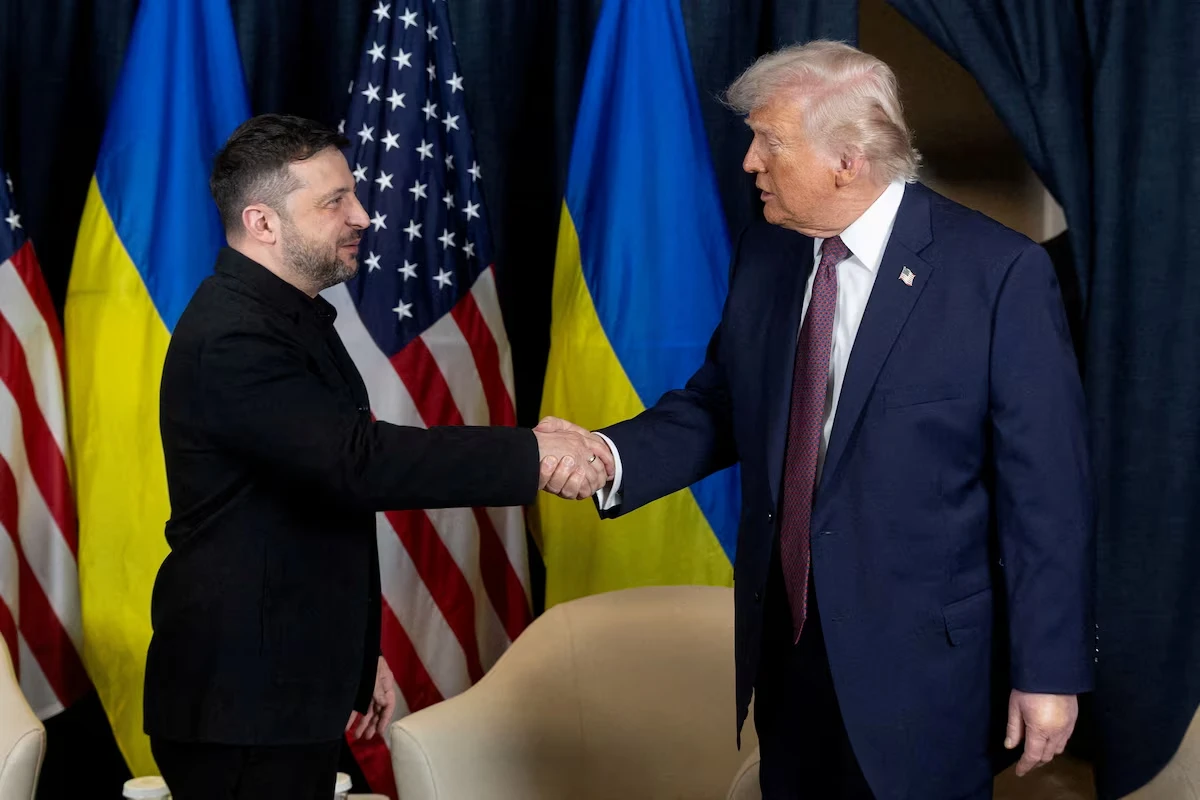




















On Friday, March 27, 2026, the G7 foreign ministers’ meeting in Vaux-de-Cernay, France, moved far beyond the scope of another routine crisis briefing. It became a venue where the United States is trying to force its allies to answer the Iranian challenge not with statements, but with real resources.
Marco Rubio arrived in France with a clear goal: to persuade partners to help restore navigation through the Strait of Hormuz. At the center of the agenda are the war around Iran, efforts to halt the fighting, Tehran’s nuclear program, ballistic missiles, and maritime trade routes.
The reason for such focus is obvious. The Strait of Hormuz remains one of the world’s most critical energy corridors: a substantial share of global seaborne oil and liquefied gas trade passes through it. This is not a regional detail but a major artery of the global economy, vulnerable to any military or political disruption.
According to the preliminary assessment of the Daycom editorial team, the dispute inside the G7 is not only about Iran. In reality, it is about a new distribution of responsibility in energy security: who must guarantee open sea lanes, who will carry the political risks, and who will pay for the consequences of another shock on the oil market.
Rubio has effectively stated the American logic without diplomatic decoration: the United States depends less on shipments through Hormuz than most of its allies, while the rest of the world — especially Asia — has a much greater stake in reopening the strait. This is Washington’s familiar burden-sharing argument, but in wartime it sounds increasingly like an ultimatum.
That is where the political friction begins. A number of European and Asian partners have already refused the Trump administration’s calls to send warships to the Hormuz area. In many capitals, the view is that the United States and Israel presented them with a fait accompli of escalation without providing meaningful consultation or a collective mandate.
Europe’s position is now deeply ambivalent. On the one hand, officials in Brussels and key capitals stress that this is not “Europe’s war.” On the other hand, Europeans fully understand that their interests are directly affected, because an energy shock, logistical disruption, and imported inflation strike at the very core of the European economy.
France, Britain, and other partners are also insisting that any solution must be diplomatic first, not exclusively military. In the European view, the security of maritime routes matters greatly, but it should not automatically mean entry into another Middle Eastern campaign without clear limits, a timeline, and a defined political objective.
The economic impact is already visible. Rising tensions around Iran and the Strait of Hormuz are pushing Brent crude higher and, with it, the costs of fuel, transport, and industrial production. In this crisis, the oil price has become more than an indicator — it has become an instrument of pressure in its own right.
Asia is the most exposed. It buys a significant share of the fuel produced in the Gulf, meaning that for Japan and other major importers, the issue of Hormuz is not an abstract debate over freedom of navigation. It is a question of industrial resilience, domestic prices, inflation, and the preservation of growth.
For Ukraine, this discussion is far from peripheral. The higher global oil prices rise, the more opportunities Russia gains to replenish its war budget. In that sense, the Strait of Hormuz now links Iran, the oil market, sanctions policy against Moscow, and developments on the Ukrainian battlefield into a single geopolitical chain.
European anxiety is compounded by the fact that Washington has already moved toward temporary easing for parts of Russian oil exports. In European capitals, there is concern that such a step could create a dangerous precedent: a Middle Eastern energy crisis begins to erode the sanctions architecture built against the Kremlin after the full-scale war.
Against this backdrop, Russia’s shadow fleet returns to the foreground. It is this network of tankers that allows Moscow to bypass restrictions, maintain export flows, and preserve revenues for its war economy. For Europe, the issue of Hormuz becomes even more acute because any spike in oil prices objectively makes Russia’s adaptation to sanctions easier.
As a result, there is no separate “Iran track” and separate “Ukraine track” on the G7 agenda. There is a single energy-security matrix in which every extra dollar on the price of a barrel can simultaneously strengthen Tehran, worsen inflationary pressure in Europe, and expand the Kremlin’s financial cushion. That is the central tension of this meeting.

Another important detail is that some states appear willing to participate not in the war itself, but in restoring navigational security after the most acute phase of the crisis. This is a meaningful signal: diplomatic reluctance to back escalation against Iran does not mean readiness to accept the effective blockade of one of the world’s most important maritime chokepoints.
That is precisely why Rubio is trying to move the debate from the question of “whose war is this?” to “whose economy is this?” If Hormuz is vital for global oil exports, then U.S. allies, by his logic, should not merely express concern. They should help reopen the route — politically, militarily, or logistically.
But the American argument has a weak point. When Rubio compares Europe’s reluctance to become involved in the Iran conflict with the scale of U.S. assistance to Ukraine, he does not strengthen solidarity so much as expose an old grievance about asymmetrical expectations. For part of Europe, it sounds more like reproach than alliance leadership.
For Paris, Berlin, London, and Brussels, the problem is broader still: any shift of strategic attention to the Middle East risks diluting the Ukrainian priority. That is why European governments insist that Russia remain central to the G7 discussion, and that pressure on the channels through which the Kremlin continues to monetize oil exports in spite of sanctions only intensify.
In the near term, two parallel scenarios are visible. The first is the formation of a limited coalition to secure maritime traffic without the full involvement of most partners in the war. The second is prolonged tension in Hormuz, under which oil continues to function as Iran’s geopolitical weapon and as an indirect financial bonus for Russia.
That is why the G7 meeting in France is no longer just a discussion of a Middle Eastern crisis. It is a test of whether the West can simultaneously contain Iran, avoid strengthening Russia, keep Ukraine at the center of the agenda, and prevent the Strait of Hormuz from becoming a point of strategic rupture in allied coordination.