




















Four years after its liberation, Izium is once again looking east as the direction from which danger may come. Russian troops are not at the city’s outskirts, and another occupation does not appear inevitable, but the offensive in Donetsk region is gradually bringing the fighting closer to the routes on which the defense of Sloviansk and Kramatorsk depends.
Izium itself can already feel how the war has changed. Russian forces are increasingly using guided aerial bombs and drones, while roads and some city streets are being covered with anti-drone netting. On Sept. 10, a nighttime strike on the city’s eastern outskirts wounded two people — another reminder that the rear here has long since become relative.
On the Sloviansk axis, Russian forces have recently attacked near Ozerne, Kryva Luka and toward Rai-Oleksandrivka. Ukrainian troops, meanwhile, report that after unsuccessful attempts to advance, the enemy has reduced ground assaults in some sectors while increasing strikes from the air.
That distinction matters: there is no direct battle for Izium today. But the city’s importance is growing precisely because Russian pressure is concentrating on the defensive system around Sloviansk, Kramatorsk, Kostiantynivka and nearby areas. Izium sits behind that line as a transport, repair and supply hub.
Daycom’s analysis indicates that the main threat to Izium today is not necessarily a direct assault on the city in the near term. More dangerous may be its gradual transformation into a frontline logistics hub that Russia will systematically try to paralyze with glide bombs, drones and strikes on roads.
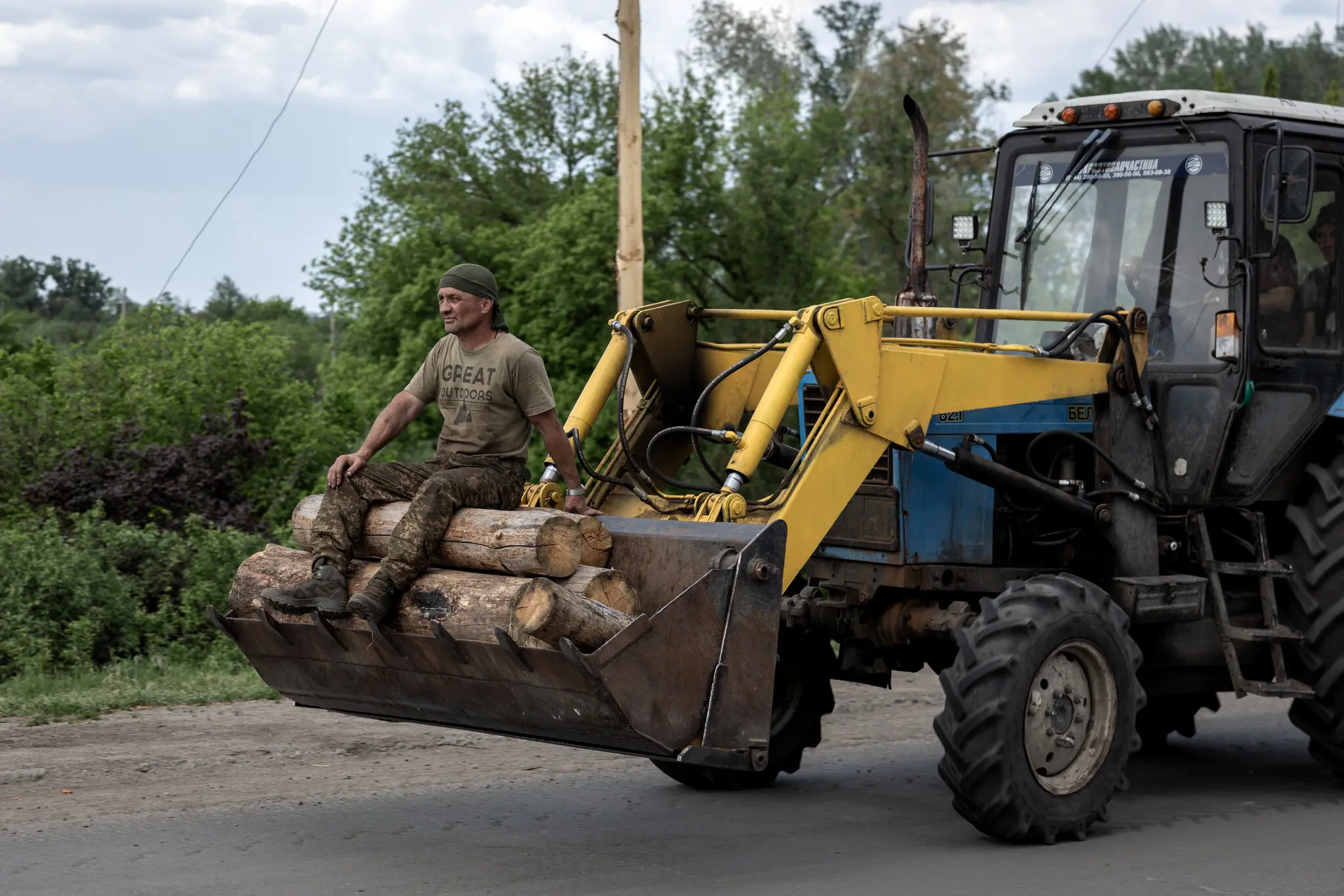 Матеріали, що перевозяться для будівництва укріплень у місті — Фінбарр О'Райлі
That is how modern warfare is changing the meaning of the front line itself. To weaken a city’s defense, an army no longer needs to reach its suburbs first. It can make roads dangerous, destroy warehouses, repair sites and bridges, attack transport and force the military to disperse air-defense and electronic-warfare systems.
For Izium, that is especially important because of geography. The city lies on key routes between Kharkiv region and northern Donetsk region. As other roads become more dangerous because of FPV drones, artillery or advances at the front, the burden on corridors running through Izium only increases.
The entire rear-area system of Donbas is already under pressure. Roads between Sloviansk, Kramatorsk, Druzhkivka and other cities are regularly attacked by drones, while deteriorating conditions on some highways force logistics units to switch to longer and more expensive routes.
That is why new trench lines, anti-tank ditches, minefields, concrete pyramids and several belts of engineering obstacles have appeared around Izium. Roads are being covered with netting intended to complicate FPV-drone attacks on cars, evacuation vehicles and military convoys.
Parts of this system are being built by units of the Third Army Corps. The corps holds more than 150 kilometers of front and is simultaneously developing its own layered air-defense system, including radar coverage and interceptor drones.
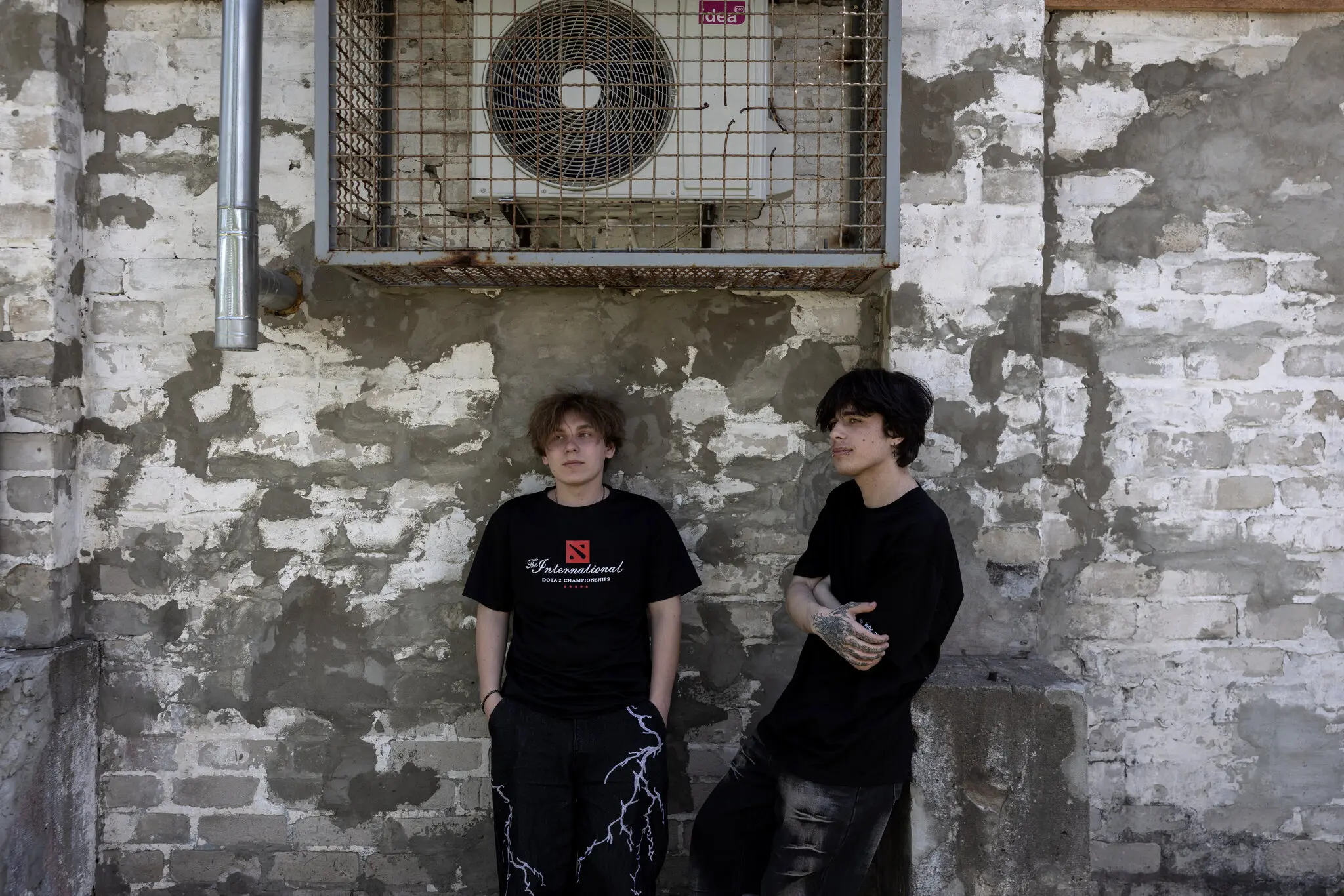 Єгор Братіщев, 18 років, ліворуч, та Клим Величко, 20 років, в Ізюмі. «Оборона тут дуже міцна, але це лише питання часу», – сказав пан Братіщев — Фінбарр О'Райлі
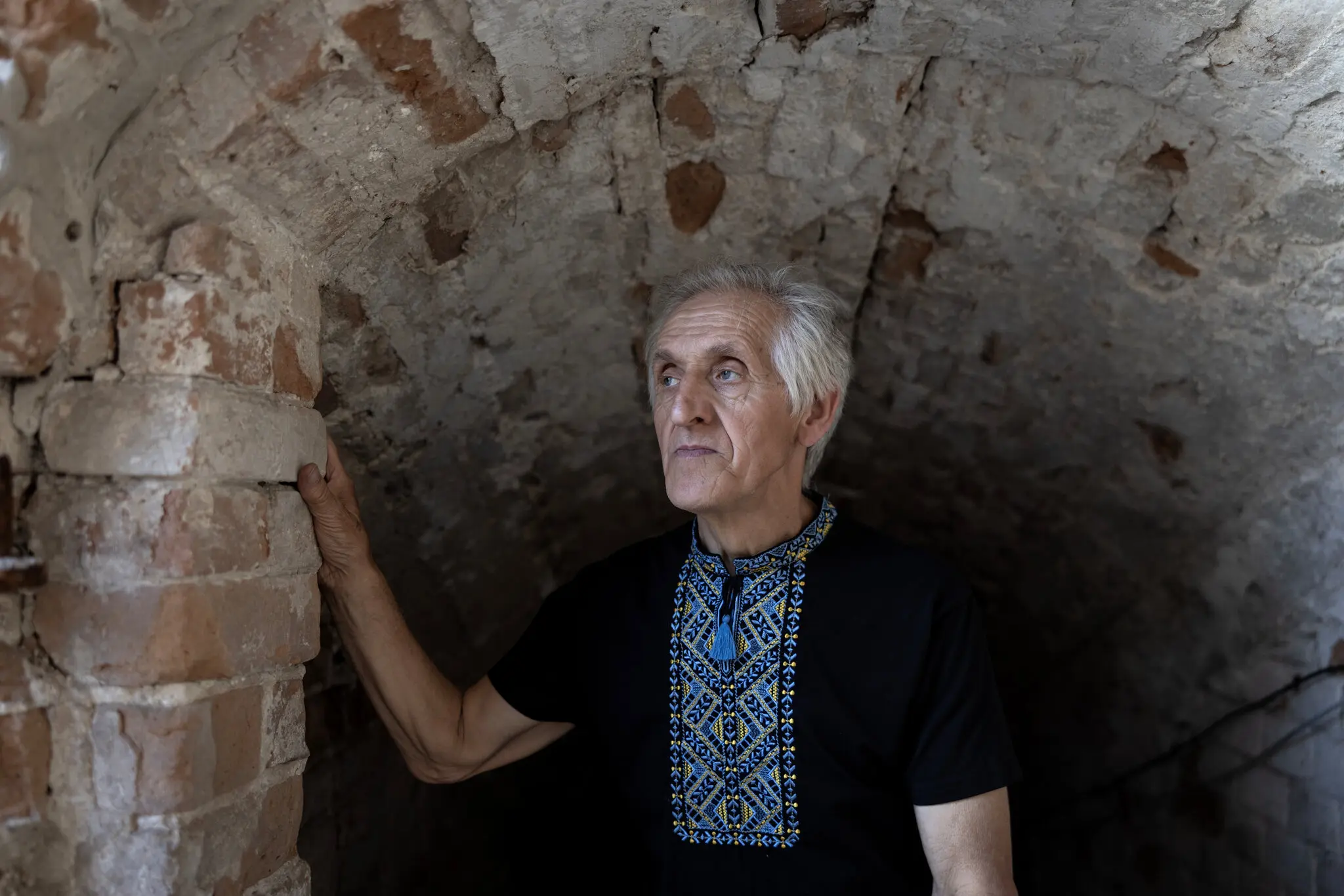 Микола Калюжний у травні стоїть біля входу в бункер, який він та його колеги використовували у підвалі будівлі своєї редакції під час окупації міста — Фінбарр О'Райлі
The fortifications around the city do not mean the military expects Izium to fall. Their logic is the opposite: prepare the terrain for the worst-case scenario before it becomes reality. After the experience of 2022, no one here wants to postpone engineering work until the enemy is already approaching the city.
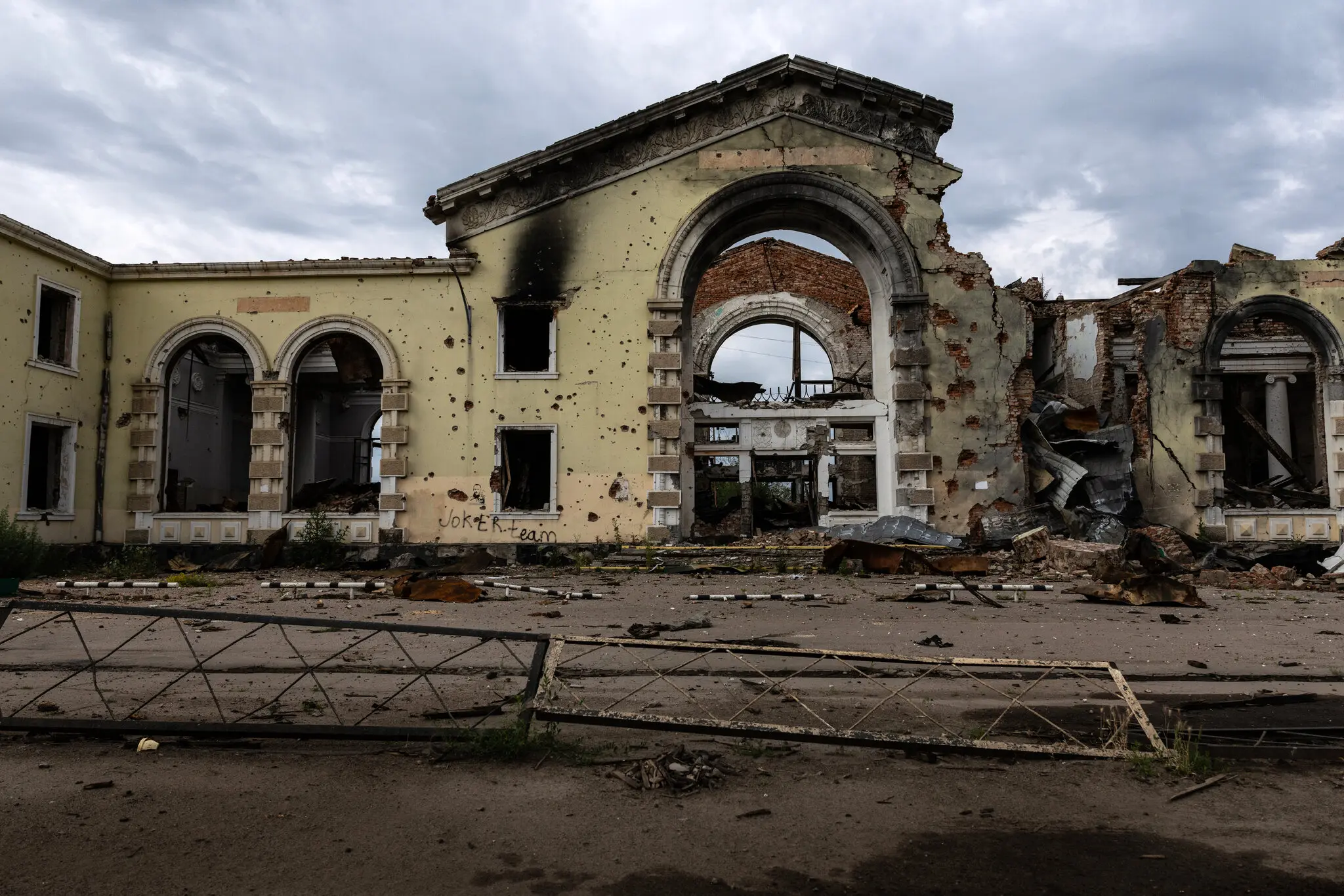
Izium knows too well the price of delayed preparedness. In the spring of 2022, the city became one of Russia’s key bridgeheads in Kharkiv region. After heavy fighting, Russian forces captured it and used it as a base for operations toward Donbas until Ukraine’s September counteroffensive forced them to retreat.
After liberation, a mass burial site was discovered in a forest near the city. Ukrainian investigators exhumed 447 bodies: 425 civilians, including five children, and 22 Ukrainian servicemen. Many showed signs of violent death, and at least dozens bore evidence of torture.
Those graves remain part of the city’s landscape of memory. Some of the dead have been identified; others have not. For Izium, the war moving closer again therefore does not represent an abstract shift on a military map, but the possibility of reliving an experience residents have already endured once.
The city marked the fourth anniversary of its liberation in September 2026 under a renewed wave of danger. Local authorities are holding memorial events and speaking of Izium as a city that endured, while the military is fortifying roads and residents are hearing the explosions of Russian aerial bombs with increasing frequency.
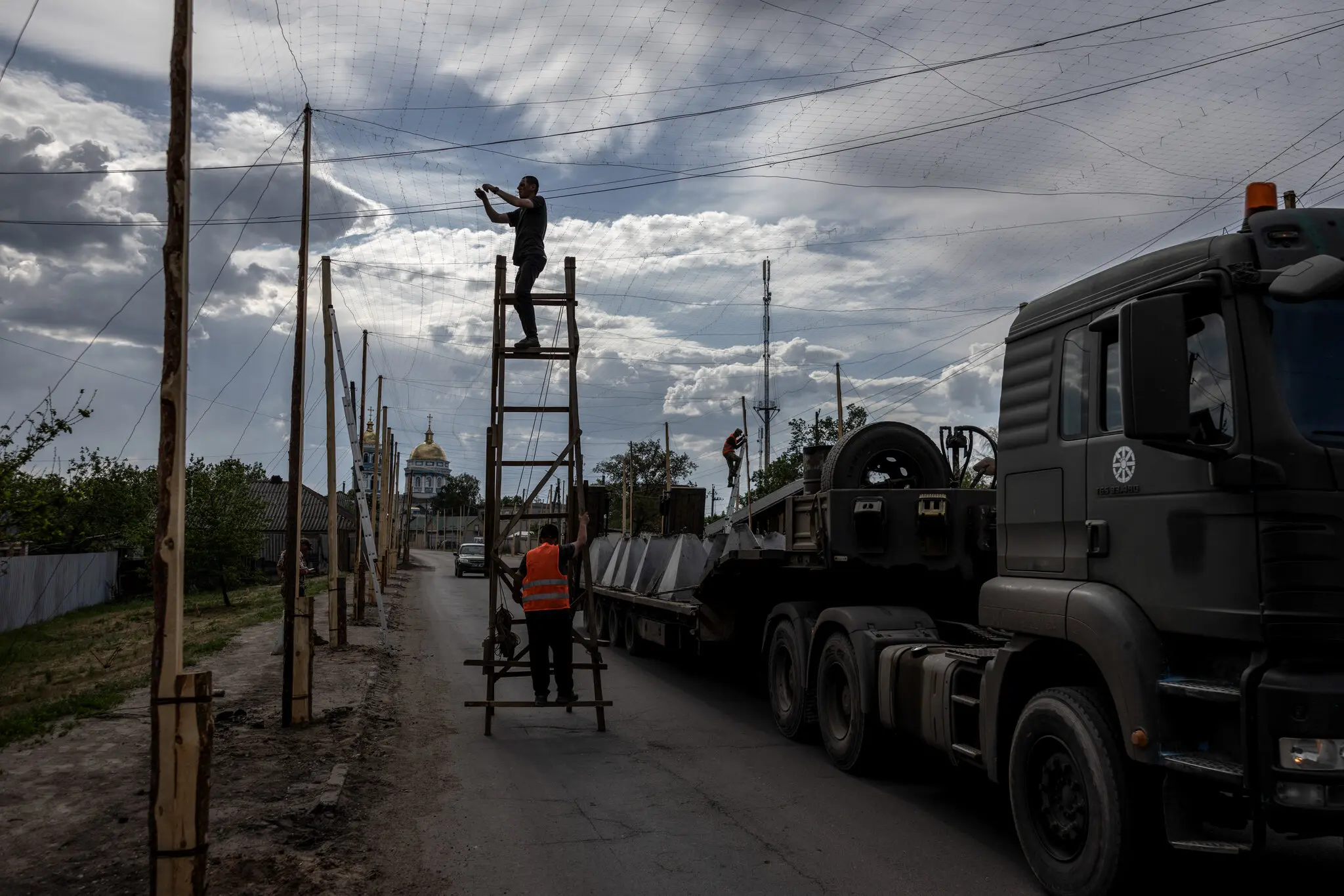 В Ізюмі навесні встановлюють сітку проти дронів — Фінбарр О'Райлі
Izium now has about 28,000 residents, compared with roughly 45,000 before the full-scale invasion. It is already a different city — less populated, scarred by occupation, partly rebuilt and at the same time forced to adapt new infrastructure to a war that has changed dramatically in technological terms since 2022.
Back then, the main threats to civilians were artillery, aircraft and street fighting. Now there is also the mass use of FPV drones. A small drone can pursue a vehicle, attack an individual, wait near a road or complicate evacuation in places where transport four years ago could still move with relative freedom.
That is why long tunnels of netting are appearing above roads. They do not provide complete protection: a drone can approach from the side, break through the structure or carry a different type of munition. But the nets alter the angle of attack, give drivers extra seconds and make precise targeting harder for the operator.
Russian aviation creates a different problem. Guided bombs allow aircraft to strike cities and fortifications without entering directly into the area of greatest risk from Ukrainian air defenses. On the Sloviansk axis, Ukrainian forces are already reporting an increase in precisely this kind of air pressure.
For Izium, that means even successful defense of the ground front does not guarantee the city’s safety. The more important its role becomes in sustaining Donbas, the greater Russia’s incentive to attack its logistics before making any decision about advancing directly toward the city.
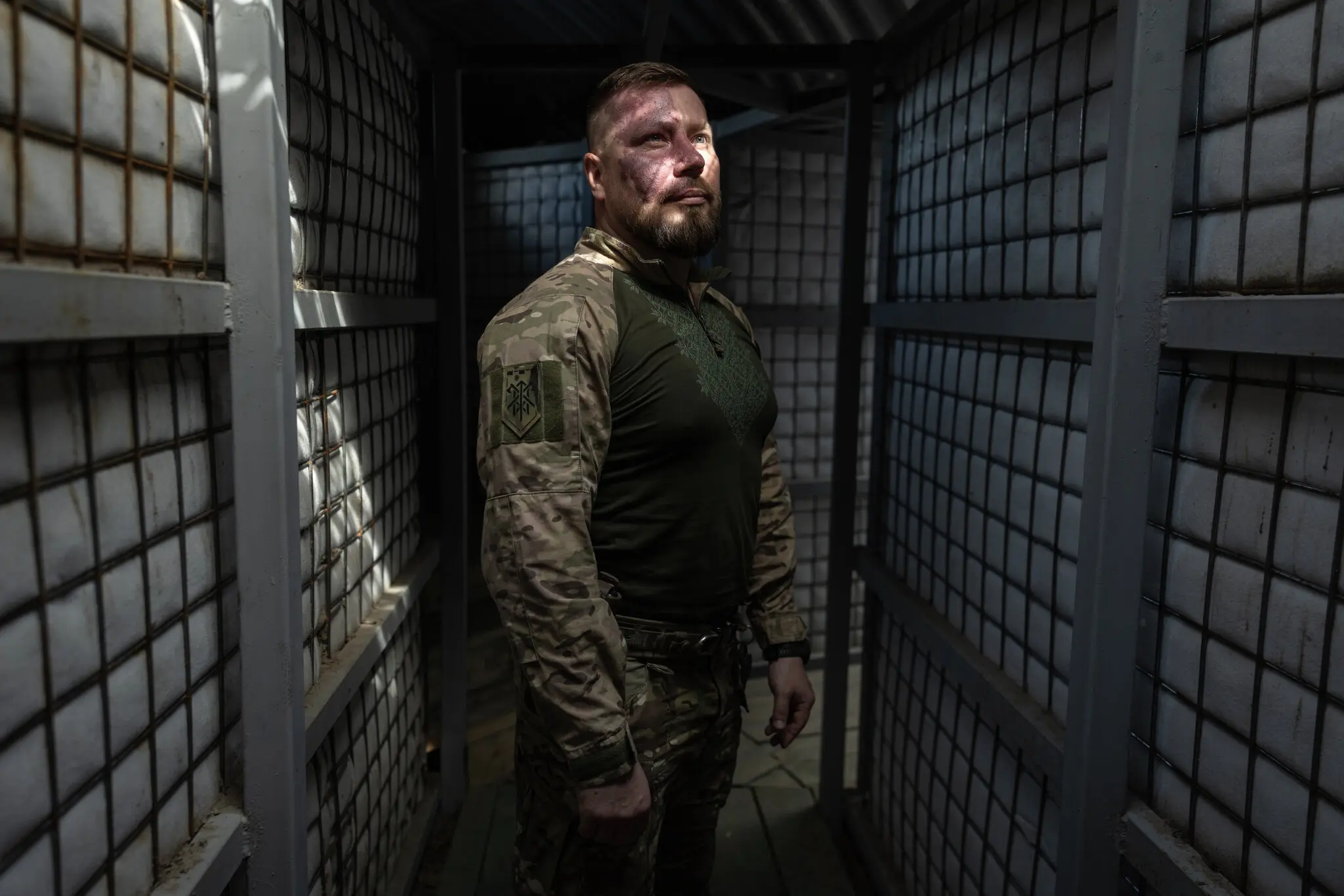 Командир 96-го окремого батальйону забезпечення, позивний «Тренер», у лінії окопів поблизу міста — Фінбарр О'Райлі
The most important battle in the east is now taking shape around the Sloviansk-Kramatorsk urban area. Moscow continues to demand all of Donbas, while control of Sloviansk and Kramatorsk remains one of Russia’s principal unfulfilled military objectives on this axis.
If Russian troops manage to move substantially closer to those cities, Izium will become even more important. Reserves, ammunition, fuel, equipment, evacuation traffic and repair operations will pass through it. The city should therefore be viewed not merely as a rear-area settlement, but as part of the architecture of Ukraine’s defense of northern Donbas.
Yet there is a long distance between strategic importance and inevitable occupation. Russian forces continue to advance in some parts of Donetsk region, but the pace remains uneven, while Ukrainian defenses rely on fortifications, mines, strike drones and increasingly sophisticated surveillance systems.
On Sept. 11, only three Russian assault actions were recorded on the Sloviansk axis and none on the Kramatorsk axis. That does not mean the front has stabilized permanently, but it shows why talk of an inevitable battle for Izium would be an exaggeration at this stage.
A more realistic scenario is a gradual increase in long-range fire pressure. Russia can strike Izium without controlling the surrounding territory and simultaneously force Ukraine to spend resources protecting its rear instead of concentrating them directly along the line of contact.
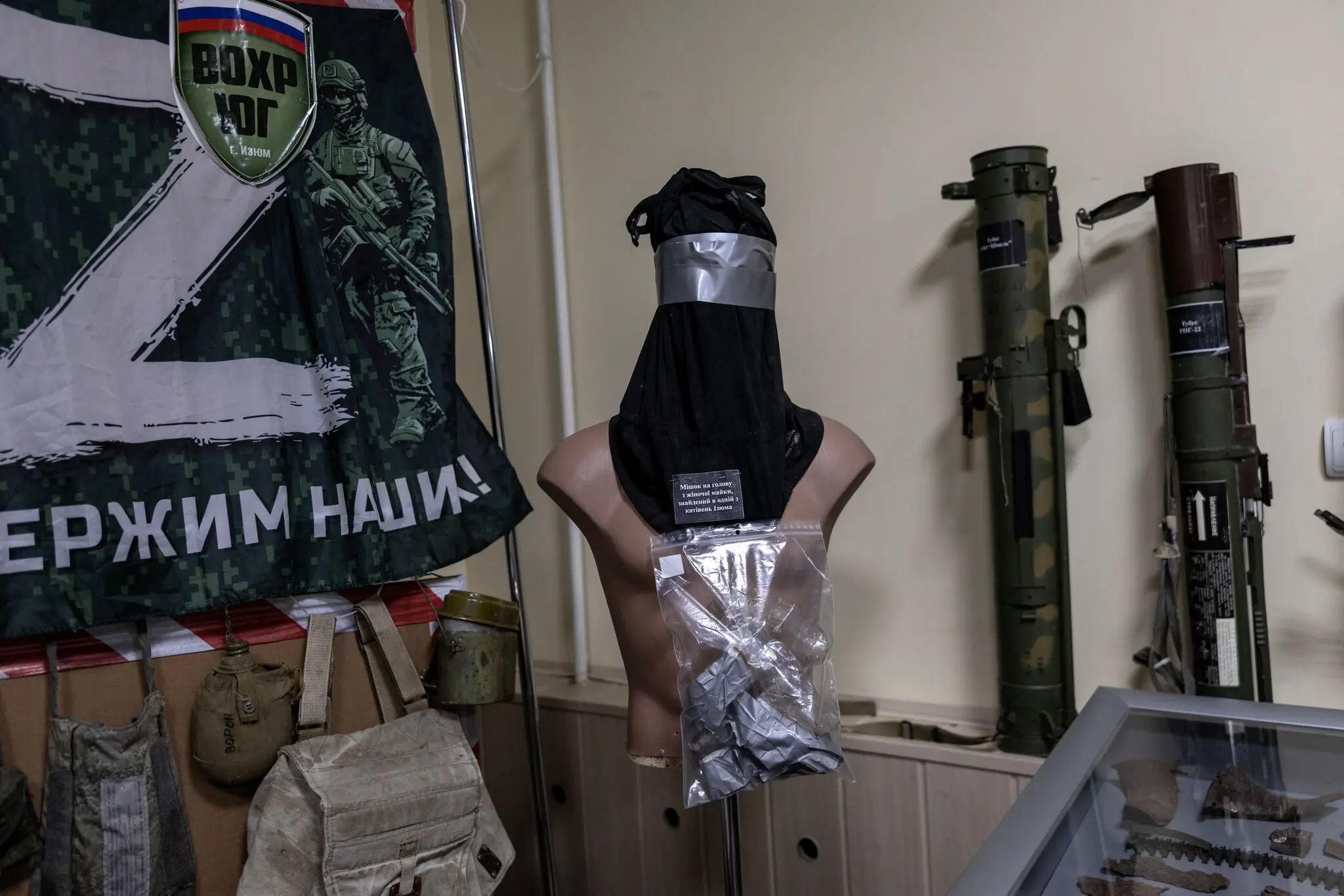 У місцевому музеї представлені предмети, знайдені після окупації, зокрема чорний капюшон з того, що, за словами українських чиновників, було камерою тортур — Фінбарр О'Райлі
That creates a strange state for the city, suspended between ordinary life and preparation for the worst. Shops, markets and public services continue to operate, people repair their homes, and local authorities hold municipal events. At the same time, nets are stretched above roads, trenches expand nearby and major investment projects become increasingly risky.
The war is already changing the logic of reconstruction itself. Underground schools, protected medical facilities, backup power systems and shelters now have to be planned not as temporary solutions until the fighting ends, but as infrastructure for a city that may remain in a high-risk zone for years.
Psychologically, that is harder for local residents than it was in 2022. Back then, most people did not yet know what occupation, mass bombardment or life without reliable communications and electricity would mean. Now they do know, and that knowledge makes the front’s return toward the city especially frightening.
Some residents are already storing food, keeping bags packed and discussing the point at which staying would become too dangerous. Others refuse to organize their lives around the possibility of another occupation and continue repairing homes, working and planting flowers.
That contradiction captures Izium in the autumn of 2026. The city has not been evacuated and is not doomed. It continues to function, but it can no longer plan its future on the assumption that the war will keep moving farther away. Every new Russian kilometer in Donetsk region changes the risk calculation for the entire rear.
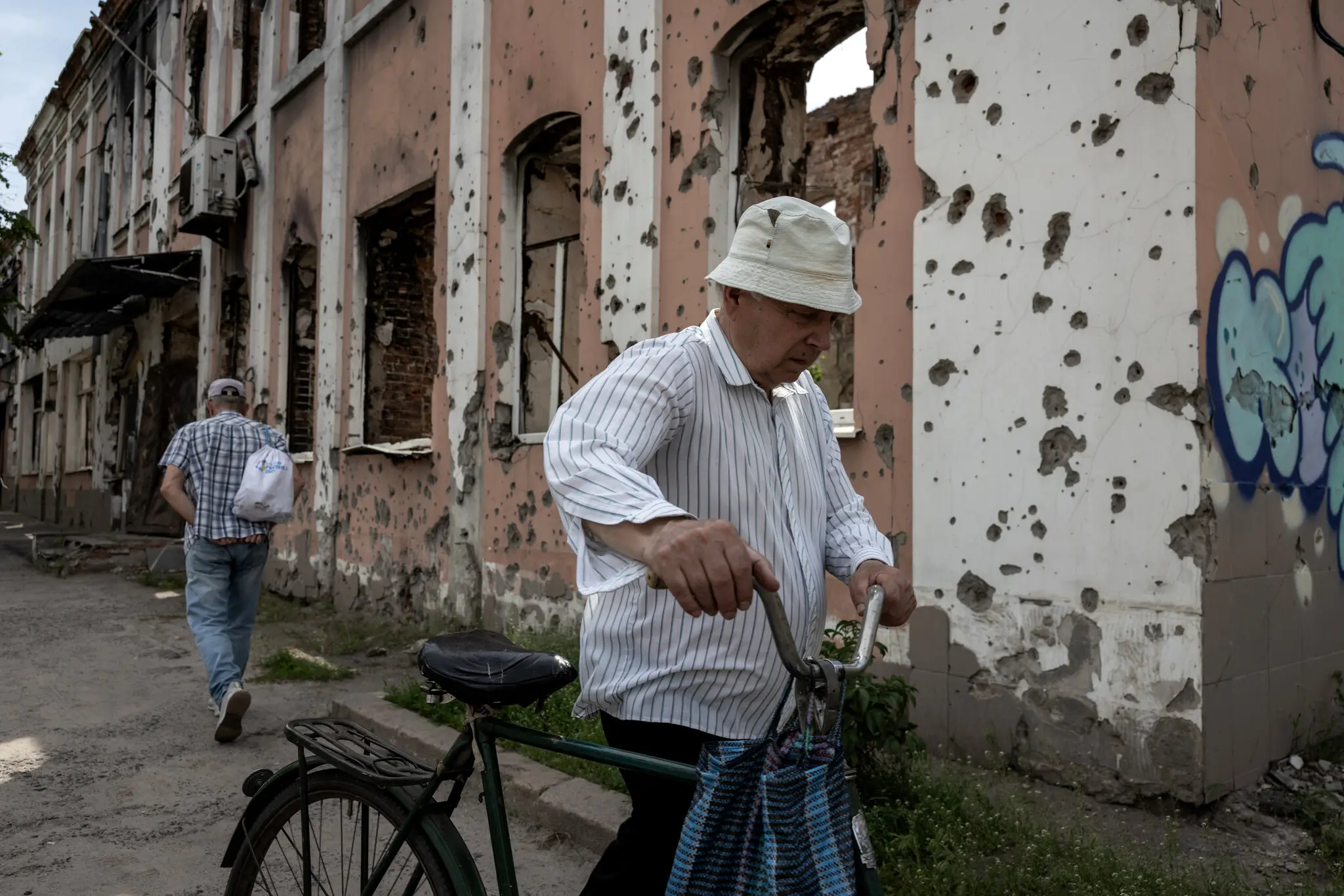 Мешканці вулиці, пошкодженої під час окупації. Населення Ізюма зараз становить близько 28 000 осіб, порівняно з 45 000 до повномасштабного вторгнення Росії — Фінбарр О'Райлі
For Ukraine, holding Izium matters far beyond Kharkiv region. Losing a secure logistics hub would intensify pressure on Sloviansk and Kramatorsk, complicate the movement of reserves and force the military to redesign supply routes across a much larger area.
Russia therefore does not necessarily need to capture the city to gain part of the military effect. If strikes slow the roads, force warehouses to disperse and make the movement of equipment more dangerous, every Ukrainian delivery to Donbas already costs more time, manpower and protection.
That is the main difference from the first battle for Izium. In 2022, the struggle was primarily for the city itself and its crossings. In 2026, the war can begin for Izium long before Russian infantry appears — through control of roads from the air, repeated glide-bomb strikes and drone hunting against logistics.
The defensive lines around the city therefore have a double purpose. They are meant to stop a ground breakthrough if one ever emerges, but they also show a change in Ukrainian military culture: fortifications are being built before the critical moment, rather than once the enemy can already see the city through its optics.
Russian forces still have to overcome Ukrainian positions across substantial territory before a direct assault on Izium becomes an immediate prospect. That route runs through areas where Ukraine is concentrating some of its most important forces and trying to make every Russian kilometer as costly as possible.
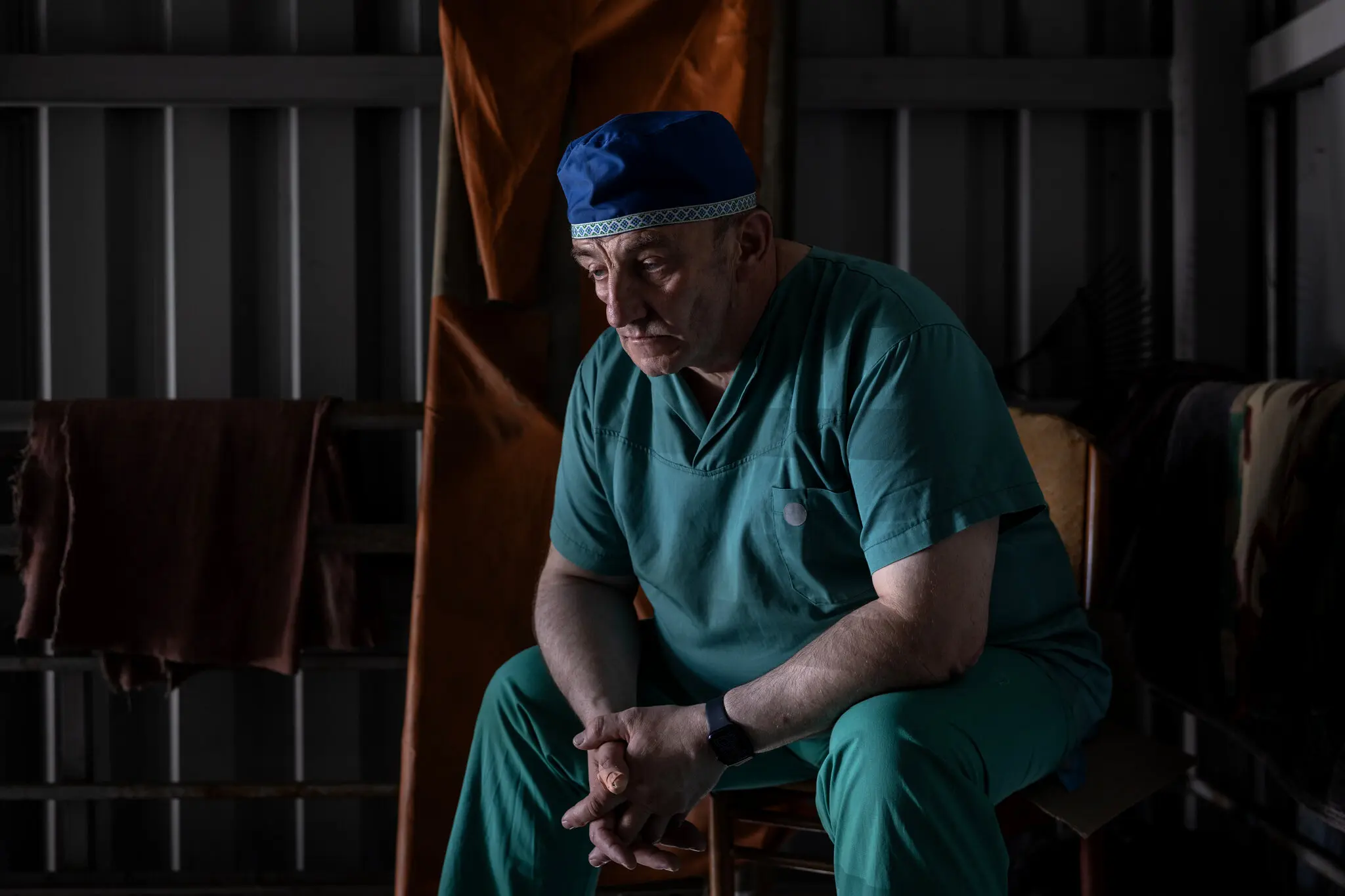 Доктор Юрій Кузнецов у головній лікарні міста. До окупації Росією у 2022 році мешканці були як «малі діти», невинні перед жахами, які чекали попереду, сказав він — Фінбарр О'Райлі
 Житловий будинок в Ізюмі, пошкоджений під час російської окупації 2022 року — Фінбарр О'Райлі
But residents do not see the situation only through the General Staff’s map. They remember destroyed homes, torture sites and the 447 bodies exhumed after liberation. For them, even a relatively low probability of the Russian army returning carries a very different weight than it does for someone who sees Izium only as a point on a frontline map.
That memory both deepens fear and explains the city’s stubbornness. Four years after liberation, tens of thousands of people still live here. They do not deny the danger, but neither do they accept that the front moving closer automatically means the end of urban life.
For now, Izium remains part of Ukraine’s rear, not a new field of urban combat. Its defenses are being prepared precisely to keep that boundary from shifting. Yet the city’s own history has already shown how quickly the rear can become the front if one side achieves an operational breakthrough.
What will determine Izium’s future, therefore, is not a single major Russian offensive but a combination of factors: whether Ukrainian defenses hold near Sloviansk, whether logistics routes remain open, how effectively protection against glide bombs and FPV drones works, and whether there are enough troops to hold a long front.
Four years ago, the Russian army left behind a city of ruins, torture sites and hundreds of graves. Today, Izium is preparing not to repeat that history but to prevent it — with fortifications, nets, trenches and the defense of routes on which the entire northern Donbas increasingly depends.
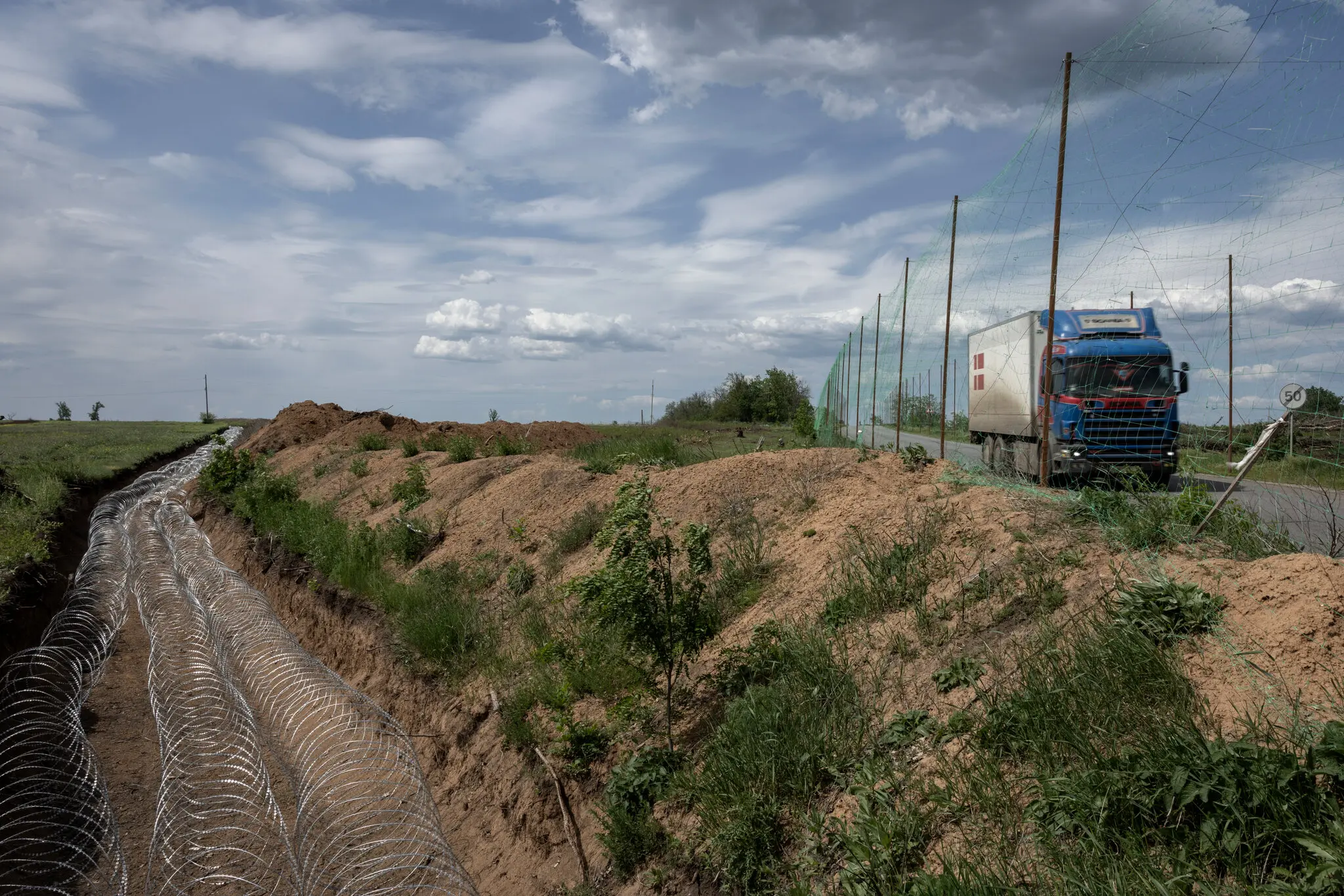 Укріплення та сітка для боротьби з дронів за межами Ізюма — Фінбарр О'Райлі
That is why the question of Izium’s future is much broader than whether Russian troops will reach the city. It is whether Ukraine can preserve its rear-area system faster than modern warfare can turn another rebuilding city into the next front line.