




















After the mass attack of July 30, Moscow presented the operation as a campaign against Ukraine’s defense-industrial base. Its list of targets included facilities in Kyiv, Lviv, the Ivano-Frankivsk region and the Dnipropetrovsk region, as well as three cargo ships near Odesa.
The list was intended to explain the scale of the overnight barrage, which involved land-, sea- and air-launched missiles alongside attack drones. Its central message was that Russia had not attacked cities, but the production system behind Ukraine’s drones and missiles.
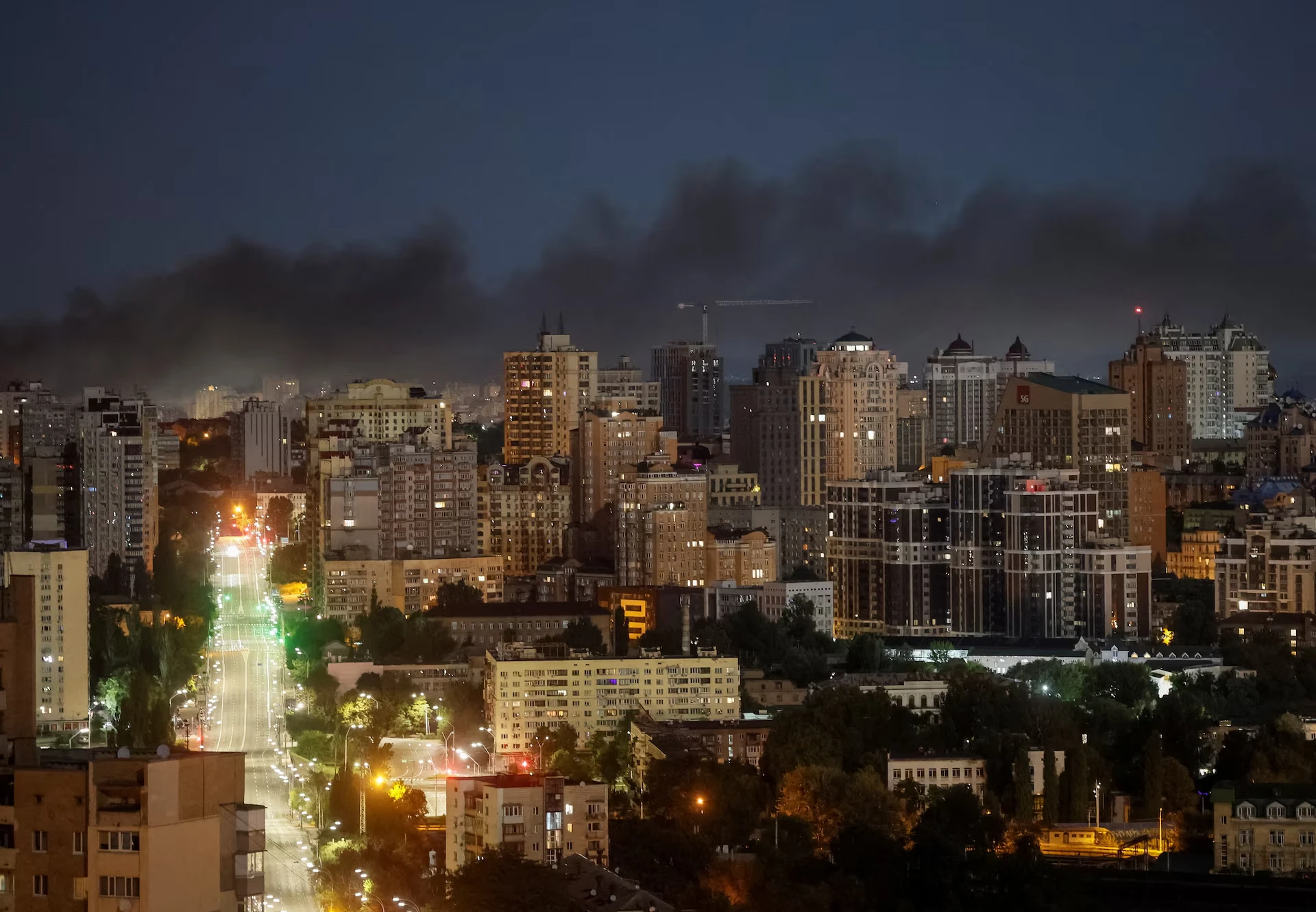
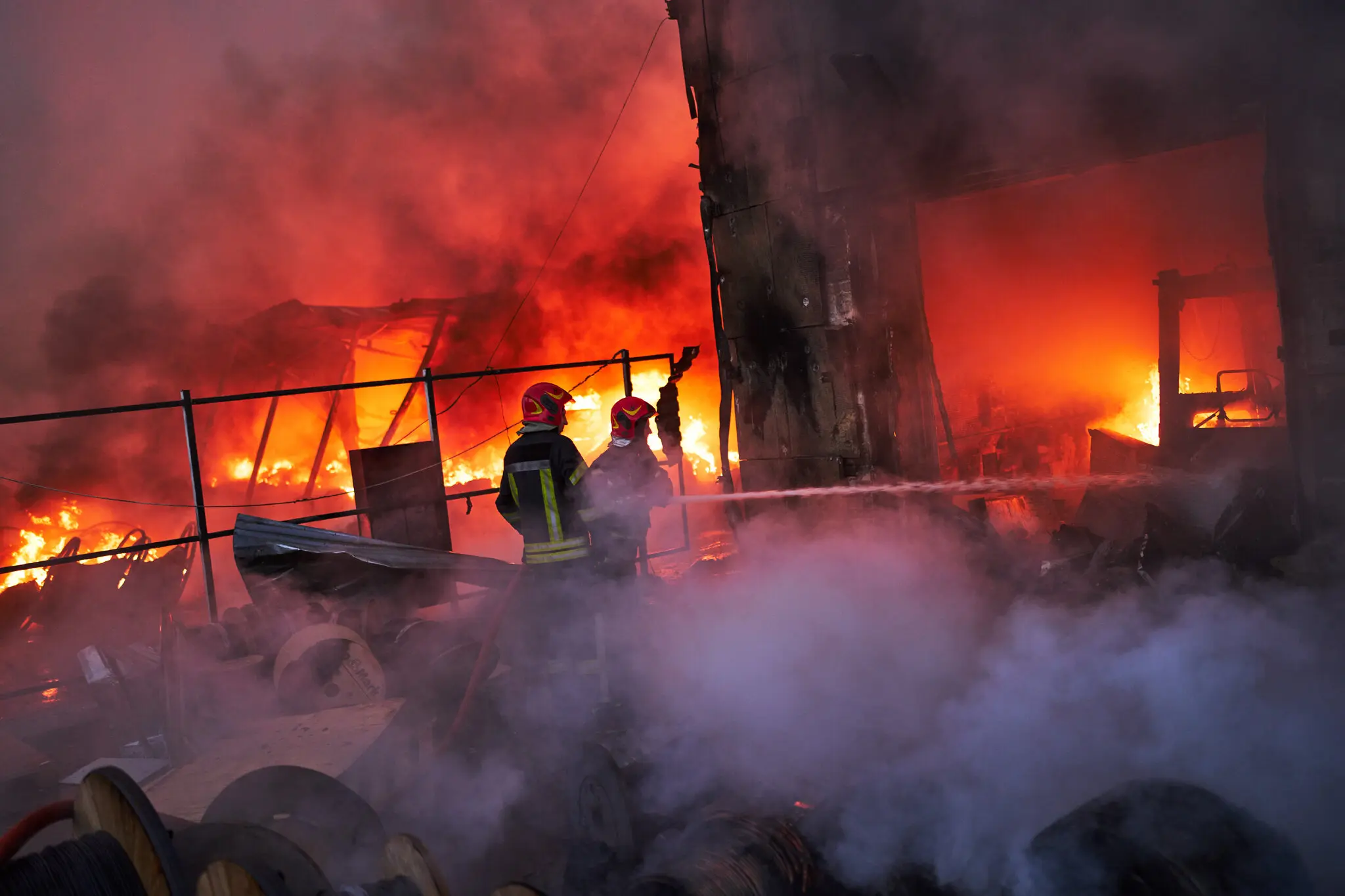
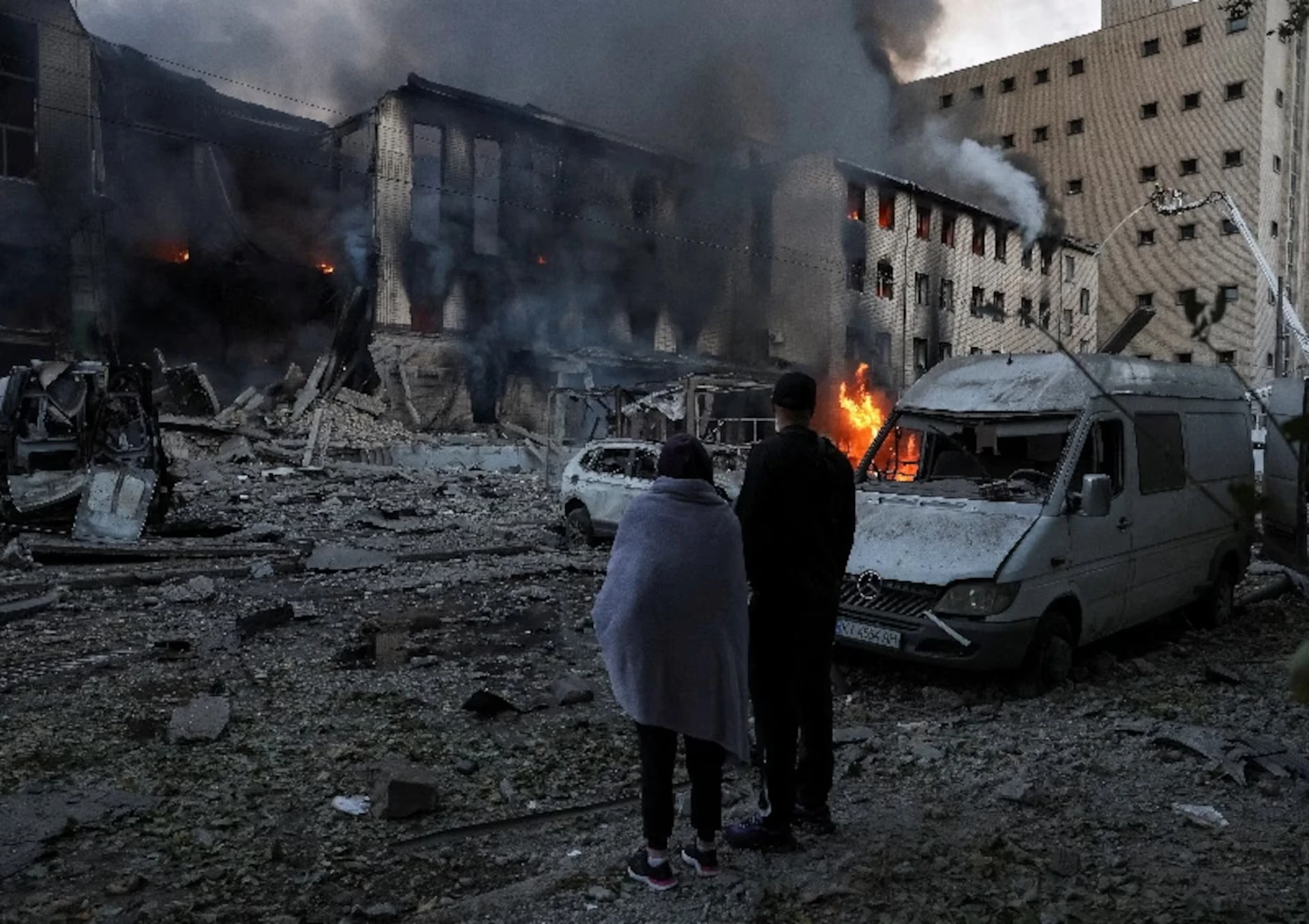
That military narrative does not erase the consequences on the ground. A family was killed in Kryvyi Rih, apartment buildings were damaged in Lviv and fires broke out in Kyiv. Even a genuine industrial target inside a city remains a lethal danger to the neighborhoods around it.
In Daycom’s assessment, the principal target was not a single building but Ukraine’s ability to conduct a long-range war with weapons of its own. Russia is trying to break the chain that begins with drone and missile production and ends with strikes on its airfields, depots, ships and oil refineries.
In Kyiv, Moscow identified the Mayak plant and an electrical engineering facility as targets. Russian officials linked them to the production of FP-1 and FP-2 attack drones, as well as reconnaissance systems. There was no independent confirmation of the scale of damage claimed.
The drone war has turned such facilities into strategic assets. FP-1 and FP-2 systems belong to the class of long-range weapons that allow Ukraine to strike infrastructure hundreds of kilometers inside Russia without seeking approval from a foreign supplier.
For Kyiv, domestic production means autonomy. An imported missile may be withheld, politically restricted or exhausted. A Ukrainian drone can be cheaper, simpler and available in quantities large enough to overwhelm Russian air defenses.
That is why the contest has shifted from launch sites to workshops, design bureaus and component suppliers. Destroying a completed drone removes one weapon. Damaging a production line is intended to prevent dozens or hundreds of future launches.
In Lviv, Russia said it had attacked a facility involved in manufacturing and repairing engines for Ukrainian Flamingo cruise missiles and unmanned aircraft. Other Russian accounts described the site as producing electronics for missile systems.
The variation in those descriptions illustrates the limits of such military statements. They do more than record an operation. They construct a desired picture in which every impact appears to be a precise strike on a critical node of Ukraine’s defense industry.
The Flamingo missile carries particular importance for Russia. It is a Ukrainian long-range weapon designed to hit large targets deep in the rear. Serial production would reduce one of Moscow’s greatest advantages: the ability to attack from areas long considered beyond Ukraine’s reach.
In the Ivano-Frankivsk region, Russia reported striking two plants that allegedly produced or stored Flamingo and Neptune missiles. The Neptune system has already evolved from an anti-ship weapon into a broader platform for long-range operations.
In Kryvyi Rih, Moscow named the Akvaplast plant as a target. It said the facility was involved in designing and assembling attack drones, unmanned surface vessels and repairing self-propelled artillery. The claim reinforced the wider logic of the operation: a systematic hunt for Ukrainian production capacity.
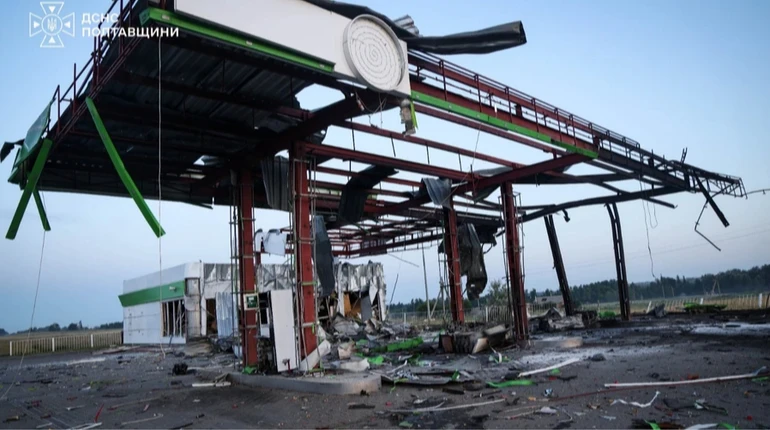
Yet Kryvyi Rih also demonstrated the central contradiction between a declared target and the actual price of the strike. A ballistic missile hit the home of a large family. The deaths of children do not become less tragic because a defense facility may have existed somewhere nearby.
Ukraine’s defense industry is not separated from its cities. Soviet-era plants were built beside residential districts, transport lines and power infrastructure. New production also relies on civilian warehouses, private workshops and dual-use components.
This creates an environment in which the boundary between military and civilian infrastructure is increasingly difficult to define. An electrical plant may produce parts for household equipment and drones. A logistics center may serve both business and the armed forces. That overlap, however, does not turn the entire urban landscape into a legitimate target.
Ukraine has responded by dispersing production. Instead of relying on one major factory, it is building networks of smaller sites, separate assembly lines and specialized suppliers. The loss of one node may slow output but rarely stops it entirely.
For Russia, this requires repeated attacks and constantly updated intelligence. For Ukraine, it means higher costs, more complicated logistics and the need to conceal facilities even from neighboring businesses.
The claim that three cargo ships were also struck opened a separate dimension of the attack. One vessel was said to be in the port of Pivdennyi, while two others were reported south and east of Odesa. Moscow said they were delivering weapons and military equipment, though that assertion was not independently verified.
Even without confirmation of the cargo, the statement carries strategic weight. Russia is effectively warning shipowners, insurers and crews that it may classify a commercial vessel as a military target if it suspects the ship of carrying supplies for Ukraine.
The line between blockade and military operation is therefore eroding. Moscow does not formally declare Ukrainian ports closed, but repeated attacks can produce the same economic result: higher insurance costs, fewer available ships, more expensive freight and disrupted exports.
Ukraine’s maritime corridor has been one of its most important economic achievements during the war. It restored shipments of grain, metals and other goods after the collapse of the earlier system of protected commercial navigation.
Russia has repeatedly attacked commercial ships near ports in the Odesa region. Those incidents have shown that the danger to civilian shipping is not theoretical and can cost crew members their lives.
A strike on a ship has effects far beyond the damage to its hull. Insurers raise rates for an entire region, shipowners demand additional compensation, and captains and crews may refuse dangerous routes altogether.
The three vessels in the Russian statement were therefore not a secondary detail. They indicated an attempt to move the war from port infrastructure directly onto maritime transport and to turn the Black Sea into a permanent zone of threat.
The escalation is unfolding as Ukraine also strikes Russian ships, tankers and logistical routes. Both sides are relying increasingly on aerial and naval drones, making commercial shipping a space where the nature of a vessel’s cargo may determine the fate of its entire crew.
There is still no full symmetry. Russia is waging war against Ukraine, attacking its ports and targeting the infrastructure of a country that depends heavily on maritime exports. Ukrainian operations are directed against the state that launched the invasion and uses the Black Sea to sustain occupation forces.
The latest Russian attack showed that pressure on Ukraine’s defense industry and pressure on shipping are parts of a single strategy. Moscow is trying to deprive Kyiv of two resources at once: the ability to produce long-range weapons and the ability to finance the war through foreign trade.
Ukraine’s response must therefore also be twofold. Defense production requires dispersed facilities, underground workshops, backup power lines and protected storage. The maritime corridor requires stronger air defense, international monitoring and insurance guarantees for carriers.
Patriot systems can protect selected cities and sites, but they cannot cover the country’s entire industrial and port network. Long-term resilience will depend on whether Ukraine can restore damaged lines and relocate production faster than Russia can identify new coordinates.
Moscow described the night of July 30 as a precise attack on factories and military cargo. In reality, the objective was broader. It was an attempt to strike the infrastructure of Ukrainian autonomy itself — the ability to build weapons, export goods and remain connected to the outside world.
The decisive question is therefore not only which workshops or ships were damaged. What matters is how quickly Ukraine restores production and vessel traffic. In a war of attrition, a system’s ability to keep functioning after a strike is often more important than the strike itself.