





















The night of Aug. 11 again showed how broad the geography of Russia’s air campaign has become. Zaporizhzhia, Kyiv, Dnipropetrovsk and Donetsk were all hit — regions separated by distance from the front, yet increasingly united by the same routine of alarms, explosions and fires.
The heaviest losses were reported in Zaporizhzhia. Russian forces struck the city with missiles and aerial bombs, killing six people and wounding 20 more. Buildings and vehicles caught fire, and emergency crews worked through damaged urban areas in the aftermath.
Explosions were also heard in Kyiv. Warehouses in a central district caught fire, and at least one person was reported injured. The capital was under air-raid alert as Russia launched another wave of attacks increasingly built around combinations of different weapons.
As Daycom has noted, the significance of the night lies not only in the number of casualties. It reflects Russia’s strategy of distributed pressure: striking frontline regions, major cities in the rear and industrial zones at the same time, forcing Ukraine’s air defenses, rescue services and medical system to respond across several directions at once.
Zaporizhzhia is particularly vulnerable within that system. Its proximity to the front shortens the time between detection and impact, while Russian aircraft can use guided bombs alongside missiles. For civilians, that means far less time to reach shelter.
Guided aerial bombs have become one of the most destructive weapons in Russia’s frontline campaign. Their large warheads can demolish buildings and cause extensive damage even without a direct hit on a specific structure.
The picture is different in cities farther from the battlefield, but the danger is no less serious. Kyiv has far denser air defenses, yet large and combined attacks repeatedly force the system to operate under intense pressure. Even when a missile or drone is intercepted, falling debris can still hit apartment blocks, businesses and roads.
The warehouse fire in central Kyiv was another reminder of that vulnerability. In modern air warfare, danger does not disappear when an incoming weapon is destroyed overhead. Part of the threat simply changes form and falls to the ground.
Overnight attacks also killed another six people in the Dnipropetrovsk and Donetsk regions, where at least 16 others were wounded. In total, at least 12 deaths were reported across several parts of Ukraine within a matter of hours.
These are no longer isolated episodes of a single strike cycle. They are part of a broader campaign of attrition. Russia is trying to force Ukraine to defend the front, major cities, energy infrastructure, transportation networks, industry and residential areas simultaneously.
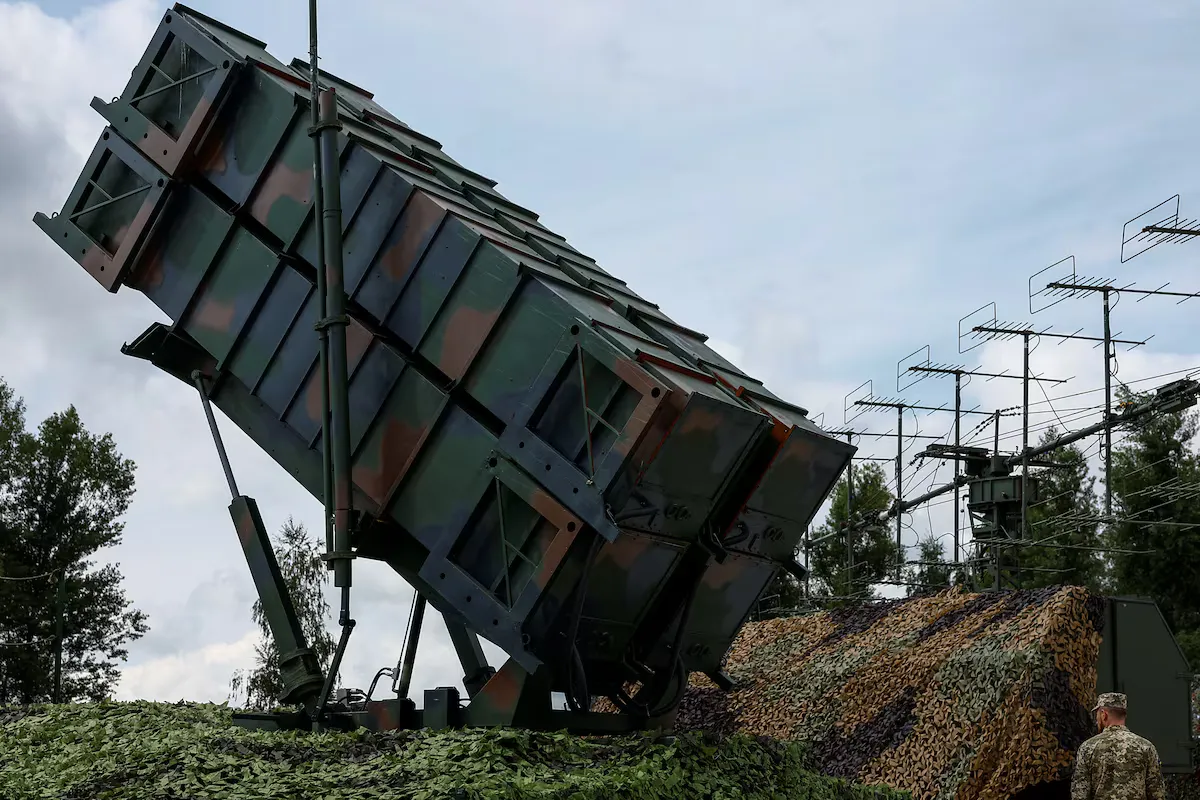
The structural problem is that offensive weapons can often be scaled faster and more cheaply than modern air defense. Russia can combine missiles, drones, guided bombs and decoys, while every interceptor used against them remains a scarce and expensive resource.
Ballistic missiles and aerial bombs are especially difficult. With many ballistic weapons, reaction time is measured in minutes. In frontline cities, the challenge of guided bombs is even greater, because defense may require not only intercepting the munition itself but also deterring the aircraft launching it from long range.
That is why Russia’s air campaign increasingly resembles an economy of overload. The objective does not always have to be a single spectacular breakthrough. It is enough to keep forcing Ukraine to expend interceptors, reposition batteries, repair infrastructure and hold emergency services in a constant state of readiness.
Civilians are trapped inside that logic. A nighttime strike has two effects: it damages a specific site and alters the life of an entire city. People sleep in hallways, shelter in subway stations, track alerts on their phones and learn to distinguish drones from missiles by sound.
After years of war, such behavior has become familiar. Familiarity, however, is not the same as safety. Fatigue from repeated alerts creates its own danger, as people increasingly make personal calculations about whether to seek shelter or remain at home.
Zaporizhzhia shows how unforgiving that calculation can be. When a city lies close to the front, the interval between warning and impact may be so short that even the correct decision does not guarantee enough time.
Kyiv faces a different kind of risk. The capital is better protected, but it remains both a symbolic and strategic target. Every strike forces Russia to spend significant resources, but it also compels Ukraine to use some of its most expensive and limited interceptors.
That is the central logic of the current phase of the air war. Russia holds an advantage in production scale and is trying to turn that into an advantage in tempo. Ukraine responds with technology, mobile air defenses and its own long-range strikes, but there are always more potential targets than systems available to protect them.
The Aug. 11 attack therefore matters as more than another tragic date. It shows that Russia’s strategy remains layered: cities near the front are hit with weapons of immense destructive power, while the deeper rear is kept under sustained missile and drone pressure.
The result is a war that increasingly erases the distinction between front and rear. Zaporizhzhia lives with the possibility of impact almost immediately after warning. Kyiv lives with the threat of another combined barrage. Dnipropetrovsk and Donetsk endure the overlap of ground warfare and aerial attack.
For civilians, the difference between these environments is narrowing. It can come down to the number of seconds between an alarm and an explosion, the strength of the nearest walls and the chance of where the next weapon lands.
And as the air war continues to expand, Ukraine’s most important resource is no longer only the number of air-defense systems it possesses. Equally important is the ability of society to withstand repeated strikes — physically, economically and psychologically — without allowing permanent danger to become something people stop reacting to.