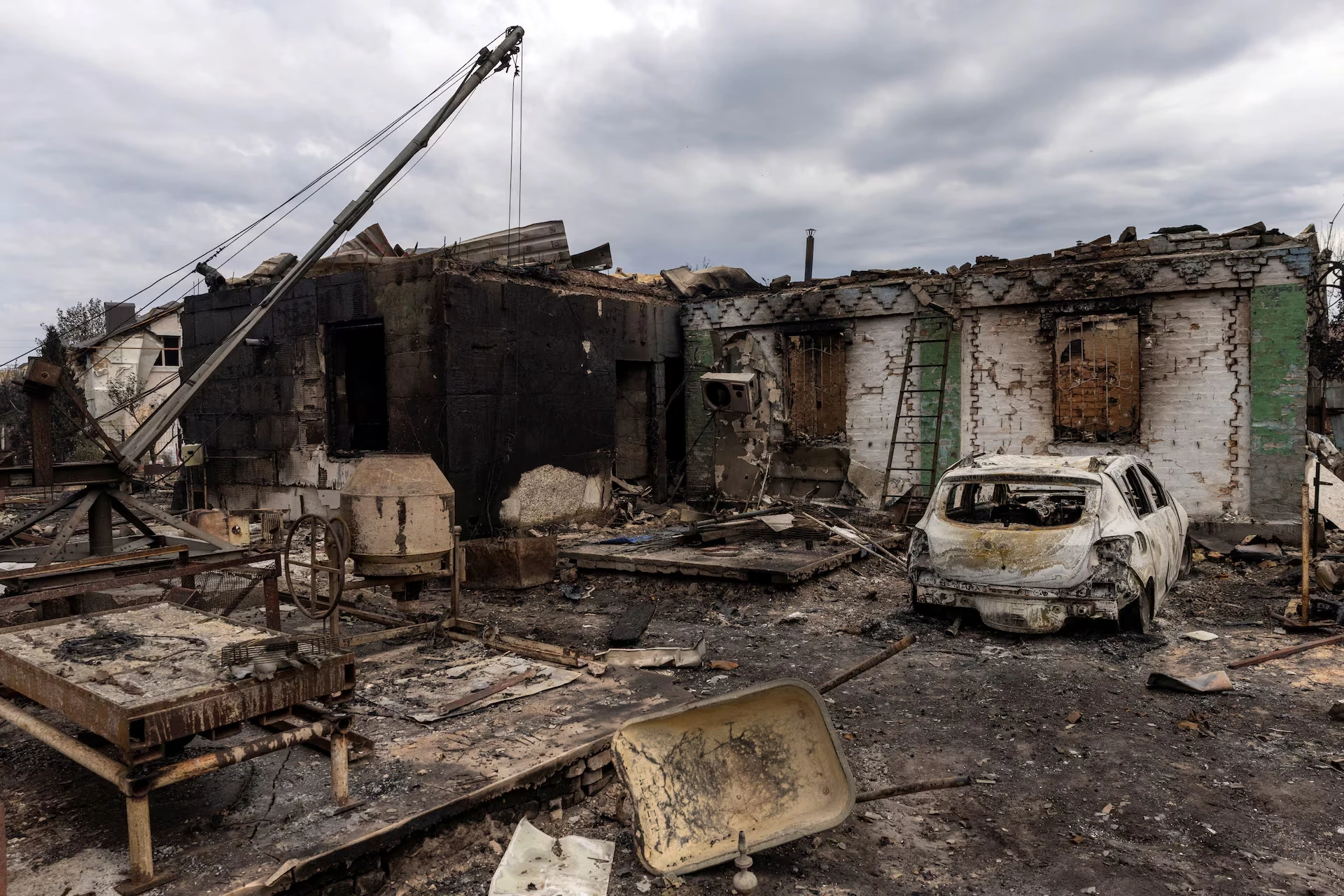




















On the night of Saturday, March 28, Tehran awoke once again not as a city, but as a theater of war. Heavy airstrikes, explosions across multiple districts, and new images of destruction showed that the escalation is no longer confined to remote areas or military bases. It is cutting directly into the fabric of urban daily life.
According to reports from Iran, residential neighborhoods and one of the capital’s technical universities were hit. That detail matters. Once a university enters the strike zone, the war in the Middle East shifts from the language of the battlefield to the language of demonstrative pressure on the city itself.
The Israeli military has openly said it is carrying out broad waves of strikes on Tehran aimed at command, production, and other military infrastructure tied to the regime. The logic presented by the Israel Defense Forces is no longer limited to destroying individual targets. It is about deepening damage to the core systems of state power.
According to Deikom’s preliminary assessment, that is the central shift in the current campaign: air power is increasingly directed not at isolated sites, but at an entire infrastructure ecosystem in which military logistics, science, industry, and residential districts are physically intertwined within a single megacity.
The strike on a university matters not only as an episode of destruction. Israel has previously stated that it targeted university and research facilities it said were linked to Iran’s military programs. That suggests the very category of “university” is no longer being treated in this war as unquestionably civilian.
At the same time, independent verification of the consequences of each strike remains difficult. Human rights groups and Western media have pointed to internet blackouts, inconsistent warnings to civilians, and restricted access to strike locations, all of which make it harder to distinguish between military objectives and damage to civilian infrastructure.
The American dimension is equally revealing. U.S. Central Command has described Operation Epic Fury as a campaign to dismantle Iran’s coercive apparatus. Yet the public arithmetic of the operation has shifted almost daily: an official fact sheet spoke of more than 9,000 targets, the Associated Press cited more than 10,000, and later U.S. media reports put the figure above 11,000.
That discrepancy is not merely technical. It is political. It suggests that Washington and Jerusalem are no longer thinking in terms of limited, precision raids, but in terms of a prolonged architecture of attrition in which the target is Iran’s wider military infrastructure, from launch systems and depots to production, command networks, and transport logistics.
The consequences of that approach are visible in figures published by the Iranian Red Crescent. Its leadership said more than 85,000 civilian sites had been damaged, including over 64,000 residential units and nearly 20,000 commercial premises. Tehran province was described as the hardest hit, with hundreds of schools and medical facilities also affected.
For the capital, that means something simple and brutal: even when the declared target is military infrastructure, the actual radius of destruction inevitably spills into residential districts. In a dense city, any strike on a nearby node turns apartment towers, roads, and service facilities into a zone of secondary devastation.
A human rights consortium cited by The Washington Post estimates that nearly 1,500 civilians have been killed in Iran. Its reporting refers to strikes on schools, hospitals, and other non-military infrastructure, and indicates that a significant share of the deadliest attacks occurred in and around Tehran.
The trend itself is especially telling. According to the same reporting, March 9 was the deadliest day for civilians, with around 400 strikes and 262 civilian deaths recorded. That matters not only as a statistic, but as evidence that the escalation is cumulative rather than episodic.
Against that backdrop, the everyday lives of Iranians are collapsing almost as quickly as building facades. The Associated Press has described a country marked by lost incomes, shuttered private businesses, fear of new explosions, and a pervasive sense of uncertainty. For many residents of Tehran, war is now measured less by front-line briefings than by the silence after the sirens.
The economic dimension of this war is also becoming more visible. Alongside the strikes on Tehran, major steel complexes have been hit in recent days. Israel has justified such attacks by arguing that parts of Iran’s industrial base serve dual civilian and military purposes or are linked to the state apparatus.
It is precisely the doctrine of dual use that expands the battlefield most dramatically. Once steel production, laboratories, university buildings, or industrial workshops are described as links in a military chain, the boundary between a legitimate target and civilian infrastructure stops being legally clear and becomes politically fluid, which is especially dangerous in a large city.
Yet a strategy of destroying systems is not the same as a strategy of rapid victory. Data cited by The Guardian suggests that the regime in Tehran is not showing clear signs of collapse. Over the past month of war, there have been hundreds of organized pro-government events, widespread arrests, and no visible wave of elite defections.
In other words, airstrikes may paralyze production, transport, and administrative hubs, but they do not guarantee political breakdown. On the contrary, external pressure often strengthens nationalist mobilization and gives the authorities grounds to intensify repression, framing any dissent as collaboration with the enemy.
That is why the current strikes on Tehran are not only a question of military effectiveness. They are also a test of the limits of international law. The more often attacks occur in densely populated districts, the sharper the questions of proportionality, civilian warning, and actual rather than rhetorical protection become.
Diplomacy, meanwhile, is failing to match the pace of destruction. Reports indicate that Iran has rejected a U.S. ceasefire proposal and presented its own demands, while the fighting has already moved far beyond a bilateral confrontation and is putting pressure on maritime routes, energy flows, and regional security as a whole.
Taken together, the strikes on a university and residential districts in Tehran are not an accidental deviation. They are a logical continuation of a campaign in which military infrastructure is being sought inside the tissue of the modern city. That is the central symptom of the current escalation: the front is no longer approaching the capital. It has moved in.