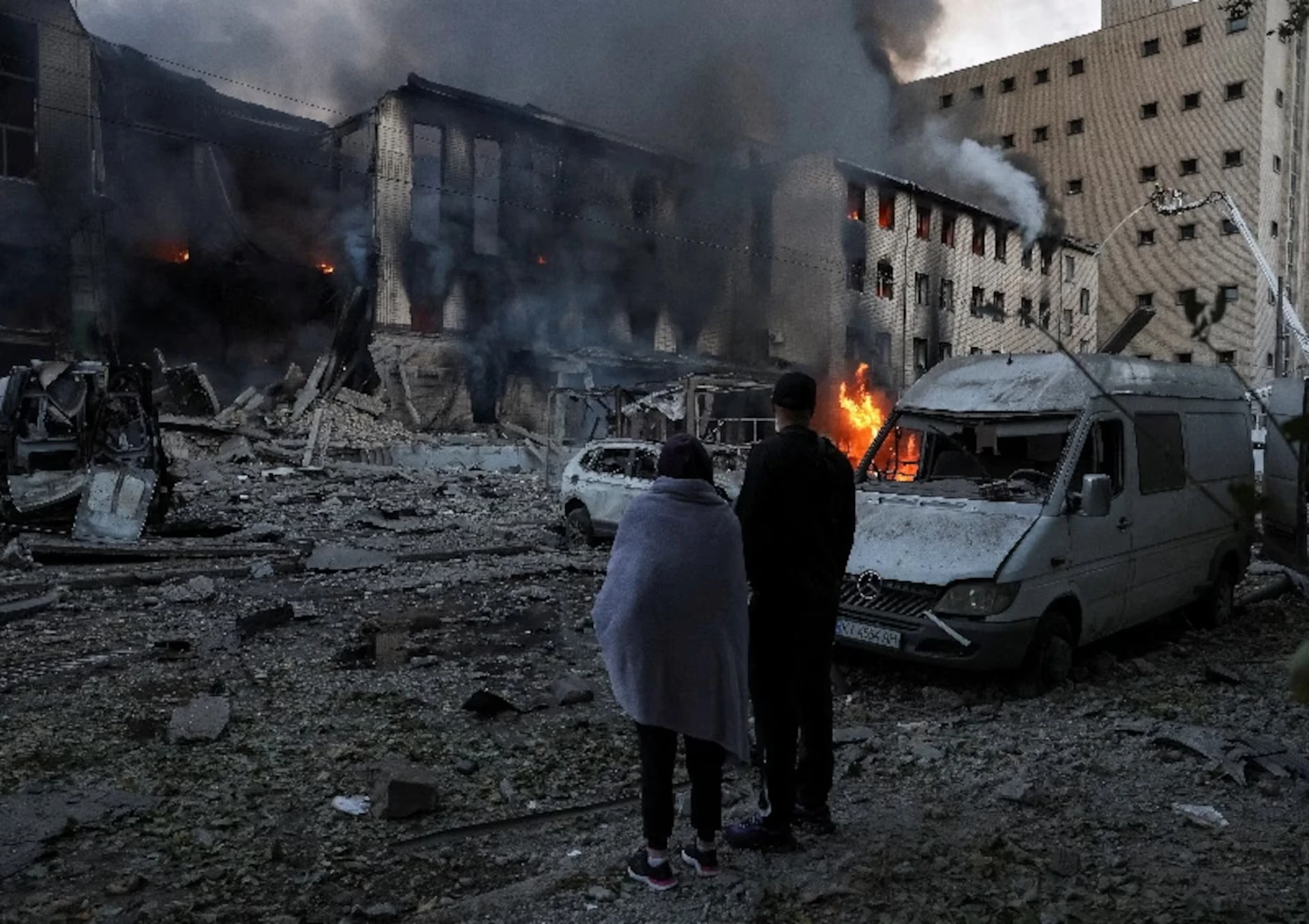
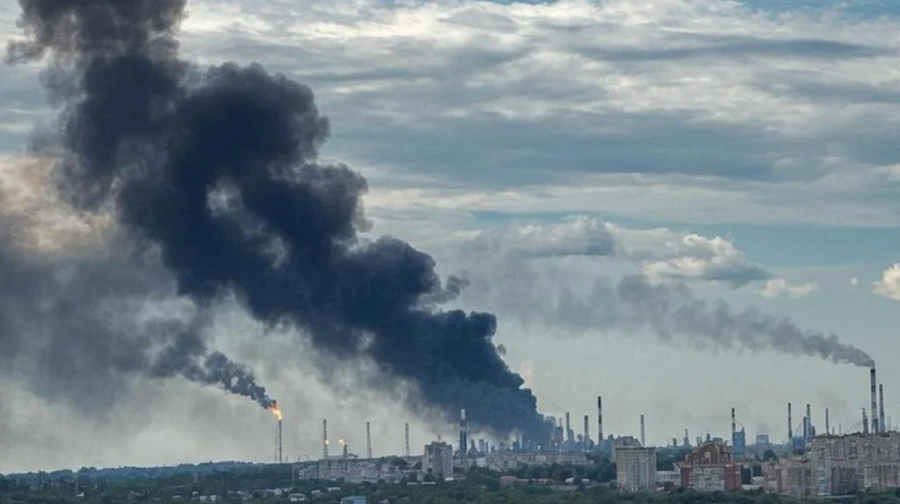







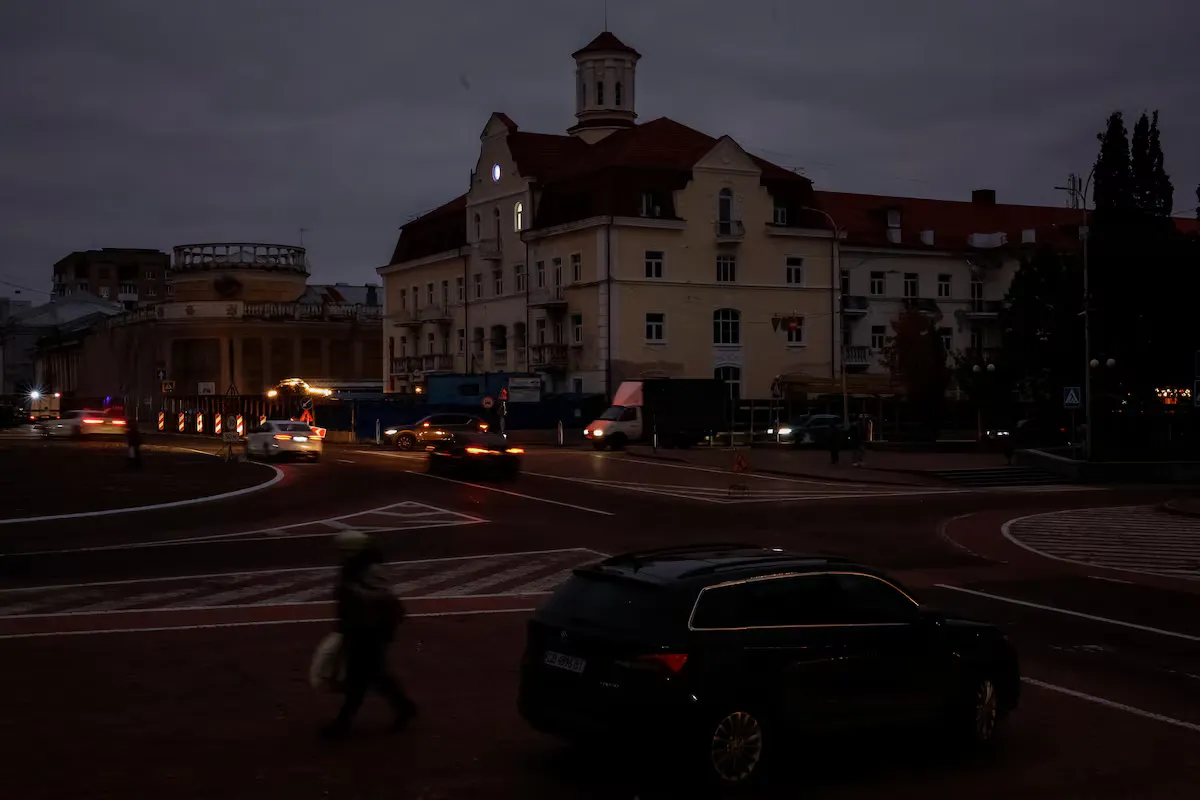













The night of July 27 bound distant cities into a single geography of air war. Explosions struck Rostov-on-Don and Belgorod, while Russian attacks hit Zaporizhzhia and the Sumy region. Hundreds of kilometres separated them, but the logic of danger was increasingly the same.
In Rostov-on-Don, initial reports said a married couple had been killed and five people wounded. As rescue crews cleared the rubble, the bodies of two more adults and a child were found, raising the death toll to five. Homes, warehouses and a shelter for homeless people were damaged.
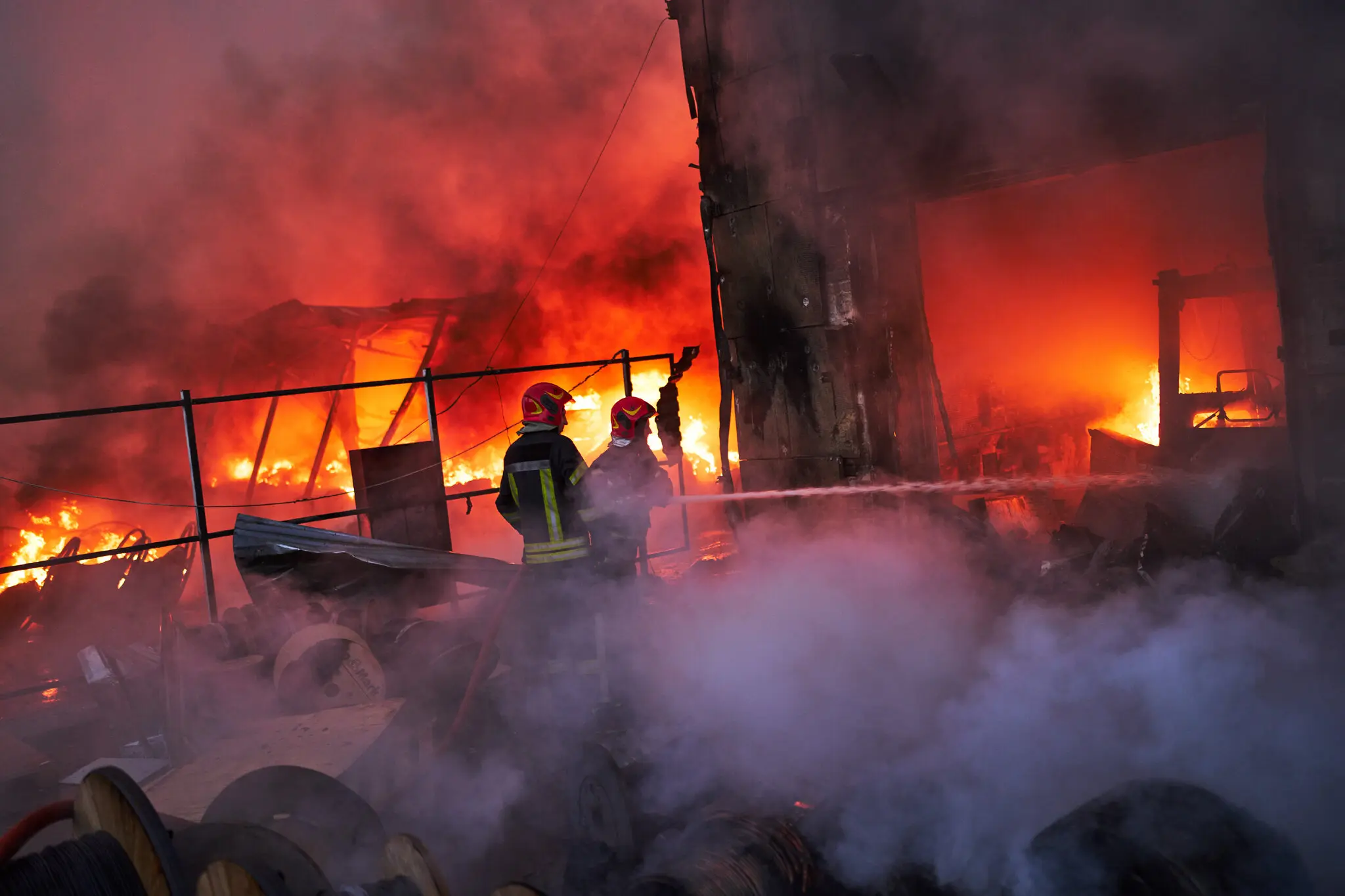
In Belgorod, the number of people wounded in a large-scale drone attack rose to thirteen. Two children, aged two and eleven, were among the injured, with the older boy reported in serious condition. Fires broke out in apartments and parked cars, while private homes and apartment buildings sustained damage.
As Daycom has previously noted, nights like this can no longer be treated as isolated exchanges of fire. They reflect a mature structure of warfare in which border cities, transport hubs and industrial centres are steadily losing any claim to being part of a secure rear.
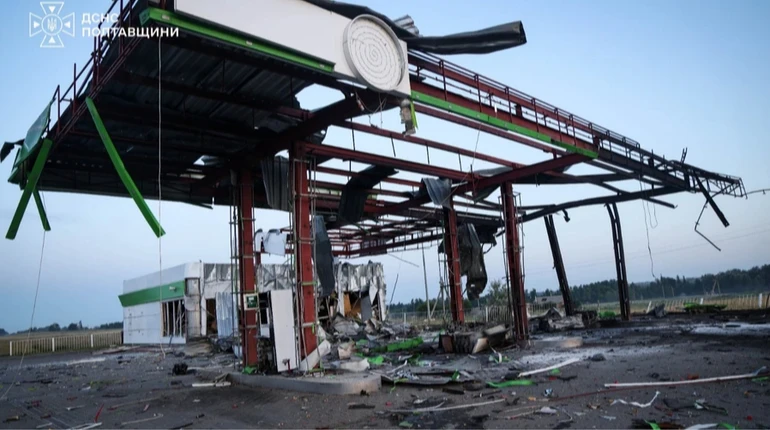
In Zaporizhzhia, a Russian guided aerial bomb destroyed a private house and killed a 67-year-old man. A separate drone strike hit an apartment in a residential building, wounding a man and a woman.
The attack combined two weapons that increasingly define the conflict: heavy guided bombs carrying large warheads and relatively inexpensive drones capable of keeping entire cities under alert for hours.
In the Sumy region, Russian forces used at least seven guided aerial bombs. Five civilians were wounded, and homes, infrastructure facilities and vehicles were damaged. The region’s proximity to the border leaves residents with little time between an air-raid warning and impact.
At first glance, the events in Russia and Ukraine may appear to form a mirror image of escalation. Yet the strategic position of the two countries remains fundamentally different. Russia is continuing a full-scale war on Ukrainian territory, using aircraft, missiles and drones against cities both near the front and deep in the rear.
Ukraine, by contrast, has expanded the range of its attacks inside the country that launched the invasion. These operations are designed to disrupt military logistics, industrial facilities, warehouses, airfields and fuel infrastructure, forcing Moscow to spread its air-defence systems across a much wider area.
Airborne weapons, however, do not respect administrative boundaries. Even when the intended target is military or industrial, interception, technical failure or a deviation from course can shift the destruction into a residential district. Falling debris has become a separate cause of fires, injuries and deaths.
That danger is especially visible in Rostov-on-Don. The city is one of southern Russia’s most important transport and port hubs, connected to military logistics and cargo routes near the Sea of Azov. Its dense urban development also means that any strike inside the city carries an immediate risk to civilians.
Belgorod faces a different but equally acute vulnerability. Its proximity to the Ukrainian border leaves air-defence units and emergency services with little time to react. For residents, the war is no longer a distant event but a routine of sirens, road closures, evacuations and damaged homes.
For Zaporizhzhia and the Sumy region, the threat is more severe still. Russian aircraft can launch guided bombs without entering the range of much of Ukraine’s air-defence network. The explosive force of these weapons is sufficient to destroy a house or an entire section of an apartment block even without a direct hit.
The difference between a drone and a guided bomb is therefore more than technical. A drone can remain airborne for hours, change direction and prolong uncertainty. A guided bomb leaves far less time to react and carries a warhead capable of devastating several buildings at once.
Cities are gradually reorganising daily life around this reality. Warning systems operate almost continuously, shelters are becoming part of basic urban infrastructure, and municipal crews must prepare for repairs before an attack has even ended.
Air defence also creates a difficult paradox. Interceptions save neighbourhoods from direct strikes, but fragments of destroyed targets still fall on roofs, warehouses, vehicles and roads. In a densely populated city, even a successful interception does not guarantee that there will be no casualties.
The first casualty figures after such attacks are almost always incomplete. Death tolls can rise as rescuers move through the rubble, while some of the wounded seek medical help only hours later. That is what happened in Rostov-on-Don and Belgorod, where early reports quickly became outdated.
This instability of information has a political dimension. Moscow uses civilian deaths in Russian cities to strengthen its narrative of Ukrainian attacks, while placing the original cause of the widening war outside the frame: Russia’s invasion and its sustained campaign against Ukrainian territory.
For Kyiv, strikes deep inside Russia are a way to transfer part of the war’s burden back onto the aggressor. Their value lies not only in demonstrating the range of Ukrainian drones, but in forcing Russia to protect airfields, factories, storage sites and energy facilities far from the front.
Yet the cost of error rises with the intensity of these operations. Civilian deaths in Russia create not only a moral problem for Ukraine but a diplomatic one, particularly when the circumstances of an individual strike cannot be independently established with speed or certainty.
Russian attacks on Zaporizhzhia and the Sumy region, meanwhile, show that the pressure on Ukrainian cities remains systematic. Its purpose extends beyond the destruction of individual targets. Repeated alerts, interrupted sleep, damaged homes and constant uncertainty gradually wear down the population.
The air war is becoming less a sequence of separate operations than a continuous contest of technology, industrial capacity, air defence and urban resilience. Drones reduce the strategic importance of distance, while guided bombs turn proximity to the front into a permanent condition of danger.
The front line, as a result, no longer exists only on military maps. It runs through airports, warehouses, apartment blocks, energy grids and transport junctions. Cities far from ground combat increasingly experience the war through sirens, shattered windows and burning roofs.
The night of July 27 revealed this new geography with particular clarity. Rostov-on-Don, Belgorod, Zaporizhzhia and the Sumy region became part of one chain of attacks, even though each strike followed its own military, technological and political logic.
The central consequence is not merely the growing number of dead and wounded. The war is erasing the very idea of a safe rear. The longer the escalation continues, the wider the territory in which an ordinary night can end with fire, a collapsed home and another list of civilian casualties.