















The European Union’s Cyprus summit looked like a political pause after a long period of exhaustion. Palm trees, yachts, Mediterranean sun and a red carpet in Ayia Napa created a scene far removed from Brussels grayness. Yet behind the visual ease stood a harder question: what does the EU do with its freedom after its main obstructionist has left the room?
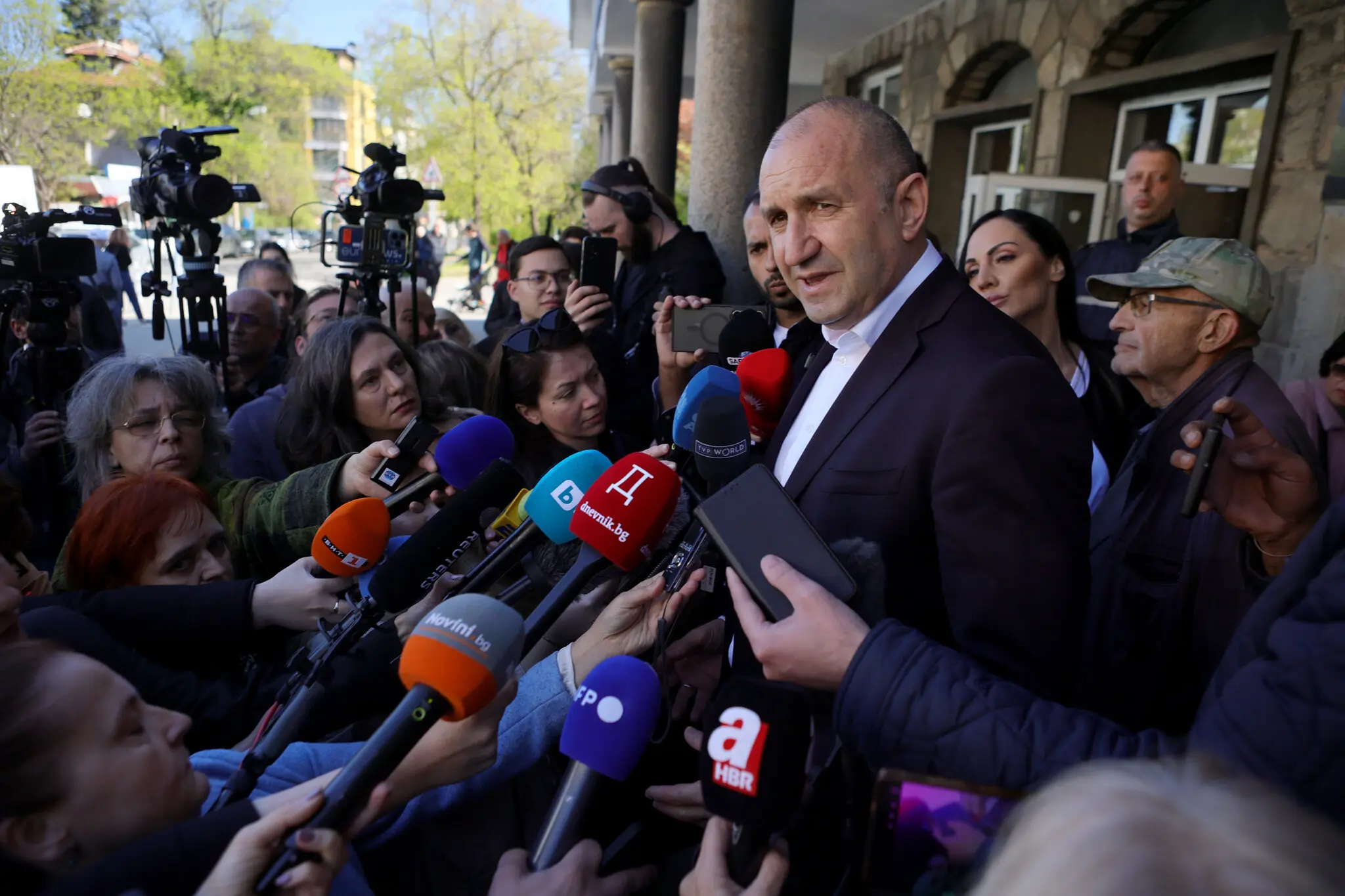
Viktor Orbán did not attend the summit after his electoral defeat in Hungary. His absence was not merely a protocol detail; it changed the political temperature. For years, Budapest had delayed sanctions against Russia, aid for Ukraine, enlargement decisions and budget compromises. Now the room felt easier to breathe in, but harder to hide inside.
That feeling broke through in Donald Tusk’s remark that, for the first time in years, there were no Russians in the room. As Robert Fico walked past, the Polish prime minister winked at reporters. The joke was sharp, almost undiplomatic, but precisely for that reason it captured the moment: the pro-Russian camp inside the EU has not vanished, but it no longer looks capable of holding the entire union hostage.
According to Daycom’s analysis, the main result of the Cyprus summit was not any single statement, but a shift in psychology. For the first time in a long while, the EU found itself with a real political opening. Yet that opening will close quickly unless the new majority turns relief after Orbán into concrete decisions on Ukraine, defense and the budget.
Ukraine remained central, but not simple. Even without a Hungarian veto, the EU is not united on rapid Ukrainian accession. Kyiv argues that it is defending shared European values and deserves full membership, while some capitals see entry by early 2027 as unrealistic. Formal support for Ukraine does not erase fears about the institutional cost of enlargement.
At the same time, Europe is trying to show that strategic support for Kyiv is not weakening. The approval of a major loan package for Ukraine and a new round of sanctions against Russia became the first practical test of the post-Orbán atmosphere. Decisions on Moscow can now move faster than they did under constant Hungarian obstruction.
But the summit also exposed the limits of that freedom. Orbán’s absence does not automatically create unity on enlargement, finance or war. European leaders may agree in condemning Russia, yet still differ on the details: who pays, how quickly Ukraine moves toward membership, what security guarantees the EU can offer and how much of its own budget it is willing to redesign for the new reality.
That made the discussion on mutual defense one of the summit’s most important themes. Article 42.7 of the EU treaty obliges member states to assist a country facing armed aggression, but it still lacks a clear practical manual: who acts, how quickly, with what forces and in what relationship to NATO. Cyprus argued that such an emergency blueprint can no longer remain a theoretical clause.
Ursula von der Leyen stated the problem clearly: the treaty explains what member states must do, but not what happens after a political request for help is made. For an EU that has relied for decades on NATO and the American security umbrella, this is an uncomfortable truth. The union wants to speak the language of geopolitics, but its defense mechanisms often still look like legal promises without operational architecture.
Cyprus was a symbolic place for that conversation. The island is not a NATO member, sits close to the Middle East and still lives with the consequences of Turkey’s 1974 invasion. For Nicosia, security vulnerability is not an abstraction, but part of the daily landscape. A summit in a country where geopolitics is visible almost from the window forced the EU to speak about defense in less theoretical terms.
The Middle East formed the second major block. European leaders held rare talks with representatives from Egypt, Lebanon, Syria, Jordan and the Gulf states, searching for a role in a region where the war in Iran, the crisis in Gaza, tensions in the Red Sea and instability in Lebanon are already affecting Europe’s trade, energy and security.
This was also a summit of small scenes that sometimes reveal politics more clearly than communiqués. Farmers in Cyprus, as in Brussels, blocked roads and protested strict veterinary measures. A conversation with European Parliament President Roberta Metsola lasted only about 15 minutes before leaders moved on to the budget. The symbolism was plain: in the EU, institutional courtesy often yields to time, money and crisis management.
The budget debate was equally revealing. Giorgia Meloni objected to expensive plans to renovate the Justus Lipsius building in Brussels, warning that spending hundreds of millions of euros on a headquarters at a time of economic pressure would send citizens the wrong message. Her point went beyond thrift. European governments know that any discussion of new spending now passes through public distrust.
Symbols followed the summit into Ayia Napa as well. The luxury marina, yachts, glass event center and empty apartments recalled Cyprus’s “golden passport” program, long a painful issue for the EU. Even when leaders speak of strategic autonomy and the rule of law, Europe’s past compromises with money, status and opaque investment leave a long shadow.
In the same category was Emmanuel Macron’s almost accidental remark to schoolchildren in Nicosia. Asked why he wanted to become president, he said politics had not been a career plan and that he would not do politics after his mandate. In France, that sounded like a hint of departure, though Macron declined to clarify it. Even a child’s question at a European summit can suddenly open the subject of the next political era.
The Cyprus summit was also an exercise in memory. A menu honoring the late chef Andreas Mavromatis gave the event a human dimension often missing from European meetings. António Costa’s failed attempt to pronounce Ayia Napa only underlined that grand politics consists not only of sanctions and treaties, but also of small awkward moments through which the living texture of the union appears.
Behind those details, however, stood a more serious conclusion. The EU after Orbán has not automatically become strong. It has become less blocked. Those are different things. Strength begins where new freedom turns into discipline: faster decisions on Ukraine, a practical mutual defense mechanism, an honest budget, real presence in the Middle East and less tolerance for internal political blackmail.
Cyprus gave Europe a beautiful stage and an unusually warm atmosphere. But the summit left behind a cold question: can the EU use the moment now that its main obstructionist has left the room? If the answer is yes, Nicosia may be remembered as the start of a new phase. If not, it will be only a brief sunny pause before the return of Europe’s old hesitation.