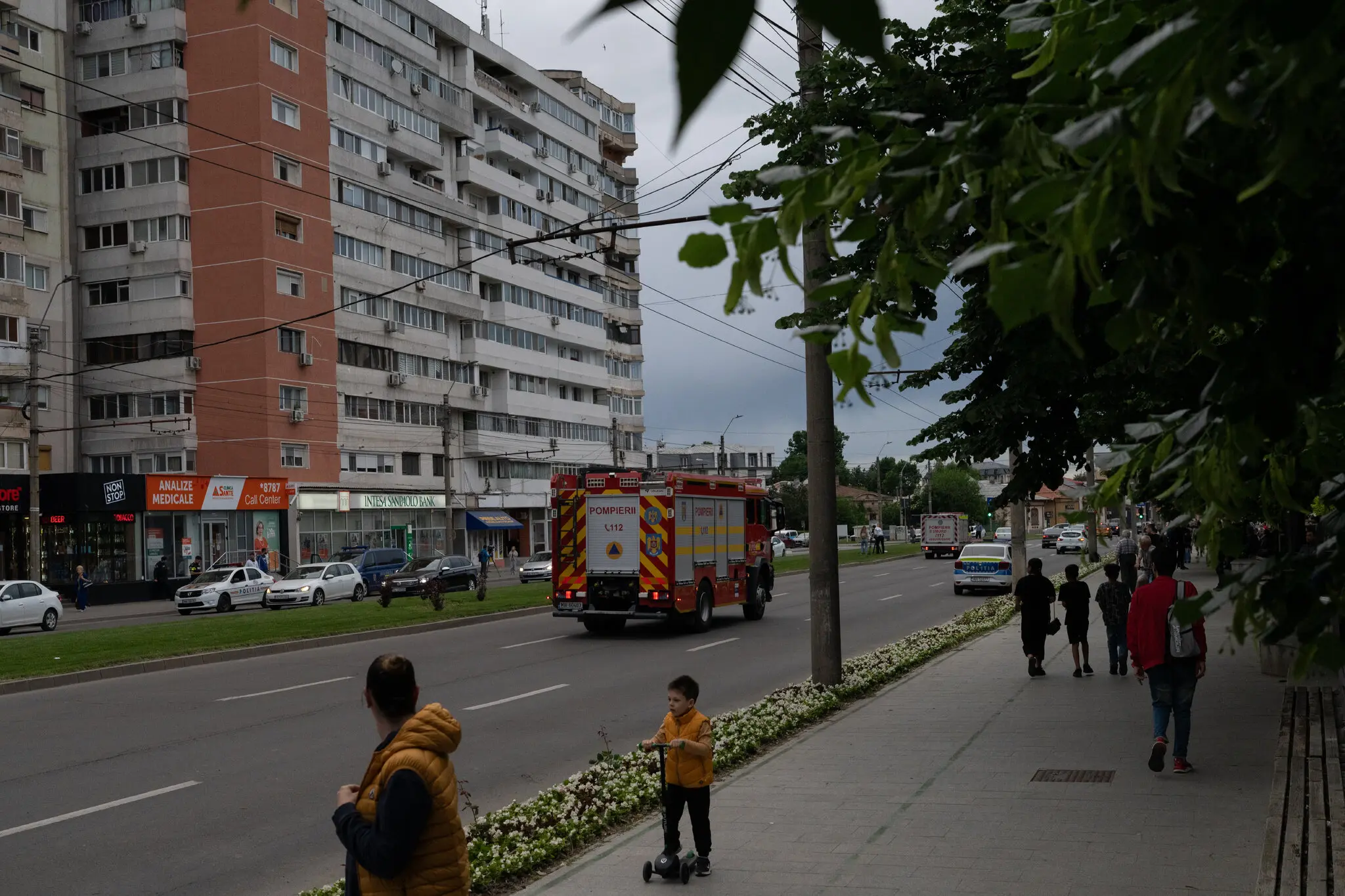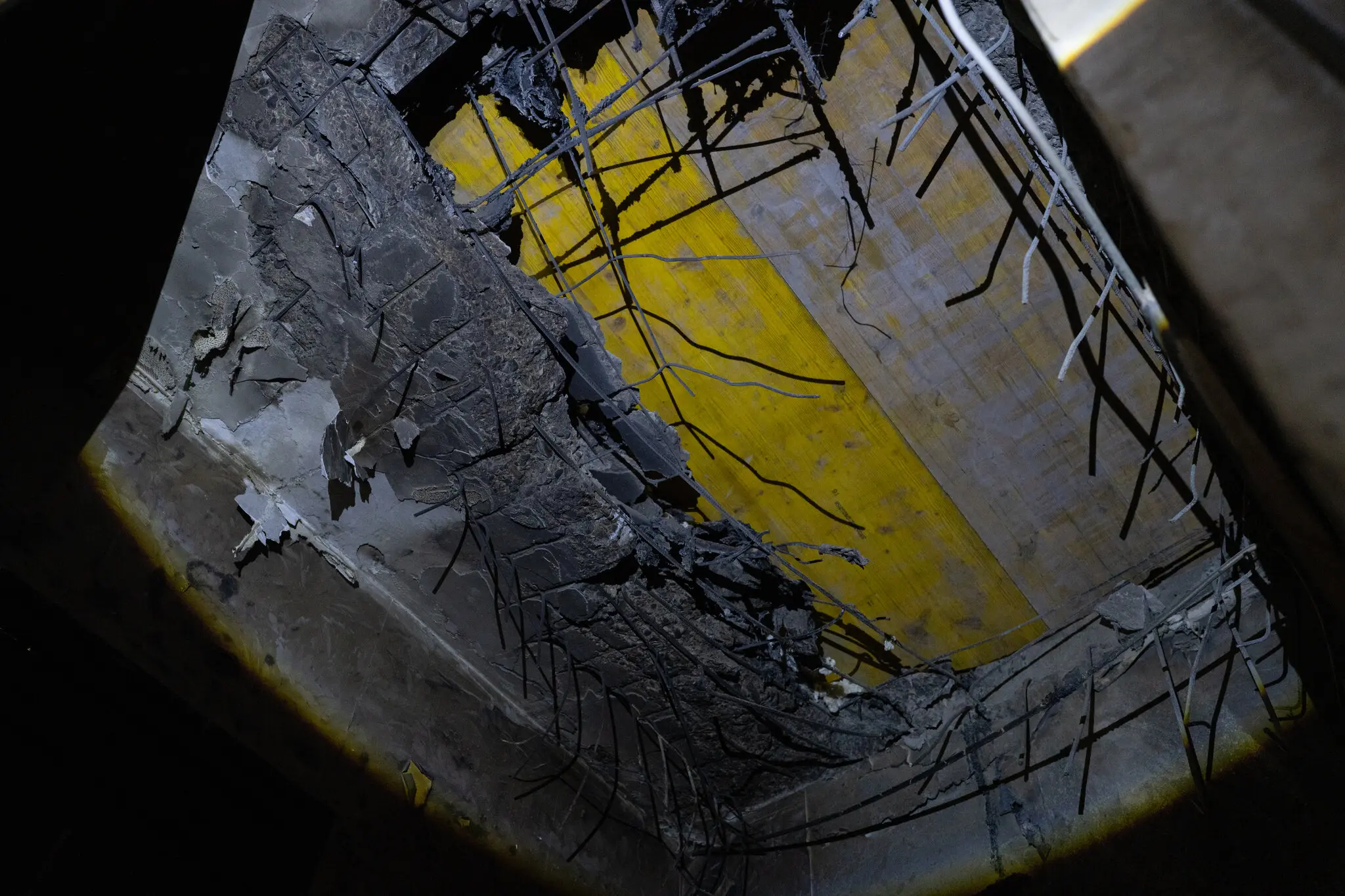


























The Russian drone that hit an apartment building in the Romanian city of Galați and wounded two people was not entirely unexpected. It was the first such incident to injure civilians on Romanian territory, but it was far from the first warning.
For more than four years since Russia’s full-scale invasion of Ukraine, residents of eastern Romania have lived next to someone else’s war. Russian drones attacking Ukraine have repeatedly crossed the border, fallen as debris, triggered alerts and tested the nerves of border communities.
Friday’s strike was the 28th officially recorded violation of Romania’s airspace since the start of the invasion. Debris from Russian drones has fallen on Romanian territory dozens of times, including near residential areas.
According to Daycom’s earlier analysis, the question is no longer whether such an attack could happen. The question is why NATO states lived for so long with a risk that gradually became normalized. When warnings are repeated too often, societies begin to confuse familiarity with safety.
Galați showed the price of that habit. The drone did not merely violate the Alliance’s border; it struck an urban space where people were not participants in the war. That changed the quality of the incident: what had previously been treated as fragments of a neighboring conflict became a direct injury inside a NATO country.
Romania’s defense ministry described such incursions as a new challenge to regional stability in the Black Sea area. The language was restrained, but the meaning was stark: Russia’s war against Ukraine is increasingly testing not only Ukrainian air defenses, but also the limits of allied patience.
The drone that struck the building was a Geran-2, Russia’s version of the Iranian Shahed-136. It is cheaper than a missile but dangerous enough to be used at scale for exhausting Ukrainian air defenses and terrorizing cities.
These aircraft have changed modern warfare. They do not require complex aviation infrastructure, can fly long distances, attack in waves and create political effects far greater than their price. A single drone can force a state to scramble fighter jets, close areas and explain to citizens why it was not shot down earlier.
In Romania, two F-16s were scrambled to intercept the drone, but did not fire because of the risk to civilians. This is the key dilemma on NATO’s eastern flank: shooting down an unmanned aircraft over a city or border area is not always safer than allowing it to fall. Each decision is made in seconds, but its consequences can be strategic.
That complexity is precisely what makes drones so dangerous for the Alliance. They create situations in which military, legal and political meanings do not fully align. The aircraft may be Russian, the intended target Ukrainian, the trajectory accidental or deliberate, and the consequences already NATO’s.
Romania may now seek consultations under Article 4 of the North Atlantic Treaty. That is not a military response and does not automatically mean the use of force, but it is a political signal: an ally believes its security is under threat and requires joint discussion.
For NATO, this is a familiar problem, but an increasingly urgent one. After Russian drones entered Polish airspace, the Alliance created a mission to strengthen defense across its territory from Finland to Turkey. Yet the number of incidents shows that existing mechanisms are not enough.
The idea of a “drone wall” along Europe’s eastern flank emerged from this experience. It is not a symbolic line on a map, but a network of radars, sensors, mobile teams, electronic warfare systems, interceptors and rapid-response protocols.
The problem is that drone technology is evolving faster than defense procurement bureaucracy. Russia adjusts routes, launches mixed waves, combines drones with missiles and tests where allies hesitate between civilian safety and the firmness of response.
Border communities pay for this uncertainty psychologically. In Romanian towns and villages along the Danube, people have grown used to danger alerts. Some residents no longer always head to shelters because previous alarms often ended without consequences. Galați broke that everyday logic.
This is how the most dangerous form of fatigue appears: people do not stop being afraid, but they stop reacting. For the state, that is no smaller problem than a shortage of air-defense systems. Civil defense works only when people trust warnings and understand that the threat is not abstract.
NATO now faces a new kind of deterrence challenge. The Alliance is committed to defending “every inch” of its territory, but that inch may now be not a tank breakthrough, but drone debris on the roof of an apartment building. A grand military doctrine is colliding with small, cheap and mass-produced threats.
Russia, whether deliberately or through indifference to the consequences, is turning the Black Sea region into a zone of constant risk. Its attacks on Ukrainian ports and cities near the border inevitably create danger for Romania. When weapons fly within dozens of kilometers of NATO territory, a course deviation is no longer a remote scenario.
This does not mean the war has automatically spread to the Alliance. But it does mean that its technical, human and political consequences are already living inside NATO territory. The eastern flank is no longer only the rear area of support for Ukraine. It has become a space of direct vulnerability.
For Romania, the central task now is not only to investigate the strike in Galați, but to accelerate the delivery and deployment of counter-drone systems. For NATO, it is to turn declarations of readiness into dense defense capable of detecting, classifying and destroying small targets without unnecessary danger to civilians.
The question of whether Romanian casualties were inevitable has an uncomfortable answer. The specific strike might have been prevented by better systems, faster decisions or a more precise interception. But the danger itself was inevitable once war drones were allowed to live for years along the edge of NATO airspace.
Galați was not the beginning of the problem. It was the moment when the problem could no longer be called distant. A Russian drone showed that the boundary between the war in Ukraine and NATO security does not run only across a map. It runs across apartment roofs, phone alerts and the question of whether the system can protect people before the next strike.