













The Strait of Hormuz is formally open again, but for shipping that does not yet mean freedom. After the preliminary deal between the United States and Iran, shipowners received a chance to move vessels that had been trapped in the Persian Gulf for more than three months. Yet the first day of hope quickly became another day of uncertainty.
The agreement signed by Washington and Tehran opened a 60-day window for negotiations. Iran promised to restore passage through Hormuz, while the U.S. military said it had lifted its blockade of Iranian ships. For global markets, this was supposed to be a signal that the planet’s most important energy corridor was gradually returning to work.
But the region shook again almost immediately. Talks in Switzerland were postponed, Israel struck Hezbollah after the deaths of its soldiers in Lebanon, and inside Iran there were new calls to close the strait again. Oil, which had fallen after the deal, rose once more.
For Daycom, this situation exposes the central weakness of the agreement: Hormuz can be reopened with a political signature, but trust cannot be restored instantly. Shipping depends not only on formal permission. It depends on predictability, insurance, routes, navigation and confidence that the rules will not change tomorrow.
At least five tankers moved through the strait on Friday. The day before, traffic was more active: 25 vessels, including 14 tankers. That was more than during the tensest weeks of the war, but still far below the prewar level, when about 130 vessels passed through Hormuz each day.
Those numbers show not recovery, but cautious testing of the corridor. Every voyage has become a test: whether the rules work, whether the cease-fire will hold, whether a safe route exists, whether insurers will cover the risk, and whether military forces, mines, GPS interference or new orders from Tehran will intervene.
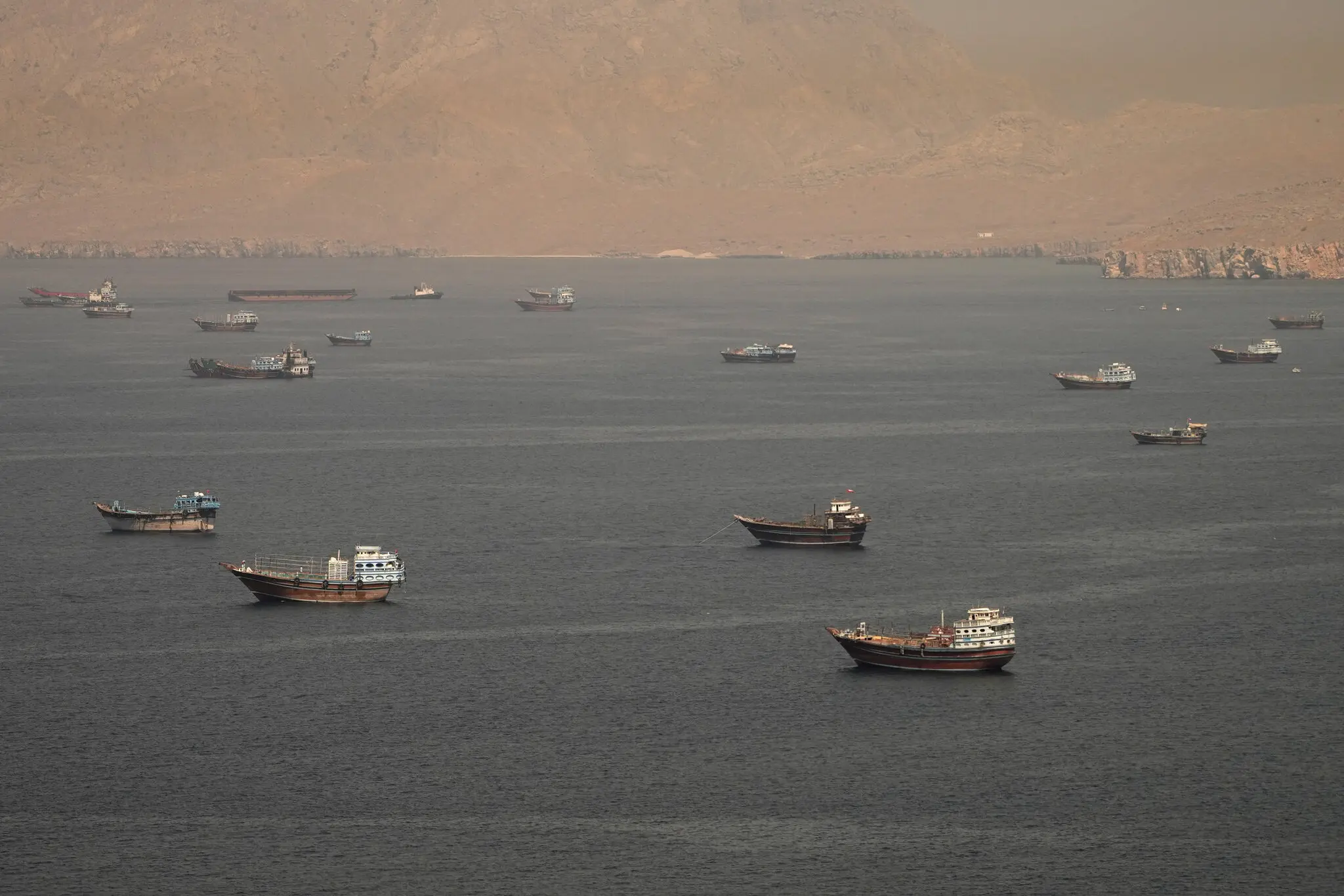
Around 500 commercial vessels and roughly 11,000 seafarers remain in the Persian Gulf. For them, the deal is not an abstract diplomatic development, but the question of escape from a trap. Crews have spent months aboard ships in a war zone, with limited movement, psychological strain and no clear answer on when the route home will become real.
Shipowners, however, are not rushing. Some companies consider conditions too unpredictable. If a vessel enters the strait and becomes caught in a new incident, the legal, financial and human consequences could be catastrophic. In maritime trade, a wrong route can cost more than weeks of waiting.
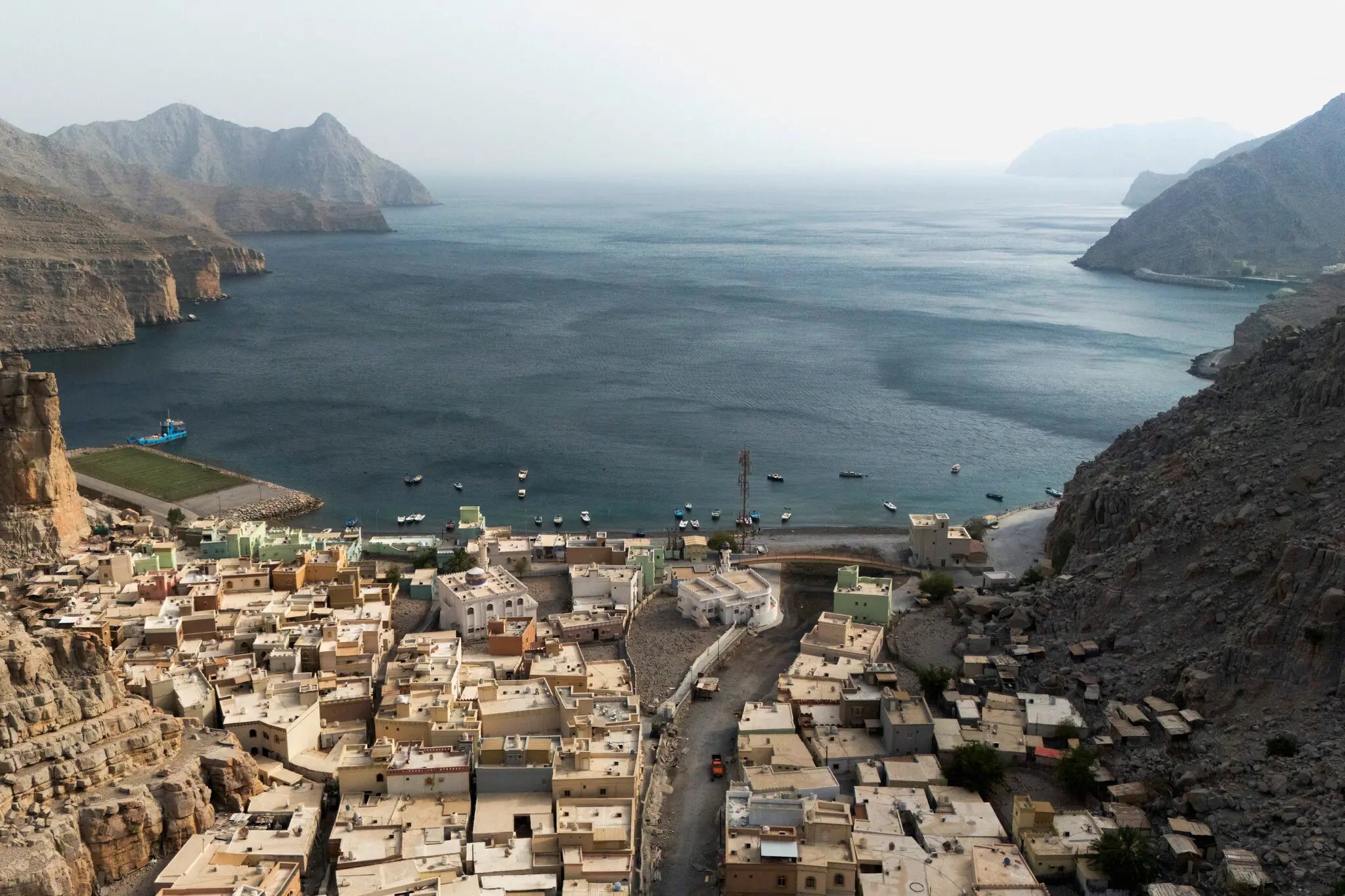
The main problem is the strait itself. Its central route is still littered with naval mines, and mine-clearing operations continue. Ships are being advised to avoid the dangerous middle section, but the alternatives are also complicated. The northern route crosses Iranian waters. The southern route runs through Omani waters under U.S. naval supervision, but carries its own navigational risks.
In such a narrow maritime corridor, every mistake multiplies. A mass exit by hundreds of vessels could create collision risks, especially if ships move without a clear queue, under pressure from cargo owners and amid disruptions to satellite navigation. Hormuz is dangerous not only because of politics. It is dangerous as a physical space.
GPS interference adds another layer of risk. In modern shipping, accurate positioning is the foundation of safety. If navigation systems return errors or signals are distorted, captains are forced to operate in conditions that resemble an older and far more dangerous era of seafaring — only now with tankers, gas carriers and warships nearby.
Iran’s newly created Persian Gulf Strait Authority has made the picture even more complicated. It has told operators that passage requires a permit and an approved insurer, and that movement must take place only along the Iranian route near Larak Island. Any deviation from that route could be considered a violation.
For Tehran, this is a way to turn Hormuz from a simple strait into a regulated lever. Iran is not merely opening passage. It is setting its own administrative framework: who may move, by which route, with what insurance and under whose control. This is no longer a full return to freedom of navigation, but a new form of managed access.
For shipowners, that creates a legal trap. If they engage with an Iranian body, apply for permits or arrange approved insurance, questions arise over sanctions, anti-terrorism rules and compliance with U.S., British and European regulations. Companies cannot risk having a single voyage through Hormuz turn into investigations and financial restrictions.
The U.S. military insists that all vessels have the right to pass through the strait without arbitrary requirements or impediments. Washington also says it will remain in the area to support freedom of navigation. But between those statements and practice lies a dangerous gray zone.
If Iran demands permits while the United States says no such requirements should exist, a captain is caught between two systems of authority. One controls the northern route and coastal infrastructure. The other has military presence and guarantees the principle of free navigation. For business, this is not a theoretical dispute. It is the risk of losing a ship.
There are also purely technical problems. Vessels that have been waiting in the Gulf for more than three months have not simply been idle. Barnacles and marine growth have accumulated on hulls, reducing speed, complicating handling and increasing fuel consumption. A long halt turns even a functioning ship into a more difficult operational object.
Insurers are not rushing to treat the situation as normal either. The risk level for the strait has been reduced to moderate, but that does not mean a safe regime has returned. Mine clearance continues, the political situation remains unstable, and the incident in Lebanon has already shown how quickly one front can affect the entire Middle Eastern balance.
Lebanon is a reminder that Hormuz does not depend only on Iran and the United States. Israel, Hezbollah, U.S.-Iranian negotiations, Tehran’s internal politics, oil markets and military forces in the Gulf are all connected. When one knot is pulled, the strait again becomes a nerve of crisis.
Calls inside Iran to close Hormuz again cannot be ignored either. Even if the official government formally supports the deal, security and radical circles may pressure it to take a harder line. That creates the main problem for shipping: who in Tehran can actually guarantee that the rules will not change?
The oil market has already partly answered. Prices that had fallen after the agreement rose again amid renewed uncertainty. Markets quickly recognize the difference between a strait that is open on paper and a corridor that is stable at sea. A tanker afraid to move carries more weight than a political statement.
The global economy has learned the lesson again: Hormuz is not only a geographic chokepoint, but a system of trust. Once that trust is broken, one document cannot restore it. Mine clearance, transparent routes, agreed rules, insurance guarantees, military de-escalation and time are all needed before the corridor can function normally again.
For seafarers, that time has a human dimension. Every additional day aboard means fatigue, fear, uncertainty and the feeling that great-power geopolitics is passing directly beneath the hull. For shipowners, it is money and responsibility. For states, it is the reputation of security. For markets, it is the price of energy.
The next few days will show whether the current movement of vessels marks the beginning of stabilization or only a short attempt to escape before the next escalation. If traffic rises, rules become clearer and military tension does not return, Hormuz will slowly recover its role. If not, hundreds of ships will remain hostages of a strait everyone has declared open, but no one has yet made safe.
The U.S.-Iran deal created a chance to leave the maritime trap. But a chance is not a route. The Strait of Hormuz today remains a place where diplomacy, mines, insurance policies, drones, tankers and warships all move through the same narrow corridor. Until that corridor becomes predictable, global trade will pass through it holding its breath.