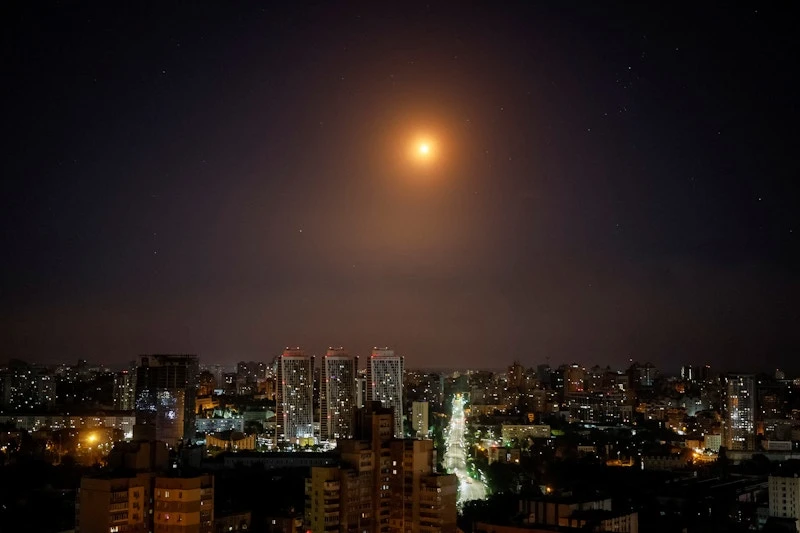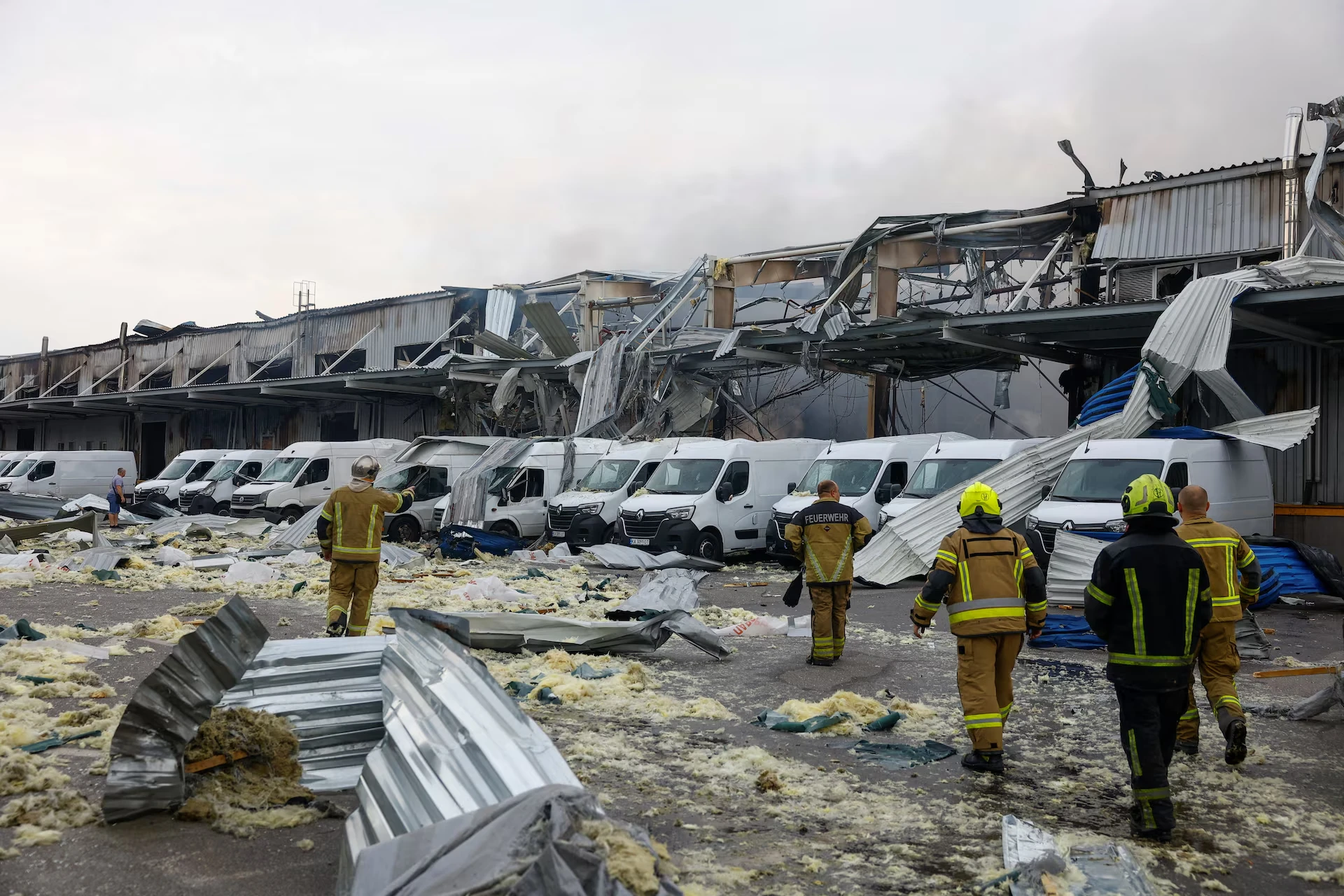







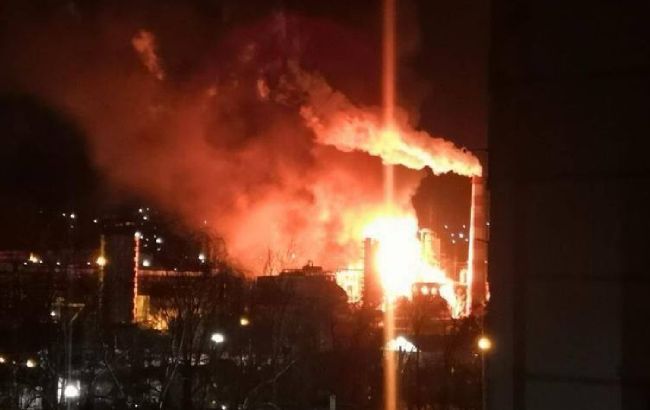
















Kyiv endured a night in which the city almost changed its physical shape. Above ground, it burned and shook from explosions; below ground, its metro stations, platforms and passageways took in tens of thousands of people who descended beneath the streets to survive a massive Russian assault.
Russia launched nearly 500 drones and more than 70 missiles at the capital and other regions. The attack lasted for hours, combining unmanned aircraft, cruise missiles and ballistic missiles. For Kyiv, it was not simply another night of air raid alerts, but one of the most destructive strikes since the start of the full-scale war.
At least 27 people were killed, dozens were wounded and around 70 were taken to hospitals. Rescue workers spent the day clearing rubble, searching for those who might still be alive beneath concrete slabs. The following day was declared a day of mourning in the capital.
According to Daycom’s analysis, this attack became the point where three lines of the war converged: Russian retaliation for strikes on fuel infrastructure, Ukraine’s need for long-range response and the critical shortage of air defense systems. All three lines ran through Kyiv’s residential neighborhoods.
On the left bank of the Dnipro River, a nine-story apartment block was torn open so violently that part of the building became an exposed wound. Apartments where people had been sleeping only hours earlier turned into piles of debris. Across the capital, fires burned, residential buildings were damaged and a hotel on one of the central boulevards was hit.
The night showed that Kyiv has learned to live with danger, but cannot grow used to its scale. More than 50,000 people took shelter in metro stations. Some brought mattresses, blankets, children’s belongings, water, phones and chargers. Platforms became temporary sleeping districts beneath the city.
This underground refuge carries its own harsh truth. When residents of the capital choose not to spend the night at home, it means the line between daily life and the front has been erased. Home stops being an unconditional place of safety. A metro station becomes a bedroom, a shelter and the collective nervous system of the city.
The military logic of the strike was no less important than the human one. Russia again used a combined pattern: masses of drones to overload the system, waves of missiles to stretch defenses, and ballistic weapons to compress reaction time. Ukrainian air defenses can intercept many targets, but every breakthrough in an attack like this can cost dozens of lives.
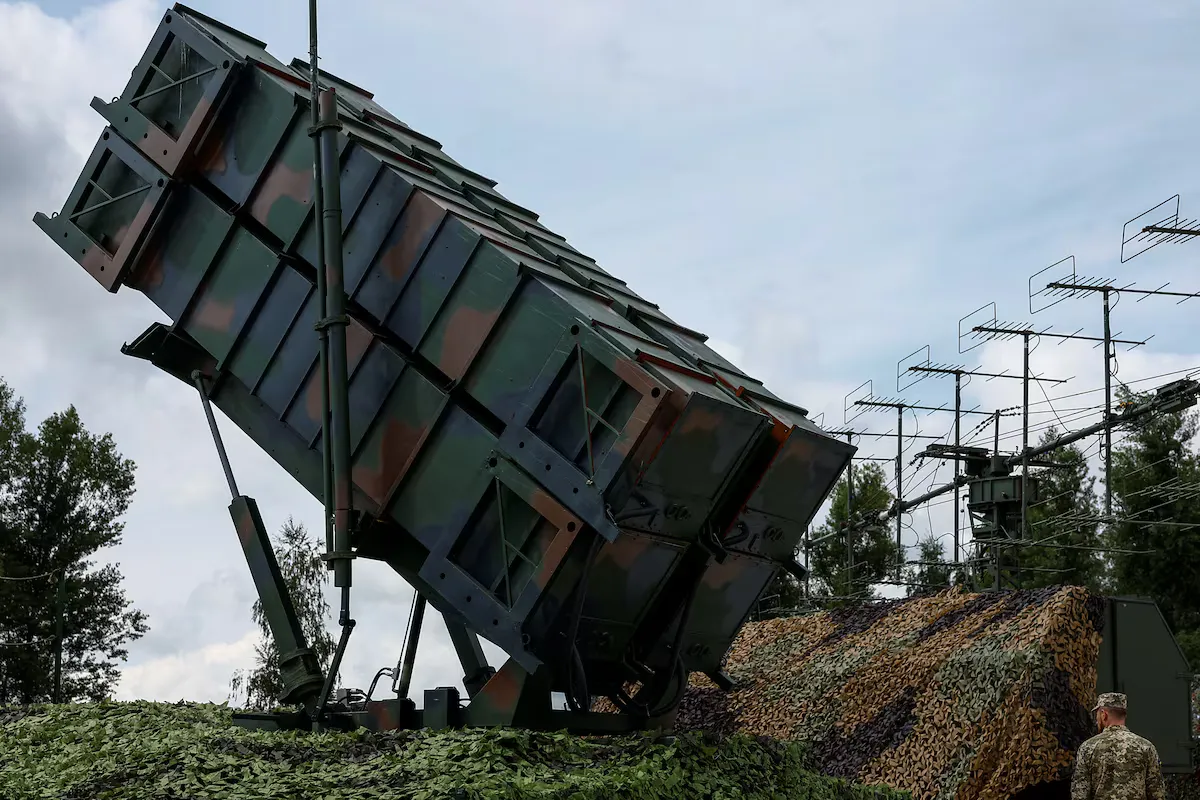
That is why Volodymyr Zelenskyy’s words about unfulfilled agreements on air defense missiles sounded not like diplomatic irritation, but like a description of the direct link between allied stockpiles and ruins in Kyiv. When interceptors arrive slowly, the city pays for that slowness with its homes.
The problem of Patriot systems and the wider air defense network has become central not because Ukraine is seeking another symbol of Western support. It has become central because ballistic missiles cannot be stopped by political statements. They require batteries, missiles, production, logistics and decisions made before the next night.
Moscow presents its attacks as a response to Ukrainian strikes on Russian targets. But that formula erases the essential difference. Ukraine strikes oil refining, logistics, military hubs and the fuel system that sustains the Russian army. Russia strikes in a way that leaves rescuers pulling people from apartment blocks.
Ukraine’s campaign against Russian oil refineries has already created a real problem for the Kremlin. Fuel disruptions are spreading across Russia, some regions have been forced to introduce restrictions, and in occupied Crimea, fuel and energy vulnerability has become part of daily crisis management.
That shift is likely making Russian strikes on Kyiv even more brutal. Ukraine has learned to hit what sustains Russia’s war machine: fuel, ports, railways, depots and Crimea as a rear hub. The Kremlin responds by trying to return fear to the center of Ukrainian life.
But fear does not work on its own. It is meant to push society toward demanding a pause, allies toward seeking compromise for the sake of quiet, and politicians toward speaking about peace as though a ceasefire matters more than the terms on which it comes. In that sense, the attack on Kyiv was also an attack on future negotiations.
The U.S.-backed peace process has lost momentum in recent months. The war in the Middle East has drawn Washington’s attention, while Moscow has shown no willingness to abandon its maximalist goals. Kyiv now enters a new diplomatic cycle with an argument that needs no translation: the ruins of a residential building.
That is why a future meeting between Zelenskyy and Donald Trump on the sidelines of the NATO summit in Ankara cannot be only a conversation about a political formula for ending the war. It will inevitably become a conversation about the sky, missiles, delivery timelines and allied responsibility for ensuring that Ukraine does not face every new Russian wave short of interceptors.
Poland scrambled fighter jets as a preventive measure, while Finland briefly restricted aviation over part of its eastern waters. These moves were a reminder that every massive attack on Ukraine has long since spilled beyond the Ukrainian map. It forces NATO’s eastern flank to live in a state of combat readiness.
After such a night, Kyiv again does what it has done many times: buries the dead, treats the wounded, replaces shattered windows with plywood, restores transport and tries to preserve the rhythm of the city. But resilience must not become a convenient screen for the slowness of partners.
Russia strikes the capital to prove that it can raise the price of the war on any night. Ukraine responds by hitting the resources that feed that war. The West now faces a decision that can no longer be postponed with the word “soon”: either Ukraine’s sky receives sufficient strength, or every new discussion about peace will begin with the clearing of rubble.