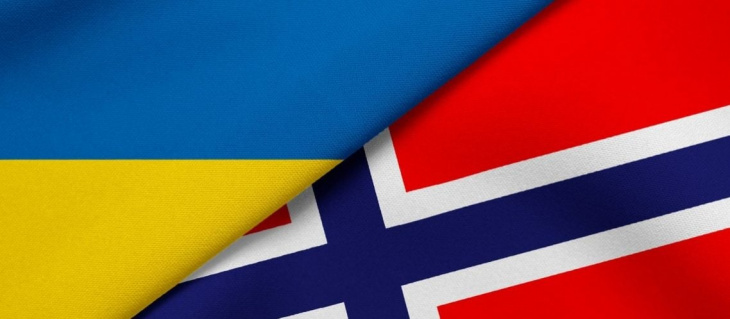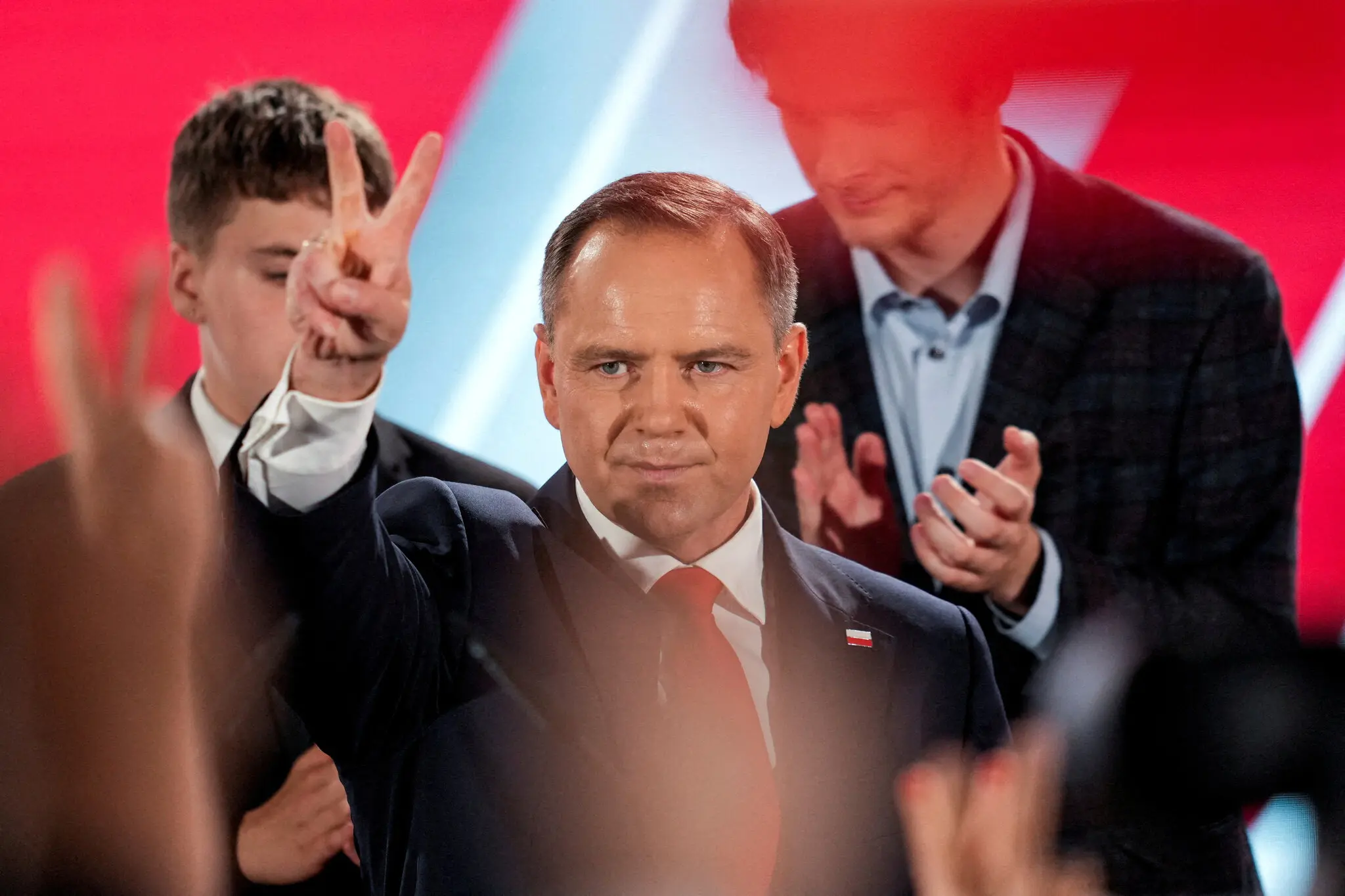




















The Polish-Ukrainian alliance is facing one of its most painful crises since the beginning of Russia’s full-scale war. Polish President Karol Nawrocki’s decision to strip Volodymyr Zelensky of the Order of the White Eagle has turned an old historical wound into an acute political conflict between two countries that remain strategically dependent on each other.
The formal trigger was Zelensky’s decree naming a unit of Ukraine’s Special Operations Forces after the Ukrainian Insurgent Army, or UPA. For part of Ukrainian society, the UPA remains a symbol of the struggle for independence against two totalitarian powers. For much of Polish society, the name is inseparable from the mass killing of Poles in Volhynia and Eastern Galicia.
That divergence of memory is where the explosive force of the dispute lies. Ukraine speaks of an anti-imperial tradition, military continuity and resistance to Moscow. Poland hears not only Ukrainian history, but the unspoken pain of its own victims. When these two languages of memory collide without diplomatic buffering, the political alliance begins to crack.
According to Daycom’s assessment, Nawrocki’s decision was not merely a gesture of historical grievance. It moved a difficult process of reconciliation into the realm of public punishment. At a moment when Russia attacks Ukraine daily with missiles and drones, the demonstrative withdrawal of Poland’s highest honor from the Ukrainian president inevitably looks like a blow to allied unity.
The Order of the White Eagle was awarded to Zelensky in 2023 for his contribution to security, resilience and the defense of human rights. At the time, the award meant more than diplomatic protocol. It symbolized a moment when Poland had become one of Ukraine’s main rear corridors, Kyiv’s political advocate in Europe and a country that had taken in millions of Ukrainians.
Now that symbol has turned against the alliance itself. Nawrocki insists that his decision does not mean a reduction in Polish support for Ukraine’s defense against Russia. But in major politics, symbols do not live apart from material reality. They shape public mood, set the tone for bureaucracy and create room for future decisions.
Ukraine’s reaction was sharp. Officials in Kyiv called the Polish president’s move an unfriendly act and a strategic mistake that benefits Moscow. Several Ukrainian officials said they would return Polish state honors. The dispute has already moved from a bilateral gesture into a chain of symbolic escalation.
That is where the main danger emerges. One mistaken political gesture cannot be repaired by another gesture that deepens the rupture. Former Prime Minister Arseniy Yatsenyuk captured the risk clearly: a wrong decision by the current Polish president cannot be corrected by wrong decisions from the Ukrainian side. In such a crisis, dignity must not become a mirror image of grievance.
Polish Prime Minister Donald Tusk tried to slow the emotional escalation by urging both sides not to inflame tensions. His line that the front runs elsewhere captured the essence of the moment. Russia wages war not only with missiles. It wages war through cracks between allies, historical wounds, domestic elections and grievances that can be turned into geopolitical weapons.
For Moscow, a conflict between Warsaw and Kyiv is almost an ideal gift. Poland has been one of the most important channels of military, humanitarian and logistical support for Ukraine. It has also been political proof that Central Europe understands the Russian threat more clearly than many older Western capitals. Weakening that bond has long been one of the Kremlin’s goals.
At the same time, Ukraine cannot pretend that Polish historical memory is merely a tool of manipulation. The Volhynia tragedy and the killing of Polish civilians remain a deep wound. In 2016, the Polish Parliament recognized crimes committed by the UPA as genocide. For Warsaw, this issue is not a secondary detail that can simply be postponed because of the war.
Polish politics, however, cannot ignore the Ukrainian context either. In Ukrainian memory, the UPA is not reducible to Poland’s trauma. It is woven into a longer history of the struggle for statehood, Soviet repression and today’s resistance to Russia. That is why any Ukrainian decision in this sphere has a double effect: it mobilizes Ukrainian symbolic resources while also reopening an old conflict with Poland.
This duality requires not loud decrees or demonstrative punishments, but precise political hearing. Historical memory does not disappear in wartime; it becomes more dangerous. When a nation is fighting for survival, its symbols gain special force. When an ally carries its own trauma connected to those symbols, carelessness can cost diplomatic trust.
Nawrocki, as a nationalist politician, is operating in an environment where anti-Ukrainian sentiment has already become part of domestic competition. Ukrainians in Poland work, pay taxes and support the economy, while increasingly facing prejudice. In that context, the decision on Zelensky can be read not only as a historical gesture, but also as a signal to Polish voters.
That makes the situation still more delicate. If the memory of Polish victims becomes an instrument of electoral mobilization, it loses moral height. If the Ukrainian state responds with a series of grievances, it weakens its own position. Both sides risk doing exactly what Moscow expects of them: turning historical trauma into a modern political weapon against alliance.
The timing is especially dangerous. The conflict erupted just before a major event in Poland focused on Ukraine’s postwar reconstruction. The very fact that Warsaw is to serve as a platform for discussing Ukraine’s future rebuilding shows the real scale of the partnership. A scandal over an award can push infrastructure, investment, security guarantees and the return of people into the background.
This does not mean history should be silenced for the sake of pragmatism. On the contrary, silence only postpones the next explosion. Poland and Ukraine had already made progress on the issue of exhuming Polish victims. A meeting between the two presidents in Warsaw had suggested that a difficult conversation could move through procedure, burial searches and mutual recognition of pain rather than ultimatums.
That path is now under threat. Historical reconciliation cannot be built on one side demanding that the other fully accept its memory. It requires a harder formula: to honor one’s own heroes without justifying crimes, to mourn one’s own victims without diminishing the victims of others, and to speak of Ukrainian independence without denying Polish tragedy.
For Zelensky, this crisis is also a lesson. A wartime president works with symbols meant to mobilize Ukrainian society. But each such symbol exists not only inside Ukraine. It enters the memory of neighbors, partners, diasporas and political opponents. In Europe’s war for survival, even the name of a military unit can become a diplomatic front.
For Nawrocki, the lesson is different. A Polish president has the right to defend the memory of Polish victims, but the method matters. Withdrawing an honor from the leader of a country fighting Russia creates an image Moscow will use without hesitation. Historical justice must not become an instrument of strategic self-harm.
Ukraine and Poland cannot afford the luxury of a long quarrel. They are bound not by romance, but by security. Poland needs Ukraine as a shield between itself and Russia’s military machine. Ukraine needs Poland as a rear base, transit hub, political partner and part of Europe’s defense architecture.
The way out of the crisis should therefore not lie in trading awards, but in returning to joint work. Calm channels between the presidents are needed, along with a historical commission with a real mandate, continued exhumations, and a clear distinction between honoring a struggle for independence and justifying crimes against civilians. Without this, every future anniversary or symbolic name may explode again.
The current conflict has shown how fragile solidarity can be when it is not supported by an honest conversation about the past. Ukraine and Poland may have different historical memories, but they cannot allow those memories to work for the Kremlin. In a war where Moscow seeks any crack between Kyiv’s allies, the hardest task is to remember pain without allowing it to become a weapon against the future.