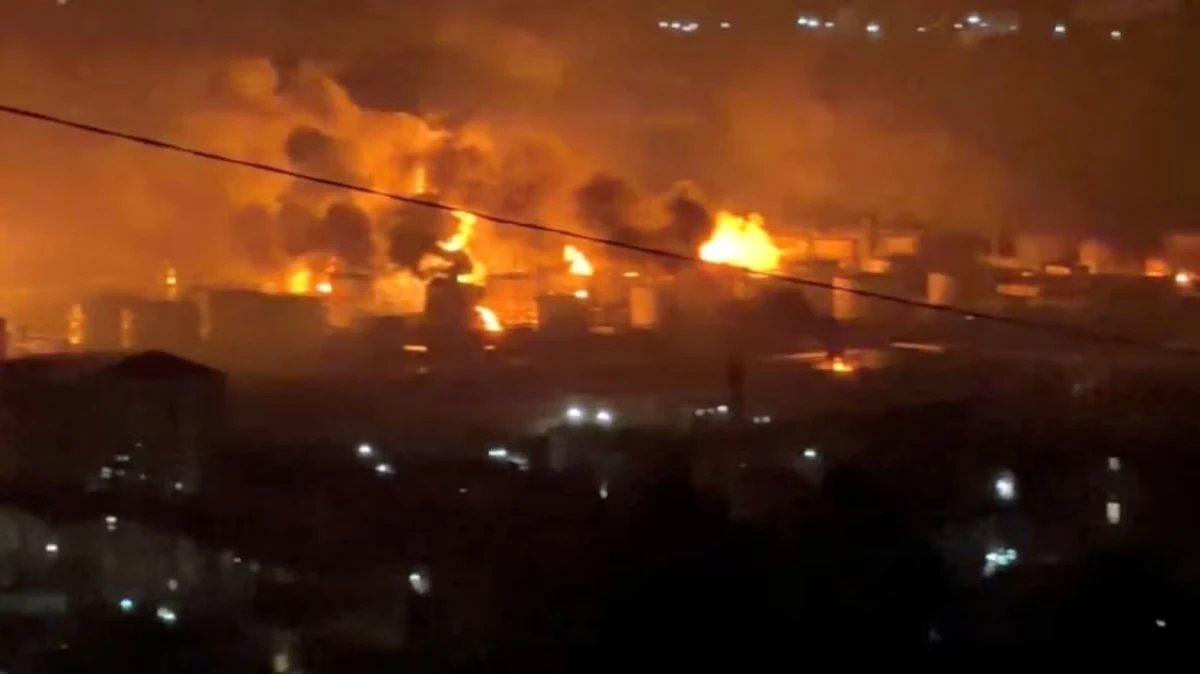


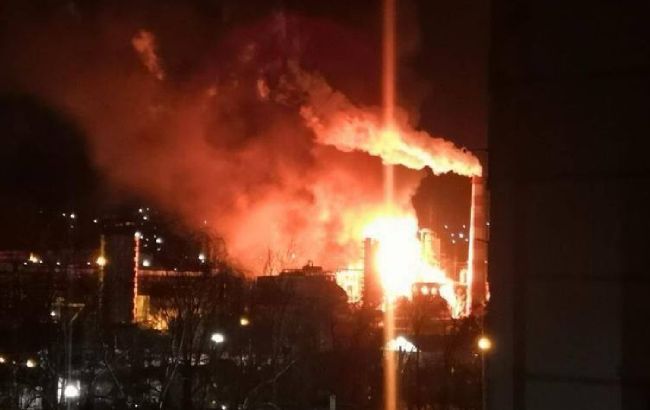

















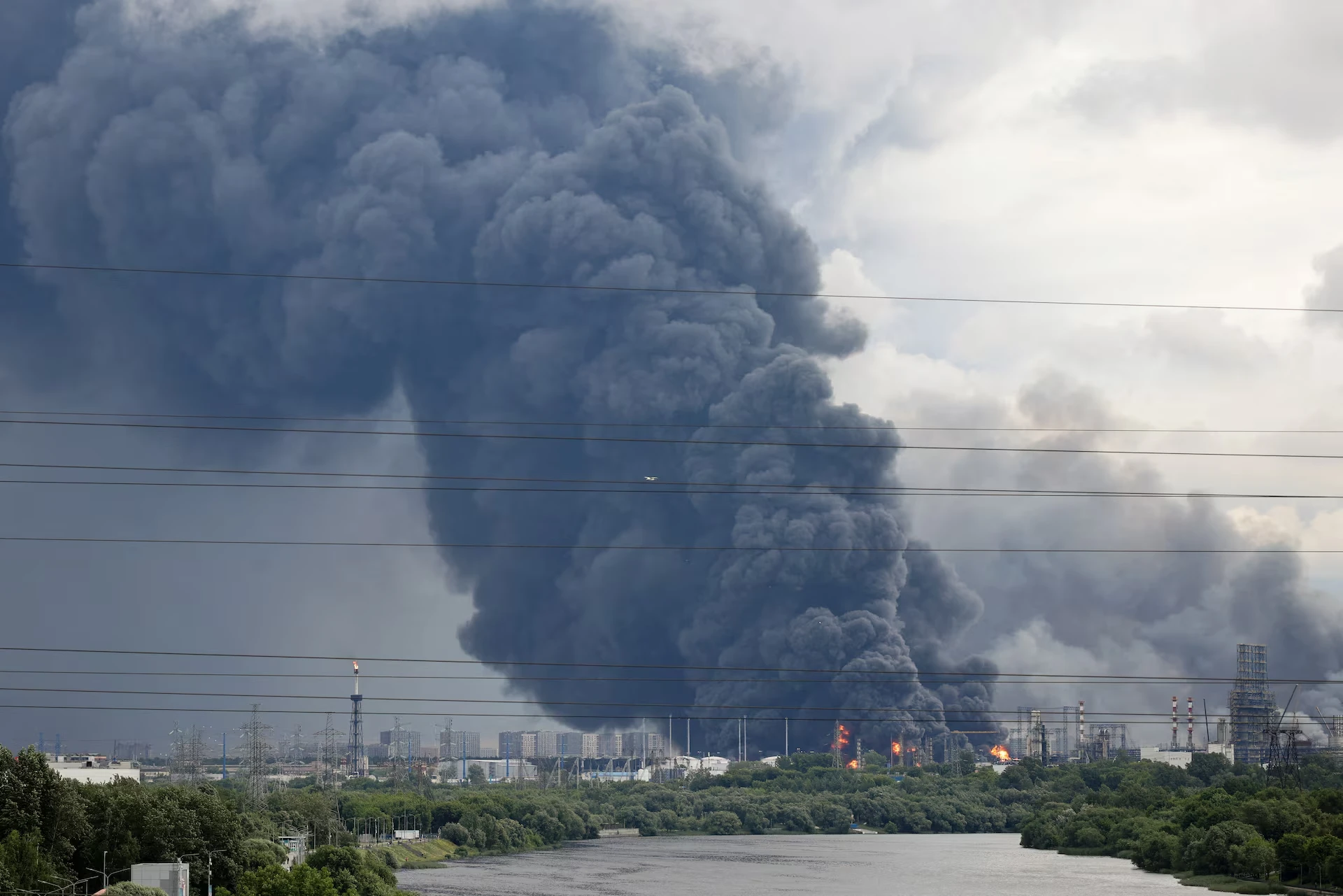
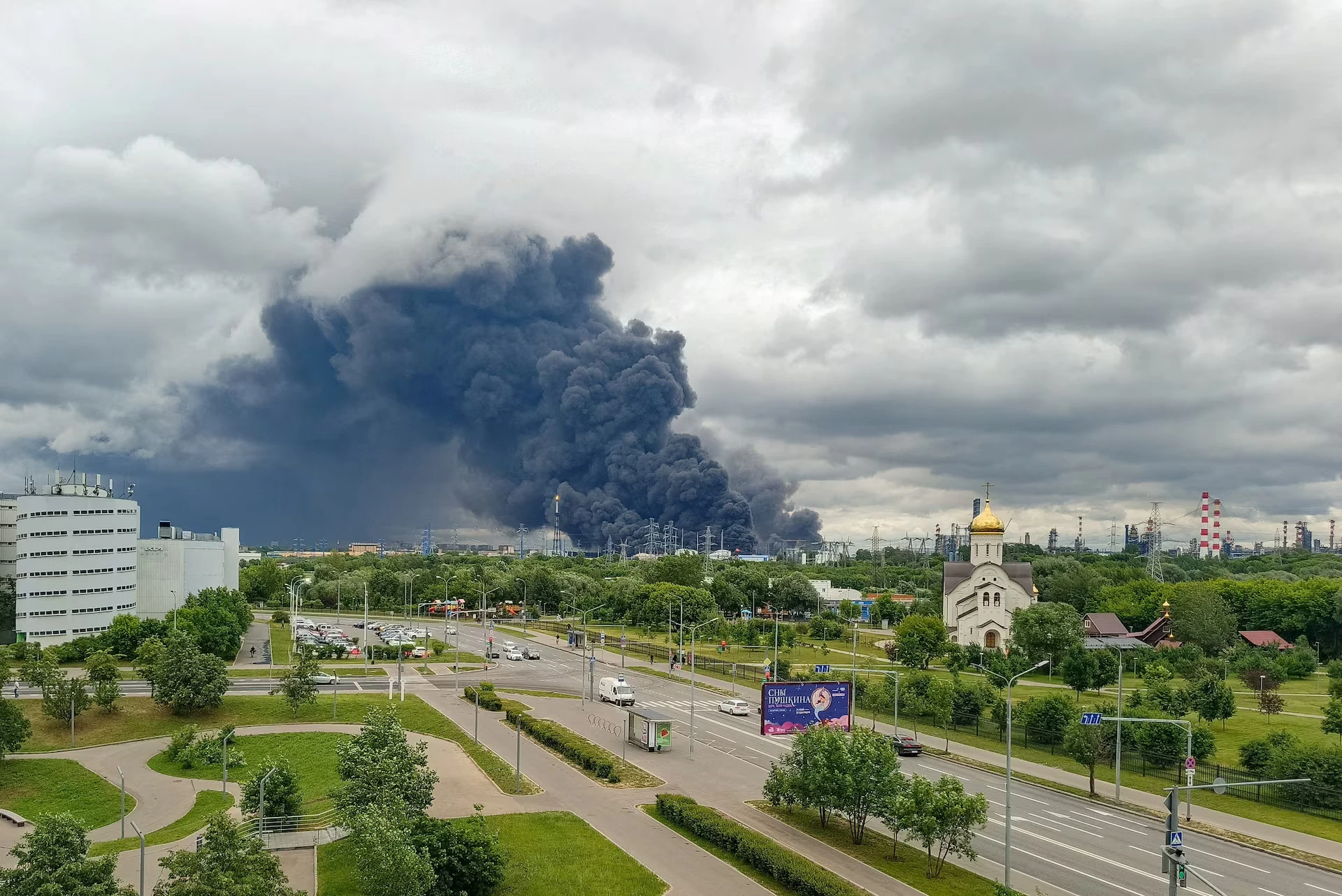
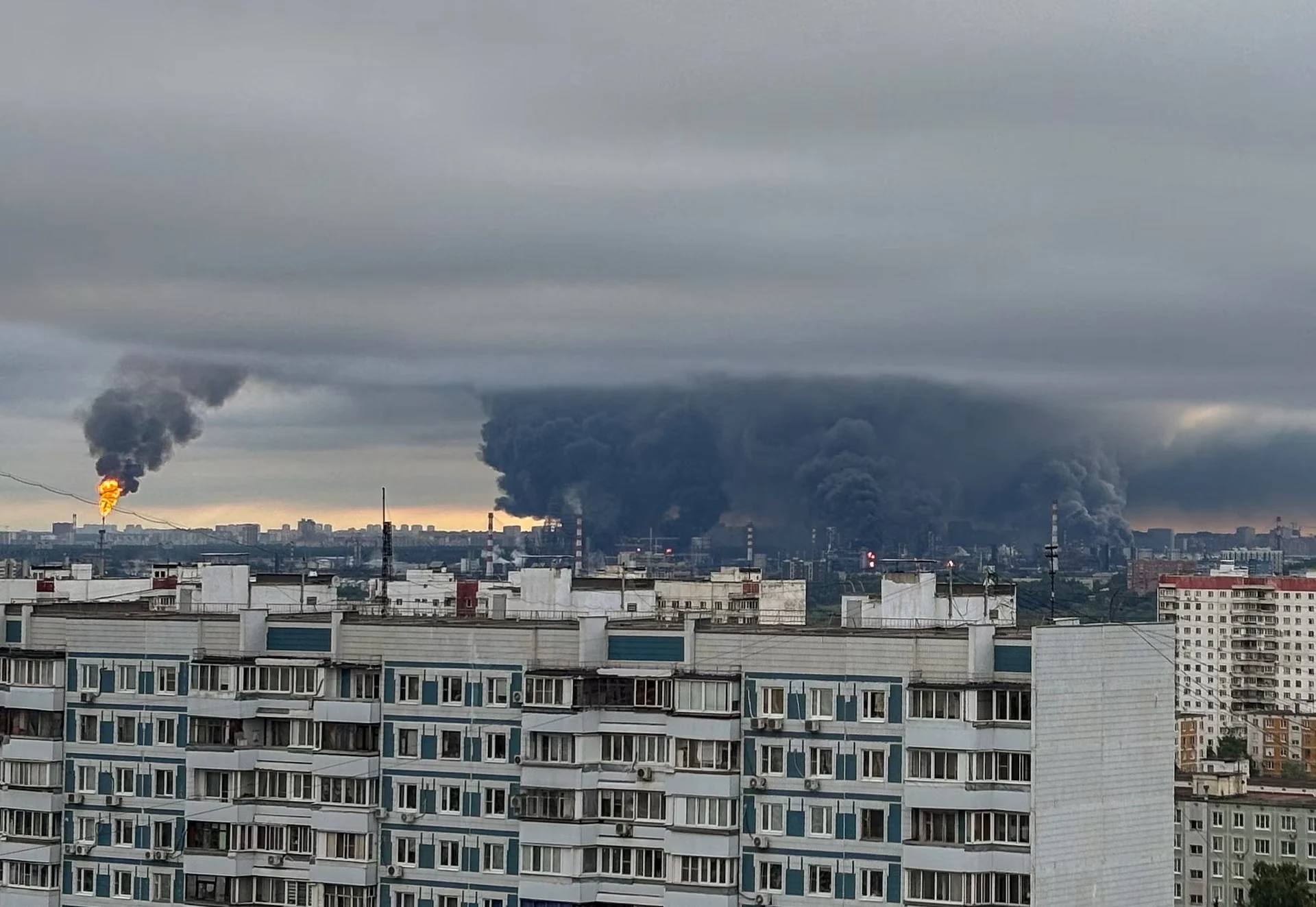
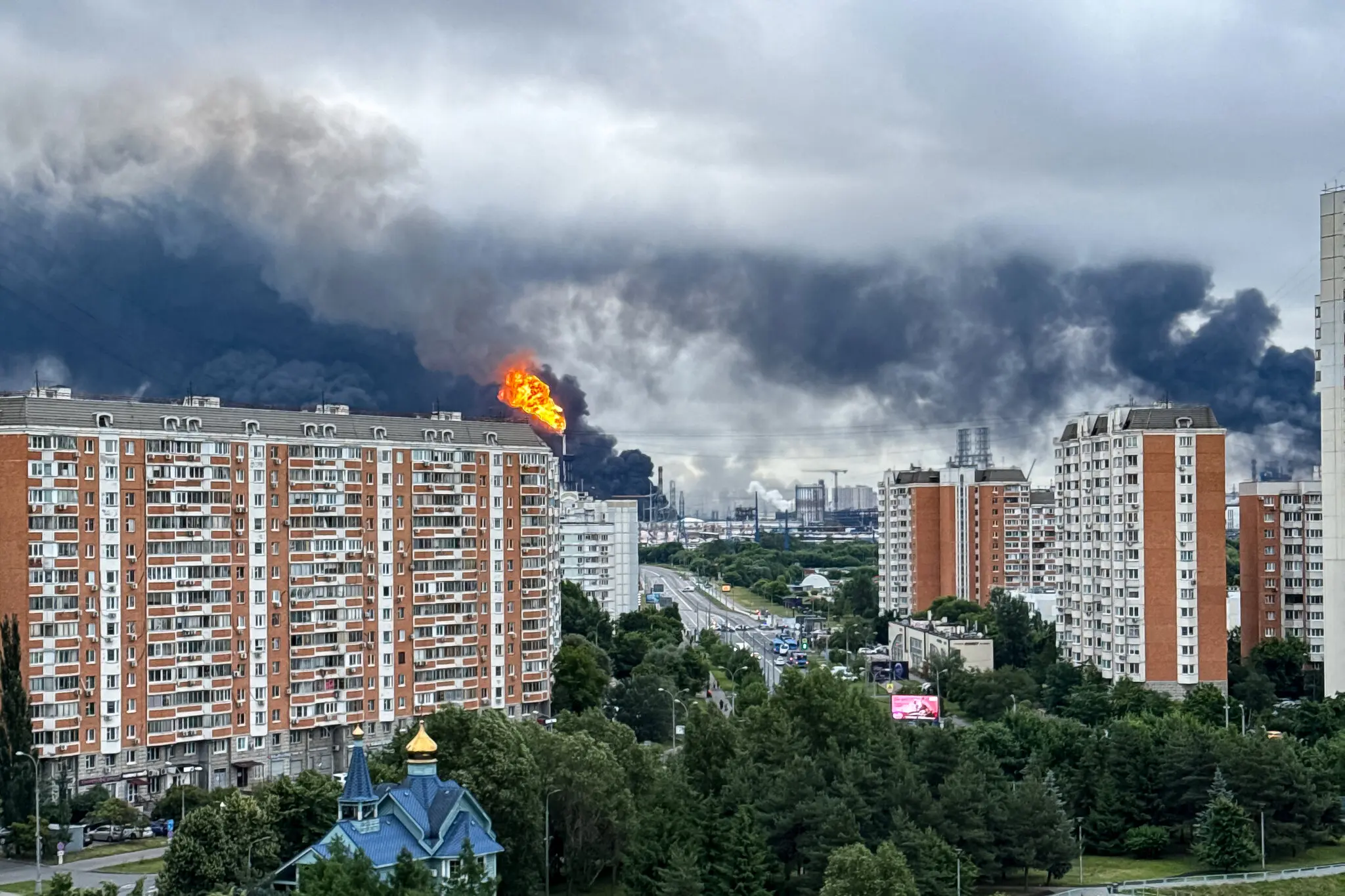
Ukraine’s attack on Moscow on Thursday became one of the sharpest signals of this phase of the war. Drones again reached the Moscow oil refinery in Kapotnya — for the second time in a week, in the capital of a state that has spent more than four years bringing war daily to Ukrainian cities.
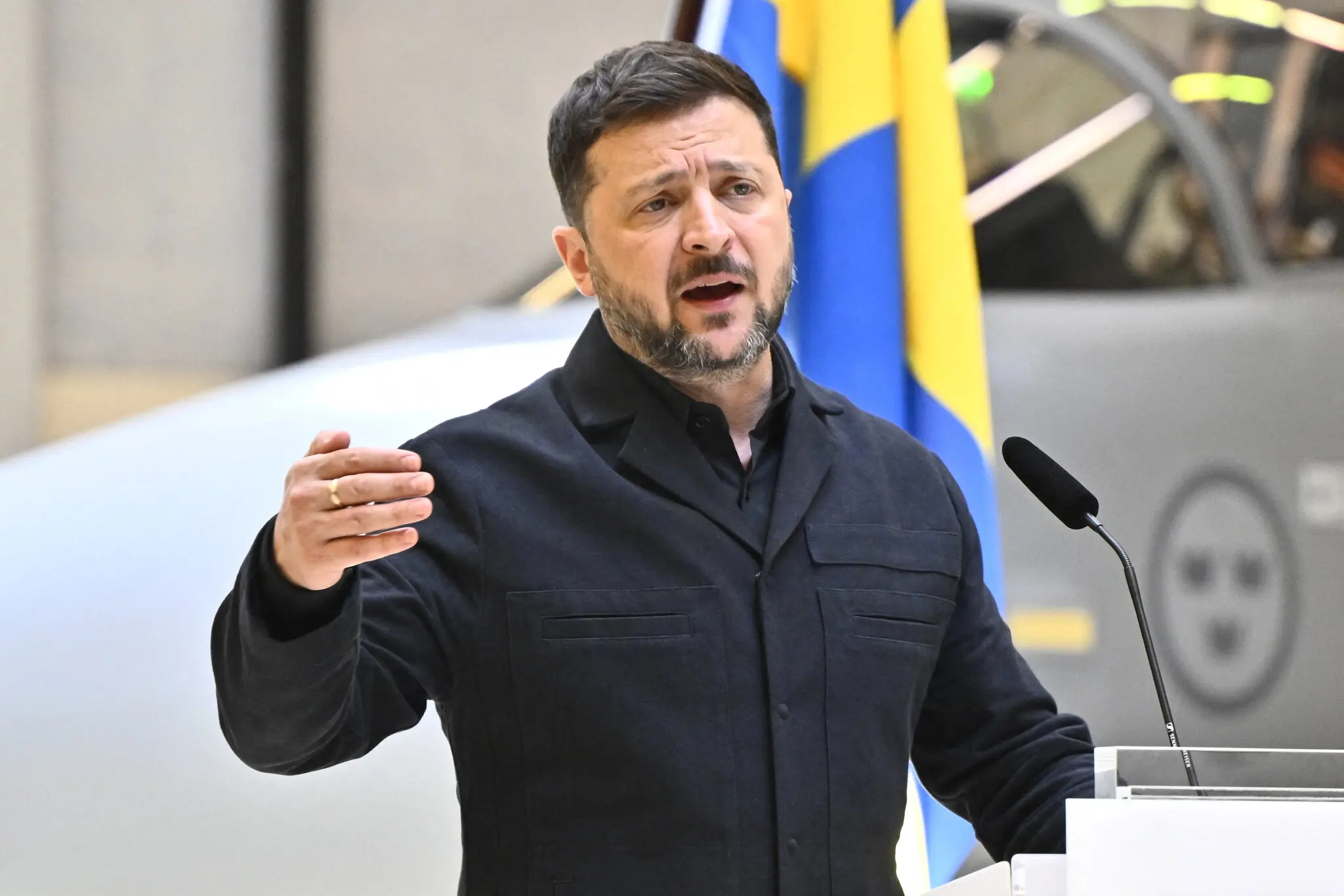
Volodymyr Zelensky stated the logic of the strike without diplomatic softening: Ukraine did not want this war, but if Ukraine burns, Moscow will burn too. There is more than emotion in that phrase. It is an attempt to explain to Russia and to partners that the aggressor’s impunity ends where Ukraine’s long-range capability becomes systematic.
At the same time, Russia again attacked Kyiv with ballistic missiles. The strikes followed an earlier attack that damaged the Kyiv Pechersk Lavra, an almost thousand-year-old monastery complex and one of the symbols of Ukraine’s spiritual and cultural memory. Moscow denies hitting the shrine, but the political effect has already taken shape.
According to Daycom’s assessment, the attack on the Moscow refinery matters not only as a military operation. It became an answer to Russia’s model of war, in which Moscow has tried for years to preserve an asymmetry: Ukrainian cities must live under missiles, while the Russian capital remains inside a sense of distant security.
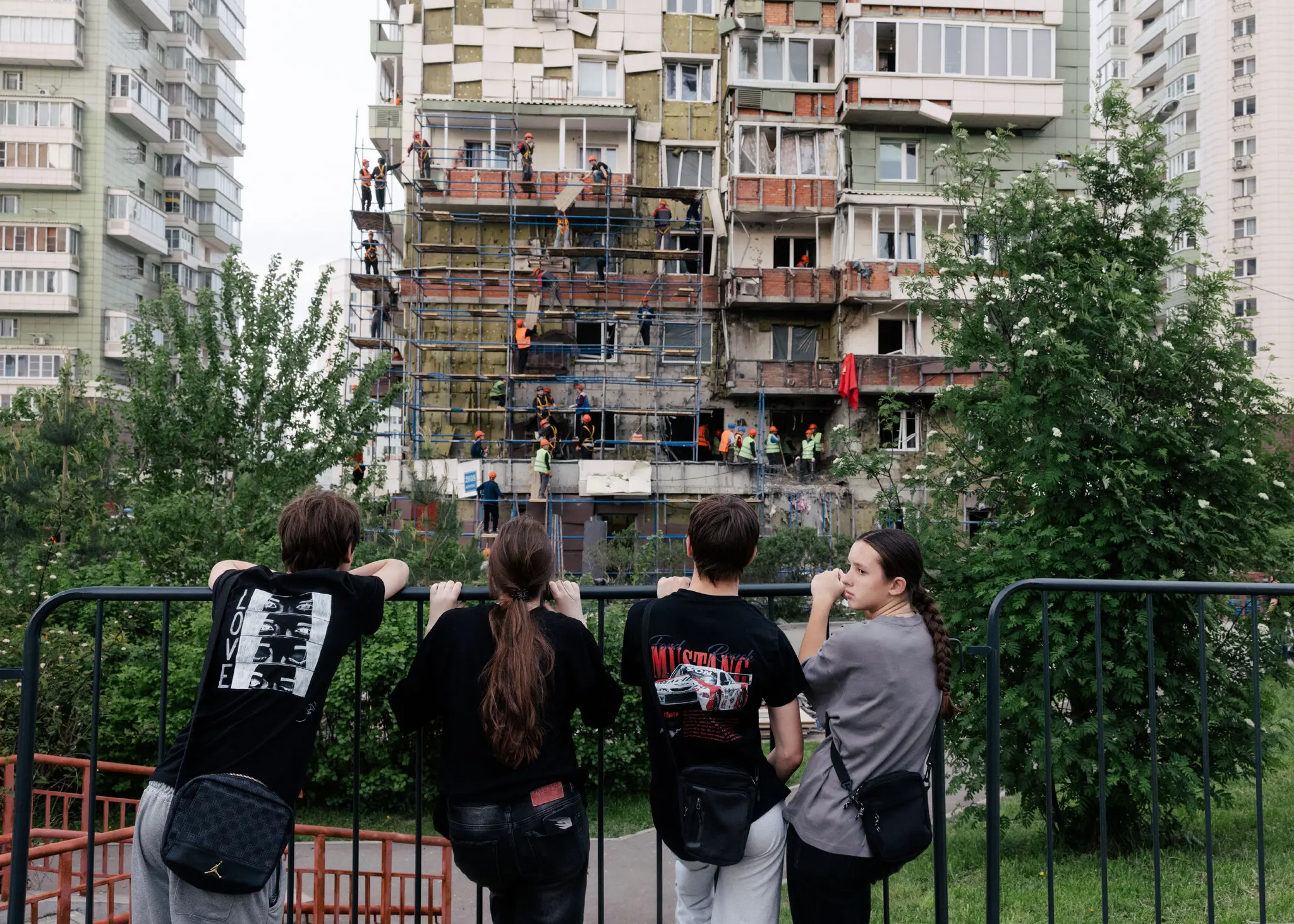
That asymmetry is collapsing. Smoke and flames rose over Kapotnya, some drones reached the refinery, a shopping center suffered minor damage, and in the Moscow region a residential building, an industrial site and private houses were affected. The regional governor reported 16 people injured.
Russian authorities said 555 drones had been shot down across the country and 180 around Moscow alone. But the need to report numbers on that scale shows the depth of the problem. Even when most drones are intercepted, some break through, while the system spends resources, halts transport and pushes the capital into wartime nervousness.
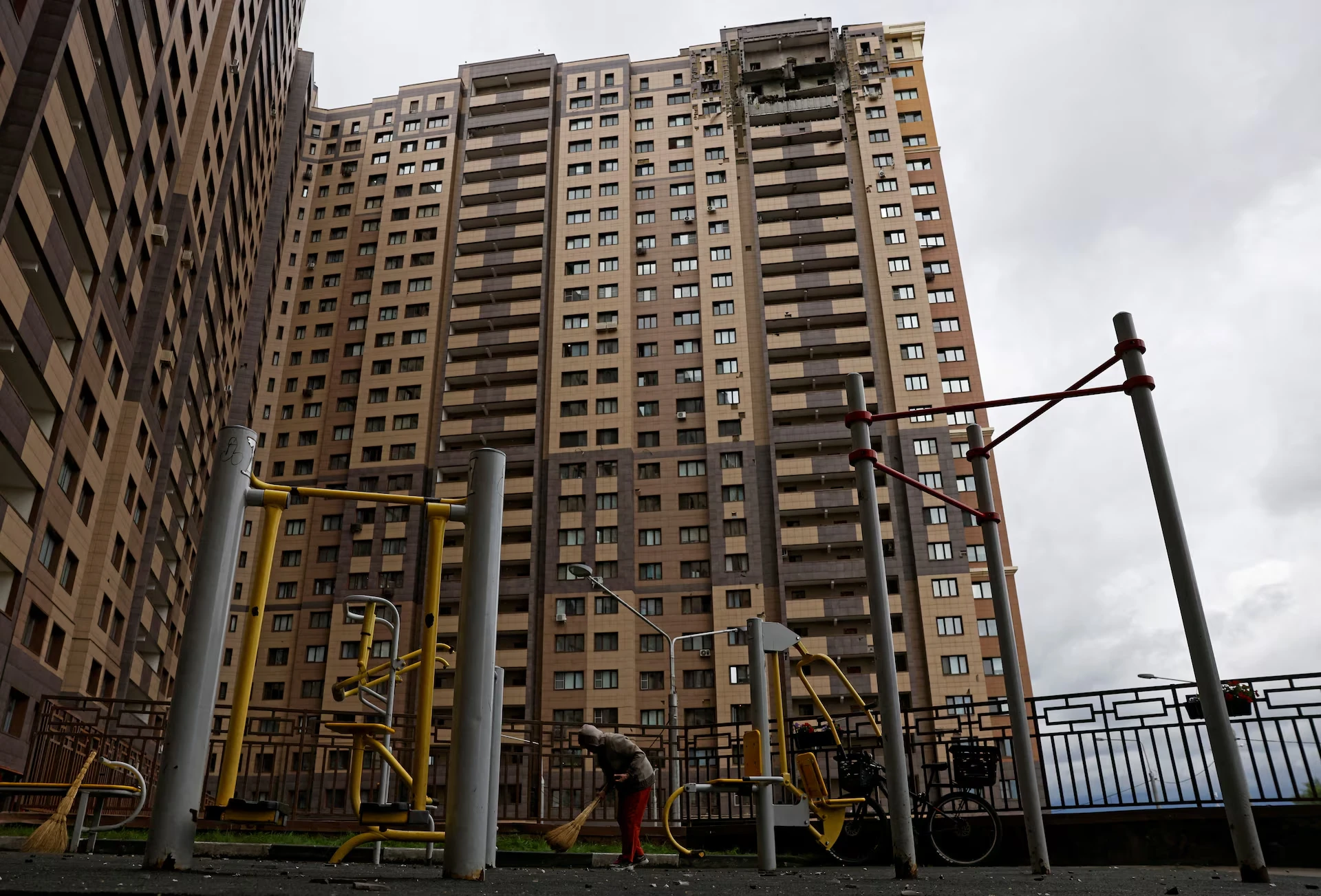 Багатоповерховий житловий будинок, пошкоджений в результаті атаки українського безпілотника під час російсько-українського конфлікту в місті Жуковський у Московській області, Росія, 18 червня 2026 року — Stringer
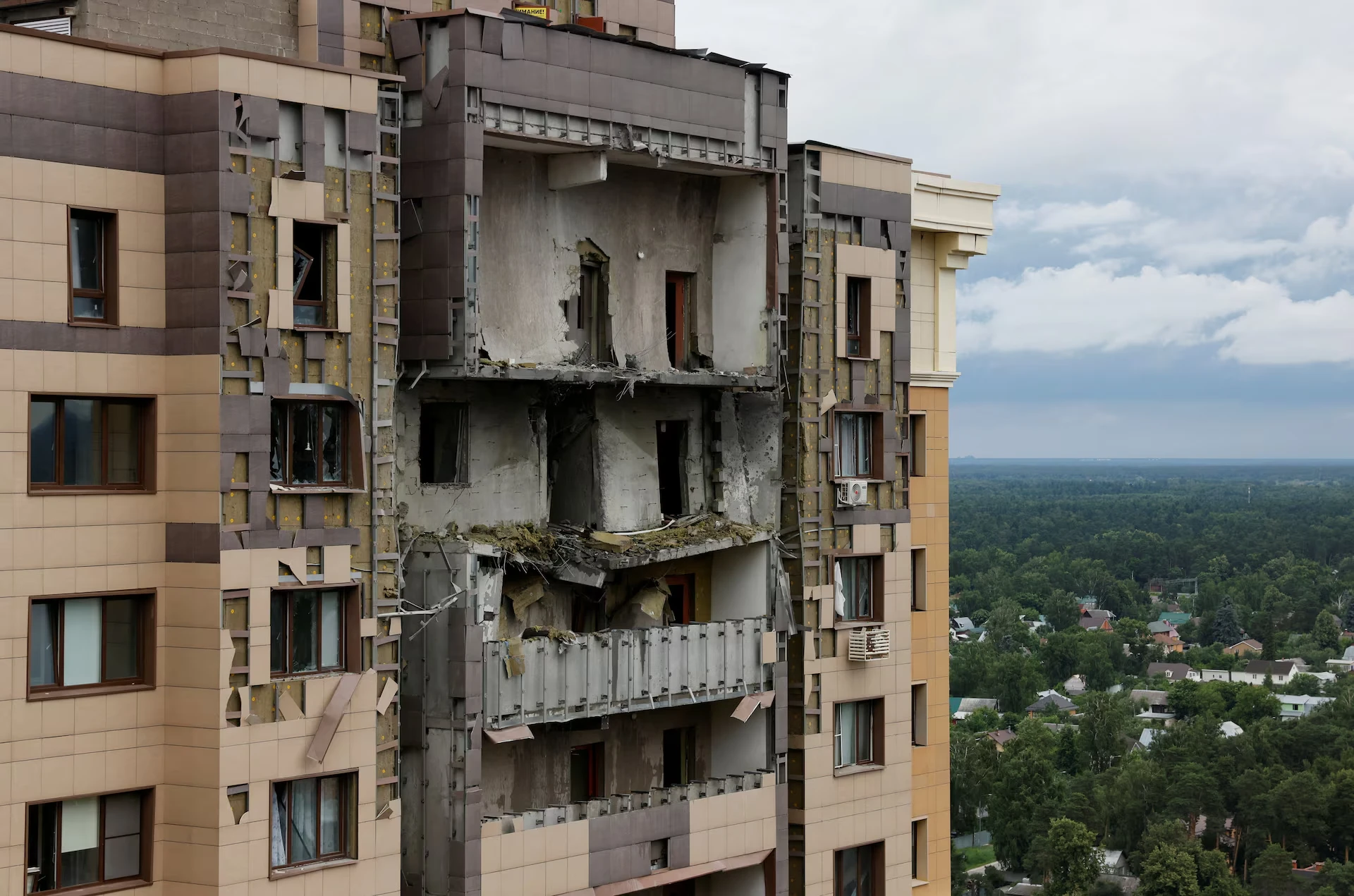 Багатоповерховий житловий будинок, пошкоджений в результаті атаки українського безпілотника під час російсько-українського конфлікту в місті Жуковський у Московській області, Росія, 18 червня 2026 року — Stringer
All Moscow airports temporarily suspended operations, Sheremetyevo was evacuated, and traffic near the refinery was shut down. For a major city, this is not merely an inconvenience. It is the moment when war stops being a television story and enters logistics, flight schedules, road traffic, insurance and the behavior of residents.
The Moscow refinery has special importance in this attack. It is not a symbolic building or a random industrial zone. It is part of the fuel system that supports the capital, transport, the economy, security structures and the wider military infrastructure. A strike on refining works more slowly than a strike on a headquarters, but it cuts deeper into the endurance of the system.
The previous strike on the same facility had already halted part of its operations. The repeated attack showed that Ukraine is not looking for a one-time demonstration, but is building a campaign of pressure on Russia’s energy nodes. On the same day, Ukrainian forces also hit an oil depot in the Rostov region and bridges, seeking to complicate Russian logistics.
This is the new substance of Ukraine’s drone strategy. It is not reducible to spectacular strikes on Moscow. It is aimed at making Russia’s war more expensive — through fuel, repairs, downtime, the redeployment of air defenses, disrupted supply, market anxiety and the need to protect an ever-growing number of facilities.
Russia remains one of the world’s largest oil producers, but refining has become one of its vulnerable points. Producing crude is not enough. It must be turned into gasoline, diesel and aviation fuel, delivered, distributed and kept flowing through the domestic market. Ukrainian strikes increasingly target precisely that chain.
Fuel pressure already has practical consequences. Russia is preparing to import fuel by sea to ease gasoline shortages after refinery strikes. For a country used to seeing itself as an energy superpower, the very need for such imports is a political humiliation and a sign that the war is returning to the aggressor’s economy.
Kyiv is trying to connect military pressure with diplomacy. Zelensky is advancing a line in which Russia must sit down for negotiations not because it is comfortable dictating terms, but because continuing the war is becoming more costly. In this logic, Ukrainian drones are not a substitute for diplomacy, but an instrument of coercion toward a real conversation.
Moscow answers with the opposite frame. The Kremlin says Ukrainian attacks push back the prospect of direct contacts between Vladimir Putin and Zelensky. That formula contains a familiar Russian inversion: a state demanding Ukrainian territorial concessions before any peace discussion is trying to present Ukraine’s response as the obstacle to negotiations.
In reality, the negotiating knot remains the same. Russia wants a peace that records its seizures. Ukraine wants a peace that does not legalize aggression. That is why strikes on Russian military infrastructure acquire political meaning: they show that time no longer works only for the Kremlin.
The price of this campaign is also complex for Ukraine. Drone warfare in densely populated areas carries risks from debris, air-defense activity, secondary damage and human injury. Kyiv must preserve a clear line between strikes on the infrastructure of war and civilian space, because that line separates strategic pressure from blind escalation.
Russia, meanwhile, continues to strike Ukrainian cities without such a line. Explosions sounded in Kyiv, and much of the country was under air alerts. In Sumy, one person was killed after an overnight drone strike; in Dnipro, a Russian attack killed one man and injured eleven others. This is not background. It is the reason Ukraine’s response is becoming harder.
That parallel reveals the moral and strategic difference. Moscow attacks cities to break Ukrainian society. Kyiv strikes refineries, oil depots, bridges and logistics sites to complicate the work of Russia’s war machine. But the closer the war comes to Russia’s capital, the sharper the question of controlling consequences becomes.
For the Kremlin, the central problem is now the stretching of defense. It cannot protect Moscow, Rostov, Belgorod, refineries, bridges, depots, airfields, border regions and the deep rear with equal density. The quantity of Ukrainian drones is gradually turning into quality precisely because that task is impossible.
Even if Russian air defenses shoot down hundreds of aircraft, the scale of the raids forces the system to work under attrition. Each wave consumes missiles, crew capacity, radars, fuel, airport time and public trust. In a long war, this is not a secondary effect. It is part of the main result.
The attack on the Moscow refinery does not end the war and does not break Russia in a single blow. But it changes the language of the war. Ukraine is no longer only asking for protection from Russian missiles. It is showing that it can create its own map of vulnerabilities for Moscow.
That is why Zelensky’s phrase about Moscow burning if Ukraine burns was not a threat made for emotion’s sake, but a political formula for a new stage. Russia has long spoken to Ukraine in the language of coercion. Kyiv is now trying to answer in the language the Kremlin understands best: a price that rises inside Russia itself.