














Tick season in the US 2026 has become one of the most troubling in years. Emergency visits are surging, tick ranges are expanding, and the lone star tick is spreading alpha-gal syndrome — a potentially life-threatening allergy to red meat.
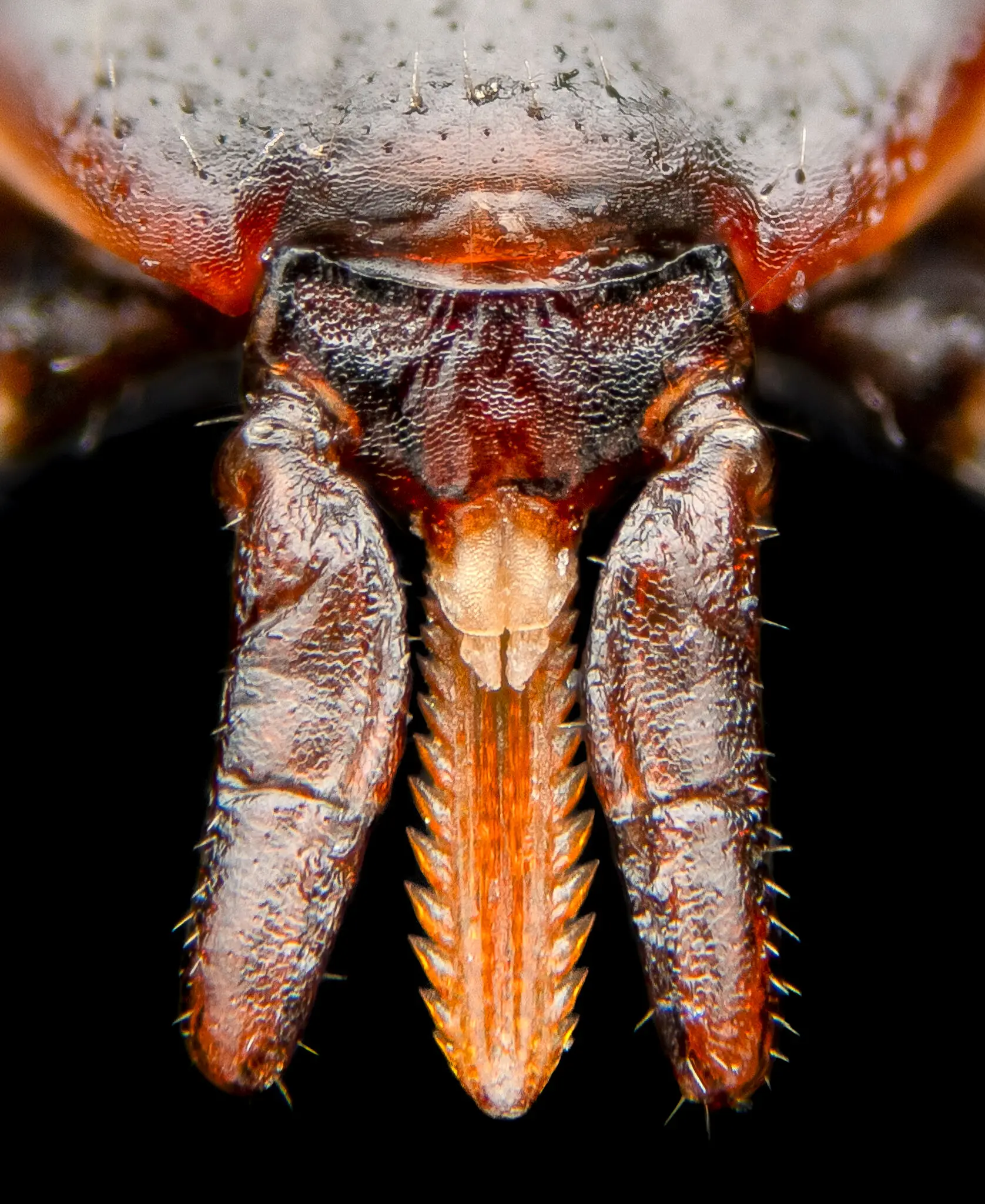
A tick does not simply puncture the skin and drink. After finding a warm, thin-skinned part of the body, it cuts into the surface with specialised mouthparts and anchors itself with a barbed structure called a hypostome. What follows can be a feeding process lasting several days.
The saliva makes that process both efficient and dangerous. Compounds in it interfere with blood clotting and dampen the host’s local immune response, helping the tick feed with little warning. At the same time, bacteria, viruses and other biological agents can pass through the bite site into the human body.
In the United States, that familiar hazard has taken on a new scale. During spring 2026, the Centers for Disease Control and Prevention reported unusually high emergency-department visits for tick bites. In much of the country, activity reached the highest levels recorded for that point in the year in roughly a decade.
The concern now extends well beyond the blacklegged tick, Ixodes scapularis, the principal US vector of Lyme disease. Amblyomma americanum — the lone star tick — is expanding its presence northward and westward, bringing with it a different set of risks and a notably more aggressive style of host-seeking.
Daycom’s analysis of epidemiological and scientific data suggests that tick season in the US 2026 is not merely an exceptionally bad summer. The geography of exposure, the length of the active season and the spectrum of associated disease are all changing at once, altering where Americans can reasonably expect to encounter risk.
The blacklegged tick still represents the largest established burden. The CDC estimates that roughly 476,000 people in the United States are diagnosed and treated for Lyme disease each year. Official surveillance captures only part of that total, because reporting practices and clinical recognition vary across jurisdictions.
Lyme disease is caused mainly by the bacterium Borrelia burgdorferi. When identified promptly, most cases respond well to antibiotics. Left untreated, however, the infection can affect joints, the heart and the nervous system. Removing an attached tick quickly matters because transmission risk generally rises with time.
The lone star tick introduces a threat that antibiotics cannot solve. Its bite is associated with alpha-gal syndrome, an immune reaction to galactose-α-1,3-galactose, a sugar found in tissues of most mammals. Once sensitised, a person may suddenly react to foods that had never previously caused a problem.
That can mean beef, pork or lamb becoming dangerous. Unlike many food allergies, alpha-gal reactions are often delayed, commonly appearing several hours after eating. Symptoms can include hives, swelling, vomiting, a fall in blood pressure, breathing difficulty and, in severe cases, anaphylaxis.
In 2025, researchers at the University of Virginia reported the first known death linked to alpha-gal syndrome. A 47-year-old New Jersey man died several hours after eating beef. He had previously sustained tick bites, but the connection between his sudden fatal reaction and mammalian meat was not initially obvious.
The case sharpened attention on a condition that remains under-recognised even within medicine. The CDC has estimated that as many as 450,000 Americans may have been affected by alpha-gal syndrome. The true number is uncertain because the condition is not tracked through a single mandatory national reporting system.
Blood-donor studies have added another layer of concern. In some states, IgE antibodies to alpha-gal have appeared in a striking share of samples. Across a group of states with the highest readings, combined seropositivity was estimated at about 24 percent, indicating widespread biological exposure.
That does not mean one in four people has a clinical meat allergy. Antibodies demonstrate sensitisation, not necessarily symptomatic disease. But the figure shows how widely the underlying immune response may already be distributed in regions where the lone star tick has become firmly established.
The map itself is changing. Long associated primarily with the American South, the lone star tick is now well established across much of the Northeast and parts of the Midwest. Surveillance continues to document new populations, while the absence of a confirmed local colony does not necessarily mean the species is absent.
Its behaviour makes the species especially unsettling. Many ticks rely largely on “questing,” waiting on vegetation until a passing host brushes against them. Lone star ticks can actively move toward potential hosts, responding to cues such as carbon dioxide, vibration and the presence of warm-blooded animals.
Their reproductive capacity is formidable as well. A fully fed adult female can lay roughly 5,000 eggs. Larvae may then gather in dense clusters, meaning a person who crosses the wrong patch of vegetation can encounter not one parasite but scores or hundreds of tiny ticks at once.
The threat is no longer confined to deep woodland. Suburban lawns, city parks and green corridors can support the same ecological chain: deer, rodents, ticks and people occupying overlapping spaces. In recent studies, alpha-gal sensitisation has also appeared among donors in heavily populated counties.
Climate is part of the explanation. Longer warm seasons allow ticks to remain active for more days each year and make previously marginal areas more hospitable. But warming alone does not account for the expansion. Land use, suburban growth, deer density, rodent populations and human behaviour all matter.
White-tailed deer play an especially important role. They are not the primary reservoir of the bacterium that causes Lyme disease, but adult blacklegged ticks depend heavily on them for feeding and reproduction. The return of large deer populations to suburban landscapes has therefore helped sustain tick life cycles near homes.
That leads to an apparently simple answer: reduce the deer, reduce the ticks. Experiments have shown that dramatic cuts in deer density can indeed lower tick numbers. The difficulty is scale. Modest culls may leave enough hosts for ticks to thrive, while animals from neighbouring areas can quickly move back in.
Researchers have also looked at mice, particularly the white-footed mouse, an important reservoir for Borrelia. Experimental strategies include targeted antibiotics and genetic interventions intended to reduce transmission from mice to ticks. Turning such approaches into large-scale field programmes remains difficult.
Pharmaceutical research is moving more quickly. Pfizer and Valneva have advanced a Lyme vaccine candidate through late-stage trials, reporting encouraging efficacy results. If approved, it could become the first widely available human Lyme vaccine in more than two decades, though uptake will remain an open question.
Another strategy borrows from veterinary medicine. Tarsus Pharmaceuticals is testing lotilaner, an oral drug designed to kill attached ticks before Borrelia can be transmitted. The concept is attractive for Lyme because the bacterium usually requires time after attachment before moving efficiently into the host.
Alpha-gal exposes the limitation of that approach. The relevant molecule can enter the body far earlier in the feeding process, and researchers have raised questions about whether a dying tick could increase salivation. A drug that protects well against Lyme might therefore do little against this different mechanism.
The broader problem is that ticks carry far more than one pathogen. Alongside Lyme and alpha-gal are babesiosis, anaplasmosis, ehrlichiosis, Powassan virus, Heartland virus and Bourbon virus. Multiple tick species are expanding at the same time, turning a single-disease problem into something closer to a vector-borne polycrisis.
That is why one of the most ambitious ideas aims not at a pathogen but at the tick itself. Yale researchers are developing an mRNA-based approach designed to train the immune system to recognise proteins in tick saliva, triggering a rapid local reaction that makes the bite easier to notice.
The logic is simple but potentially transformative. If a bite quickly becomes red, itchy or inflamed, a person may find and remove the tick sooner. An immune response might also interfere with feeding, reducing the window in which a range of pathogens can be transmitted rather than targeting only one infection.
Until such protection exists, the advice remains strikingly low-tech. Experts recommend repellents, permethrin-treated clothing, full-body checks after outdoor activity and showering after returning indoors. An attached tick should be removed promptly with fine-tipped tweezers, grasping close to the skin.
What has changed is where those precautions may be needed. A tick encounter no longer requires a wilderness hike. A backyard, suburban path, golf course or city park can be enough. For some species, activity also stretches beyond the familiar summer window, weakening the idea of a neatly defined “tick season.”
Blacklegged ticks can remain active during colder months whenever temperatures rise sufficiently. Lone star ticks follow a different seasonal pattern, but their growing range adds another layer of exposure to the established Lyme threat. The calendar of risk is becoming longer, less predictable and more geographically diffuse.
Tick season in the US 2026 has brought several trends together at once: unusually high bite-related medical visits, expanding ranges, new evidence around alpha-gal and real progress in vaccines and preventive drugs. A nuisance once associated mainly with hikers is becoming a broader public-health challenge.
Science is advancing, but the ecology is changing faster. Ticks are benefiting from warmer seasons, abundant animal hosts and landscapes people themselves have created around towns and cities. A parasite small enough to escape notice is becoming a striking example of how environmental change can quietly redraw the map of everyday risk.