




















When Washington announced an open-ended extension of the cease-fire, the move looked like an attempt to buy time for diplomacy. In Tehran, the same decision was read differently: as evidence that a strategy of endurance was beginning to work. That divergence in perception now defines the next phase of the confrontation.
For Iran’s leadership, the pause does not signal the end of the conflict. It reinforces a core assumption instead: in a prolonged standoff, they believe they can absorb more pain than their opponent. The logic is blunt. If the other side is constrained by political cycles, economic risk and domestic pressure, then time stops being a neutral factor and becomes a weapon.
That logic is most visible in the Strait of Hormuz. Any sustained disruption in one of the world’s most important energy corridors radiates outward far beyond the region. Higher oil prices, pressure on gas supplies and knock-on effects across freight and industrial inputs all create a global economic environment that can erode the political resilience of the United States and its allies faster than they weaken Iran’s ruling establishment.
According to Daycom’s earlier analysis, this asymmetry of endurance is becoming Tehran’s central advantage. Iran measures the confrontation in months, while for the Trump administration and global markets even a few weeks of instability can carry serious consequences. It is in that mismatch of political timelines that Tehran sees its opening.
The collapse of the previous round of talks only strengthened that view. The two sides entered diplomacy with opposite expectations. Washington tried to combine negotiation with pressure, including a naval blockade aimed at constraining Iran’s oil exports. Tehran, by contrast, treated the removal of that pressure as a precondition for any meaningful engagement. The result was a process that appeared structurally weak before it could properly begin.
The blockade has become the core point of confrontation. For the United States, it is a tool of economic coercion designed to cut into Iran’s financial base. For Tehran, it is a direct escalation, one it frames as an act of war. Iran’s answer has been to demonstrate that it can obstruct or complicate movement through strategic waters, creating a form of reciprocal pressure that reaches well beyond the battlefield.
In that sense, the cease-fire has become a paradoxical mechanism. It lowers the intensity of direct military exchanges while deepening the strategic contest itself. Both sides are avoiding a larger immediate escalation, yet neither is giving up its principal levers of pressure. The pause therefore does not resolve the conflict; it shifts it into another dimension — economic, logistical and psychological.
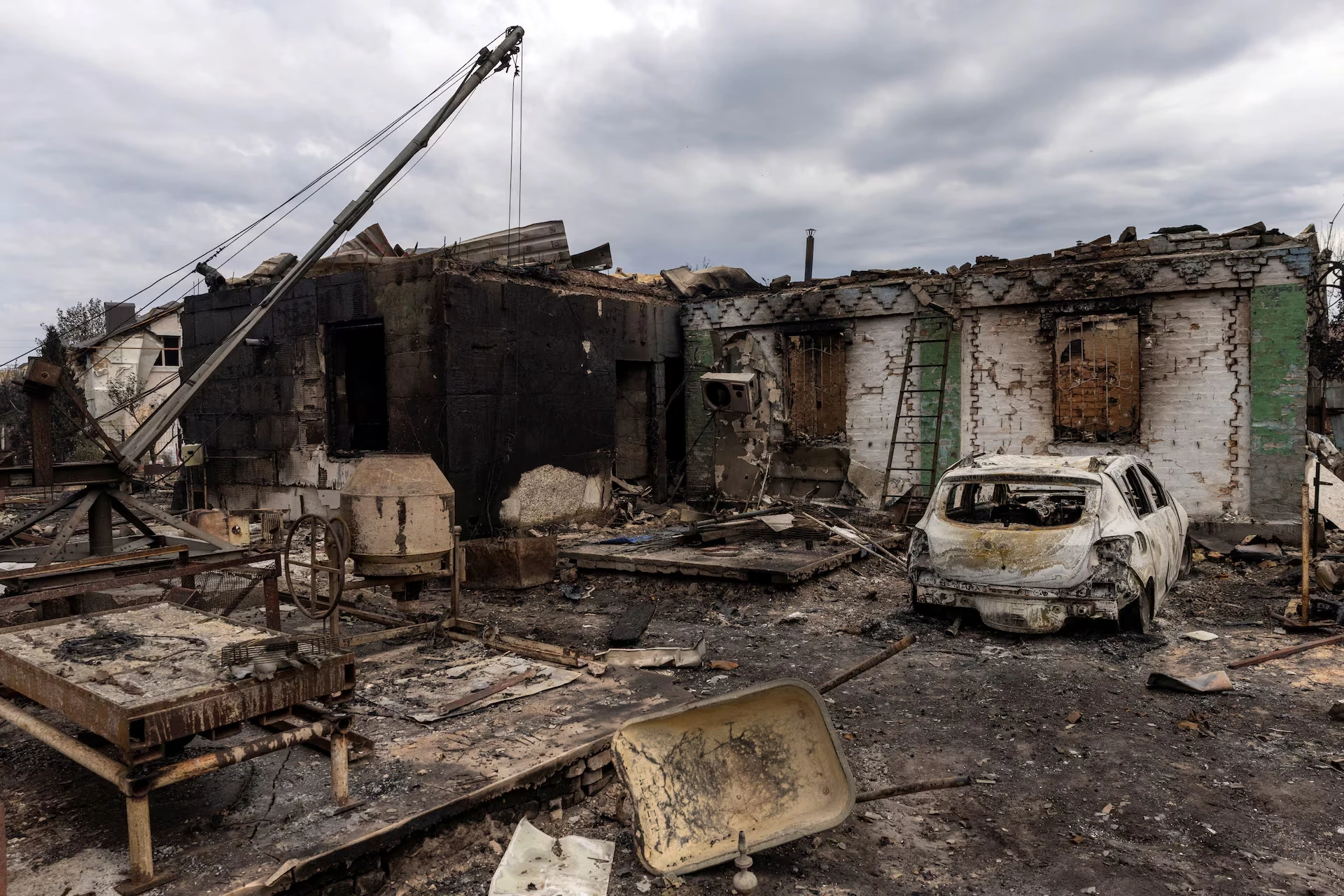
The internal cost of that strategy for Iran remains immense. The country’s economy was already under severe strain before the war, and the conflict has only aggravated long-standing structural weakness. Job losses, shortages of critical goods and pressure on everyday life are not abstract risks, but accumulating burdens. Even so, the political leadership appears willing to absorb those costs as part of a broader struggle for survival and leverage.
That is where the line between tactic and strategy becomes clear. For Washington, the priority is speed: stabilizing markets, containing escalation and restoring political control over events. For Tehran, the priority is duration itself. The longer uncertainty lasts, the greater the chance of shifting the balance without needing a decisive military breakthrough.
This is what makes renewed negotiations so difficult. Both sides are entering any future dialogue with the belief that they hold the stronger position. In such a setting, compromise no longer appears as a mutual necessity, but as a concession each side is determined to avoid.
The result is that the cease-fire ceases to function as a path to peace and becomes part of the conflict’s design. While one side uses the pause to preserve room for diplomacy, the other uses the same pause to prove that it can endure longer. And at this stage, that contest over time may matter just as much as sanctions, naval pressure or military strikes themselves.