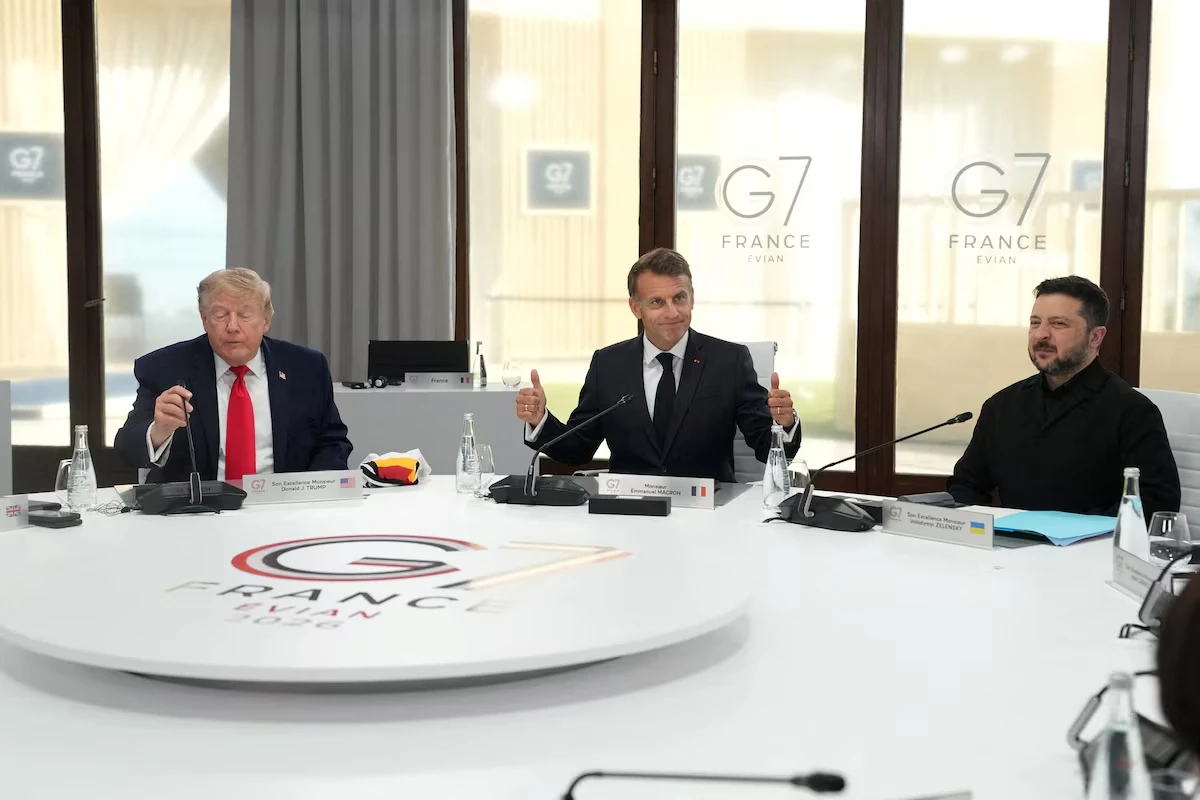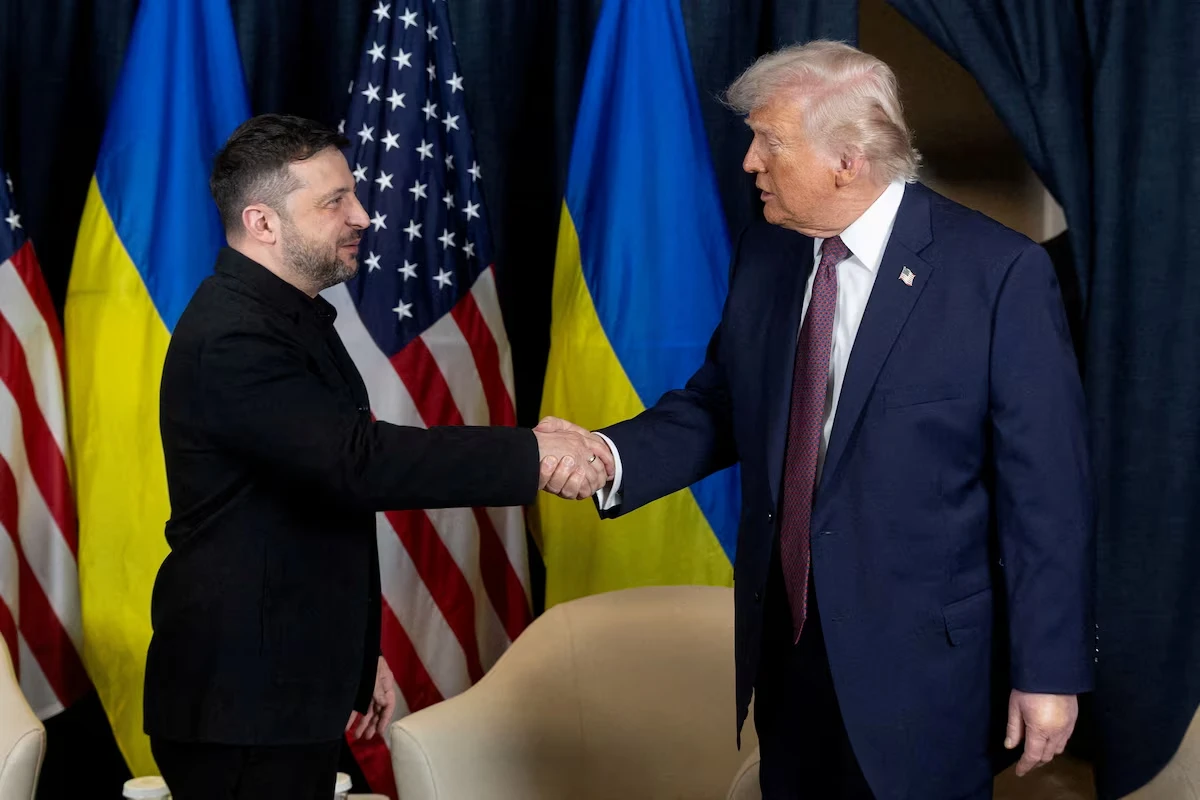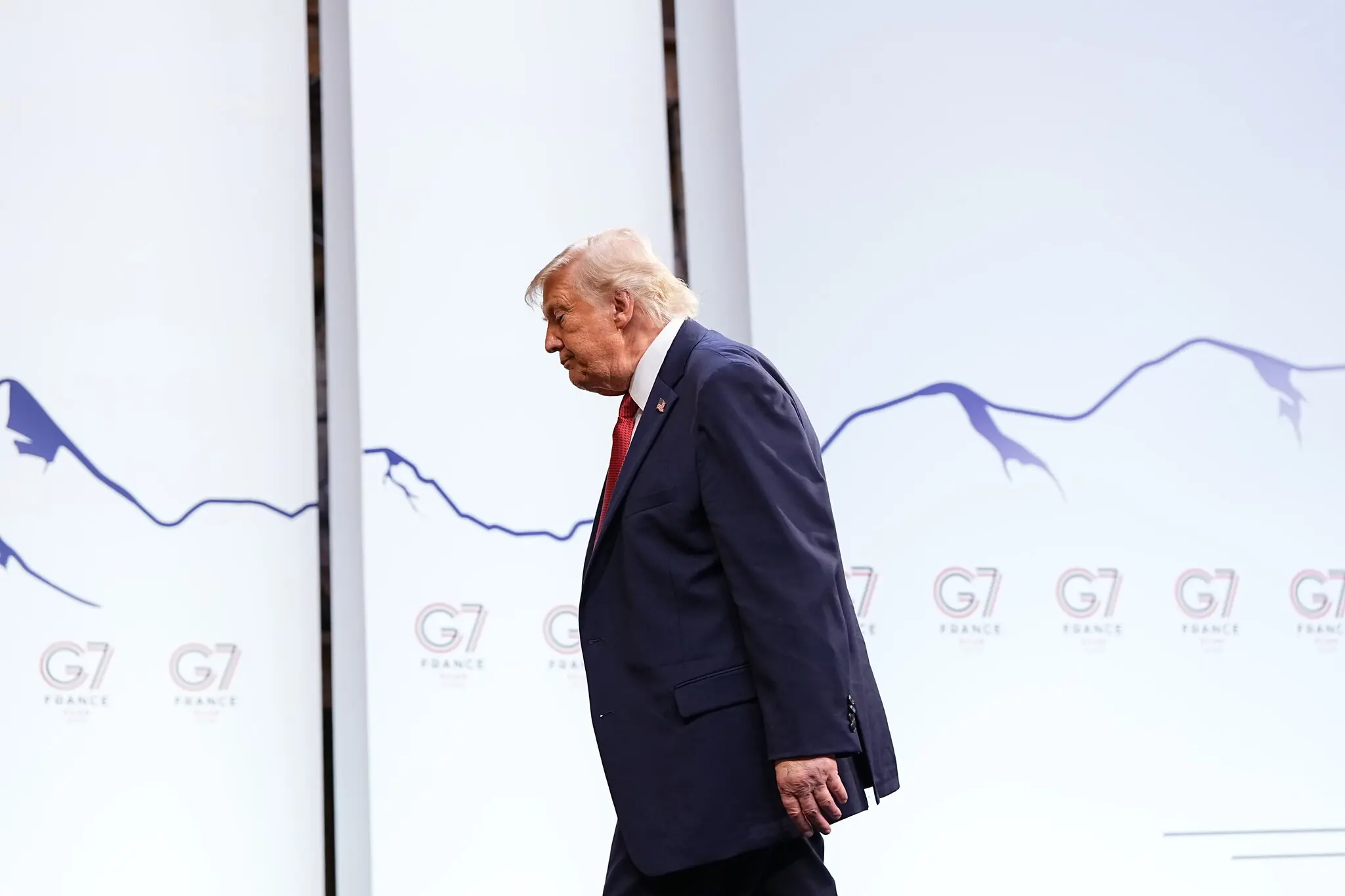
























Donald Trump said at the G7 summit in Evian-les-Bains, France, that he had held good conversations with both Vladimir Putin and Volodymyr Zelensky. For Ukraine, that formula sounds ambiguous: it keeps a diplomatic channel open, but also shows that the White House is not yet ready to publicly define the limits of any possible compromise.
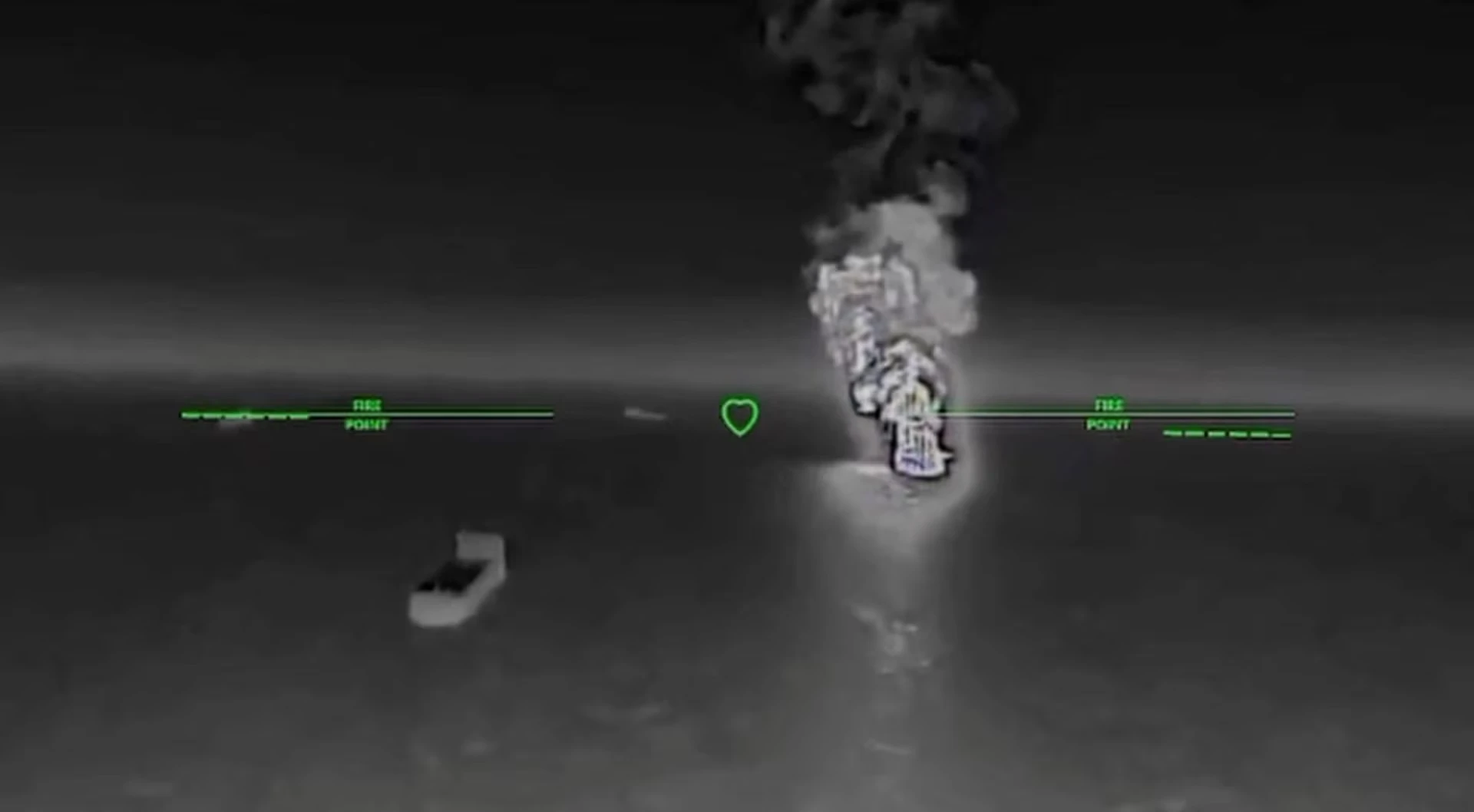
Zelensky and his European allies arrived at the summit with one central argument: Ukraine is no longer only defending itself. Its drones are striking deep inside Russian territory, disrupting oil refining, pressuring Moscow and gradually changing the question of who pays the cost of prolonging the war.
Kyiv is trying to turn that shift into diplomatic capital. If Russia feels pressure not only at the front but also in its own rear, negotiations stop looking like one-sided pressure on Ukraine. They can become a conversation in which Moscow also has something to lose.
According to Daycom’s assessment, Trump’s position at the G7 reveals the main dilemma of the American line: he wants to appear as a leader capable of ending the war, but avoids words that could complicate his dialogue with Putin. That is why he did not directly answer when asked about Russia’s responsibility.
There is logic in that caution. Trump speaks like a politician who wants to keep every channel open. A direct accusation against Putin could narrow the space for contact with the Kremlin. But for Kyiv and European capitals, such language creates a risk: neutrality of tone can look like dilution of the aggressor’s responsibility.
Ukraine is not simply asking for support. It is trying to persuade Trump that its battlefield position has grown stronger. Long-range strikes on Russian energy infrastructure, pressure on logistics and new drone capabilities are meant to show Washington that Kyiv is not entering talks from a position of weakness.
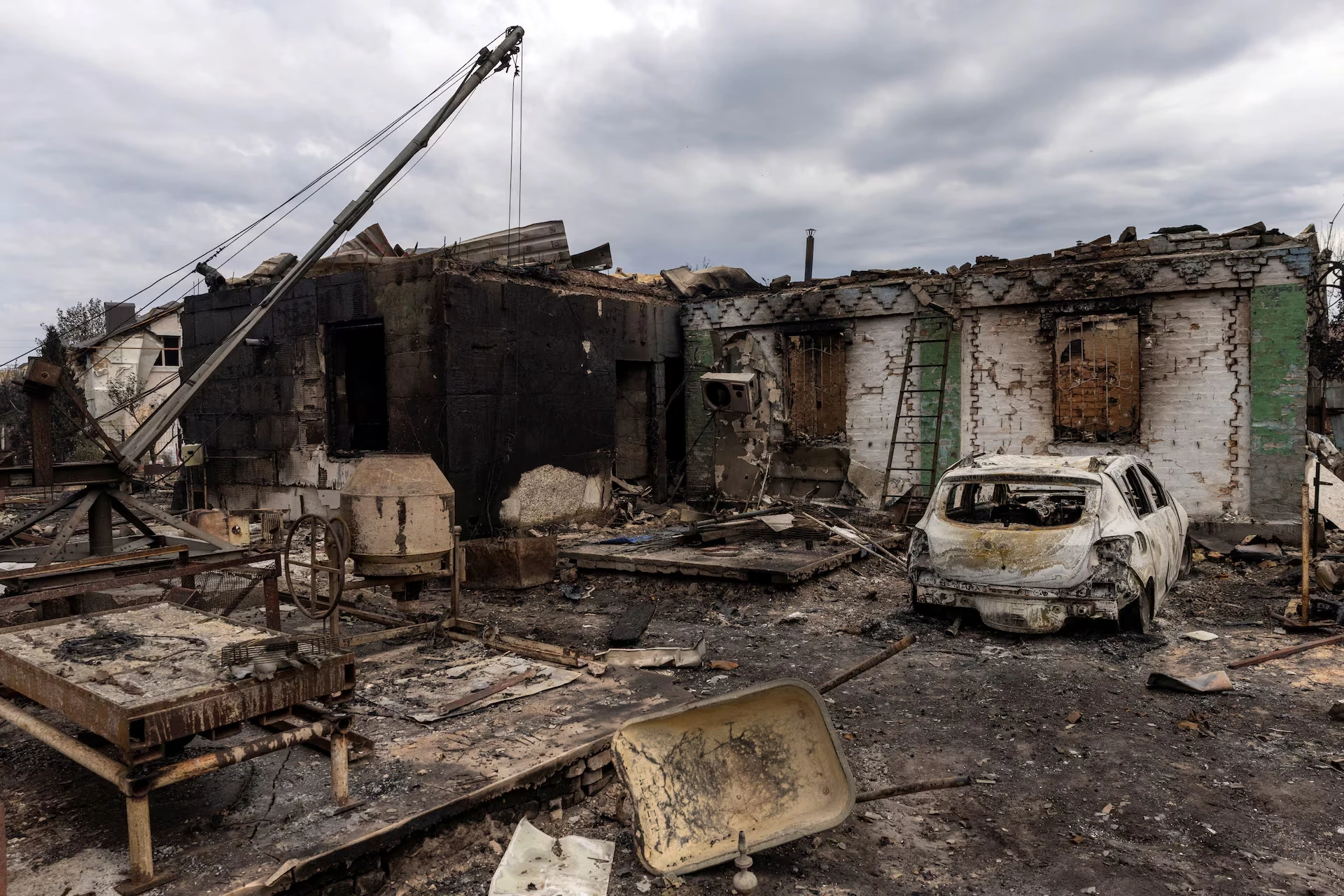
For Zelensky, this is especially important against the backdrop of Russian strikes on Kyiv, Ukrainian energy infrastructure and cultural heritage. Moscow speaks of peace while continuing to hit cities. In such a situation, any peace formula without military strength behind Ukraine risks becoming a pause Russia would use for renewed pressure.
Trump also said the United States would consider Ukraine’s wish to produce American missiles in Europe. This could become one of the most important points in a future defense architecture. The issue is not only the delivery of finished weapons, but the creation of a production base closer to the theater of war.
For Ukraine, such a model would mean greater resilience. The war has shown that dependence on distant warehouses and political cycles in Washington creates dangerous pauses. If American missiles or their components are produced in Europe, that could shorten logistics, strengthen continental defense and reduce the risk of shortages.
For Europe, this is also a chance to move from the role of payer and mediator to that of real defense producer. After years of slow industrial buildup, the war is forcing the continent to think in terms of a long conflict, not short aid packages.
Another key issue is sanctions on Russian oil. The U.S. Treasury did not publish an extension of a sanctions waiver for Russian seaborne oil, which expired at midnight. But the Trump administration did not immediately clarify whether that meant restrictions had effectively been reimposed.
When asked about sanctions, Trump said Washington was looking at the situation and watching how oil prices were falling. This is a typical economic frame for him: pressure on Russia is viewed not only as a moral or security measure, but through its effect on energy markets, inflation and domestic political cost.
For Ukraine, this can be both an opportunity and a risk. If sanctions on Russian oil are tightened, the Kremlin will face additional financial pressure. If decisions are delayed because of oil prices, Moscow will preserve part of the revenues that support its war machine.
The G7 summit has therefore become more than a meeting of allies. It is a place where three logics collide at once: Ukraine’s demand for a just peace, Europe’s fear of a deal made without Kyiv and Trump’s desire to show a diplomatic result without sharply breaking any channel.
Putin, in this configuration, is trying to use personal contact with Trump to return the war to the framework of a grand Russian-American bargain. For the Kremlin, it is useful to speak about Ukraine not as a subject, but as a problem two major powers can “resolve” between themselves.
That is why it is so important for Zelensky to be near Trump at the G7 moment. Ukraine must prevent its future from being discussed without it. Kyiv wants to show that any peace formula must rest on Ukraine’s position, European participation, security guarantees and continued pressure on Russia.
There is no quick solution in this diplomacy. Trump speaks of good conversations, but good conversations do not yet mean a good peace. The question is whether Washington can turn contacts with Putin and Zelensky into pressure on the aggressor, rather than pressure on the victim of aggression.
For Kyiv, the main goal in the coming days is to fix a simple frame: Ukraine is ready for peace, but not capitulation; ready for negotiations, but not territorial dictation; ready for diplomacy, but only when it is backed by weapons, sanctions and a real cost for Russia.
The summit in France showed that the war is entering a new phase not only on the front, but also in negotiations. Ukrainian drones are changing the military arithmetic, Russian missiles continue to destroy cities, and Trump is trying to keep every door open. But peace is not born from equal distance. It comes when the aggressor understands that continuing the war will cost more than ending it.