


















Donald Trump is trying to answer Iran’s challenge in the Strait of Hormuz in a way that may itself become a new source of escalation. After days of strikes and counterstrikes, the United States is preparing to restore the naval blockade of Iranian ports and is claiming the right to effectively control the world’s most important energy corridor.
Trump’s idea is simple, but explosive: if the United States protects Hormuz, others should pay for it. The president is speaking of a 20 percent fee on goods passing through the strait while also blocking Iranian ports. This is no longer only a military response to Tehran’s attacks. It is an attempt to rewrite the rules of maritime passage by force.
Such a step means a practical return to the conflict Washington and Tehran had tried to pause through their earlier cease-fire. Formally, both sides may still describe their actions as limited. In practice, they are again moving toward an open struggle for control of the strait through which, before the war, a significant share of the world’s oil and liquefied natural gas passed.
According to Daycom’s assessment, Trump’s new statement is an attempt to pull Hormuz out of the gray zone created by his previous deal with Iran. But instead of a neutral model for safe passage, it offers another unilateral formula: if Iran cannot control the strait, the United States will — and will charge a political and financial price for that control.
This is where the crisis moves to another level. Until now, the central question was whether Iran could paralyze shipping without formally closing the strait. Now a second question arises: whether the United States, while responding to Iranian coercion, can itself turn Hormuz into a paid naval-security regime.
For global markets, the signal is alarming. Soon after the blockade announcement, Brent crude climbed to $83 a barrel. This is not yet panic, but it is a clear repricing of risk. Markets understood that Iranian attacks, American strikes, a blockade of ports and a fee for passage could combine into a prolonged crisis rather than a short episode of pressure.
Shipping is already semi-paralyzed. Iranian attacks and threats have sharply reduced traffic through Hormuz; on Sunday, only 14 vessels passed through, the lowest number in a month. Even if the waterway is not formally closed, it is already operating as a zone of heightened fear. For tankers, insurers and charter operators, that is enough to alter routes and prices.
Trump is trying to answer this reality with a demonstration of control. He says the United States will guard the strait and be paid for guarding it. But this logic is dangerous because it blurs the difference between securing freedom of navigation and imposing a new American regime of passage. In the first case, Washington defends the international order. In the second, it becomes its new arbiter.
For Iran, this is almost an ideal pretext for further mobilization. Tehran already presents the American presence as interference and a violation of the sovereignty of coastal states. If the United States truly combines a blockade of Iranian ports with a fee on Hormuz, Iranian propaganda will gain a simple formula: Washington is not reopening the strait, but appropriating it.
This matters especially after the killing of Supreme Leader Ali Khamenei. Iranian officials are speaking of revenge as the “right of the Iranian nation,” and that rhetoric sharply narrows the space for de-escalation. When a war is framed as retaliation for the highest political-religious figure, any compromise begins to look like betrayal.
The latest Iranian strikes on American military assets in Jordan, Bahrain, Kuwait and Oman fit precisely into this logic. Tehran is not limiting Hormuz to geography; it is stretching the conflict across the entire network of American presence in the region. Radar nodes, ammunition depots, support bases and allied territories are becoming parts of the same theater.
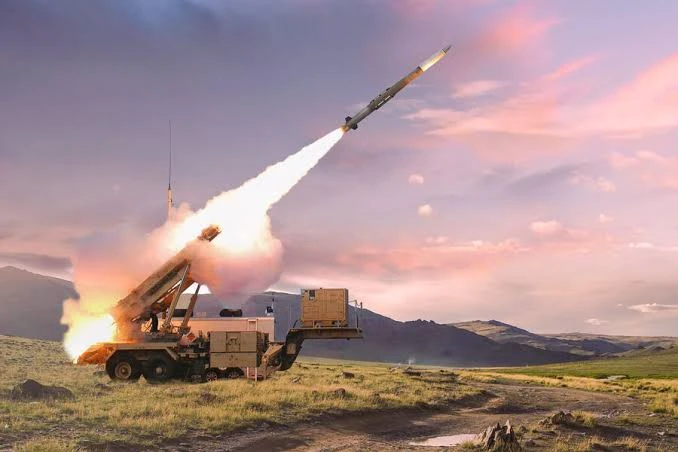
The United States is responding with strikes on Iranian capabilities used to attack commercial shipping. These include missile systems, drones, air defenses, radars and military infrastructure. But every new strike both reduces part of Iran’s capability and pushes Tehran toward another response. In this way, the conflict begins to feed itself.
Restoring the blockade of Iranian ports may become the most serious step in this spiral. A blockade is not merely a sanction or a patrol. In international practice, it is almost always understood as an act of war, or at least as a sharp expansion of armed conflict. That is why its return inevitably raises the question of presidential authority.
Trump has already notified Congress that hostilities with Iran have resumed. This recognition matters not only formally. It opens a domestic American struggle over who has the right to decide questions of war. Congress is demanding either an end to the war or approval for its continuation. The president insists he has enough authority to act on his own.
That dispute over war powers may become the second front of the Iran war — this time in Washington. If the president unilaterally expands the operation into a blockade, control of the strait and fees on international trade, it goes beyond an ordinary response to an attack. It creates a new strategic regime that inevitably requires political legitimacy.
The situation is also difficult for U.S. allies. Countries dependent on Persian Gulf energy want a safe Hormuz, but they do not necessarily want an American fee on goods. Europe and Asia may support the containment of Iran, but the idea of paying for American protection of the strait could provoke resistance even among Washington’s partners.
That is the risk in Trump’s approach. He turns an international security problem into a transaction: the United States protects, everyone else pays. This logic works well as a political slogan, but in a real maritime crisis it can split a coalition. Freedom of navigation in Hormuz is needed by all, but not all are ready to recognize an American right to monetize it through military power.
Iran, despite its weaker military position, retains leverage that does not disappear after American strikes. It sits at the edge of the strait. Its missiles, drones, boats, mines and coastal systems allow it to constantly generate risk for shipping. The United States can inflict painful blows, but it cannot change geography without total war.
That is why Hormuz remains a trap for both sides. Iran cannot fully close the strait without risking a devastating response. The United States cannot fully guarantee its safety without committing to a long operation. Each side has enough force to obstruct the other, but not enough to impose a stable order without a political settlement.
The previous cease-fire was supposed to reduce this danger, but it only postponed it. Iran used the ambiguity of the agreement to claim control over passage. The United States is now responding not only with strikes, but with its own claim to a model of control. As a result, the strait is caught between two coercive interpretations, neither of which guarantees calm movement for ships.
The proposed 20 percent fee is especially dangerous. It may be conceived as a way to shift security costs onto users of the route. But in the eyes of many countries, it will look like an American attempt to charge rent on a global artery. If Iranian fees were seen as blackmail, American fees may be seen as coercive rent.
For the energy market, the difference between Iranian coercion and an American charge may matter less than the simple fact of instability. Traders react not to the legal purity of arguments, but to the risk of delays, attacks, blockades, insurance spikes and political decisions. Every new element of uncertainty is priced into the barrel.
That means Trump risks getting exactly what he sought to avoid: rising fuel prices, inflationary pressure and the United States being pulled into a long war. His previous deal with Iran was meant to reopen Hormuz and calm markets. Its failure now leads to the opposite result — blockade, passage fees and another cycle of strikes.
For Tehran, the price is also high. Restoring the blockade of its ports will hit an Iranian economy already exhausted by sanctions and war. If the United States truly cuts off maritime channels, Iran will have even less room for exports, imports and hard-currency inflows. But the regime may be willing to endure economic pain if it can show its domestic audience resistance to American diktat.
The next phase of the conflict will therefore be not only military, but psychological. Washington will test whether Iran cracks under blockade and strikes. Tehran will test whether Trump can withstand the political, economic and energy costs of a prolonged confrontation. Hormuz will become an indicator of whose endurance is weaker.
The core problem is that both sides may underestimate the other’s limits. Trump may assume Iran’s economy will crack first. Iran may assume the American president cannot withstand rising prices and congressional pressure. If both assumptions are wrong, the conflict will stretch on without a clear exit.
The global economy, meanwhile, is becoming hostage to a narrow strip of water. Hormuz has long been more than a maritime strait. It is the nerve of the energy market, a test of American power, a lever of Iranian coercion and a mirror of rushed diplomacy’s weaknesses. Now an American attempt to monetize security is being added to that mix.
Trump wants to show that the United States will not let Iran dictate the rules of Hormuz. But if the response is an American blockade, control and a fee on goods, the question of freedom of navigation will not disappear. It will merely change form: who has the right to set the price of passage through the world’s most important energy artery?
Thus Hormuz again becomes the place where military force collides with economic dependence. The United States can launch more strikes. Iran can create more risk. Markets can price in more fear. But none of those tools, by itself, produces stability.
The return of the blockade means the cease-fire is effectively over. What lies ahead is a struggle not only over Iranian ports or tanker routes, but over the very model of control over global chokepoints. If that model is built on strikes, fees and mutual revenge, Hormuz will remain open only on the map. In reality, it will increasingly look like a paid corridor through war.