




















The published text of the U.S.-Iran arrangement matters not as a final peace treaty, but as a map of future risks. The document is called a memorandum of understanding, and that term matters: it fixes a political framework while leaving the hardest questions for the next stage.
Formally, the agreement promises an end to hostilities, the reopening of the Strait of Hormuz, the lifting of the naval blockade, oil waivers, access to frozen Iranian funds and negotiations over the nuclear program. But a strict reading shows something else: real U.S. concessions begin immediately, while Iran’s central obligations are deferred.
The weakest point is not one isolated phrase, but the sequence of the document. Iran first receives economic breathing room, maritime access, oil relief and the prospect of sanctions dismantlement. In return, the nuclear program, inspections, uranium enrichment and the future security architecture are merely pushed into negotiations.
According to Daycom’s assessment, the memorandum creates an asymmetry of time: Washington pays in advance, while Tehran accepts mostly framework-level, delayed and vaguely verifiable obligations. That is why the document may become not the end of the war, but a pause in which Iran rebuilds resources before the next round of confrontation.
The first paragraph is the broadest. The parties declare an “immediate and permanent termination of military operations on all fronts, including in Lebanon.” This is not merely ceasefire language between the United States and Iran. The reference to Lebanon moves the agreement into the heart of Israel’s security doctrine.
The words “including in Lebanon” are critical. They mean that a future deal could affect Israel’s room for action against Hezbollah and Iranian infrastructure in Lebanon. The United States cannot legally bind Israel automatically, but politically Tehran receives a tool to pressure Washington over any future Israeli strikes.
The same paragraph commits the parties to respect “the territorial integrity and sovereignty of Lebanon.” For Beirut, that sounds like a guarantee. For Israel, it may look like a potential restriction on freedom of action in southern Lebanon. For Iran, it is a diplomatic shield for the space where its proxy network has built military depth for decades.
The second paragraph contains the classic noninterference formula: the parties undertake “to refrain from interfering in each other’s internal affairs.” On paper, this is standard diplomatic language. In practice, it closes or at least complicates the regime-change rhetoric Washington used during escalation.
For Tehran, this paragraph has symbolic value. It places American and Iranian conduct on the same legal plane, as if both sides were equivalent actors with mutual grievances. That is useful to Iran: a regime that has spent years building networks of coercive influence abroad receives a formula protecting its own domestic immunity.
The third paragraph promises a final deal “in maximum 60 days extendable with mutual consent.” Sixty days for such a complex set of issues — the nuclear program, sanctions, regional security, Hormuz, assets, oil exports and U.S. military presence — looks less like a realistic schedule than a political deadline.
That timeline may be useful for the White House, but dangerous for substance. If no final deal is reached, temporary relief will already be operating. If the deadline is extended “with mutual consent,” Iran gains an incentive to stretch negotiations while retaining part of the benefits and moving the crisis into diplomatic fog.
The fourth paragraph is one of Tehran’s largest gains. The United States undertakes to begin removing the naval blockade immediately and “fully end the naval blockade within 30 days.” That means the restoration of exports, imports, logistics, insurance, maritime trade and Iran’s broader economic circulation.
Even more important is the future U.S. commitment “to remove its forces from the proximity of the Islamic Republic of Iran within 30 days after the final deal.” For Iran, this is not only a military result. It is a strategic image of victory: a regional power forcing a global superpower to pull back from its borders.
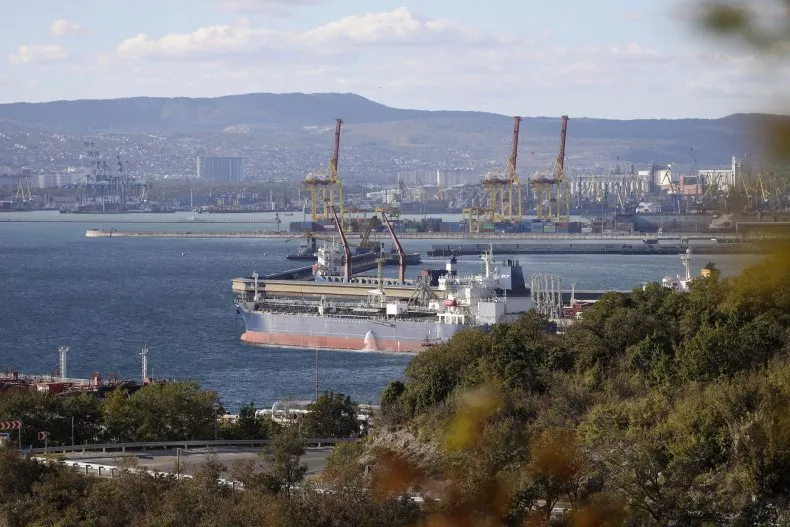
The fifth paragraph on the Strait of Hormuz looks technical, but it contains a central risk. Iran promises “best efforts for the safe passage of commercial vessels,” but only “with no charge for 60 days only.” The phrase “60 days only” changes the nature of the arrangement.
Before the war, freedom of passage through Hormuz was not a paid Iranian concession. If Tehran gains room after 60 days to impose fees, it will effectively monetize a crisis it helped create. That would not be a return to the prewar order, but a new regime in which Iran can turn the strait into a recurring instrument of pressure.
The sixth paragraph opens the most politically explosive question inside the United States and among allies. Washington, together with regional partners, undertakes to develop a plan “with at least U.S.D. 300 billion for the reconstruction and economic development” of Iran.
Even if American money does not flow directly into that fund, the United States assumes a key role: “All required licenses, waivers and permissions” are to be granted by Washington. This means America is not merely allowing others to pay. It is opening the financial gates without which such reconstruction cannot function.
For Israel, Saudi Arabia and part of the Republican Party, this will look less like stabilization than the financing of an adversary’s recovery. Money that Washington may call reconstruction will be read in Jerusalem as future missiles, proxy networks, tunnels, drones and renewed military infrastructure.
The seventh paragraph concerns sanctions and effectively creates a path toward their full dismantlement. The United States undertakes “to terminate all types of sanctions,” including U.N. Security Council resolutions, IAEA Board of Governors resolutions, and all unilateral U.S. sanctions — “primary and secondary.”
This is maximalist language. It does not describe partial relief or a limited humanitarian corridor. It describes the goal of full sanctions cleansing for Iran. But the most important part is hidden in the words “in an agreed-upon schedule”: the order of sanctions removal has not yet been defined.
That schedule will become the battlefield. If sanctions are lifted before irreversible nuclear concessions, the United States loses its main lever. If Washington demands deep dismantlement first, Iran can accuse it of violating the spirit of the memorandum. The document builds in a conflict of interpretation before negotiations even begin.
The eighth paragraph is the heart of the agreement because it deals with the nuclear program. But its language is dangerous precisely because it is vague. Iran merely “reaffirms that it shall not procure or develop nuclear weapons.” The word “reaffirms” signals not a new concession, but the repetition of an old obligation.
Iran has formally said before that it does not seek nuclear weapons. The phrase therefore does not alter the strategic picture. It does not dismantle centrifuges, close facilities, ban enrichment, remove material from the country or create a new inspections regime.
The document addresses enriched material: the parties are to agree on a mechanism for its disposition, with the minimum methodology being “down-blending on site under the supervision of the I.A.E.A.” This is better than no action, but much weaker than transferring the stockpile outside Iran.
The words “on site” are essential. If the material remains in Iran, Tehran retains physical control over the nuclear resource, even if it is temporarily diluted. That provides fewer guarantees than a model in which enriched uranium is shipped to a third country.
Another critical phrase is “to discuss the issue of enrichment.” That means enrichment is not resolved. Iran has not agreed to stop enrichment. It has agreed to discuss it. For a deal meant to end a war triggered by nuclear danger, that is a weak center.
Equally important are the words “Iran’s nuclear needs.” They legitimize Iran’s position that it has a right to some nuclear capability for peaceful purposes. The problem is that under this formula Tehran has long defended infrastructure that preserved the potential for a rapid move toward military capability.
The ninth paragraph freezes the status quo pending a final deal: Iran maintains “the current status quo of its nuclear program,” while the United States imposes no new sanctions and deploys no additional forces in the region. At first glance, this looks stabilizing. In reality, it freezes the conflict on terms both sides will interpret differently.
For the United States, it means a pause in escalation. For Iran, it means protection from new pressure during negotiations. If U.S. strikes did damage nuclear infrastructure, Tehran can use the time to assess, conceal restoration or bargain diplomatically over each site.
The tenth paragraph gives Iran another immediate gain. The United States undertakes to issue waivers for the export of “Iranian crude oil, petroleum products and derivatives,” as well as associated services: “banking transactions, insurances, transportation.” This effectively restores Iran’s oil oxygen before a final nuclear agreement exists.
This point is especially dangerous for Washington’s negotiating position. Oil is the most durable U.S. economic lever against Iran. If it is relaxed at the start, Tehran receives revenue before America receives verifiable nuclear limits.
The eleventh paragraph is even sharper. The United States undertakes to make frozen or restricted Iranian funds available “upon the implementation of this M.O.U.” Not after the final deal. Not after nuclear verification. Not after dismantlement. Upon implementation of the memorandum.
The most alarming phrase is that funds may be used for payments “to any ultimate beneficiary designated by the Central Bank of the Islamic Republic of Iran.” The words “any ultimate beneficiary” open a dangerous field: absent hard restrictions, Iran could direct resources to structures tied to its military, intelligence or sanctioned networks.
The twelfth paragraph promises to establish “an executive mechanism” to monitor implementation of the memorandum and future compliance with the final deal. But this is only the promise of a mechanism, not the mechanism itself. There are no details on inspections, access, timelines, penalties, snapback provisions or IAEA authority.
Without those details, any agreement remains a political declaration. In the nuclear field, verification is more important than promise. Words about verifiability cannot replace inspectors’ rights to enter facilities, see materials, monitor centrifuges and record violations without delay.
The thirteenth paragraph shows that negotiations on the final deal begin only after implementation starts on key concessions: Paragraphs 1, 4, 5, 10 and 11. In other words, after the end of operations, the lifting of the blockade, the opening of maritime passage, oil waivers and access to assets.
This is the document’s core structural problem. The most valuable items for Iran are activated before the nuclear questions are finally resolved. Tehran enters the next round of negotiations no longer under maximum pressure, but with partially restored revenues and international legitimacy.
The fourteenth paragraph provides that the final deal will be endorsed “by a binding U.N.S.C. resolution.” That could give the arrangement international weight and make future dismantlement harder. But it also raises a domestic U.S. problem: the text contains no reference to Congress.
For Trump, this may be a way to frame the result quickly at the international level. For critics, it will look like the White House is trying to pass the most consequential Iran deal through executive diplomacy without full domestic legitimization. After the experience of the 2015 nuclear deal, this is politically explosive.
In strict terms, the memorandum has three major defects. First, it advances benefits to Iran: the blockade, oil, assets and sanctions pathway move faster than nuclear concessions. Second, the key limits are vague: enrichment, inspections, stockpiles and proxy networks remain unresolved. Third, it strikes at allies, above all Israel, through Lebanon and the narrowing of future military space.
This does not mean the deal is doomed. It could stop the war, reopen the Strait of Hormuz, lower energy pressure and create a channel for nuclear control. But the text looks more like a ceasefire with a large advance payment to Iran than a hard Iranian capitulation on the nuclear question.
The central question now is not whether Trump will call the agreement a victory. He will. The real question is whether Washington can, within 60 days, turn phrases like “to discuss,” “mutually agreed,” “best efforts” and “status quo” into hard, verifiable and irreversible limits.
If not, this memorandum will enter history not as a peace that stopped the Iranian threat, but as a document that gave Tehran money, time, maritime access and diplomatic cover while leaving the most dangerous elements — nuclear potential and the regional network of force — for later.