

















Ukraine’s recovery is looking less and less like a postwar dream postponed until the guns fall silent. It is moving into the realm of agreements, loans, investment funds and projects that must begin while the war is still underway, while Russian missiles continue to strike energy infrastructure, cities and industry.
In Gdańsk, Ukraine expects to sign more than 160 agreements worth over €10 billion. For a country living through the fourth year of Russia’s full-scale war, this is not simply a diplomatic success. It is an attempt to translate allied confidence into concrete financial and industrial commitments.
The Polish venue carried the risk of being overshadowed by tension between Kyiv and Warsaw over historical memory, Volhynia and the UPA. But the opening of the conference showed a different logic: political wounds remain, yet Europe’s strategic need for a strong Ukraine has become too large to postpone.
According to Daycom’s assessment, Gdańsk became a test not only for Ukraine’s reconstruction, but for Europe’s ability to treat recovery as part of its own security. Ukraine is not asking for charity after destruction. It is asking for a place in the continent’s economic, defense and energy architecture.
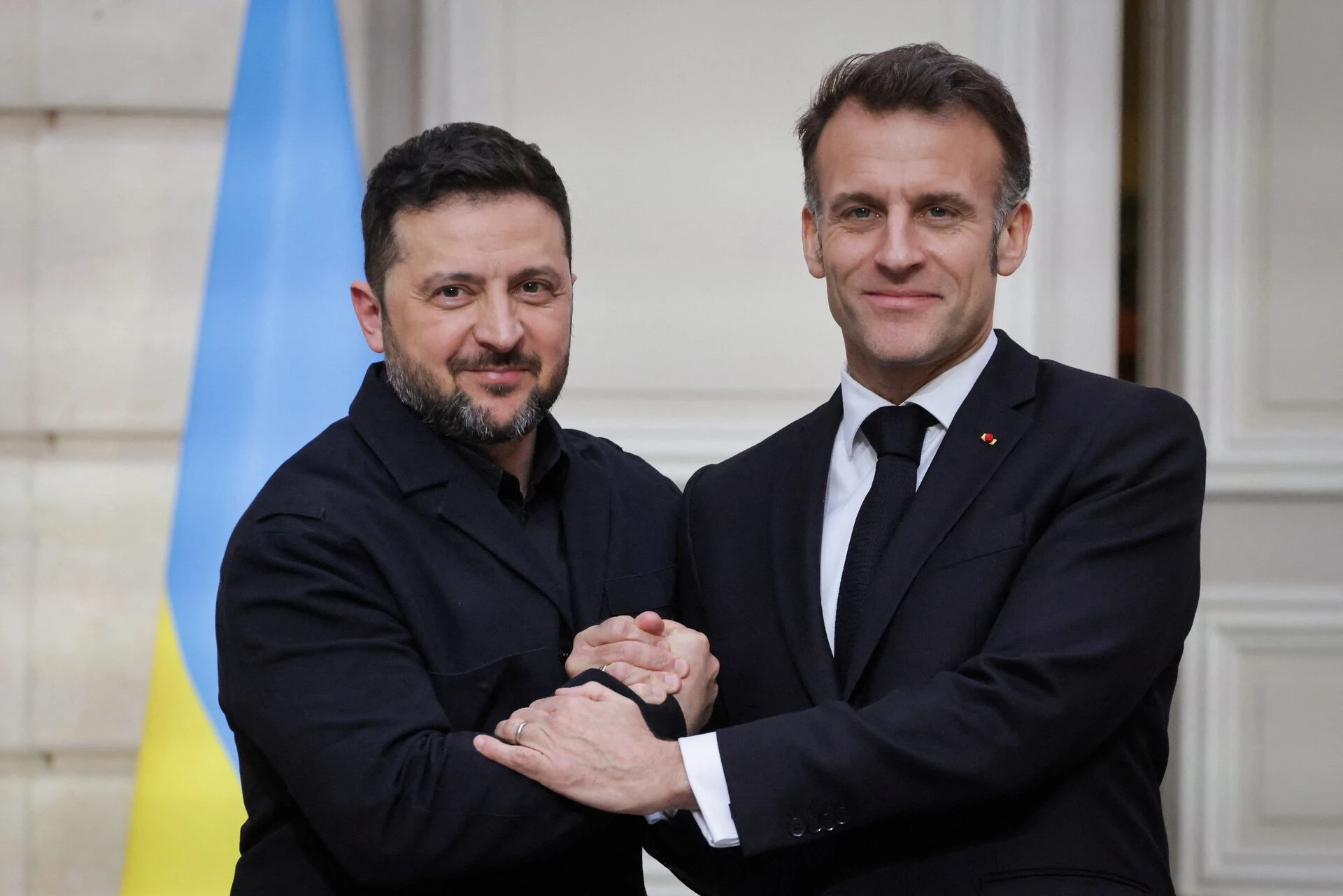
Prime Minister Yulia Svyrydenko framed it directly: Europe’s challenges have become existential, and Ukraine has been forced to innovate in order to survive. That sentence captures Kyiv’s new positioning. Ukraine is no longer speaking only in the language of losses. It is speaking in the language of capability.
This is an important shift. In the first years of the full-scale war, Ukrainian diplomacy was built around urgency: weapons, air defense, budget financing, refugee support and emergency repairs to the energy system. Now another logic stands beside it — Ukraine as Europe’s future production, defense and technology partner.
On the sidelines of the conference, Kyiv signed a $3.39 billion agreement with the World Bank under a development program focused on growth and jobs. For Ukraine’s economy, this carries a double meaning: the money is needed immediately, but it also has to enter a framework of reform, employment and long-term resilience.
Another signal came with the first €3.2 billion tranche from the European Union’s large €90 billion loan package. Ukraine plans to use the money for defense and security, energy resilience and covering the budget deficit. The priorities themselves show how far the line between war and recovery has blurred.
Defense is no longer a separate sector sitting beside the economy. It has become a condition for any investment. Energy resilience is no longer a technical matter for engineers. It determines whether factories, schools, hospitals, transport and communities can function. Budget stability is no longer accounting. It is the rear line of statehood.
The European Commission also said an investment fund for Ukraine’s reconstruction, backed by the EU, France, Germany and Poland, is ready to launch. It is expected to mobilize around €500 million this year. The amount does not change the full scale of need, but the mechanism matters: public guarantees are meant to pull in private capital.
Private capital remains the most difficult part of Ukraine’s recovery. Donors can close budget gaps, governments can issue loans, and international institutions can create programs. But reconstruction worth hundreds of billions of dollars is impossible without businesses, banks, risk insurance and projects that can be financed not out of sympathy, but because they make sense.
The estimated cost of Ukraine’s recovery over the next decade has reached $588 billion. The number is so large that it can easily become abstract. In reality, it means power stations, bridges, housing, schools, hospitals, ports, roads, water systems, factories, digital infrastructure and millions of people trying to return to normal life.
But money alone does not rebuild a country. Ukraine needs bankable projects, clear legislation, transparent rules on land and property, independent courts, war-risk insurance, corruption control and capable local communities. This is where the romance of reconstruction meets hard administrative labor.
The problem can be described simply: the main obstacle is not always a shortage of funding, but the conversion of needs into bankable projects. A destroyed school is an obvious need. But for major capital, there must be a budget, an owner, guarantees, a contractor, procurement rules, a source of maintenance and political predictability.
That is why the Gdańsk conference matters as more than a showcase of support. It is a place where Ukraine must convince partners that it can manage recovery not as an endless humanitarian stream, but as a modernization process. Otherwise, the risk is clear: money will arrive, but it will not form a new quality of statehood.
The Polish context gives the forum special weight. Relations between Kyiv and Warsaw are passing through a difficult moment after Ukraine’s decision to honor a military unit with a name linked to the UPA and Poland’s sharp response. Historical memory has again shown that even the closest alliance has deep nerves.
Poland remembers the Volhynia killings as one of the gravest traumas of the 20th century. Ukraine sees anti-Soviet resistance as part of its struggle for statehood. These two memories do not disappear because of today’s war against Russia. Under pressure, they can become even sharper.
That is why Donald Tusk’s words about the need to understand one’s own history and show a genuine readiness for reconciliation did not sound like a ritual phrase. They sounded like a political condition for an adult alliance. Poland wants to see Ukraine in a united Europe, but such integration requires not only a shared enemy, but honest work with the past.
For Ukraine, this is a painful but unavoidable lesson. It cannot build a European future while ignoring the historical fears of its neighbors. But Poland, too, cannot turn memory into an instrument for weakening a country that is holding Russia back on Europe’s eastern flank. Reconciliation here is not moral decoration. It is part of security.
Against that background, the economic agreements in Gdańsk become a way to hold the strategic horizon. Political disputes may strike at emotions, but reconstruction demands a colder logic: a strong Ukraine is necessary for Poland, and Poland remains one of Ukraine’s key rear and logistics spaces.
Gdańsk works as a symbol better than almost any capital could. It is a Baltic port city associated with Polish freedom, European trade and resistance to imperial pressure. Holding a Ukraine Recovery Conference there places reconstruction not on the margins of war, but at the center of Europe’s political imagination.
Ukraine’s economy is not waiting for ideal conditions. It is adapting under bombardment, relocating production, repairing energy facilities, launching defense technologies, seeking investors and maintaining social spending at the same time. That is why the idea that recovery is not waiting for the war to end became the forum’s real message.
This does not mean the risks have vanished. The war continues, Russian strikes on energy infrastructure can again alter priorities, political conflicts in Europe can complicate decisions, and fatigue among societies can weaken willingness to finance Ukraine. But the Gdańsk agreements show that another dynamic exists as well.
Ukraine is trying to move from the image of a country that must be supported to the image of a country worth investing in. The difference is subtle, but fundamental. Support rests on solidarity. Investment rests on belief in future value, political resilience and the capacity to deliver results.
This is where the long battle for postwar Ukraine is being decided. Russia destroys in order to make the country economically exhausted and dependent. Europe invests to show the opposite: that the Ukrainian state can not only survive, but become part of a new continental order — defensive, energy-based, industrial and political.
More than €10 billion in expected agreements from Gdańsk will not cover Ukraine’s recovery needs. But they set a direction. If these agreements become working projects, jobs, rebuilt infrastructure and new energy resilience, the conference will be more than an annual forum. It will become one of the nodes of a future European Ukraine.