




















Russia has changed the intensity of its air war against Ukraine in a way designed to strike not only cities, energy sites and rear infrastructure, but the logic of Ukrainian defense itself. Its current bet is on massive combined attacks, in which drones overload the system and ballistic missiles leave almost no time to react.
For Ukraine, this creates a problem that cannot be solved by courage alone or by better organization of air-defense shifts. The country’s defenses are increasingly running into a shortage of American-made Patriot interceptors — the missiles that remain Ukraine’s most important tool against Russian ballistic attacks.
Recent weeks have shown how quickly this shortage moves from a technical issue to a political and humanitarian one. When a single assault can include more than a thousand drones and dozens of missiles, air-defense commanders are not simply repelling an attack. They are forced to decide which targets must be destroyed first, and which may break through.
According to Daycom’s assessment, this is one of the most dangerous moments of the current stage of the war. Ukraine has an experienced, layered air-defense network, but Russia is trying to break it not through one decisive breach, but through exhaustion: the number of launches, the speed of ballistic missiles, the geography of strikes and the scarcity of the most expensive interceptors.
Patriot is not a symbolic umbrella. It is a complex combat system: radar, command post, launchers, trained crews and interceptor missiles. When the interceptors run out, the system can still see the threat, track it on screen and calculate its trajectory. But it no longer has anything with which to stop the strike.
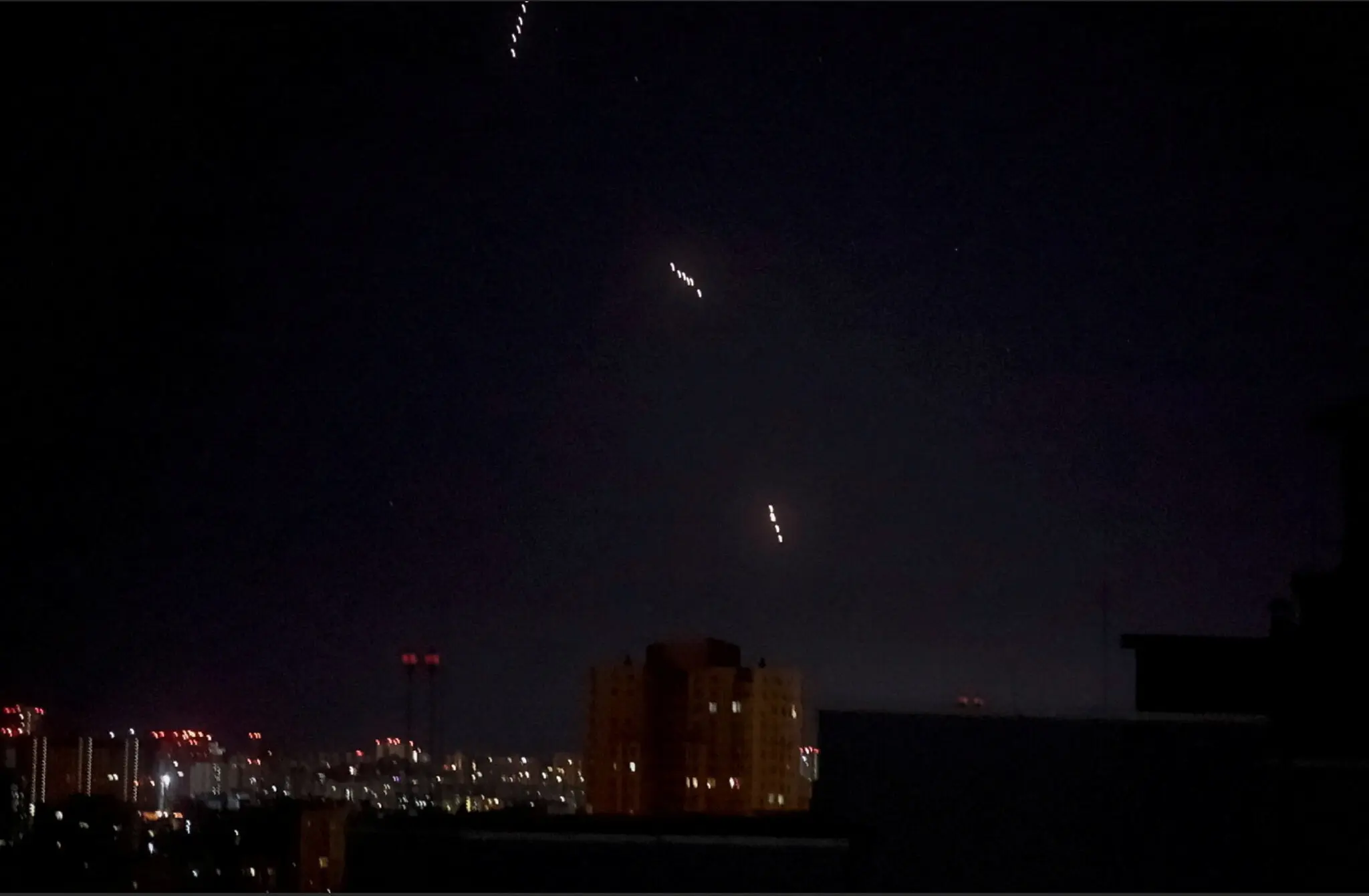 Російські ракети — які, за даними Повітряних сил України, ймовірно, є гіперзвуковою балістичною ракетою «Орешник» — пролітають над Києвом у травні — Гліб Гаранич
That is why the most painful question is not how many systems exist on paper, but how many missiles are loaded in a specific battery on a specific night. Ukraine may have a highly advanced system, but if the launchers are empty after previous waves, the next ballistic target becomes a problem no political statement can solve.
The most critical element remains the PAC-3 interceptor, capable of engaging ballistic missiles. This is a weapon of a different level of precision. It must meet a target falling from enormous altitude at extreme speed, and do so within a very narrow window of time. In this kind of war, error is not measured in meters on a map, but in lives inside the building toward which the missile is flying.
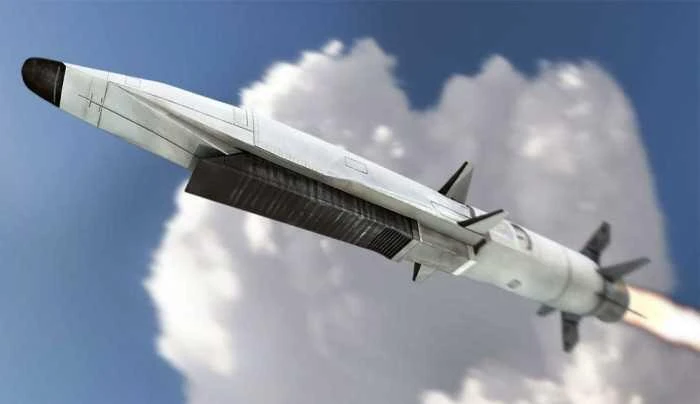
Ballistic missiles differ from drones and cruise missiles precisely because they compress the decision. A drone can be detected, tracked, transferred between zones of responsibility and shot down by mobile teams, antiaircraft guns or interceptor drones. A ballistic missile arrives faster, harder and with almost no second chance.
Russia sees this vulnerability clearly. In 2023, it launched dozens of ballistic missiles. By 2025, the number had risen into the hundreds. In 2026, the pace could become even higher if Moscow sustains its current intensity. That means ballistic missiles are no longer an occasional instrument of intimidation. They are becoming a regular tool for exhausting Ukrainian air defense.
There is a clear military logic behind this shift. First, waves of drones force Ukraine to spend attention, ammunition, mobile-team resources and operator time. Then cruise missiles stretch defenses along their routes. Finally, ballistic missiles strike at the point where the fastest and most expensive response is required.
 Пожежники працюють на місці Успенського собору Києво-Печерської лаври, який горить після ураження під час російських ракетних ударів та ударів безпілотників на тлі нападу Росії на Україну, у Києві, Україна, 15 червня 2026 року — Міністр культури України Тетяна Бережна
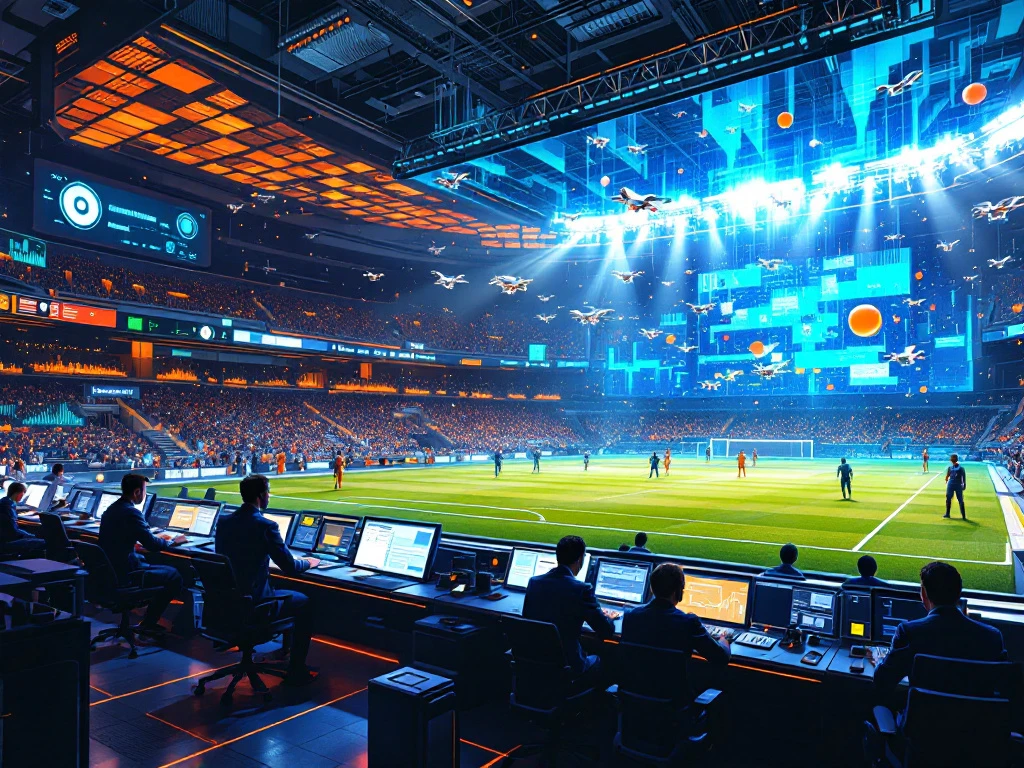
In such a configuration, even a strong air-defense system cannot work as an absolute shield. Colonel Yurii Ihnat compared the situation to a goalkeeper facing 10 balls at once. He can stop only as many as his hands and feet allow. In the case of Patriot, those “hands and feet” are the number of ready interceptors in the launchers.
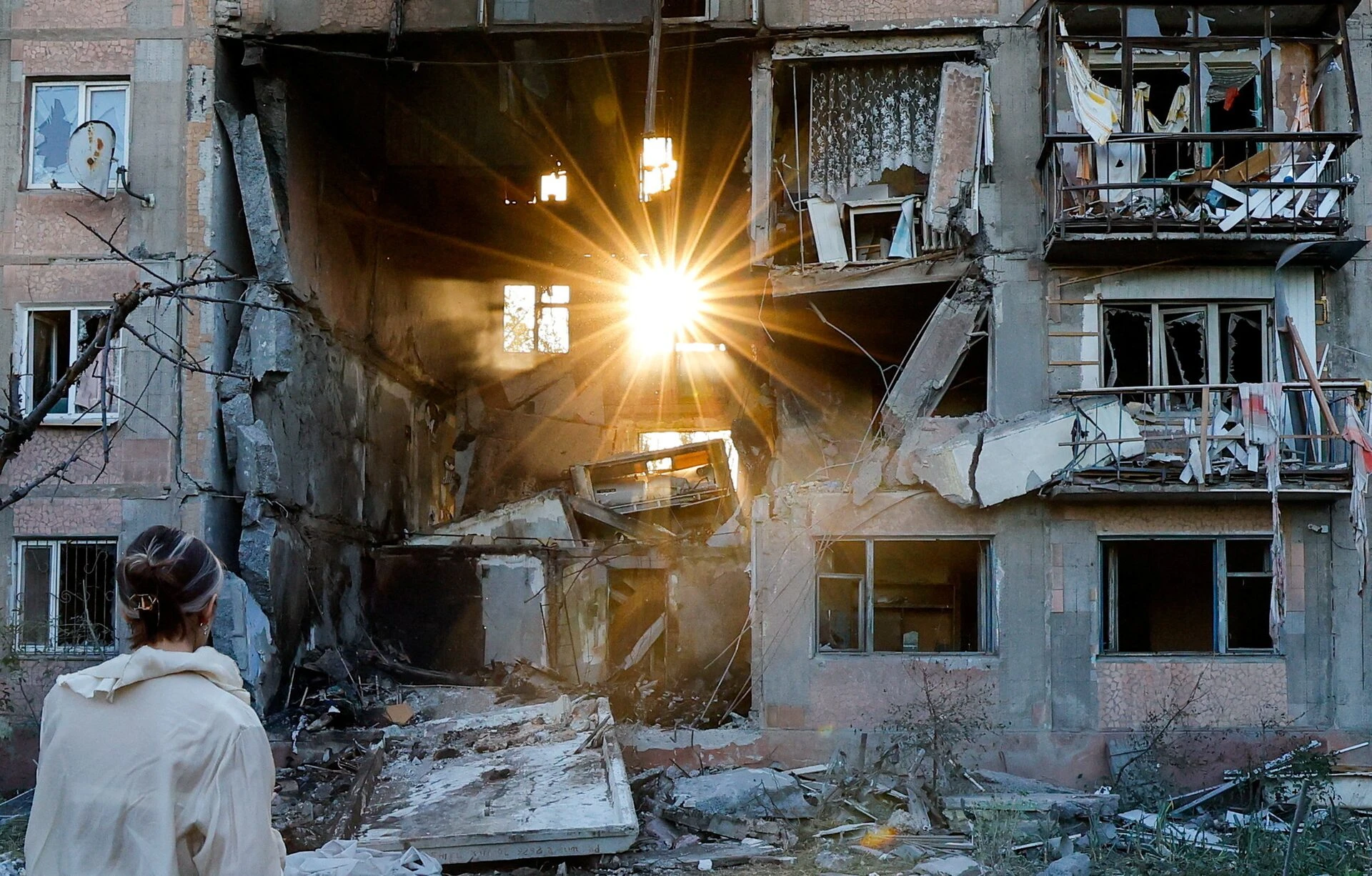
The price of that arithmetic is already visible to civilians. A strike on an apartment building in Kyiv that killed 24 people destroyed what remained of the sense that the capital could be reliably protected by the mere presence of Patriot systems. The system saves lives, but it is not magic. Its capacity ends where its ammunition ends.
Ukraine does not rely on Patriot alone. Its defensive network includes European air-defense systems, antiaircraft weapons, fighter aircraft, helicopters, mobile teams, interceptor drones and a growing domestic engineering base. Against drones and some cruise missiles, this mosaic can work effectively. But against ballistic targets, Patriot remains the critical link.
The problem is deepened by Ukraine’s size. One battery cannot simultaneously protect Kyiv, the eastern front, ports, energy facilities, industrial districts and military hubs. A system in the west cannot defend the east. A battery near the capital cannot cover cities hundreds of kilometers away. Ukrainian geography stretches every shortage.
There is also the constant threat of Russia hunting the systems themselves. Moscow tries to detect radars, launchers, missile storage sites and trained crews. Ukraine therefore cannot keep interceptors in one place or concentrate them too visibly. Supplies must be dispersed, which makes it harder to reload batteries quickly during repeated attacks.
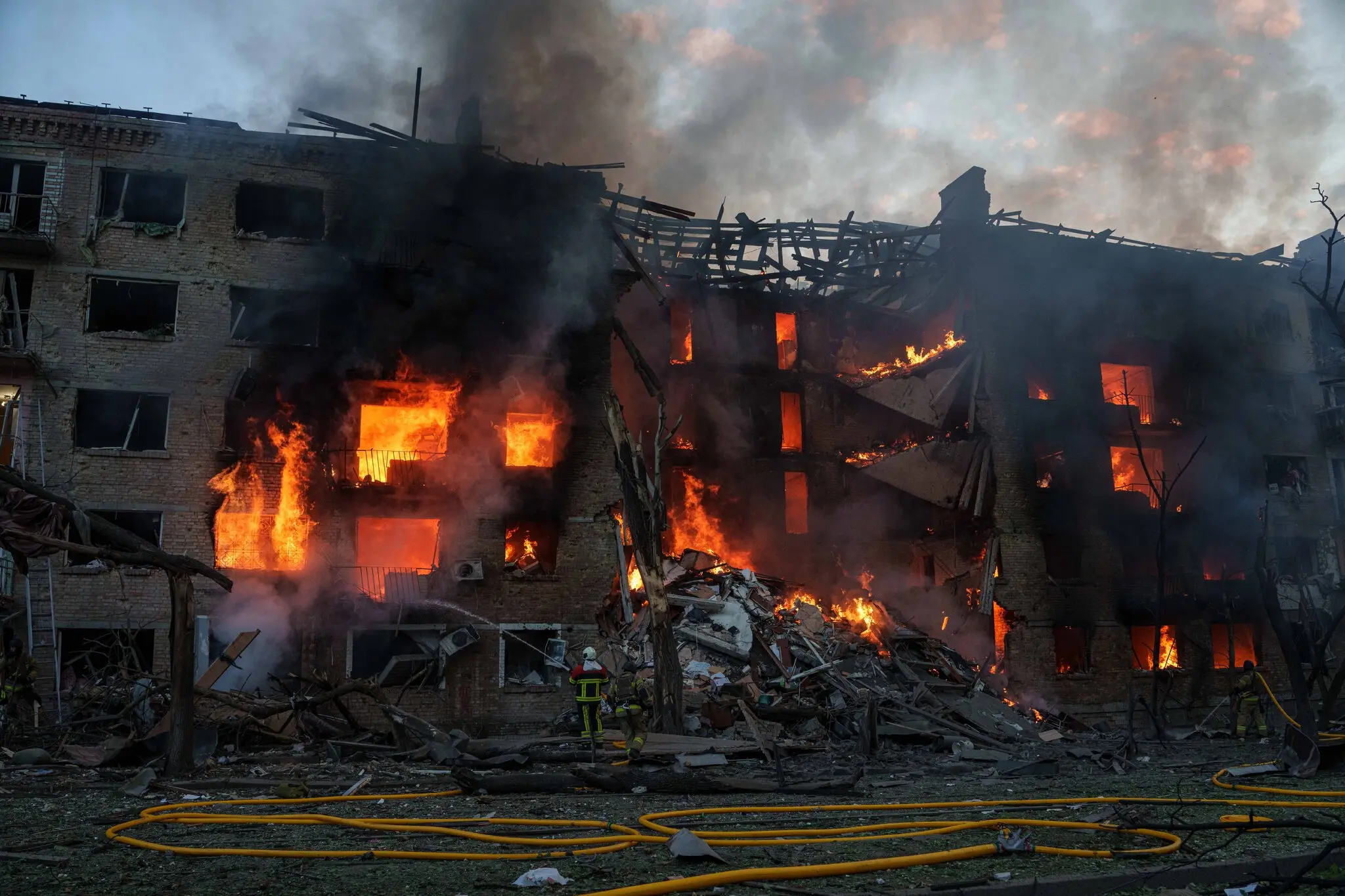 Рятувальники намагаються загасити пожежу в житловому будинку в Києві, столиці України, після російського удару в травні — Євген Малолєтка
Former air-defense officer Valerii Romanenko described the worst scenario without embellishment: a unit sees incoming missiles, but its launchers are already empty. That is the moment when technological superiority becomes a hollow shell. The radar sees the tragedy, but cannot stop it.
The shortage also has a global dimension. PAC-3 interceptors are slow, expensive and dependent on complex supply chains. They cannot be “printed” quickly by a government decision. Production lines, motors, electronics, quality control, contractors, components, testing and time are all required.
This is where Ukraine’s need collides with global demand. Conflict with Iran, tensions in the Persian Gulf and allies’ own missile-defense requirements create a queue for the same interceptors. In a world where several regions are living under missile threat at once, Patriot is no longer just a weapon. It is a scarce strategic resource.
For Ukraine, this is especially painful because Russian ballistic missiles do not strike abstract “targets.” They strike cities, power plants, residential blocks, transport hubs and the psychological endurance of society. In this war, every interceptor is not a warehouse item. It is the chance that the next missile will not hit a home.
Western armies spent years maintaining high-tech stockpiles, but they were not prepared for their mass expenditure in a long war against a major power. Ukraine has become the place where that weakness has appeared most sharply. Modern war has shown that it requires not only the best weapons, but an industry capable of producing them at the pace of attrition.


This is one of the central strategic errors of the prewar era. The West invested in quality but underestimated quantity. Russia, by contrast, combines less sophisticated systems with mass, repetition and a willingness to expend large numbers of missiles and drones to overload defenses. As a result, even a technologically stronger system runs into the blunt question of stock.
Ukraine is not standing still. It is developing its own interceptor drones, experimenting with new missile-defense tools, expanding engineering solutions, integrating European systems and looking for cheaper ways to destroy cheap targets. But anti-ballistic defense cannot be created in a few months. It cannot be assembled from commercial components in the same way that parts of Ukraine’s drone revolution were built.
Ballistic interception technology requires years of testing, precise sensors, reliable guidance, complex motors and real combat validation. Even when Ukrainian companies demonstrate promising systems, a long road lies between a successful test and stable protection for cities.
Partners are also searching for an answer. American and European defense companies are expanding production, opening new capacity and arranging component supply, including in Europe. But industry does not turn at the speed of a missile. What Ukraine needs tonight may often be produced only months or years from now.
That is why the current Patriot crisis is not a separate problem of Ukrainian aid requests. It is a test for the entire allied security system. If Europe and the United States recognize that Russia is waging a long war, they must build not short-term support packages, but a long-term missile-defense economy.
 Мешканці сплять, сховавшись у станції метро під час ракетного та безпілотного удару Росії в рамках російської агресії проти України, Київ, Україна, 15 червня 2026 року — Аліна Смутко
In that economy, Patriot must become not an exceptional gift, but part of a stable flow. Ukraine needs not only new batteries, but guaranteed interceptor stocks, fast logistics, repair capacity, crew training, protection for the systems themselves and planning measured in months ahead. Without that, even the most modern launcher may stand alone at the moment of the heaviest attack.
Russia’s calculation is simple: strike for a long time, strike often, and strike with different weapons until Ukrainian defense begins to let more through. This is a war not only against air defenses, but against public trust. Moscow wants Ukrainians to feel that no Western system can guarantee safety if there are not enough missiles inside it.
The answer must be just as systematic. Ukrainian resilience cannot rest only on the heroism of crews who stare at radar screens for days and choose between several deadly targets. It must rest on the productive advantage of allies, on industrial mobilization and on the understanding that Ukraine’s missile defense is part of Europe’s defense.
If Russia learns to pierce Ukrainian skies regularly through the sheer quantity of ballistic missiles, that will not remain only Ukraine’s problem. It will become evidence for every adversary of the West that high-tech defensive systems can be exhausted if attacked long enough and massively enough.
That is why the Patriot question now reaches far beyond another list of military aid. It is a question of whether the democratic world can produce protection as persistently as authoritarian regimes produce threat. Ukraine is asking for more interceptors not because it seeks symbolic support. It is asking for time, sky and the chance that the next ballistic missile will not become another sentence passed on a civilian city.