






















For years, Ukraine spoke to America in the language of international law, democratic solidarity and allied responsibility. Inside the MAGA movement, those arguments often failed. The war was cast as somebody else’s conflict, aid to Kyiv as wasteful spending and Vladimir Putin as a strong leader standing against the liberal order.
Kyiv is now trying to change not only the opinions of individual conservatives, but the entire frame of the debate. Ukraine increasingly presents itself not as a country asking to be rescued, but as a partner that has already demonstrated military competence, technological ingenuity and an ability to impose strategic costs on Russia.
The most visible symbol of that shift was a visit to Kyiv by far-right activist Laura Loomer, who has direct access to Donald Trump and once repeated Russian claims about a “Nazi-run” Ukraine. During the trip, she met Volodymyr Zelensky, senior officials, military figures, religious leaders and representatives of the defense industry.
As Daycom assesses it, the significance of the visit lies less in Loomer herself than in the audience Ukraine chose to address. Kyiv is no longer speaking only to the traditional foreign-policy establishment. It is entering a political world shaped by personal loyalty, influencers, media combat and proximity to Trump.
Loomer was a useful figure for that strategy. She holds no formal government post, but she is widely seen as someone Trump listens to. Her audience also treats her as part of his broader political ecosystem, regardless of her official status.
Her change of position was deliberately public. Loomer acknowledged that she had absorbed Russian propaganda and withdrew some of her previous attacks on Zelensky. For a MAGA audience, a conversion by a former skeptic can carry more weight than another statement from a diplomat or policy expert.
Ukraine had been preparing the ground for this kind of shift for years. Pro-Ukraine groups brought conservative pastors, Republican advisers, activists and right-wing media figures to the country. They showed them churches destroyed by Russian strikes, evidence of religious persecution and the daily work of Ukrainian soldiers.
The effort was designed to overcome a major obstacle. Russia had long cultivated an image among parts of the American right as a defender of Christianity, order and traditional values. Ukraine, by contrast, was often presented as a project of Democrats, globalists and the foreign-policy establishment.
Kyiv therefore began changing its argument. Instead of relying only on abstract appeals to defend democracy, supporters emphasized destroyed churches, pressure on clergy, the deportation of Ukrainian children, forced Russification and the suppression of religious life in occupied territories.
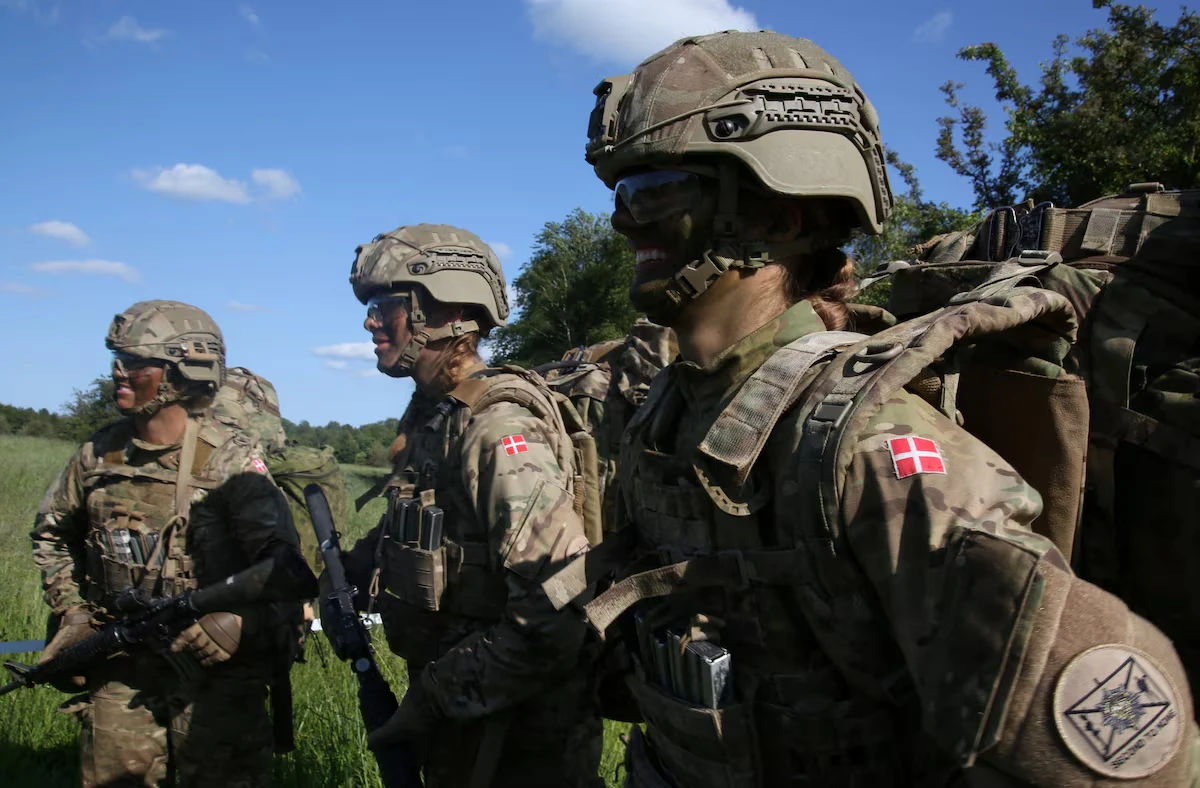
The military narrative changed as well. Ukraine was presented not as a helpless victim, but as a force that had badly damaged Russia’s Black Sea Fleet, developed an advanced drone industry, carried the war into Russian territory and repeatedly struck important military infrastructure.
That framing is especially important for Trump, whose political language revolves around strength, status and winning. Pro-Ukraine conservatives increasingly describe Putin not as a master strategist, but as a failing leader who has spent years, lives and money without achieving his central objectives.
The slogan “Putin is a loser” is not accidental. It speaks more directly to Trump’s political instincts than arguments about the rules-based international order. He prefers to be associated with winners, not leaders trapped in costly wars without a convincing result.
Ukraine is also reframing American support. Aid is increasingly described not as charity, but as an investment in U.S. security. Ukrainian counter-drone technology has value for protecting American troops and allies, while Ukraine’s battlefield experience is becoming a resource for modernizing Western militaries.
That may be the most persuasive case inside MAGA. It allows support for Ukraine to fit within “America First.” If Kyiv helps the United States protect its forces, allies and infrastructure, assistance no longer looks like a one-way transfer to a distant country.
Still, one successful visit does not amount to a political realignment. MAGA retains a powerful faction that is sympathetic to Russia, hostile to further U.S. involvement and inclined to view Putin as an ally against liberal institutions. Tucker Carlson, Candace Owens and others continue to shape the views of millions of conservative voters.
Paradoxically, the split on the American right over Iran created an opening for Ukraine. Trump supporters who backed strikes on Iran and close ties with Israel began clashing with the movement’s isolationist wing. Kyiv could then present Russia as part of a broader network of threats tied to Tehran and anti-American forces.
Loomer described her own shift in similar terms. After seeing that some of her fiercest rivals defended Russia, attacked Israel and opposed pressure on Iran, she began to question what else they had told her. Ukraine used that moment by giving her access, attention and a set of personal encounters that could challenge her assumptions.
For Kyiv, the trip was a carefully designed influence campaign. Loomer received high-level meetings, access to defense sites, conversations with military figures and symbolic encounters tailored to the interests of her audience. She was shown not an abstract geopolitical case, but stories that could be translated into emotionally direct content.
One of the most important meetings was with a senior Ukrainian rabbi whose son was killed fighting Russian forces. For a Jewish activist who had once repeated claims about a “Nazi Ukraine,” the encounter offered a personal rebuttal more powerful than a stack of official denials.
The central question, however, remains unchanged: Is Trump himself moving? He continues to shift positions, promise deeper cooperation and then retreat from his own statements. His posture toward Putin remains softer than Kyiv would like, and his decisions are often influenced by personal impressions and the last conversation he had.
That is why winning over MAGA cannot substitute for winning over the president. Conservative activists, pastors and media figures can make support for Ukraine more acceptable inside Trump’s movement, but the final decision still belongs to Trump.
Ukraine’s strategy is to make backing Kyiv feel politically natural to his base. That means presenting Ukraine not as an extension of Joe Biden’s foreign policy, but as an effective partner fighting a U.S. adversary, producing valuable military technology and demonstrating the capacity to win.
Ukraine has not conquered MAGA. But it has learned how to speak to it without an interpreter. It has replaced the language of guilt with the language of strength, the image of a victim with that of a partner, and the appeal for sympathy with an argument based on American advantage.
In Trump’s political world, that change in language may prove more important than any formal diplomatic message.