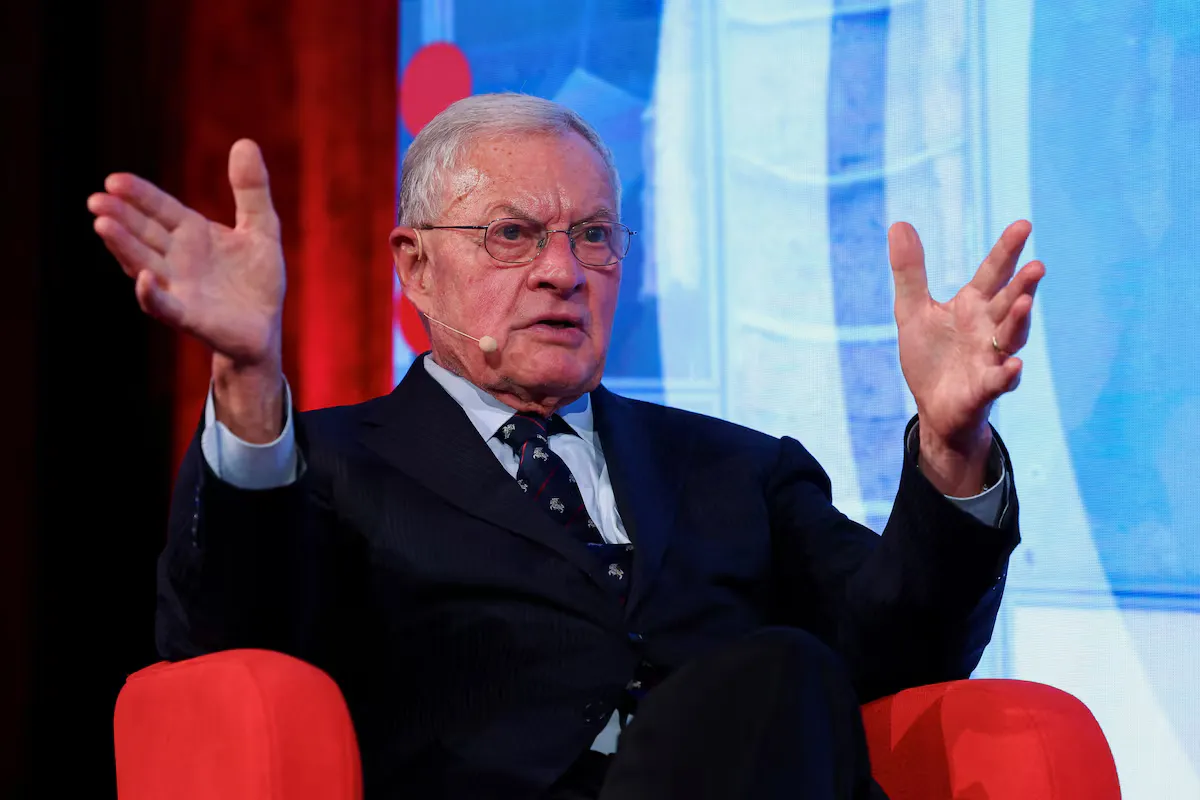



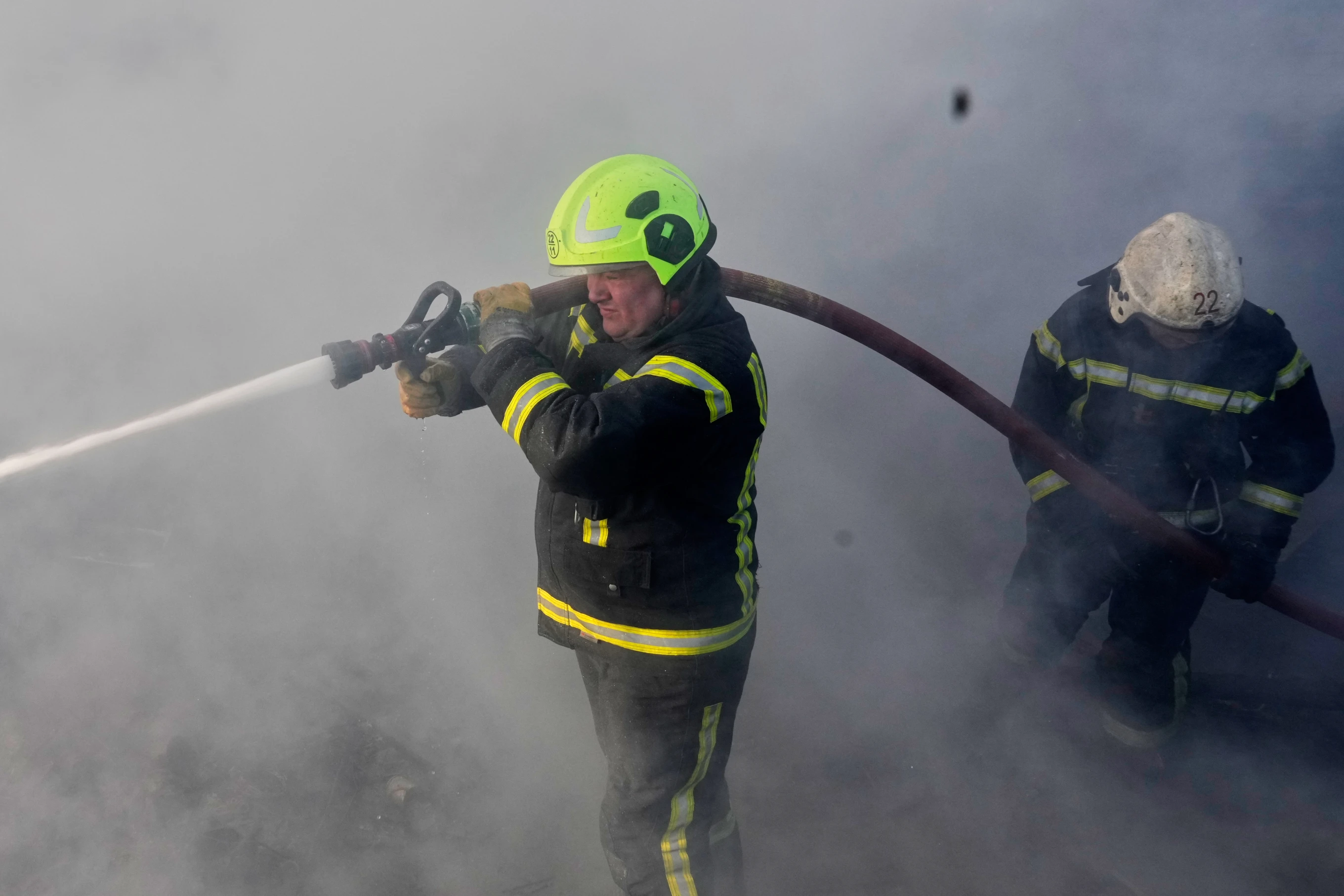






















Ukrainian drones have learned to do what recently seemed almost impossible: carry the war deep into Russia’s rear, striking refineries, airfields, depots and even Moscow. Images of black smoke over the Russian capital have become, for Ukrainians, a symbol of reply to the daily attacks on their own cities.
But behind that visible symmetry lies the war’s central military imbalance. Russia does not strike Ukraine only with drones and cruise missiles. Its most destructive instrument is ballistic missiles: fast, heavy, difficult to intercept and capable of breaking through even well-organized air defense.
It is ballistic power that has turned Russia’s air war into the main source of pressure on Ukraine at a time when the ground front is moving slowly. It has battered the energy system in winter, disrupted the rhythm of major cities, overloaded Patriot batteries and forced Kyiv to spend scarce interceptors on each new salvo.
According to Daycom’s assessment, Ukraine’s drone campaign has already changed the psychology of the war, but it has not yet changed its ballistic arithmetic. Without its own mass missile instrument, Kyiv can hurt Russia, but it does not yet possess a full mirror of the coercion Moscow applies monthly against Ukrainian cities.
The difference between a drone and a ballistic missile is not only range. A drone can be cheap, numerous, flexible and accurate enough to strike infrastructure. But its warhead is limited, its speed relatively low, and its path to the target long and vulnerable to electronic warfare, mobile fire groups and air defenses.
A ballistic missile operates differently. It does not merely arrive. It falls on the target at enormous speed, carries a far heavier warhead and leaves the defender seconds or minutes to react. That is why one successful ballistic strike can cause damage that dozens of drones may struggle to reproduce.
Russia is expanding that advantage. In 2023, its average monthly launch rate of ballistic missiles was still relatively limited. Then the tempo rose sharply: dozens per month in 2024, more in 2025, and this year already more than 70 on average each month. A significant share of those missiles pierces Ukrainian defenses.
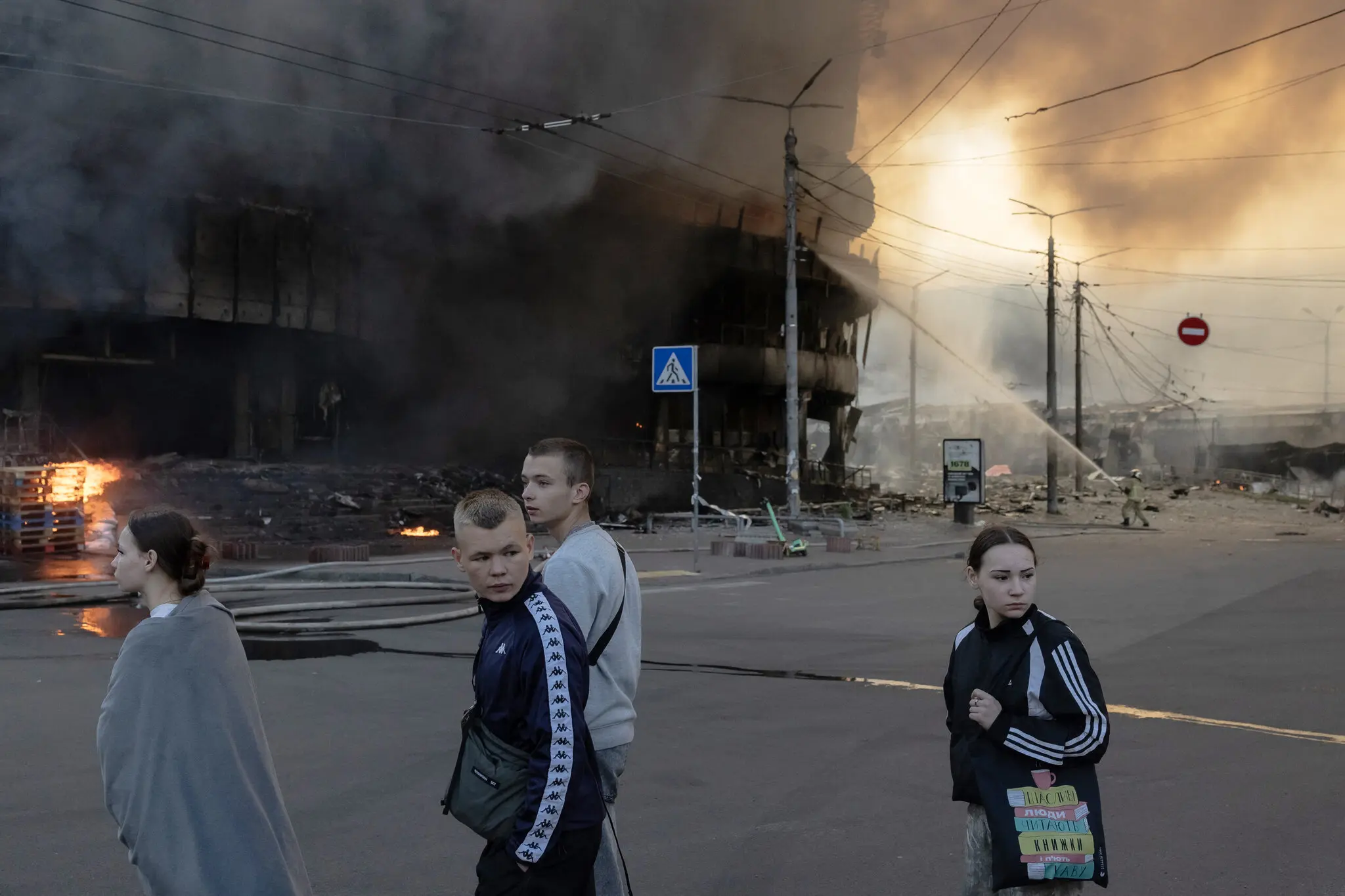 Після російських ударів по Києву, Україна, 24 травня, коли Росія здійснила масштабний ракетний удар — Роман Піліпей
That is the most dangerous asymmetry. Ukraine can strike Russian refineries, disrupt fuel logistics, force Moscow to close airports and expose the vulnerability of the capital. But Russia can impose a different level of threat on Ukraine night after night: a fast, heavy strike against a city, power plant, rail depot, bridge or command infrastructure.
President Volodymyr Zelensky has defined the logic of Ukraine’s response bluntly: if Ukraine burns, Moscow will burn as well. Politically, the phrase explains the new phase of the war. Ukraine no longer accepts being the only territory where the rear becomes the front.
Yet military reality is stricter than symbolism. Drones can show Russians the cost of the war, but on their own they rarely force the Kremlin to reconsider strategic goals. That requires a tool threatening not merely an individual fuel tank, but the entire sense of impunity on which Russia’s campaign rests.
That is why Ukrainian officials are speaking more openly about a domestic ballistic missile program. Defense Minister Mykhailo Fedorov has said that Ukrainian ballistic capability would fundamentally change the nature of the war and stressed that such missiles will exist and will be used against Russia. This is no longer the language of aspiration, but a political declaration of direction.
Ukraine is not starting from zero. Its Soviet industrial inheritance gave it missile memory, and the city of Dnipro was once known for a reason as “Rocket City.” But between inheritance and a modern serial system lie years of lost infrastructure, underfunding, technological gaps and a war that forces production to be built under attack.
Ukraine’s limited stocks of Soviet-era Tochka missiles were quickly depleted. The state-backed Sapsan program dragged on for years without producing the battlefield result Ukraine needed when it needed it. U.S.-supplied ATACMS helped, but there were too few of them, and their use depended on Washington’s political restrictions and fear of escalation.
That explains Ukraine’s turn toward domestic production. The state and private defense sector are not looking for a perfect missile, but for a sufficiently effective, relatively fast and scalable system. In a war of attrition, perfection gives way to serial production, tempo, cost and the ability to strike important targets regularly.
The company attracting the most attention is Fire Point, linked to the production of drones that already attack Russian territory. It says it is developing a shorter-range ballistic missile, the FP-7, and a longer-range version, the FP-9. The very fact that these systems have been shown on an international defense platform indicates that Ukraine wants to move the missile issue from shadow development into an industrial track.
But sobriety is essential. Building a long-range drone and building a reliable ballistic missile belong to different engineering leagues. Ukraine needs engines, materials, stable production, precise guidance, resistance to interference, testing, logistics, safe storage and, above all, serial output, without which even a successful prototype remains a political signal.
Ukraine’s experience with cruise missiles also cautions against premature euphoria. Early battlefield results do not always match expectations, and accuracy and reliability in real war differ from presentation logic. Ukraine learns quickly, but ballistics are not about quick media effect. They are about industrial endurance.
That is why partnerships with European manufacturers may become critical. Ukraine needs not only money, but guidance technologies, materials, components, testing capacity and integration into a wider European defense industry. A Ukrainian missile must be not a one-off project, but part of a new industrial ecosystem.
The strategic meaning of Ukrainian ballistics is not revenge as emotion. It is coercion. As long as Moscow can strike Kyiv, Kharkiv, Dnipro, Odesa or energy hubs while preserving the sense that its own key centers are protected by territorial depth, it has an incentive to continue the war of attrition.
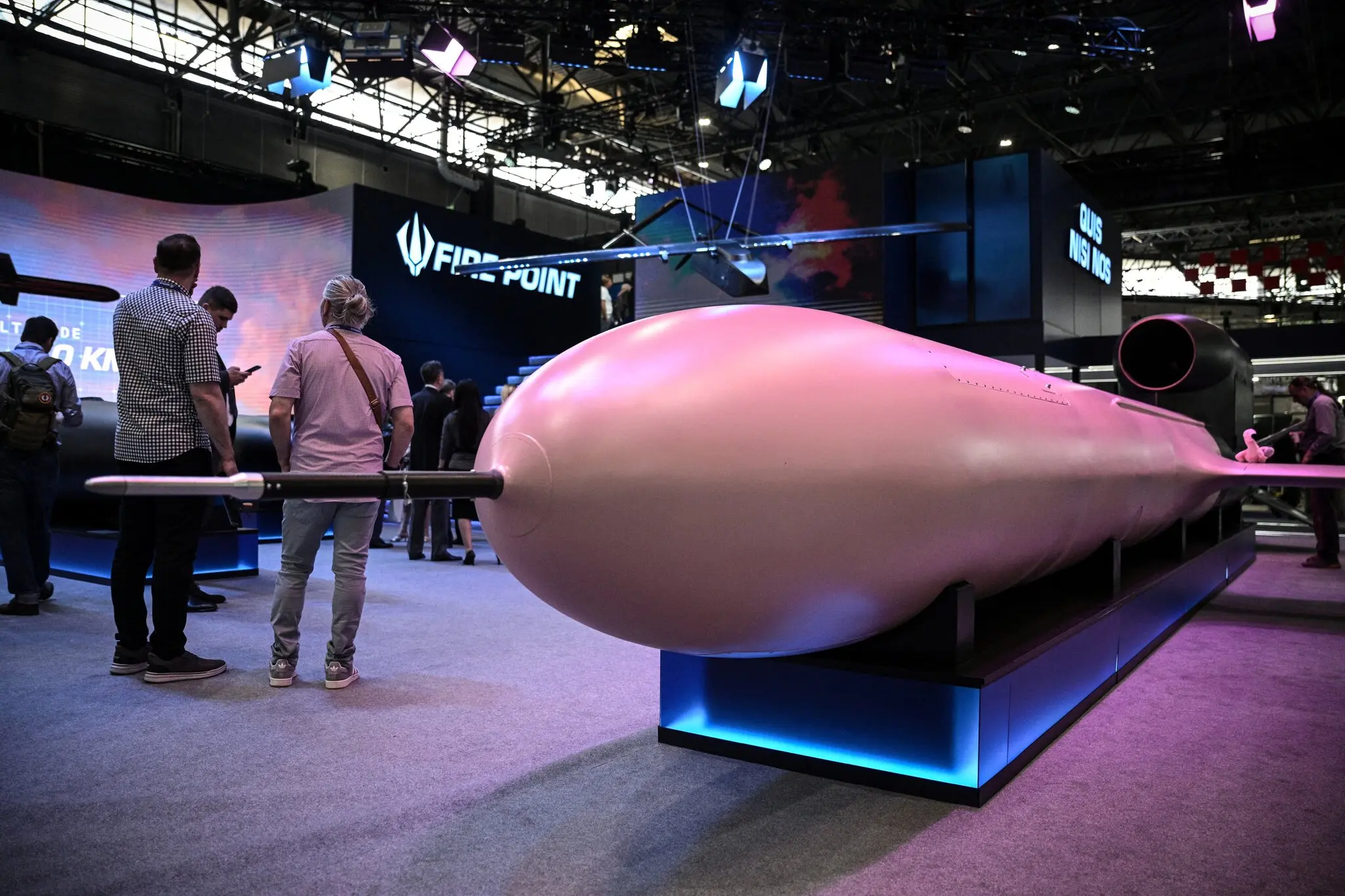 Крилата ракета під назвою «Фламінго», вироблена українською компанією «Fire Point» — Жюльєн де Роза
If Ukraine gains the ability to strike Russian military-industrial, logistical and energy nodes regularly, accurately and heavily at significant depth, the cost of war for the Kremlin will change. Not only in rubles and tons of fuel, but in the political architecture of security that Vladimir Putin sells to his own society.
That is the logic of “shooting the archer, not the arrow.” Ukrainian drones already attack factories producing components for Russian missiles. It is a rational strategy: if every ballistic missile cannot be intercepted, Ukraine must strike the chains that allow Russia to produce, transport and launch them.
Ballistic missiles could make that strategy far more severe. They would allow Ukraine to threaten targets drones do not always reach, or cannot disable because of insufficient warhead size. This matters especially against hardened targets, large industrial complexes and critical command or logistics nodes.
But opportunity comes with escalation risk. The Kremlin has repeatedly used nuclear threats to restrain the West and Ukraine. The emergence of Ukrainian missiles capable of genuinely threatening Moscow or other major Russian cities would raise the stakes. The question would be not only range, but political will.
Still, fear of escalation has for years been one of the main constraints on Ukraine’s defense. Russia has exploited it: increasing ballistic strikes, destroying energy infrastructure, attacking cities and at the same time trying to make any Ukrainian response a source of international alarm. Such asymmetry cannot be a stable foundation for peace.
A Ukrainian ballistic missile program will not solve the war by itself. It will not replace artillery, air defense, infantry, drones, intelligence, the economy or diplomacy. But it can give Kyiv what it lacks most: an instrument of heavy long-range coercion capable of changing not only tactical conditions, but the enemy’s calculations.
In this war, drones became Ukraine’s answer to a deficit of resources. Ballistics could become its answer to a deficit of strategic pressure. The first allows Ukraine to punish Russia for aggression. The second could force Russia to consider whether it can withstand a war of mutual vulnerability.
That is why the success or failure of Ukraine’s ballistic program will matter far beyond the technical sphere. The question is whether Ukraine can move out of the role of a country mainly defending against Russian missile superiority and create a force of its own that Moscow must take into account before any negotiations begin.