



















Russia’s war against Ukraine is increasingly becoming a proving ground where North Korea can gain something it has lacked for decades: real experience in modern warfare. After supplying artillery shells, ballistic missiles and thousands of soldiers, Pyongyang’s military partnership with Moscow may now be entering a much larger phase.
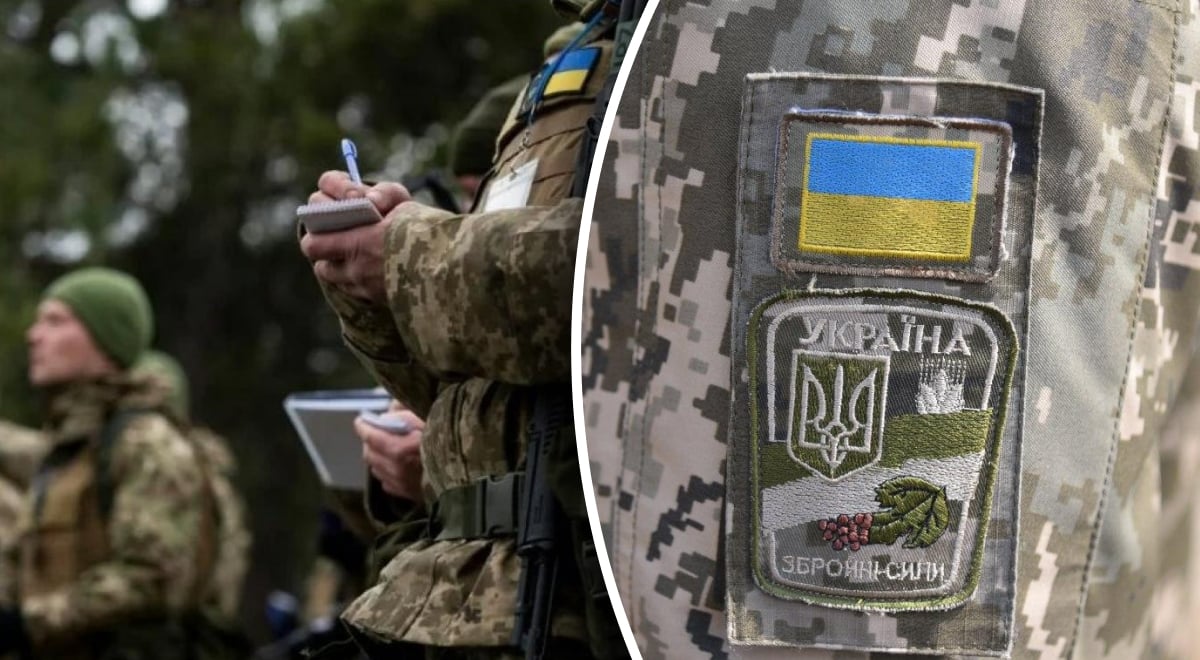
President Volodymyr Zelensky says a decision has been made to deploy between 30,000 and 50,000 North Korean troops on Russian territory. That is significantly higher than Kyiv’s previous estimate of 30,000 and, if confirmed, would amount to the creation of a major foreign military contingent supporting Russia’s war effort.
North Korea’s presence is already far from symbolic. Roughly 14,000 North Korean troops were previously sent to Russia’s Kursk region, where they took part in combat against Ukrainian forces. The next step could increase that component severalfold and turn it into a more permanent element of Russia’s military machine.
As Daycom has previously assessed, the greater strategic risk is not simply the number of North Korean soldiers. More important is what Pyongyang stands to gain: battlefield experience, Russian military technology, drone tactics, missile integration, electronic warfare expertise and the logistics of a large-scale industrial war.
For North Korea, that experience cannot be replicated through exercises. Its army is enormous, but for decades it has existed with little direct exposure to a major contemporary conflict. Ukraine gives it an opportunity to test troops, commanders and weapons against an adversary equipped with Western systems.
Zelensky has warned that North Korea will continue accumulating experience in modern warfare while receiving military tools and technology from Russia. That exchange makes the Moscow-Pyongyang relationship far more consequential than a simple arrangement in which ammunition is traded for money.
The relationship is already formalized through the comprehensive strategic partnership treaty signed by Vladimir Putin and Kim Jong Un in 2024. The pact includes provisions for mutual assistance in the event of external aggression and created a political framework for North Korean military participation alongside Russia.
Pyongyang presents the deployment of its troops as the fulfillment of treaty obligations. For Moscow, the arrangement is useful: foreign personnel can be incorporated into the war without the formal construction of an international coalition, while Russia can provide North Korea with technologies it has long sought.
The exchange has long gone beyond manpower. North Korea has supplied Russia with millions of artillery and mortar rounds, ballistic missiles, long-range artillery and multiple-launch rocket systems. North Korean missiles have already been found in Ukraine after Russian strikes.
The next stage may involve the direct deployment of North Korean missile units in western Russia. Ukrainian military intelligence has said such a formation could be equipped with six launchers and as many as 120 ballistic missiles for strikes against Ukraine.
That is particularly dangerous because ballistic defense remains one of Ukraine’s most acute vulnerabilities. Russia has increasingly relied on this class of weapon precisely because the number of systems capable of reliably intercepting them is limited.
For Kyiv, the arrival of an additional North Korean missile arsenal would place even greater pressure on Patriot and other high-end air-defense systems. The logic is one of attrition: if the number of incoming missiles rises faster than the stock of interceptors, even an effective air-defense network gradually loses density.
That helps explain why Zelensky paired his warning about North Korea with an appeal to South Korea. Kyiv wants Seoul’s assistance above all in air defense, where Ukraine’s shortages are most severe.
South Korea now faces a difficult strategic choice. Seoul has long been cautious about directly providing lethal military aid to Ukraine, but its principal adversary is gaining combat experience, technology and political support from Russia on a European battlefield.
That changes the Korean security equation. What happens on the Ukrainian front could affect the future balance of power on the Korean Peninsula. Troops returning from Russia may bring home experience in assault operations, drone warfare, artillery coordination and fighting under constant enemy surveillance.
The technological exchange may be even more troubling for Seoul. Russia possesses precisely the capabilities North Korea wants most: missile technology, air-defense systems, aviation expertise, satellite infrastructure and experience integrating different weapons into a single combat architecture.
Pyongyang, in turn, offers Moscow what Russia needs in volume and at speed: soldiers, artillery ammunition and missiles. The partnership rests less on ideological affinity than on the complementarity of two wartime economies.
That is why a possible deployment of 50,000 troops matters far beyond the Ukrainian battlefield. For Russia, it represents an additional manpower reserve that could reduce pressure for domestic mobilization and allow Russian forces to concentrate on priority sectors.
For North Korea, it is an opportunity to transform an army that has spent decades preparing for a hypothetical war into one with real battlefield experience. Even substantial losses may not alter that calculation if Pyongyang views the knowledge gained as strategically more valuable.
For Ukraine, the development is another sign that the war is becoming less bilateral. Russia is drawing on the industrial capacity and manpower of its partners, while Kyiv becomes increasingly dependent on how quickly its own allies respond to that internationalization.
In that context, Ukraine’s proposal for deeper cooperation with South Korea, including a possible drone agreement, has a clear strategic logic. Ukraine has accumulated unique experience in the mass use of unmanned systems, while South Korea possesses one of Asia’s strongest defense-industrial bases.
The potential exchange is straightforward: Ukrainian combat experience and drone-warfare expertise in return for systems, ammunition and production capacity that Kyiv badly needs. The deeper North Korea becomes integrated into Russia’s war, the stronger the argument becomes for such cooperation.
The larger shift, however, goes beyond individual weapons deals. Moscow and Pyongyang are gradually building a military ecosystem in which one side receives manpower and ammunition while the other gains technology, experience and political cover.
If tens of thousands of North Korean troops do arrive in Russia, it will be another sign that the war in Ukraine has long since expanded beyond Europe. Its immediate front may run through Donbas and the Kursk region, but its strategic consequences now reach all the way to the Korean Peninsula.
The defining question, then, is not simply how many North Korean soldiers may appear in Russia.
It is what kind of army they will become when they return home.