
























The war between the United States and Iran has returned not as a sudden flare-up, but as the predictable collapse of an agreement held together more by mutual exhaustion than by trust. The latest American strikes on Iranian targets along the Persian Gulf coast have shown that the Strait of Hormuz is once again the conflict’s main front line.
Washington says it hit dozens of military targets connected to air defenses, drones, missile storage, logistics and coastal infrastructure. The declared objective is to weaken Iran’s ability to threaten commercial shipping in a waterway through which a significant share of global energy supplies moves.
Tehran answered with missile and drone launches against U.S. military facilities in Kuwait and Bahrain. Air sirens sounded, and air defense systems were activated. Iran’s Islamic Revolutionary Guards Corps warned that any further American strikes could expand retaliation to other U.S. bases across the region.
According to Daycom’s earlier analysis, the conflict has entered a dangerous intermediate phase: both sides are still avoiding a formal declaration of full-scale war, yet they are already acting as if the diplomatic pause has lost operational value. This is neither peace nor a final rupture, but a zone of managed escalation, where every strike is meant to force the opponent to yield without formal surrender.
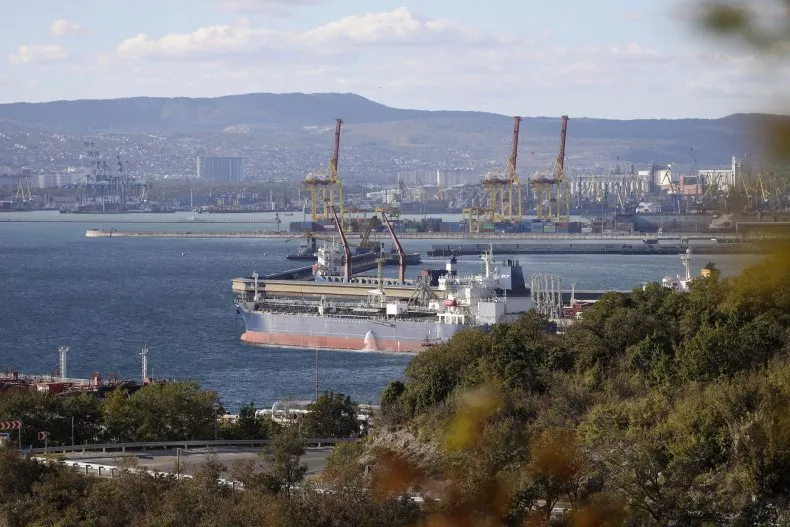
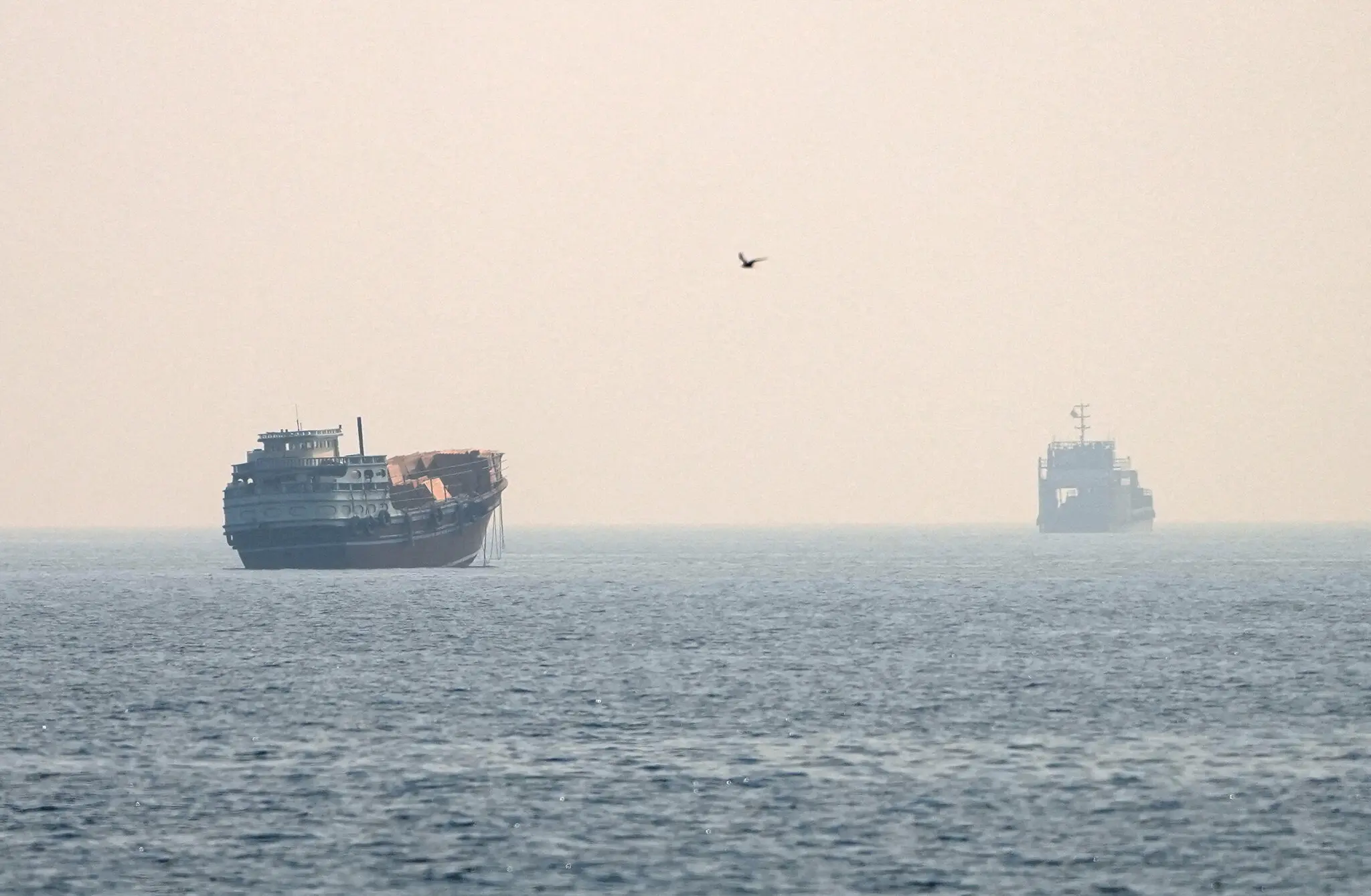
The Strait of Hormuz has become the crisis’s central pressure point. For Iran, control over shipping routes is one of the last levers capable of affecting not only the United States, but also energy markets, Gulf states, insurance firms and Asian oil importers. For Washington, freedom of navigation through the strait is a test of whether it can still maintain naval superiority in the region.
That is why the American strikes were aimed not merely at symbolic targets, but at the infrastructure sustaining Iran’s presence along the southern coast. Radars, depots, launch sites, logistics nodes and small IRGC boats form the backbone of Tehran’s asymmetric strategy: creating risk for tankers and gas carriers without entering a direct fleet-on-fleet confrontation with the United States.
After the strikes, reports emerged of explosions in several strategically sensitive areas of southern Iran — from Bandar Abbas to Chabahar, Jask, Sirik and Abu Musa Island. Some of these locations are militarily significant; others matter for transport and energy. Together, they form a coastal arc through which Iran can influence vessel movement in the Gulf and near the entrance to the strait.
Washington’s military logic is clear: reduce the risk of further attacks on commercial ships without sliding into a large ground or air campaign against Iran as a whole. Yet the scale of the strikes narrows the space for de-escalation. As the number of targets hit on both sides rises, the political cost of backing down can become higher than the cost of continuing the confrontation.
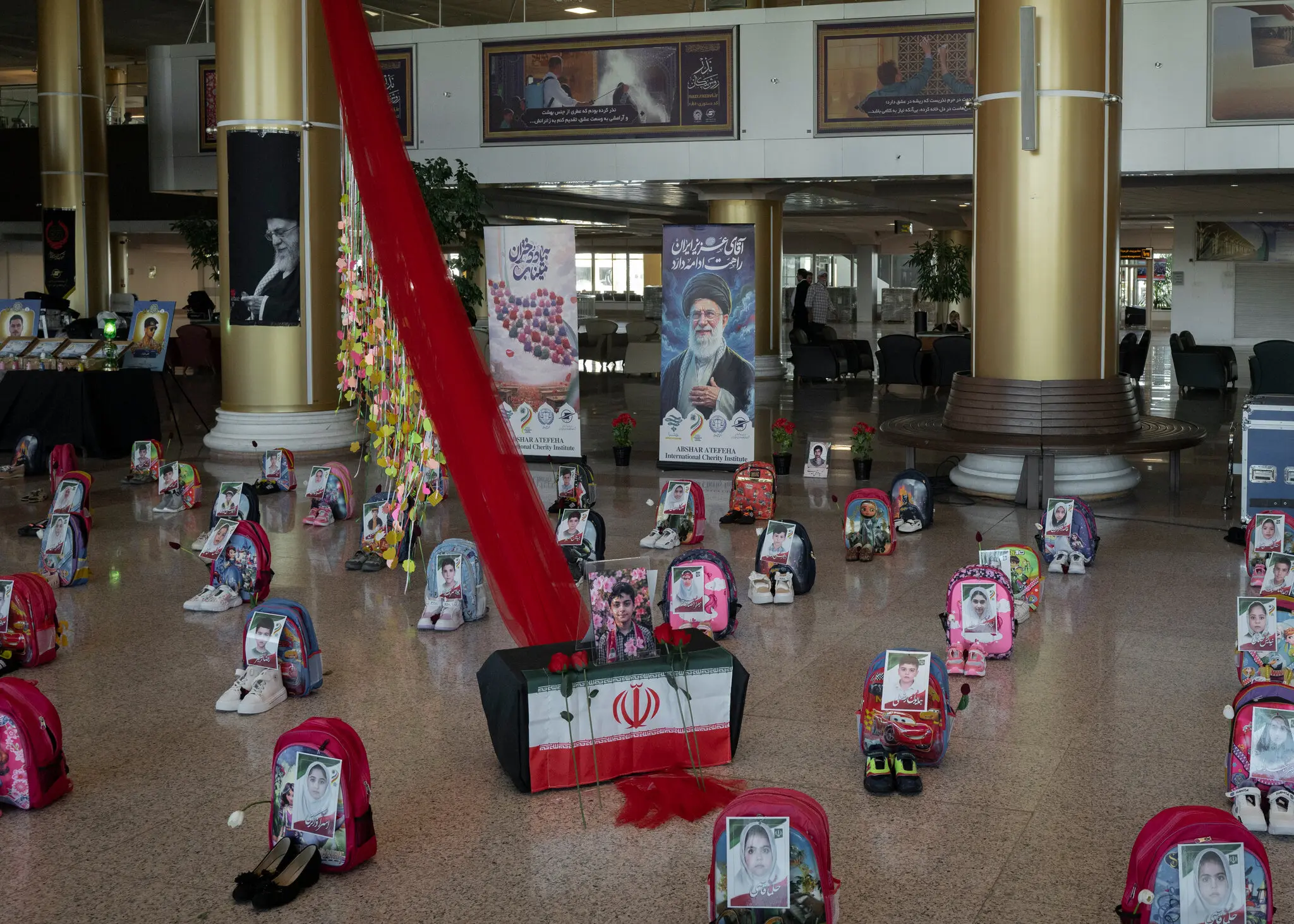
For Tehran, the situation is further complicated by an internal crisis. After the death of Supreme Leader Ali Khamenei and prolonged funeral ceremonies, the state has entered a moment of symbolic vulnerability. At the center of Iranian politics, the struggle has intensified between those who favor negotiations and a hard-line faction that treats any compromise with Washington as weakness.
President Masoud Pezeshkian and parts of the governing camp are trying to preserve the possibility of a diplomatic exit, but their room for maneuver is shrinking under pressure from radicals. Attacks on figures associated with the negotiation line during mourning ceremonies showed that the conflict with Washington has already become a tool in the internal battle for legitimacy after Khamenei’s death.
In this atmosphere, every American strike strengthens those demanding retaliation. Every Iranian attack on ships or bases, in turn, gives Washington a political rationale for further operations. A closed loop is forming, in which both sides respond less to diplomatic signals and more to the need not to appear weak.
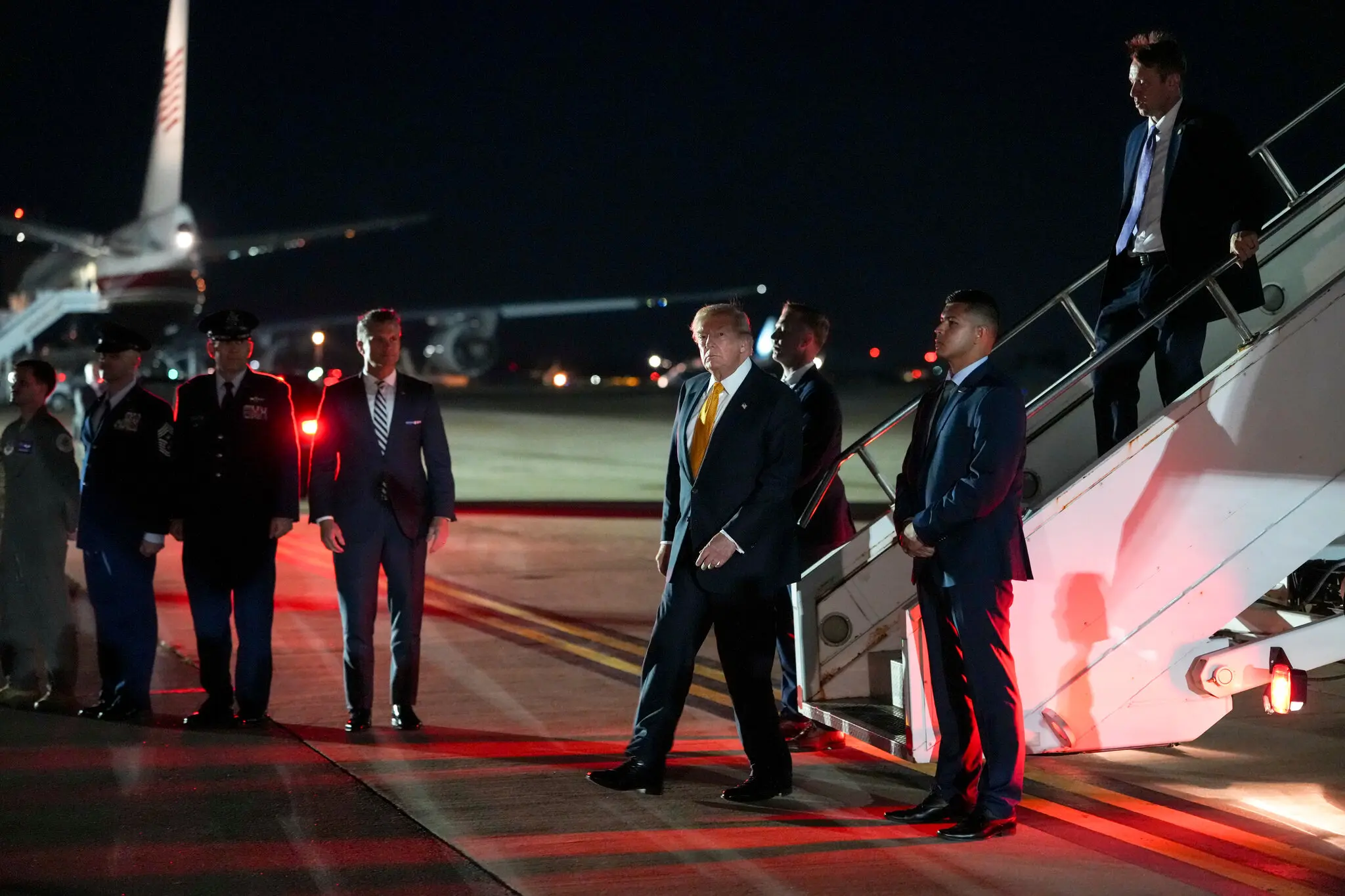
President Donald Trump is publicly keeping a dual tone. He speaks of hitting Iran hard, yet avoids saying that he expects a return to full-scale war. That ambiguity is part of his strategy: keeping a channel for a deal open while refusing to abandon military pressure.
But Washington’s signal becomes less convincing when negotiations proceed alongside missile strikes. Tehran can read that not as diplomacy, but as coercion. The United States, meanwhile, sees Iranian activity in the strait as an attempt to dictate the rules of international shipping. As a result, both sides speak of a deal while effectively fighting over the terms of any future negotiation.
The regional consequences are already moving beyond Iran. Bahrain, Kuwait, Qatar, Saudi Arabia, Oman and the United Arab Emirates all sit near the line of fire, even when they are not the conflict’s principal actors. Their security depends on whether the strait remains passable and whether American bases can be protected from repeated attacks.
Energy markets reacted immediately. The rise in Brent crude showed that traders are pricing in not only actual disruptions, but also the probability of broader risk: blocked routes, higher insurance costs, tanker delays, attacks on ports and threats to gas infrastructure. Even without a full closure of Hormuz, the fear of it is already functioning as an economic weapon.
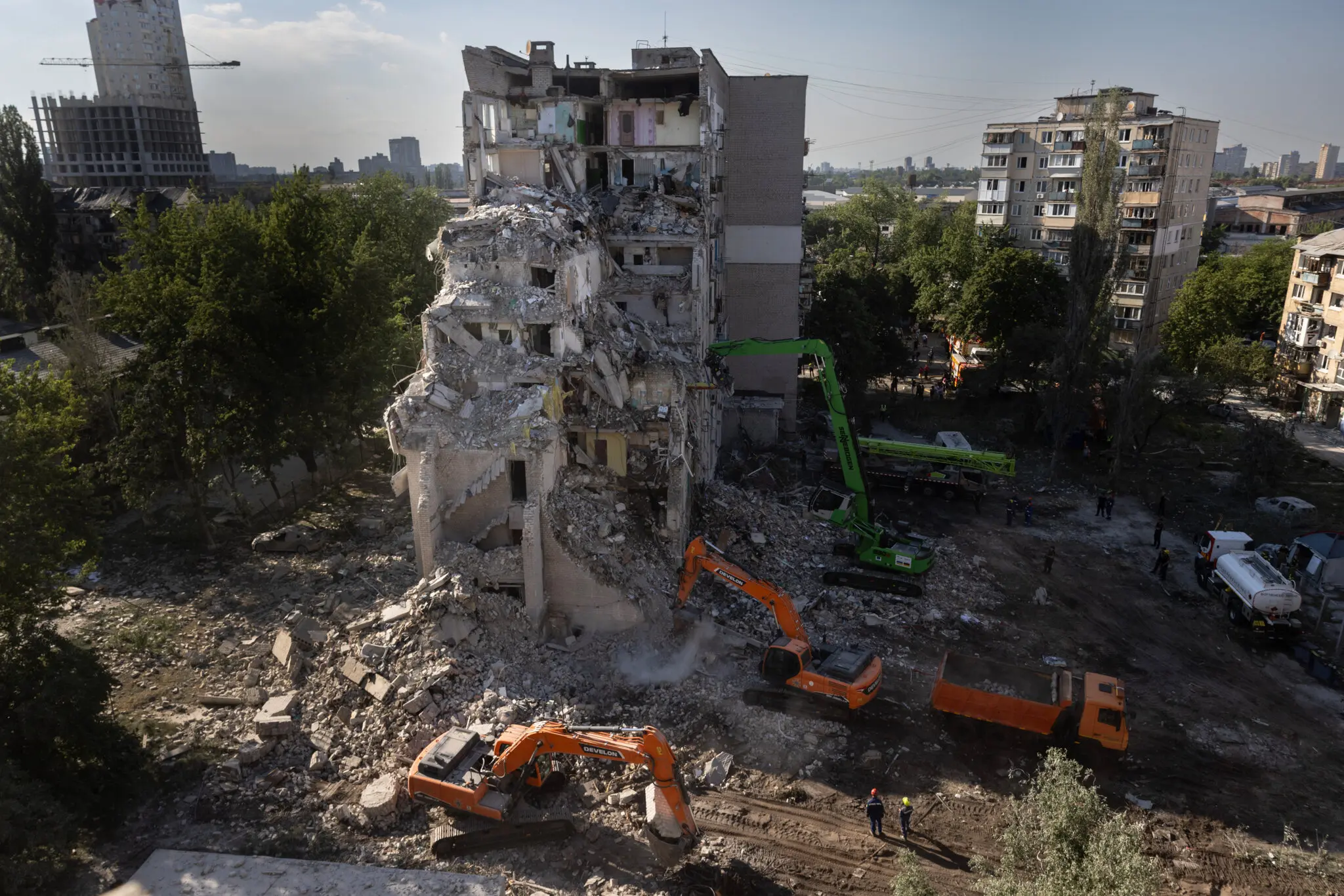
The most dangerous feature of this phase is the absence of a clear line between a limited operation and a larger war. The United States may view its strikes as deterrence; Iran may see them as aggression; neighboring states may treat them as a threat to their own territory; markets may read them as a warning of an energy shock. In such an environment, an air-defense error, an inaccurate strike or the death of a large number of troops could rapidly change the conflict’s scale.
The fragile June cease-fire is no longer performing its main function: reducing the risk of direct confrontation. It may still exist in diplomatic language, but in practice it has been displaced by the logic of mutual punishment. Both sides are testing each other’s limits, and every new strike makes those limits less visible.
The question now is not only whether the United States and Iran can return to negotiations. It is whether diplomacy can regain control before military momentum becomes a force of its own. The Strait of Hormuz has again revealed its defining quality: it is a bottleneck not only for the world’s oil, but also for the political restraint of states accustomed to speaking in the language of force.