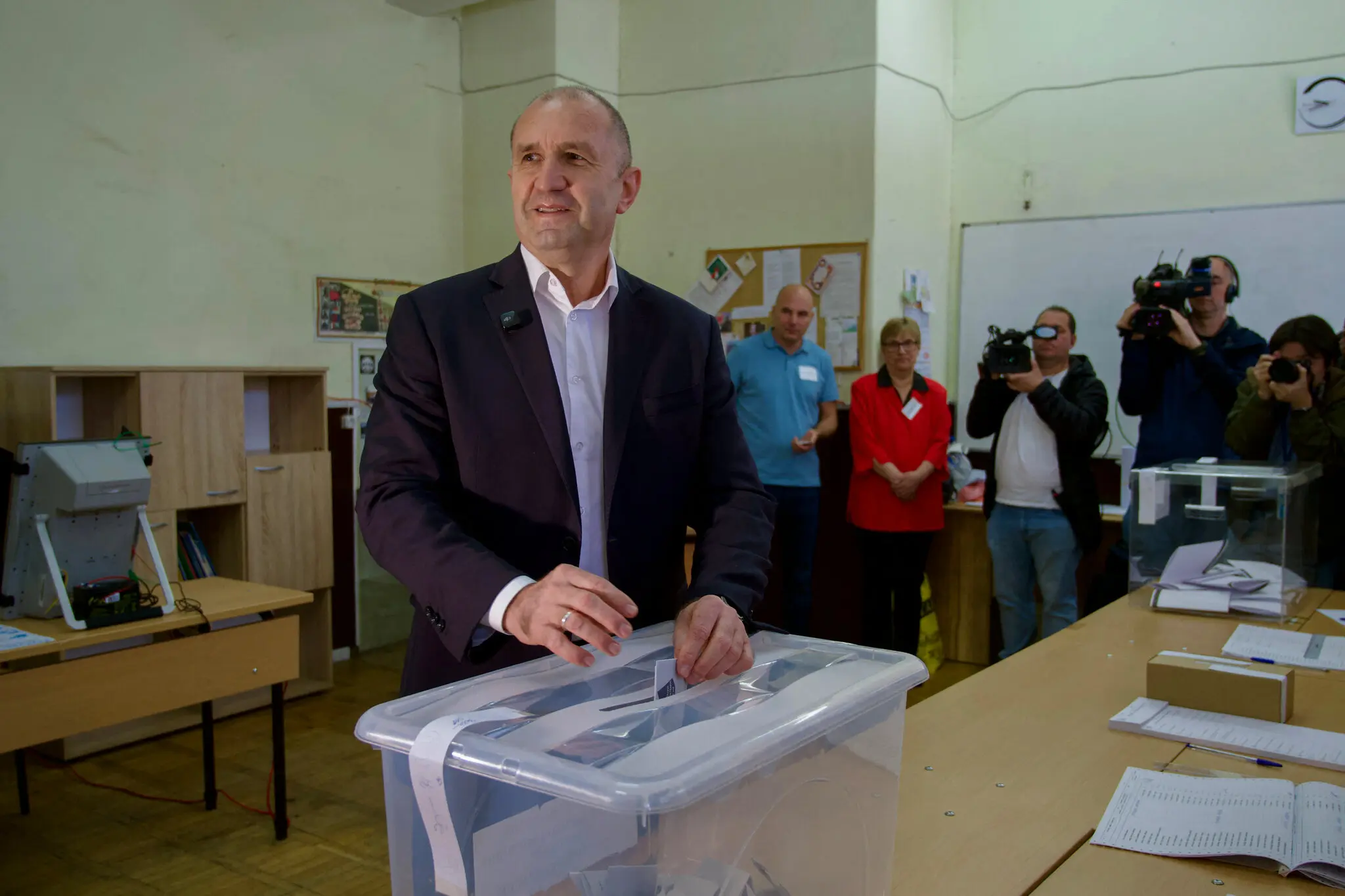






















Bulgaria has once again voted less for a government than for a way out of a prolonged political crisis. This was the country’s eighth election in five years, and instead of delivering final clarity, it sharpened the central reality: Bulgaria wants a strong political figure, but is not yet ready to hand him full control.
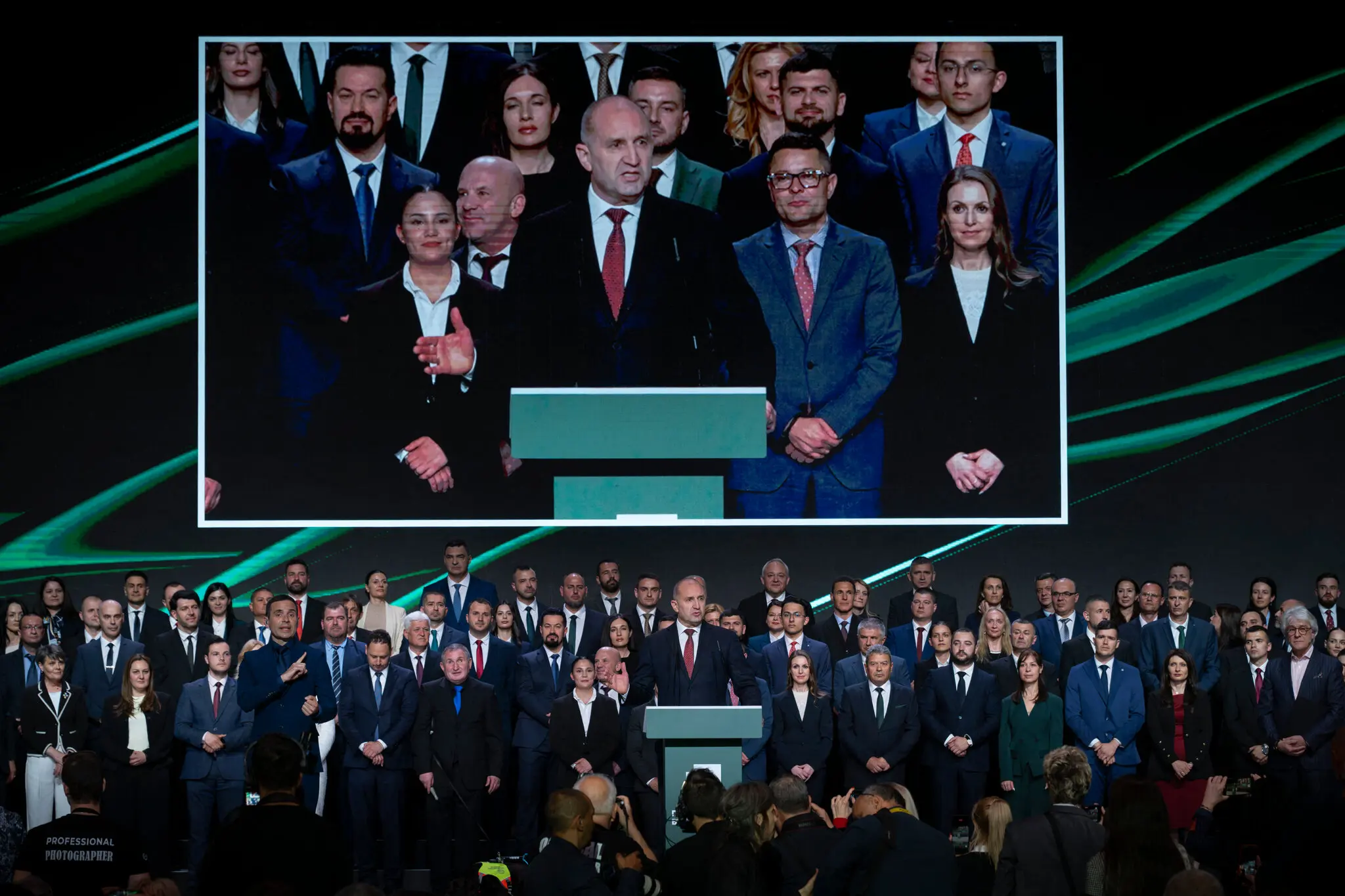
Rumen Radev, the former president and former air force commander, emerges from this vote as the unquestioned winner. His newly created Progressive Bulgaria movement has secured roughly 40 percent of the vote, more than double the support of any rival. This is not simply an electoral result. It is a signal that a large share of Bulgarian society is ready to entrust him with the leading role in shaping the next government.
Yet the nature of that victory remains incomplete. Parliamentary arithmetic once again leaves room for uncertainty. Whether Radev can govern alone depends on how many smaller parties cross the electoral threshold. If a coalition becomes necessary, the choice of partners will determine not only the composition of the cabinet, but the country’s broader strategic direction. According to Daycom’s earlier analysis, that dilemma — rather than the win itself — is the true political substance of this election.
Radev now faces two distinct paths. The first is an agreement with pro-European reformists focused on anti-corruption change and institutional modernization. The second is an alliance with socialists and nationalists, which could produce a governing bloc more skeptical of Brussels and markedly softer toward Moscow.
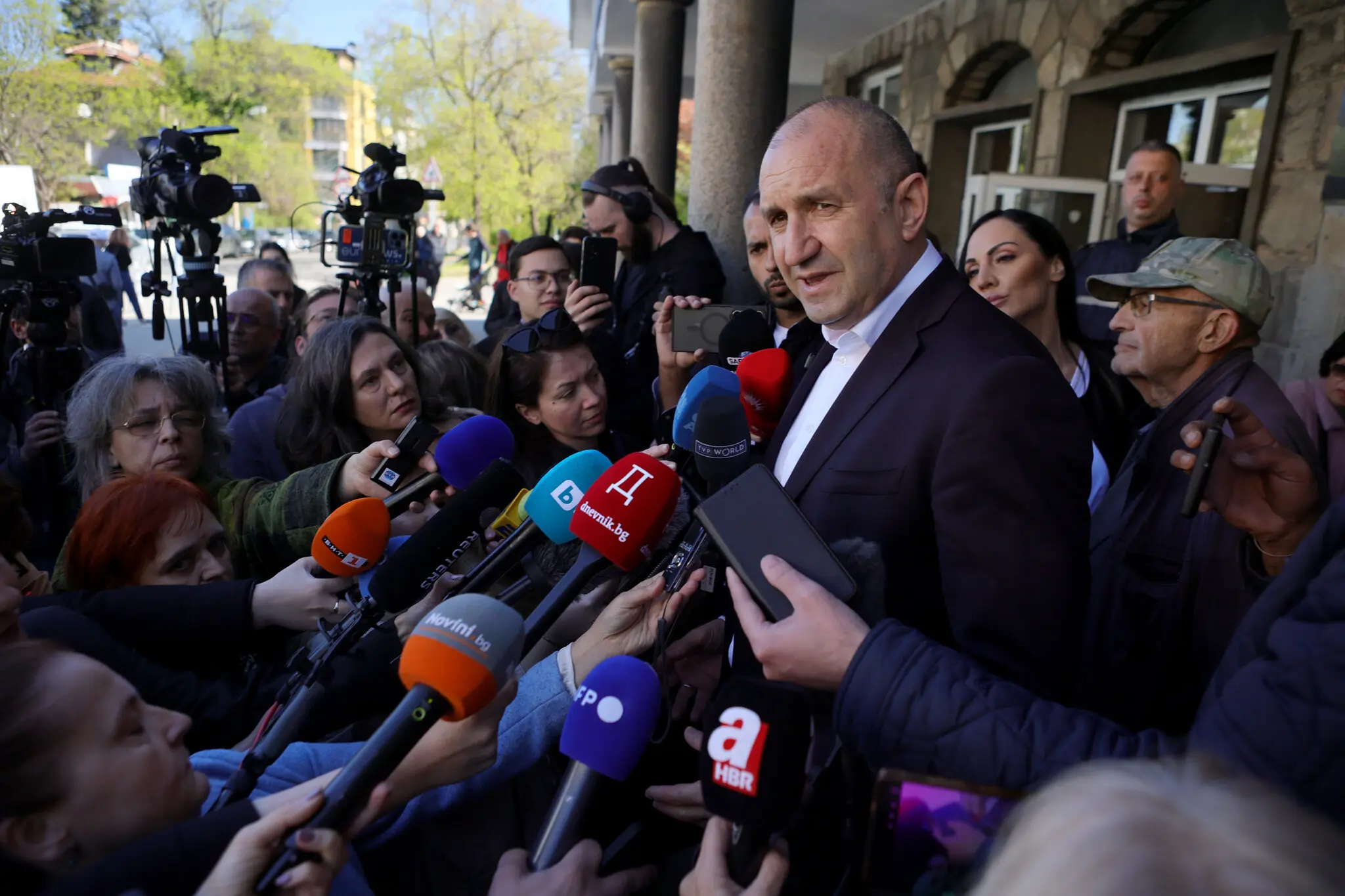
For now, Radev is keeping both options open. His public language after the vote was cautious and deliberately elastic. He spoke of the need for a “functional and stable government” without fixing the ideological boundaries of a future coalition. That is consistent with the political style he has cultivated for years: balancing among camps while avoiding final self-definition.
His public image has always been built on that duality. On one side, he presents himself as an opponent of the country’s oligarchic system and promises to dismantle the corruption networks that have long hollowed out public trust. On the other, his foreign-policy positioning has repeatedly unsettled Western partners. His skepticism toward military support for Ukraine, his calls for compromise, and his language on Crimea have all contributed to the image of a politician who sits uneasily inside the European mainstream.
That ambiguity, however, is also the source of his strength. Radev has succeeded in assembling an electorate for whom anti-corruption rhetoric matters more than geopolitical clarity. In a country trapped for years in political deadlock, the demand for effectiveness often outweighs the demand for ideological purity.
It is equally important that even a potentially Russia-friendly turn in Bulgaria has clear structural limits. The country’s dependence on European funds, its institutional embedding in the European Union, and the traditional caution of Bulgarian elites in Brussels all impose hard constraints on any dramatic geopolitical shift. Radev may alter tone and emphasis, but he cannot easily alter the system of coordinates within which Bulgaria operates.
That is why comparisons with more openly disruptive European leaders are often overstated. His politics are more pragmatic than ideological. He uses the language of sovereignty and strategic flexibility as a tool of domestic mobilization, while still avoiding the kinds of moves that would produce a direct rupture with the European Union.
Another key factor is his refusal to work with figures who have dominated Bulgarian politics for years. His hostility toward the old political establishment is not merely personal. It is part of an attempt to reconfigure the political field itself by pushing aside entrenched centers of influence.
But that same strategy makes coalition-building far more difficult. The narrower the circle of acceptable partners, the smaller the room for a durable majority. In a fragmented parliament, that raises the familiar risk of a short-lived government followed by yet another election.
Bulgaria has therefore arrived at another moment of decision that extends well beyond domestic politics. The issue is not only who will form the next cabinet, but whether the country can break out of its cycle of instability without losing its strategic balance between competing external poles of influence.
Radev’s victory answers the public demand for strong leadership. What it does not answer is the more important question: what kind of strength this will be — integrative or revisionist. That is what will determine whether this election becomes a point of stabilization or merely another turn in Bulgaria’s long political turbulence.