




















Yemen has again moved close to the edge of a major war at a moment when the Middle East is already living through widening escalation. A strike on Sana’s main international airport, accusations against Saudi Arabia and a Houthi missile response have placed the fragile calm that has held since 2022 in danger.
Formally, the truce between the Saudi-led coalition and the Iran-backed Houthis was never a full peace. It did not produce a political settlement, reunify Yemen or restore the internationally recognized government’s authority over the country. But it did halt the most intense phase of bombardment and gave Yemen a rare period of relative quiet.
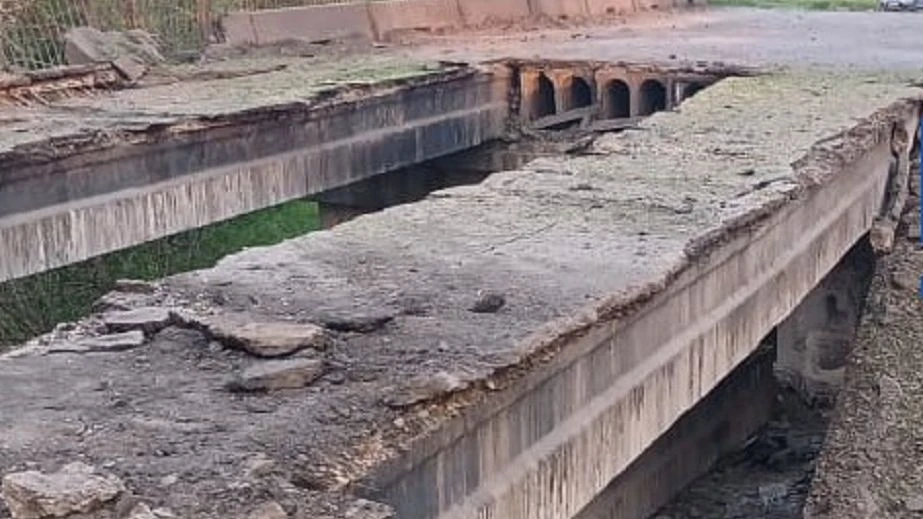
Now that quiet may be ending over a single air route. The Houthis say the strike on Sana’s airport was an attempt to prevent an Iranian aircraft from landing. Saudi Arabia has not confirmed the accusation, while Yemen’s Saudi-backed government said the operation was aimed precisely at stopping another flight from Iran.
According to Daycom’s assessment, the conflict around Sana’s airport is dangerous not only on its own terms. It shows how the U.S.-Israeli war with Iran has gradually pulled into its orbit regional crises that had seemed partly frozen. Yemen had long remained outside the main blast radius. Now it may again become an extension of it.
For the Houthis, Sana’s airport has more than logistical value. It is a symbol of their effective control over northern Yemen and a channel to the outside world. Airspace restrictions, limited flights, dependence on permissions and disputes over each aircraft have long turned civilian aviation into part of the struggle over sovereignty.
The Iranian aircraft became the point of collision because Tehran is the Houthis’ main external partner. In previous years, Iran supplied them with weapons, training, political support and technologies that helped transform the movement from a local insurgency into a force capable of launching missiles, drones and attacks on maritime routes. For Riyadh, every direct flight between Tehran and Sana can be read as a potential military signal.
The Houthis frame the flights differently. They speak of civilian aircraft, returning patients, political delegations and Sana’s right to direct air links. After the death of Iran’s supreme leader, Ali Khamenei, one such flight carried a Houthi delegation to Tehran for state funeral proceedings. That was when tensions around the airport sharply increased.
Saudi Arabia has found itself facing an old dilemma. If it allows direct Iranian flights to Sana, it risks strengthening the Houthi arsenal and symbolically entrenching Iran’s presence on the southern flank of the Arabian Peninsula. If it blocks them by force, it risks destroying the truce it sought to preserve after years of exhausting war.
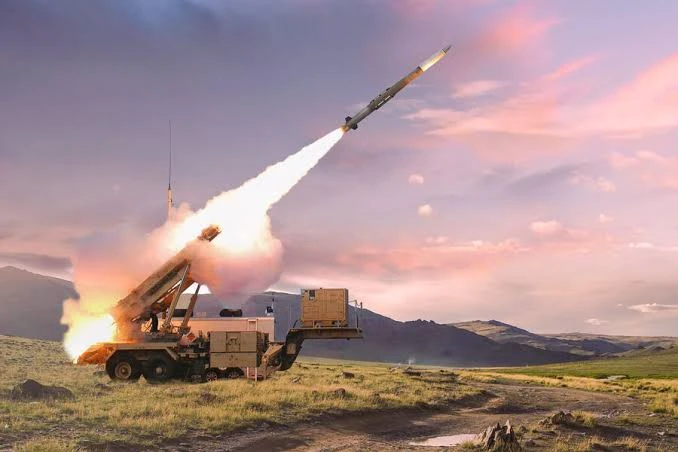
After the strike on the airport, the Houthis launched ballistic missiles toward Saudi Arabia. The Saudi-led coalition said its air defenses handled the threat. Houthi military spokesman Yahya Saree named Abha airport as the target and warned airlines to avoid Saudi airspace. This is no longer a diplomatic dispute. It is a return to the language of mutual missile deterrence.
It is especially alarming that both sides describe their actions as defensive. The Saudi side speaks of violations of Yemeni sovereignty and threats from the Houthis. The Houthis speak of a breach of the truce, aggression against the airport and the right to respond. In such a logic, escalation almost always accelerates: each strike becomes proof that the next one is necessary.
The four-year pause between Saudi Arabia and the Houthis was one of the few cautious stories of de-escalation in the region. It did not bring peace, but it reduced the scale of airstrikes, opened limited humanitarian channels and allowed Riyadh to step back gradually from a war that had become politically and morally toxic.
The Saudi campaign in Yemen began in 2015 as an attempt to restore the internationally recognized government after the Houthis seized Sana. The war quickly became a catastrophe: airstrikes, blockade, hunger, disease, the collapse of state institutions and one of the world’s worst humanitarian crises. The military objective was never achieved.
The Houthis not only held the north; they consolidated their own de facto state there. The internationally recognized government remains nominally based in Aden, but much of its political weight depends on Saudi Arabia. Yemen is effectively divided into two zones of power, and neither side has enough strength to reunify the country quickly.
That is why the new escalation around Sana is so dangerous. It could destroy not peace, but the pause that kept the country from returning to the worst phase of the war. If Saudi strikes and Houthi missiles become regular again, Yemen will quickly return to a model in which every military move deepens humanitarian collapse.
The danger is greater because the Houthis have long ceased to be merely a Yemeni actor. Their strikes on Israel, attacks on Red Sea shipping and ties to Iran have made them part of a wider axis of pressure against the United States, Israel and their regional partners. If conflict with Saudi Arabia resumes, it will inevitably be read through that broader map.
For Riyadh, this is an especially unwelcome scenario. Saudi Arabia has spent recent years trying to present itself as a state of economic modernization, investment, vast infrastructure projects and diplomatic balance. A return to open war with the Houthis would threaten not only the security of its southern cities, but also the image of stability on which its new strategy depends.
For Iran, by contrast, tension in Yemen may be useful as an additional front of pressure. Tehran does not need to fight directly to force Saudi Arabia and the United States to disperse their attention. It is enough for the Houthis to create risk for airports, ports, energy infrastructure and maritime routes. This is the classic logic of Iran’s regional strategy: pressure through partner forces.
But the Houthis also have interests of their own. They want to prove that no decision about airspace, Sana airport or flights to Iran can be made without them. For a movement that effectively controls northern Yemen, the question of flights is also a question of political recognition. If they can receive Iranian aircraft despite resistance, they demonstrate de facto sovereignty.
The strike on Sana’s airport therefore touched one of the conflict’s most sensitive nerves. It challenged not only the safety of a particular flight, but the status of Houthi authority. That is why the response was missile-based and the rhetoric uncompromising. For the Houthis, silence would have meant accepting that their skies remain controlled from outside.
The United Nations role in this situation is limited, but important. Its special envoy, Hans Grundberg, is urging the sides to prevent a new cycle of violence because he understands that escalation in Yemen almost never remains isolated. It quickly becomes blockades, attacks on civilian infrastructure, airport closures, fuel shortages and new waves of humanitarian catastrophe.
Ground clashes pose another threat. In recent days, fighting between Yemeni government forces and the Houthis has broken out in Hodeidah province. This port region is vital to the country’s supply lines. If tension around Sana merges with renewed fighting in Hodeidah, the conflict could rapidly leave the diplomatic track and return to full-scale war.
Yemen’s tragedy has always been a war of overlapping crises. The local struggle for power, Saudi-Iranian rivalry, humanitarian collapse, control of ports, the air blockade, tribal politics and regional alliances do not exist separately. Each new incident immediately touches several layers, which is precisely why peace there is so fragile.
The present moment is dangerous because it coincides with a wider regional war. When the United States and Israel are fighting Iran, Hormuz is under threat and the Red Sea remains vulnerable, any explosion in Yemen can become not a local incident, but part of a wider chain reaction. That is what diplomats fear most.
Saudi Arabia may not want to return to war. The Houthis may not seek an immediate full-scale campaign. But the logic of mutual warnings, strikes and displays of force can push them toward a place neither side formally planned to go. That is how new phases of old wars often begin.
Yemen needs another front least of all. The country has already paid for the previous decade of violence with shattered cities, hunger, disease and a generation of children raised amid blockades and displacement. Even a limited return to air war could again close humanitarian channels, disrupt medical flights and deepen the dependence of millions on aid.
The question now is not only who carried out the strike on Sana’s airport. It is whether the parties can stop after the first exchange of blows. If they cannot, the four-year pause may prove not to have been the beginning of peace, but only an interval between two phases of the same war.
Yemen’s fragile quiet rested on fatigue, fear and the recognition that victory by force was unattainable. Now it is being tested by Iranian flights, Saudi restrictions, Houthi missiles and a regional war spreading across the Middle East. If this knot is not loosened quickly, Sana, Abha and Hodeidah may again become names not of a truce, but of a return to catastrophe.