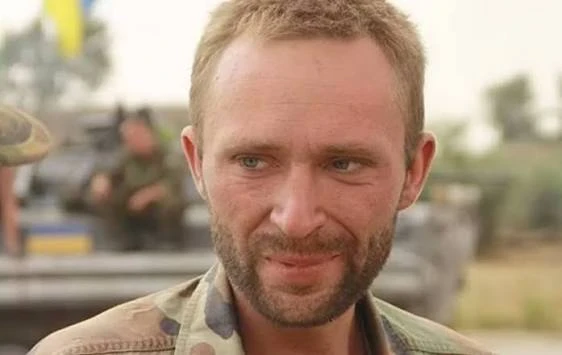



















Russia is preparing to receive another 30,000 military personnel from North Korea, President Volodymyr Zelensky said. Preparations have reportedly been underway since June in the Voronezh region, where infrastructure is being created to house, train and deploy the new contingent.
The figure has not been independently confirmed. Neither Moscow nor Pyongyang has formally announced another troop deployment, meaning the claim remains a Ukrainian intelligence assessment rather than evidence of a completed transfer. Previous cooperation between the two countries, however, makes the scenario credible.
North Korea sent roughly 14,000 troops to Russia in 2024, some of whom fought in the Kursk region. If the new force reaches 30,000 personnel, it will be more than twice as large and can no longer be treated as a limited auxiliary mission.
According to Daycom’s earlier analysis, the significance lies not only in the additional manpower. Russia and North Korea are moving from an improvised exchange of ammunition and military services toward a durable model of joint warfare.
For the Kremlin, 30,000 foreign troops would provide a way to ease manpower shortages without immediately announcing another large domestic mobilization. North Korean units could be assigned to border security, engineering, logistics or direct combat operations, freeing Russian formations for offensive missions.
Even if those units do not appear on the most active parts of the front, their deployment in rear areas would still have military value. Every battalion guarding warehouses, training grounds or border regions could allow Russia to move more experienced personnel against Ukraine.
The Voronezh region is well suited to such preparations. It has military training grounds, a developed railway network and direct logistical links to Russia’s western and southern operational zones. Troops stationed there could later be distributed across several fronts.
Numbers alone, however, do not guarantee combat effectiveness. North Korean soldiers would have to adapt to an unfamiliar command structure, new terrain, a language barrier and a battlefield transformed by drones, electronic surveillance and precision strikes.
Their earlier deployment in Kursk gave Pyongyang something its armed forces had lacked for decades: experience in a large, modern war. North Korean units gained exposure to offensive operations, artillery coordination, drone threats and sustained combat under fire.
For Kim Jong Un, that experience may be more valuable than financial compensation. North Korea can test its military in real conditions, study Russian tactics and return officers home with lessons capable of reshaping training across the armed forces.
Russia, meanwhile, gains a resource that carries fewer domestic political costs. The deaths of foreign troops do not create the same pressure on the Kremlin as heavy losses among mobilized Russians from Moscow, St. Petersburg or major regional centers.
That does not mean Moscow will abandon plans for further mobilization. A North Korean contingent would more likely supplement Russian reserves than replace them, forming another layer of manpower for a prolonged war.
The deepening partnership rests on the strategic treaty signed by Vladimir Putin and Kim Jong Un in 2024. The agreement includes mutual military assistance and effectively restored the closest defense relationship between the two countries since the Cold War.
In practice, cooperation has already moved beyond mutual defense. Ukraine did not attack North Korea, yet North Korean personnel have fought on Russia’s side. The treaty has therefore become political cover for Pyongyang’s participation in Moscow’s war.
The exchange also has a technological dimension. North Korea supplies Russia with ammunition, missiles and personnel, while Moscow may provide assistance with satellite technology, air defense, aviation and ballistic missile development.
If reports of additional North Korean launch systems are confirmed, the partnership will involve not only replenishing Russia’s missile stocks but also expanding the infrastructure needed to use them in combat.
For Ukraine, that creates a dual threat. Additional infantry would help Russia sustain pressure along the front, while new missile systems would increase the danger to cities, energy infrastructure, defense plants and transport networks.
The consequences extend far beyond Europe. Any technology Pyongyang receives from Moscow in return for military assistance could later strengthen North Korea’s nuclear and missile capabilities against South Korea, Japan and American forces in the region.
The war in Ukraine is therefore becoming increasingly connected to the balance of power in East Asia. Russia’s needs on the European battlefield are accelerating the military development of a regime that already poses a major regional security threat.
For China, the trend is uncomfortable. Beijing benefits from partners that challenge Western influence, but it must also watch North Korea become a more autonomous military actor with a direct strategic relationship with Moscow.
Western sanctions have so far failed to break the exchange. Both Russia and North Korea are already heavily restricted, operate through opaque financial systems and can settle transactions through energy, food, technology and concealed logistics networks.
Stopping the transfer of 30,000 troops through diplomacy alone would be difficult. A more realistic strategy would be to raise its cost by identifying transport routes, sanctioning carriers, disrupting financing and increasing pressure on Russian training and support facilities.
For Ukraine, the immediate priority will be determining the structure of the force. It matters whether the incoming personnel are infantry, engineers, artillery troops, missile operators or a mixed formation capable of conducting semi-independent operations.
A contingent of 30,000 changes the meaning of foreign participation in the war. This would not be a group of advisers, covert technical assistance or a symbolic gesture of alliance. It would be a force comparable in size to a full army corps.
Its arrival would not guarantee Russia a strategic breakthrough. The troops would still need weapons, transport, training, command integration and continuous logistical support. Each stage would create vulnerabilities that Ukraine could target.
The central message is nevertheless clear: the Kremlin is preparing not for a rapid end to the war, but for its continuation and expansion. Moscow is seeking manpower inside Russia and abroad, accumulating weapons and turning international alliances into sources of combat power.
If the Ukrainian assessment is confirmed, North Korea will no longer be merely a supplier to the Russian military. It will become a direct participant in the war.
For Ukraine, that would mean another source of pressure on the battlefield. For the wider world, it would confirm that Russia’s invasion has evolved into a conflict whose military and strategic consequences can no longer be contained within Europe.