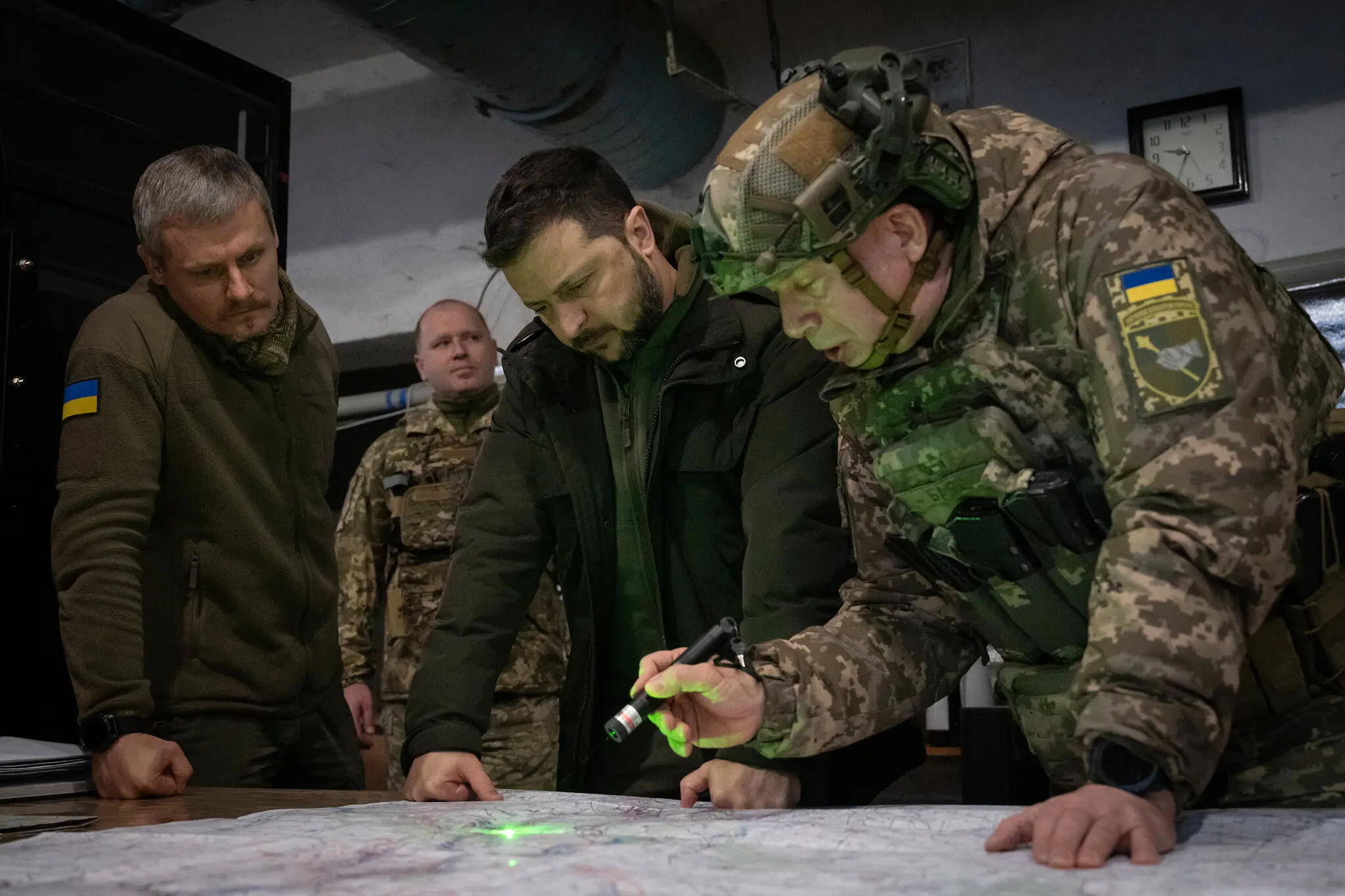
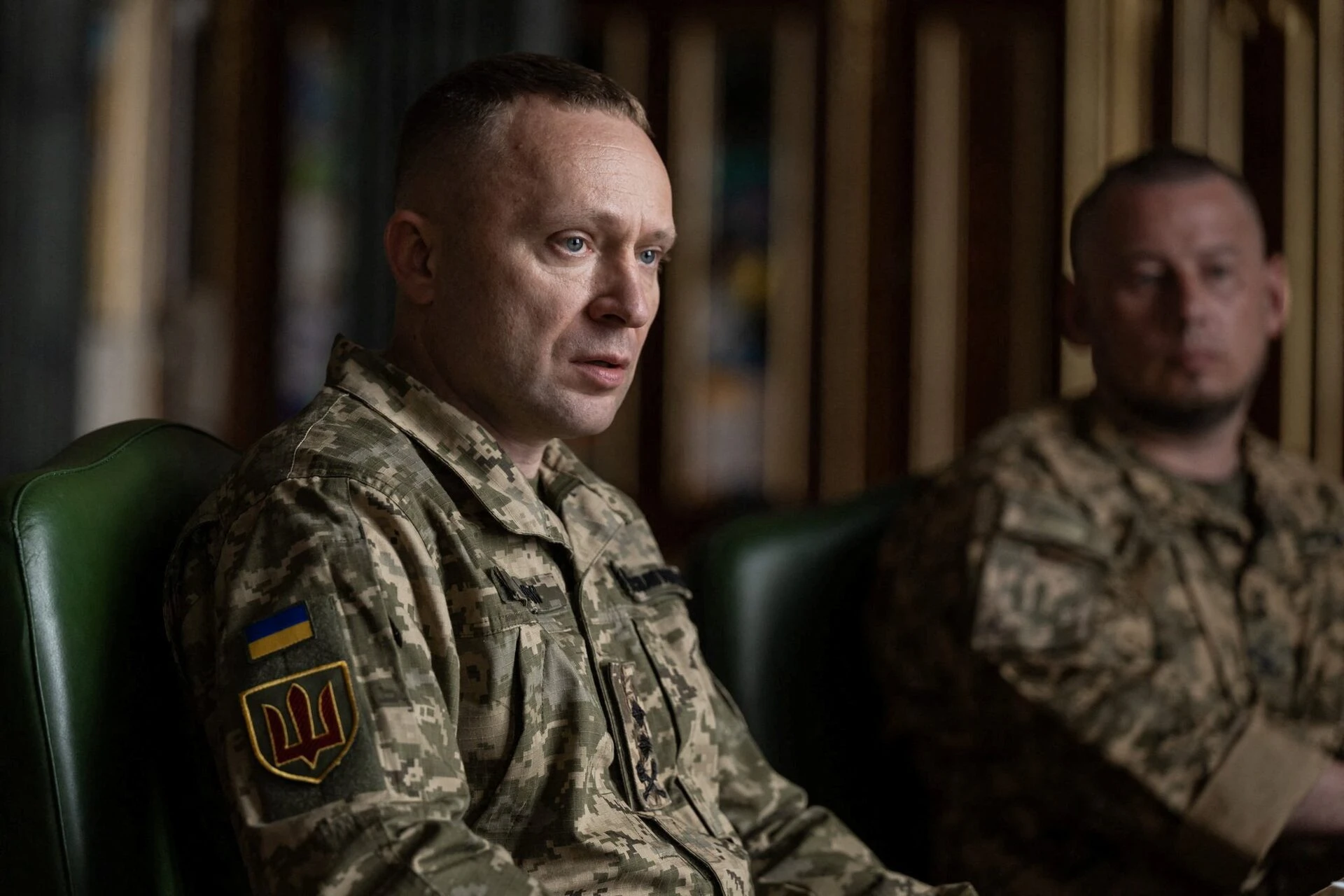



















Oleksandr Syrskyi is leaving his post as commander-in-chief with a striking final claim: Ukraine has retaken 700 square kilometers of its territory since the start of the year. The figure is more than a battlefield statistic. It is his closing argument in the dispute over his legacy.
Handing command to Mykhailo Drapatyi, Syrskyi said he was leaving behind an army that was not merely defending, but advancing. His farewell rests on a clear proposition: despite criticism, political upheaval and public pressure, Ukraine’s forces have preserved the ability to regain the initiative.
His departure followed several days of protests and a broader government reshuffle that exposed deep divisions inside the defense leadership. The dismissal of Defense Minister Mykhailo Fedorov transformed tensions between reformers and the military hierarchy into an open political crisis.
According to Daycom’s analysis, the reference to 700 square kilometers was an attempt to move the debate away from personalities and back to battlefield results. Syrskyi is effectively asking to be judged not by protests or criticism of his command style, but by the condition of the army he is handing to his successor.
That argument carries weight. Ukrainian forces are operating in a far more difficult environment than at the beginning of the full-scale invasion. The skies above the front are saturated with drones, large mechanized breakthroughs are increasingly rare, and almost every movement of troops or armor can be detected and attacked.
Under such conditions, territorial gains are no longer measured mainly in rapid advances across dozens of kilometers. They come through localized operations, the gradual exhaustion of Russian units, strikes on logistics, the seizure of individual positions and the slow displacement of troops from prepared defenses.
The 700-square-kilometer figure therefore has two meanings. In the geographic scale of the war, it is limited. In the tactical reality of a front where even a few kilometers may require months of fighting, it suggests that Ukraine has retained offensive capacity.
Syrskyi also pointed to the halting of Russia’s offensive in the Kharkiv region and to the operation in Russia’s Kursk region. Both became central to his tenure: the first demonstrated an ability to stabilize a dangerous sector, while the second showed that Ukraine could carry the war onto Russian territory.
The Kharkiv campaign was a test of command speed. Russian forces sought to create a new threat in the northeast and force Kyiv to divert reserves from other parts of the front. Stopping that advance did not produce a dramatic strategic victory, but it prevented Moscow from widening the battlefield on favorable terms.
The Kursk operation, by contrast, broke more visibly with Ukraine’s defensive posture. It forced Russia to respond to a threat inside its own borders, shift resources and confront the fact that its territory was no longer beyond reach.
These operations helped define Syrskyi as a commander willing to act with severity and pragmatism. Yet that same severity became the source of his fiercest criticism. Some service members accused him of excessive centralization and decisions that led to unjustifiably high losses.
This is the central divide in assessments of his command. To supporters, Syrskyi was the general who held the line during a period of shortages in personnel, ammunition and Western assistance. To critics, he was a commander of the old school, too willing to compensate for structural weakness with human lives.
Both judgments may contain truth. The Ukrainian military did operate under severe constraints that no commander could solve alone. But shortages do not eliminate questions about the quality of decisions, unit rotation, reserve preparation and the price paid to hold individual positions.
Syrskyi took command in early 2024, when the strategic situation was already worsening. Russia held advantages in artillery, manpower and industrial output, while American military assistance was delayed by political conflict in Washington.
His central task was not to deliver a sweeping victorious campaign, but to prevent collapse. The front receded in places, yet remained intact. Ukraine lost ground, but Russia failed to turn local gains into a decisive operational breakthrough.
The claim of 700 square kilometers regained is meant to show that this phase has ended. Syrskyi presents his successor with an army not in uncontrolled retreat, but one again capable of active operations and of imposing pressure on the enemy.
The figure itself, however, does not explain where the territory was retaken, what it cost or how durable the gains are. In modern warfare, control of a sector can shift quickly, and tactical progress does not always produce a lasting operational advantage.
It also matters whether the gains exhausted some of Ukraine’s best units. If success was achieved through reserves that cannot be rebuilt quickly, its strategic value becomes less certain.
That does not erase the achievement, but it changes how it should be judged. Ukraine’s most important resource remains its people. Territory can sometimes be recovered later; experienced crews, drone operators, sergeants and commanders take years to replace.
That is why Mykhailo Drapatyi takes command under pressure not simply to continue advancing, but to establish a different command culture — faster, more technological and more attentive to preserving personnel.
The new commander inherits Syrskyi’s results along with his unresolved problems. The army remains capable, but short of people. The corps reform has begun, but is unfinished. Strike drones have become a mass weapon, but are not yet fully integrated into command structures everywhere.
There is also a sharp imbalance between units. Some brigades benefit from strong leadership, internal technology teams and reliable logistics. Others face shortages of equipment, poorly prepared replacements and slow responses from higher headquarters.
Syrskyi commanded a system in which success often depended on exceptional initiative from individual commanders despite bureaucracy. Drapatyi’s challenge is to turn that initiative from an exception into a rule without weakening unified control over a large army.
The removal of a commander-in-chief after street protests creates a difficult precedent. Military leadership cannot be governed by public pressure alone, but neither can it be insulated from public judgment. In a prolonged war, trust becomes a resource as important as ammunition or reserves.
Zelensky’s response was a leadership reset. Syrskyi’s departure met one of the protesters’ main demands, but it also placed enormous expectations on Drapatyi.
The new commander will be expected to reduce losses, regain ground, reform mobilization, expand unmanned warfare and continue strikes against the Russian rear. No general can solve all of these problems at once without political decisions, resources and time.
Syrskyi’s legacy therefore matters not only as a historical argument. It defines the starting position of the new command. If the army has genuinely regained operational initiative, Drapatyi may be able to use it to pursue deeper reform. If the offensive image is overstated, his first months will be spent stabilizing the front.
Syrskyi is leaving office in the same manner in which he commanded: without sentiment, through a list of operations and results. His statement offers no direct reply to critics, but it makes a clear claim for recognition — the front held, the Russian advance was stopped, and the Ukrainian army is moving forward again.
That is enough to prevent his tenure from being reduced to failure. It is not enough to settle the question of cost. A final judgment will require not only a map of regained territory, but an honest accounting of casualties, orders and opportunities used or lost.
Syrskyi hands over an army that has preserved the ability to attack. Drapatyi must show that it can do so differently — adapt faster, lose fewer people and turn local gains into strategic advantage.
Seven hundred square kilometers became Syrskyi’s final number in command. Its true meaning will depend not only on what Ukraine recovered, but on whether the new leadership can preserve that momentum without repeating the old price.