
















Mykhailo Drapatyi has taken Ukraine’s highest military post at a moment when the country needs more than a new signature beneath operational orders. Soldiers and civilians expect new rules: less dependence on headquarters inertia, greater freedom for combat commanders and a system capable of turning technological advantages into lasting military practice.
President Volodymyr Zelensky appointed the 43-year-old major general after dismissing Oleksandr Syrskyi, whose departure followed days of protests and increasingly open criticism from within the armed forces. The decision was not simply a personnel change. It was a response to a broader crisis of trust between the General Staff, front-line units, society and the political leadership.
Drapatyi belongs to a generation of Ukrainian officers whose professional worldview was formed not by Soviet military doctrine but by more than a decade of war against Russia. He rose from tank platoon commander to head of the Joint Forces, repeatedly serving in sectors where the defensive line was weakening and required rapid stabilization.
In Daycom’s assessment, his appointment is an attempt to restore moral authority to the military command. Drapatyi is distinguished not only by his combat record, but by his willingness to accept responsibility — a quality whose absence had become one of the most serious accusations against the previous system.
A Career Shaped by War
Mykhailo Drapatyi was born in 1982 in Kamianets-Podilskyi, western Ukraine. After graduating from the Kharkiv Institute of Tank Forces in 2004, he began his career as a lieutenant in the 72nd Separate Mechanized Brigade. His rise took place entirely within the land forces, without political appointments or transitions into civilian administration.
He first became widely known during the fighting in Mariupol in 2014. An armored vehicle under his command broke through a fortified barricade to reach Ukrainian police officers who had been surrounded. Footage of the breakthrough became one of the early symbols of an army recovering its ability to act decisively.
Later that year, Drapatyi led troops out of an encircled position near the border. The experience helped establish his reputation as an officer capable of making decisions with incomplete information, limited resources and unreliable communication with higher headquarters.
After Russia launched its full-scale invasion in February 2022, Drapatyi was repeatedly sent to sectors where the situation had deteriorated and required immediate intervention. That pattern distinguishes him from officers whose influence grew mainly through staff work. His authority rests on personal involvement in critical parts of the battlefield.
In the summer of 2024, he played an important role in stabilizing the Kharkiv front after a renewed Russian advance. Ukrainian forces halted the immediate momentum, reinforced the defensive line and reorganized command arrangements under the threat of a deeper breakthrough.
Soon afterward, Drapatyi was appointed commander of Ukraine’s Ground Forces, becoming the youngest officer ever to hold one of the country’s most senior military posts. Even then, his promotion was seen as a bet on a new generation of generals — officers for whom flexibility, drones, digital data and initiative from below are not supplements to warfare, but its foundation.
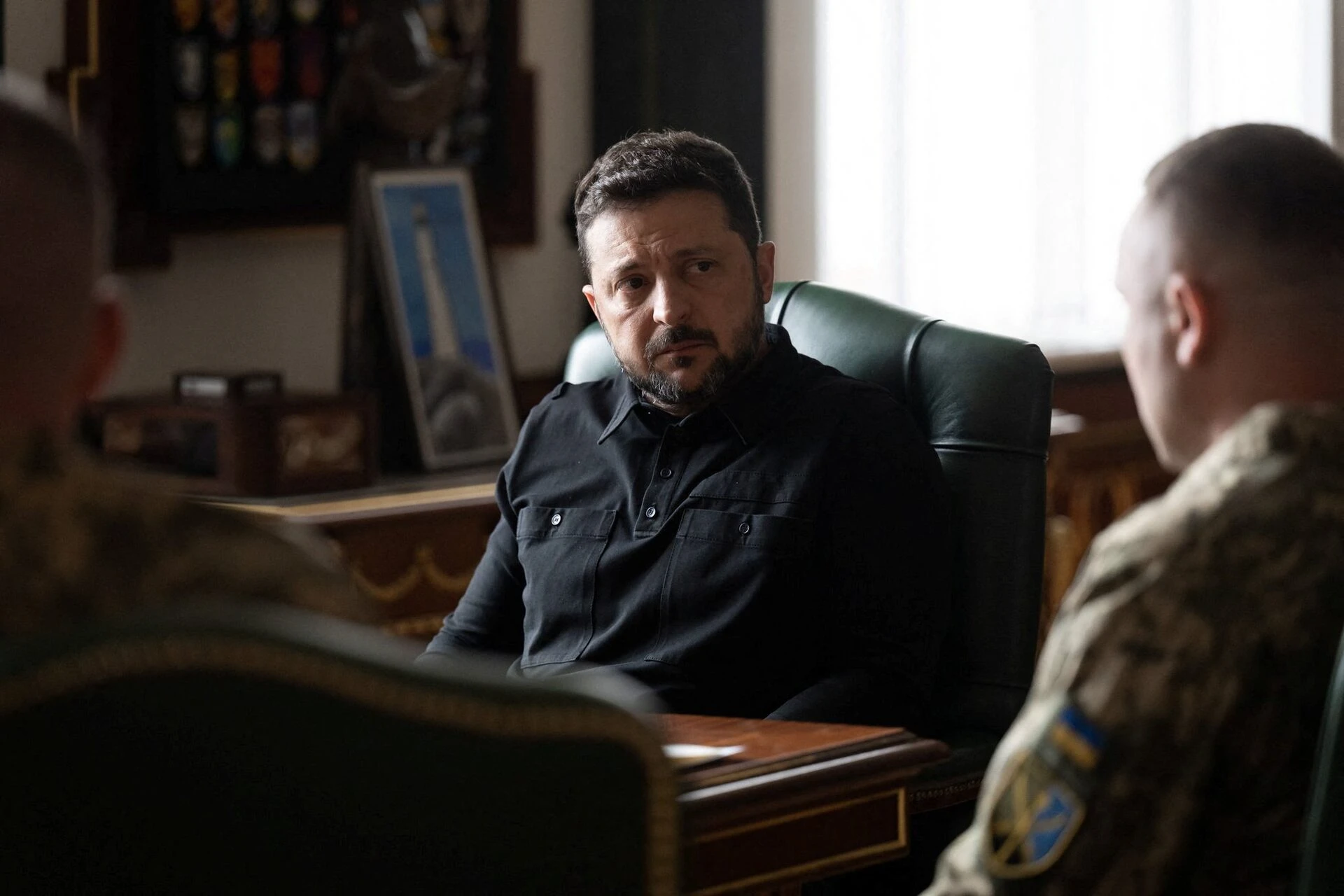 Президент України Володимир Зеленський зустрівся з генерал-майором Михайлом Драпатим на тлі нападу Росії на Україну в Києві, Україна, 20 липня 2026 року — Прес-служба президента України
The General Who Resigned
One of the most important episodes in Drapatyi’s career may not be a victory, but a resignation.
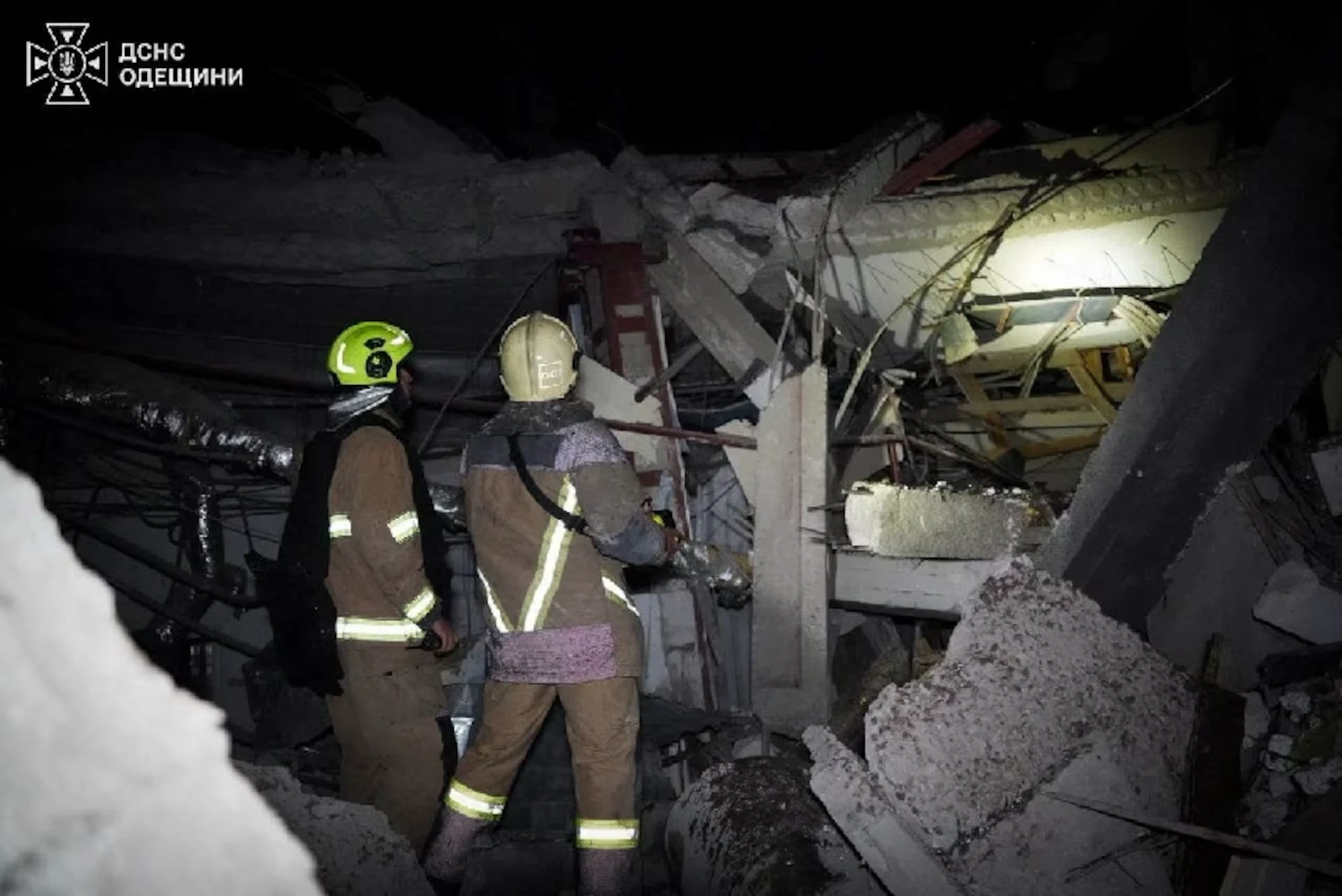
In June 2025, a Russian strike on a Ukrainian training center killed at least 12 service members and wounded dozens more. Drapatyi announced that he accepted personal responsibility for the tragedy.
Such a step was close to unprecedented within the Ukrainian military system. Commanders had often explained disasters through the actions of the enemy, circumstances beyond their control or mistakes made at lower levels. Drapatyi instead linked the health of an army to the willingness of senior officers to answer for the safety of their personnel.
His message was uncompromising: an army in which commanders take personal responsibility for human lives remains alive; an army in which no one is accountable for casualties begins to die from within.
That principle now becomes the central professional and moral obligation of the new commander in chief.
The resignation did not end his career. Drapatyi was moved into the less prestigious but more combat-focused role of Joint Forces commander. He returned to direct management of the northeastern defense and retained his reputation as a general of the front rather than of the office.
That episode now strengthens his position. After years in which Ukrainian soldiers increasingly criticized a culture of diluted responsibility, Zelensky chose a commander who had already demonstrated a willingness to pay with his post for a failure under his authority.
An Ally of Technological Reform
Drapatyi openly supported the reform agenda associated with former Defense Minister Mykhailo Fedorov after Fedorov was dismissed. He argued that the armed forces must learn, develop technology, protect their people and allow commanders to take responsibility for results.
The statement contains the outline of Drapatyi’s military philosophy.
An army, in his view, must not only be disciplined. It must be capable of learning continuously. A commander should have enough freedom to adapt a mission to changing conditions, but that freedom must be matched by personal responsibility for the outcome.
This approach challenges the traditional model of rigid hierarchy. In that system, decisions are concentrated at the top, while junior commanders are judged mainly by how precisely they execute orders. Drapatyi proposes a different logic: results matter more than formal obedience when battlefield conditions have changed.
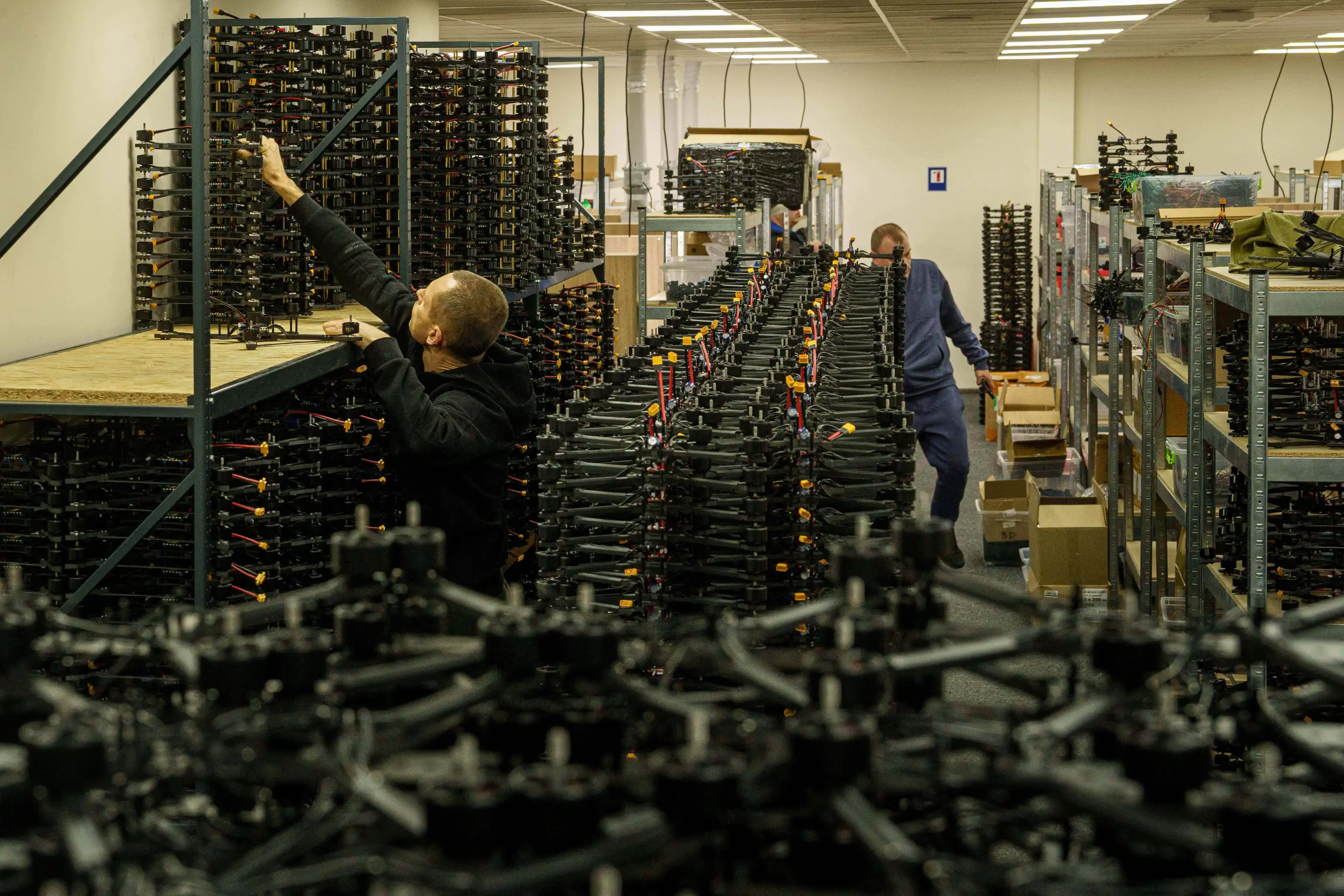
His appointment is therefore inseparable from Ukraine’s broader debate over drone and robotic warfare. The country cannot match Russia in manpower, artillery systems or ammunition production. Its advantage depends on the speed of adaptation, the precision of intelligence and the ability to scale successful technologies before the enemy can copy them.
The new commander in chief must transform unmanned systems from a specialized branch into a principle running through the entire military. Drones must be integrated into operational planning, logistics, reconnaissance, evacuation, strike missions and the protection of infantry.
Yet technological reform cannot be reduced to buying more FPV drones. It requires a different procurement system, improved training, faster data sharing and new ways of evaluating commanders. Without those changes, even advanced equipment will remain a collection of local successes that the army cannot reproduce across the front.
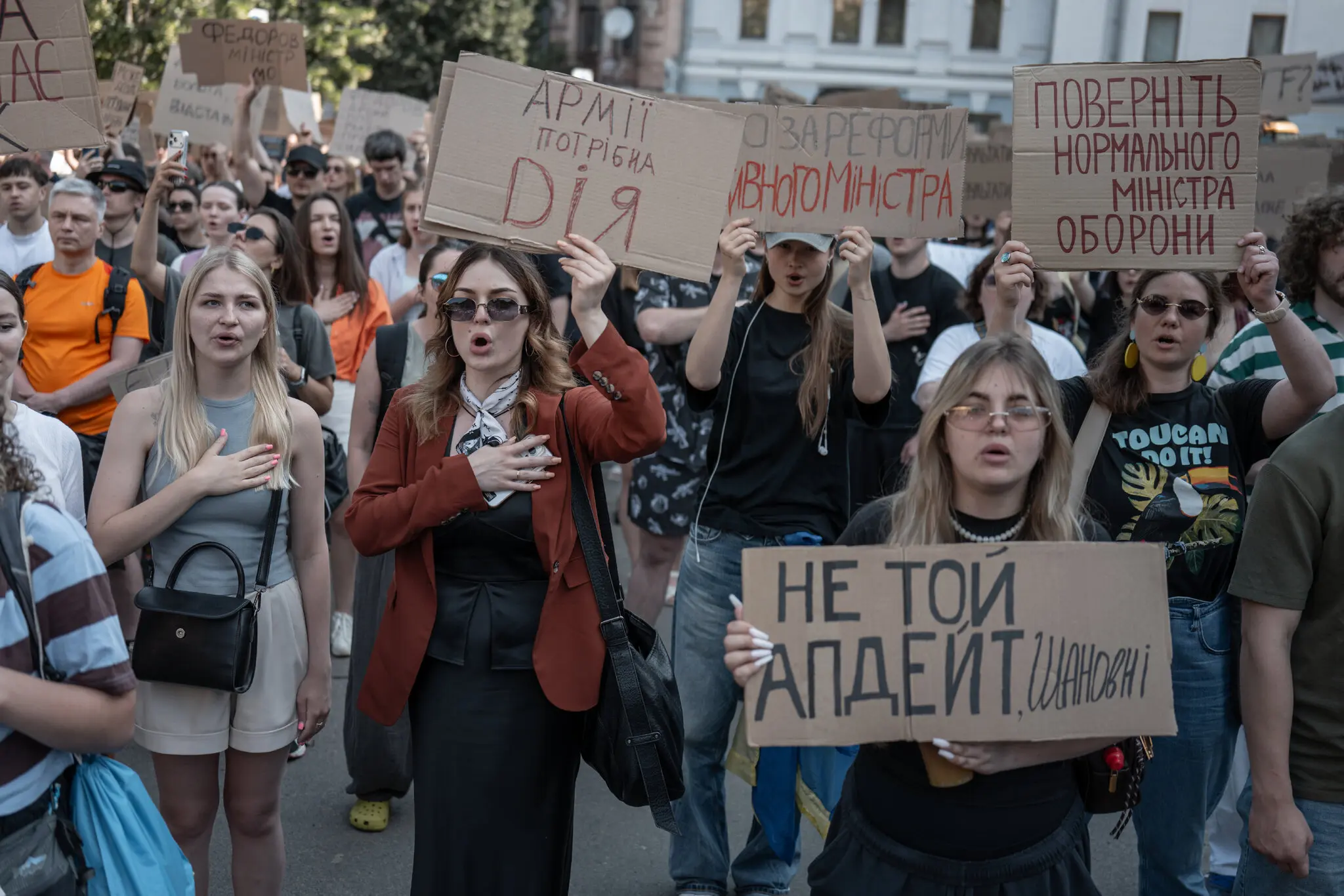 Минулого тижня протестувальники в Києві розкритикували рішення президента Володимира Зеленського звільнити міністра оборони Михайла Федорова — Єнджей Новіцький
The Hardest Work Begins Now
Drapatyi’s reputation gives him trust, but it also creates dangerously high expectations. Soldiers and civilians may expect rapid change even though the military’s structural problems accumulated over years. No commander in chief can solve infantry shortages, mobilization failures or dependence on foreign assistance with a single appointment.
He inherits an army fighting an exhausting defensive war against a larger opponent. Russia has deeper manpower reserves, continues expanding drone production and applies pressure across several sectors at once. Drapatyi will have little time for prolonged experiments.
His first test will be personnel policy.
Changing the commander without changing the team around him risks turning the appointment into a symbolic gesture. Drapatyi will need officers who share his principles and can push reforms through an apparatus that may resist them.
At the same time, broad purges could destabilize command during active combat. He must distinguish between experienced officers shaped by an older military culture and those who use hierarchy primarily to protect their positions. That is far more difficult than replacing one generation with another.
The second test will be his relationship with the presidential office.
Previous conflicts between Ukraine’s political and military leadership showed that the presidency seeks influence not only over strategic objectives, but also over individual operational decisions. Drapatyi will need autonomy to act effectively, yet the independence of a strong general has repeatedly made political leaders uneasy.
His public support for Fedorov already demonstrated a willingness to express disagreement. Now that independence will face a more demanding test: whether he can tell Zelensky uncomfortable truths about the front, casualties, mobilization and the army’s real capabilities without turning a professional dispute into a political confrontation.
An Army That Must Preserve Its People
The strongest element of Drapatyi’s reputation is his attitude toward soldiers’ lives. For Ukraine, this is no longer only a moral question. Manpower has become one of the central strategic limits on the country’s defense.
Ukraine cannot afford operations in which symbolic results or a few metres of ground are purchased with disproportionate losses. Every experienced soldier, sergeant and drone operator requires months of training and accumulates knowledge that cannot be quickly replaced.
Protecting troops does not mean avoiding risk. War offers no risk-free decisions. It means that the danger must correspond to the objective, and that commanders must be able to explain why a particular mission is worth its potential cost.
If Drapatyi makes that principle the foundation of his command, he will have to change more than orders. He will have to change military culture.
Commanders must be allowed to report that a task is impossible without automatically fearing punishment. Headquarters must receive an accurate picture rather than reports written to preserve careers. Operational truth must become more valuable than bureaucratic comfort.
The success of such reform will not be measured by speeches. It will be visible in the length of rotations, the quality of recruit training, the speed of evacuation, the distribution of drones, the response to failed operations and the willingness to remove officers for incompetence rather than disloyalty.
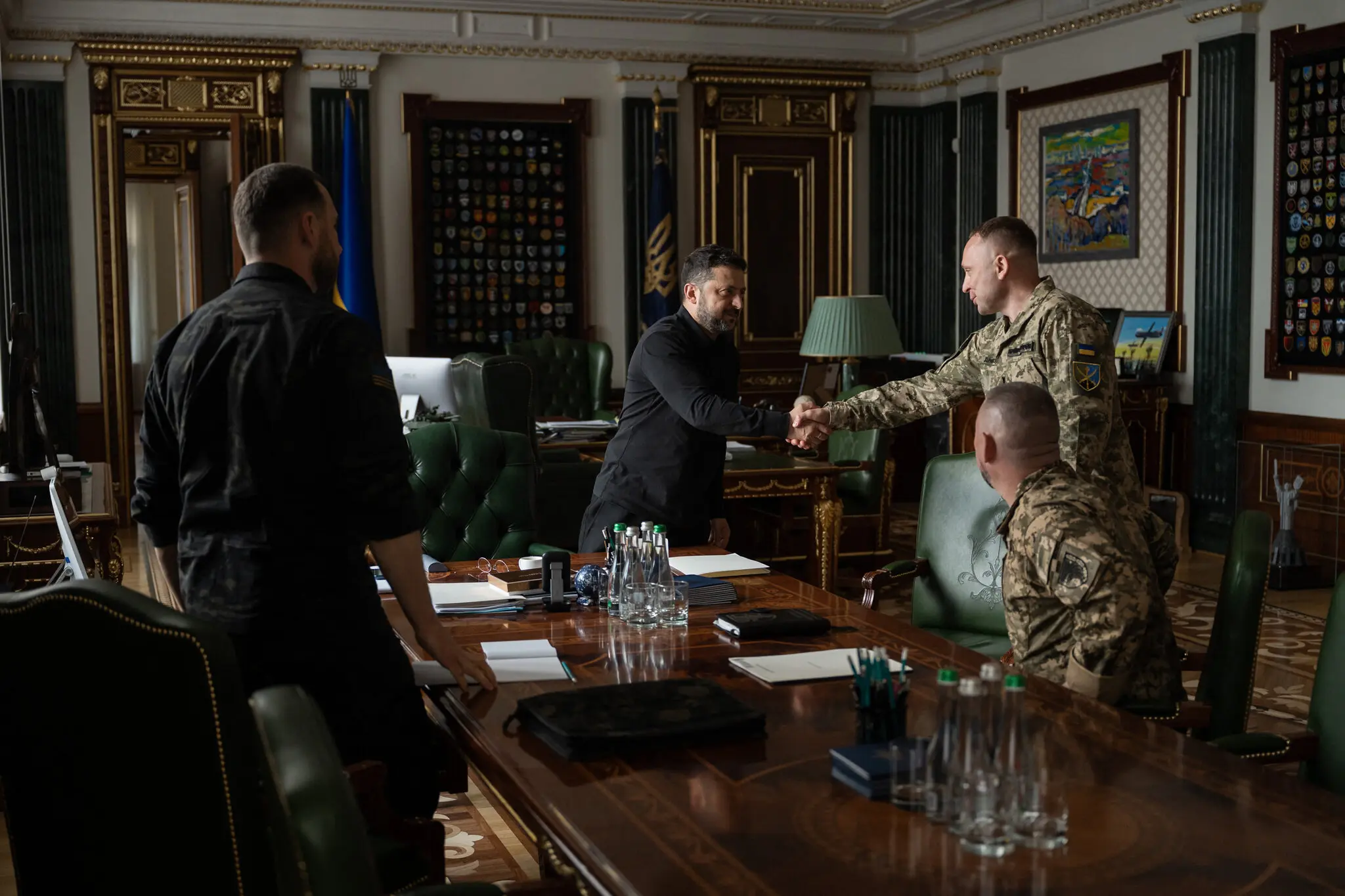 Фотографія, оприлюднена прес-службою Президента України в понеділок, на якій зображено зустріч Президента Володимира Зеленського з командувачем Об'єднаних сил генералом Михайлом Драпатим у Києві — Прес-служба Президента України
Not a New Hero, but New Rules
Drapatyi’s appointment can easily be presented as the story of a young combat general arriving to rescue the army from an outdated system. It is an attractive narrative, but a dangerous one. Ukraine has repeatedly placed expectations on individual commanders that should properly be placed on institutions.
The new commander in chief must not become another national symbol expected to change the war single-handedly. His task is to build a system capable of functioning without a cult around one general.
That requires clear boundaries of responsibility between the General Staff, the Defense Ministry, the commands of individual service branches and the president. It requires honest operational assessment, protected space for professional criticism and a mechanism for rapidly spreading battlefield experience across the armed forces.
Drapatyi received the position because he is seen as a commander who can act in a crisis. But the crisis before him differs from breaking through a barricade or stabilizing one sector of the front. He must now reform an institution of which he has been part for more than a quarter of a century.
His greatest asset is the trust of many soldiers. His greatest danger is losing it if reform stops at the level of rhetoric. The army will not judge him by new slogans, but by evidence that initiative is no longer punished, that commanders answer for losses and that successful technologies can be scaled without months of bureaucratic struggle.
Mykhailo Drapatyi takes command of Ukraine’s armed forces not as an untarnished victor, but as a general who knows the price of failure and has already acknowledged it in public.
In a military system where responsibility often dissolves between headquarters, departments and ranks, that may be his most important advantage.
He must now prove that personal accountability can become a rule for the entire army. Whether his appointment becomes a genuine reset of Ukrainian command will depend not on the speed of the next reshuffle, but on whether he can turn that principle into an institution.