


















Mykhailo Drapatyi’s appointment as commander-in-chief marks the most significant restructuring of Ukraine’s military leadership since the start of the full-scale invasion. President Volodymyr Zelensky replaced Oleksandr Syrskyi after days of protests and an increasingly public dispute over the future of defense reform.
Drapatyi is 43. He has fought Russia since 2014, commanded Ukraine’s Ground Forces, led operations on the Kharkiv axis and worked across some of the most heavily contested sectors of the front. His career was shaped by the realities of the current war rather than by the institutional habits of the Soviet military.
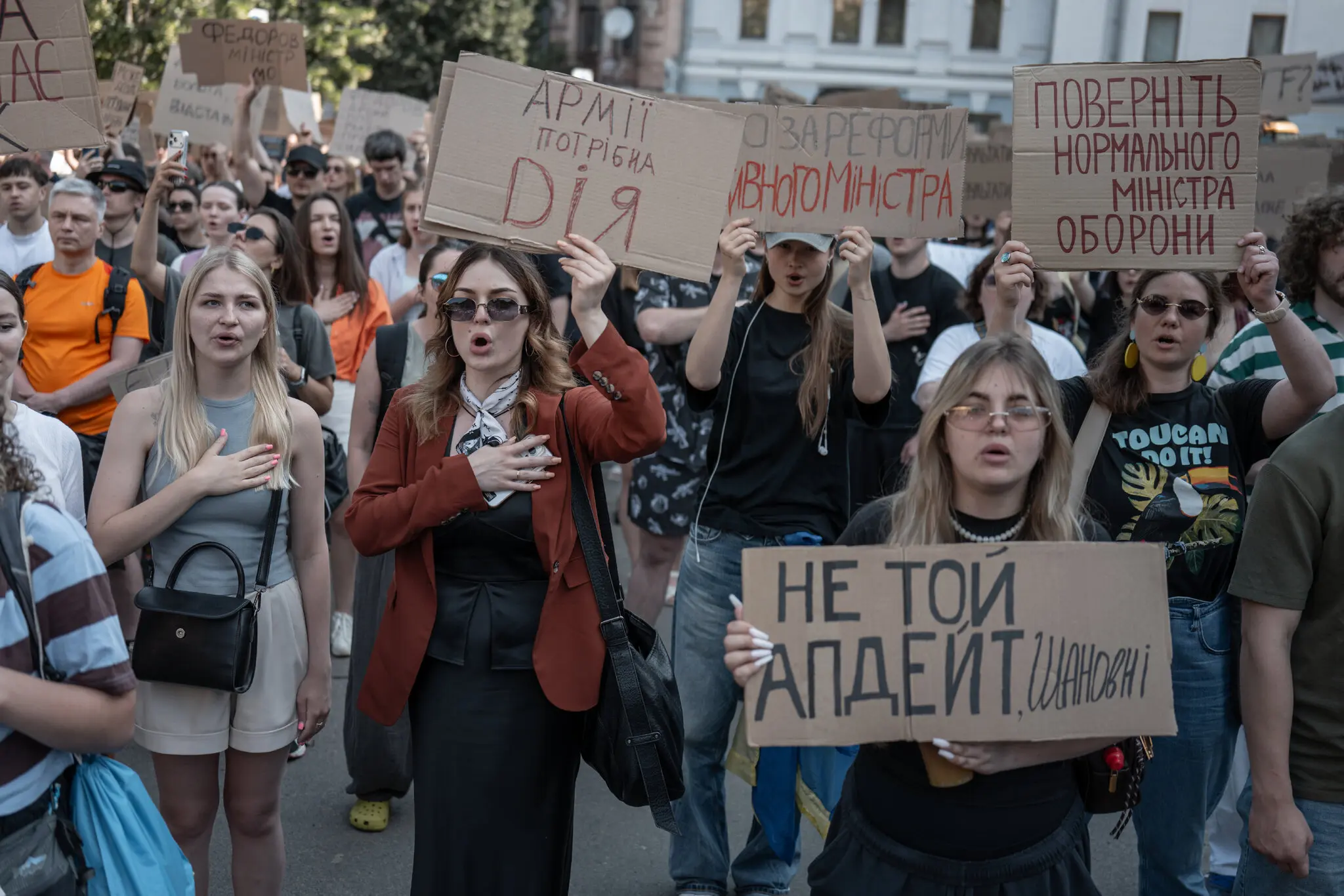
The change came only days after the dismissal of Defense Minister Mykhailo Fedorov. His removal brought protesters into the streets and turned what had been presented as a personnel reshuffle into a broader crisis of confidence over how the state intends to build and command its army.
According to Daycom’s analysis, Drapatyi’s appointment is an attempt to contain that crisis without restoring the previous arrangement. Zelensky did not return Fedorov to the Defense Ministry, but he removed Syrskyi, the figure most closely associated by reform supporters with resistance to technological and institutional change.
Syrskyi leaves behind a deeply contested legacy. He played an important role in the defense of Kyiv, the Kharkiv counteroffensive and operations in Russia’s Kursk region. At the same time, some service members accused him of an excessively rigid command style and decisions that produced unjustifiably high losses.
Those criticisms had circulated for years among frontline units, veterans and military analysts. Fedorov’s dismissal gave them a common political focus. The demand was no longer simply for a different general, but for an army capable of changing the way it manages the war.
Drapatyi came to symbolize that possibility even before his appointment. He is seen as a combat commander of a newer generation: experienced enough to lead a large military, but not so closely tied to the old hierarchy that he treats its procedures as untouchable.
His first public message was deliberately restrained. He promised responsibility, complete focus and respect for those defending the country. It was not yet a doctrine, but it addressed the central political demand behind the protests — that the life of a soldier must become a measure of command quality.
The treatment of personnel had become one of the weakest points of the previous system. Mobilization, training, transfers between units, brigade supply and the use of infantry were too often handled as separate administrative processes rather than as parts of one system for preserving combat strength.
Drapatyi’s task is to stop treating that strength as an expendable resource. Ukraine does not possess Russia’s demographic reserves. Its advantage must therefore come from training, technology, competent leadership and the ability to reduce avoidable losses.
That means reform cannot end with a new name at the top. Changes are needed in the General Staff, the emerging corps structure, combat training and the division of responsibility between strategic headquarters and commanders in the field.
The new leadership is expected to prepare an updated defense strategy, continue the corps reform and respond more directly to frontline requests for weapons, drones and equipment. The intended change is not merely organizational. It is a shift in how the military identifies and solves problems.
For too long, battlefield needs have moved slowly through headquarters, ministries and procurement agencies. A new system must shorten the distance between a problem inside a brigade and a decision in the General Staff, the Defense Ministry or a production facility.
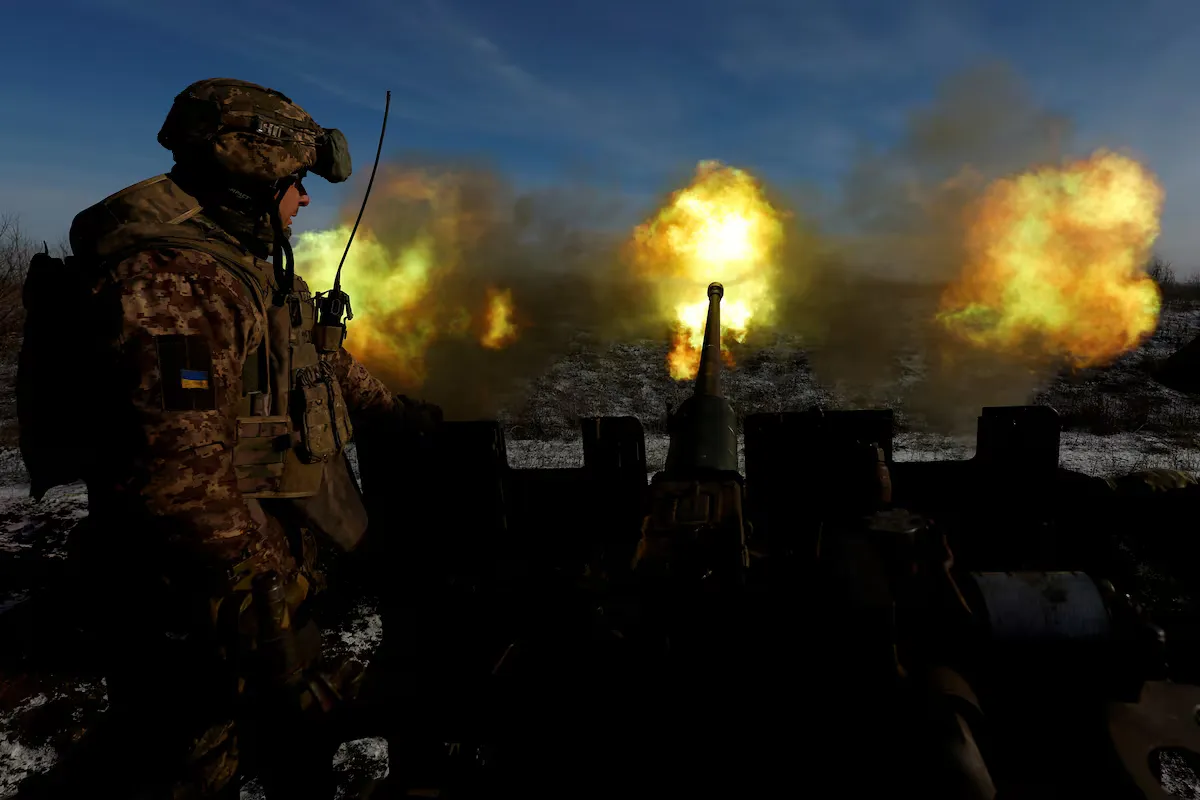
Drapatyi inherits a military fighting several different wars at once. Infantry units are holding ground under relentless pressure. Unmanned systems dominate dozens of kilometers around the front. Long-range strikes are attacking Russian logistics, while air defenses protect cities and energy infrastructure.
Bringing those elements into one coherent strategy is more difficult than managing land operations alone. The commander-in-chief must decide how to distribute scarce missiles, drones, personnel and ammunition between immediate defense and campaigns whose effects may take months to become visible.
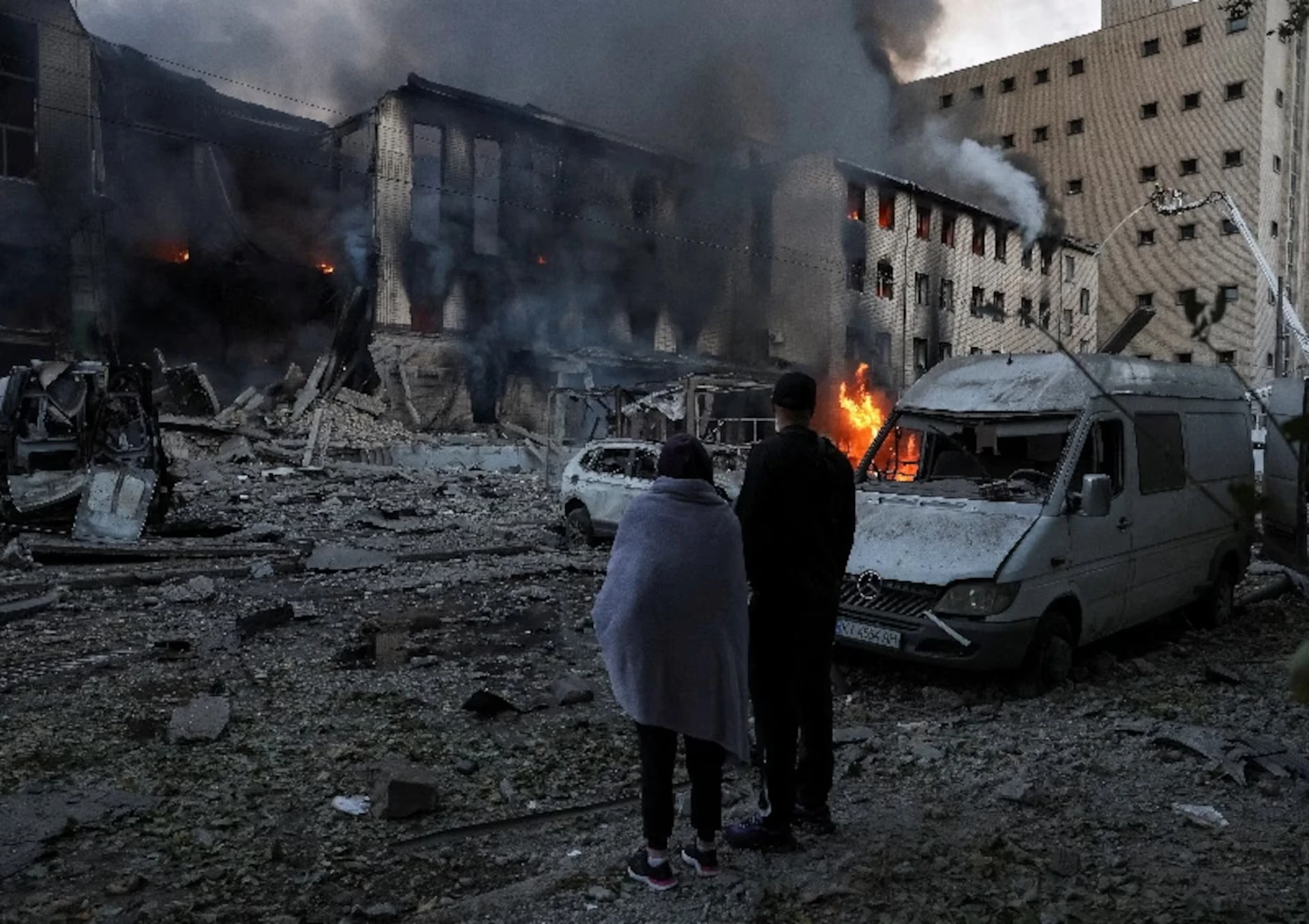
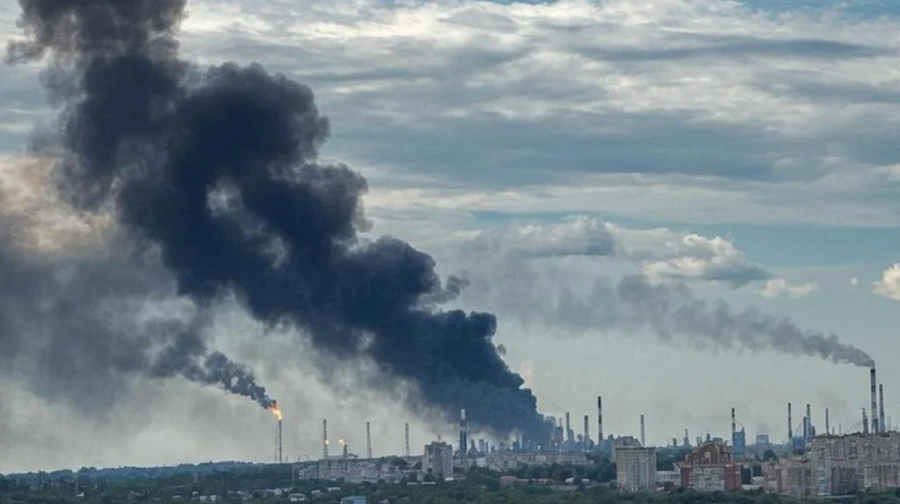
Zelensky has made clear that Ukraine’s long-range strike campaign and its medium-range weapons program are to continue without interruption. The leadership transition must therefore take place without slowing attacks on Russian energy infrastructure, military production and logistical hubs.
That will be Drapatyi’s first test. Even a short loss of operational tempo could allow Russia to regroup, replenish stockpiles, reinforce a sector or adapt to Ukrainian tactics.
Mobilization will be the second. The demand for a more realistic model amounts to an admission that the current system is exhausted. The problem is not only the number of available recruits, but public trust in training, command decisions and the rules governing military service.
Without that trust, stronger mobilization measures will deepen resistance. The state must explain where recruits are sent, how they are trained, who is responsible for their survival and why some formations receive people and equipment faster than others.
Technological warfare will be the third challenge. Fedorov’s dismissal demonstrated that drones, digital platforms and defense start-ups are no longer auxiliary parts of the armed forces. They have become a political constituency demanding influence not only over procurement, but over military doctrine itself.
Fedorov welcomed Drapatyi’s appointment as the arrival of a voice for change that could no longer be ignored. That does not guarantee a political alliance, but it creates an opportunity to reconnect the military command with the technology community disrupted by the government reshuffle.
Fedorov’s own future remains unresolved. Zelensky has offered him a senior role overseeing the state’s technological capacity, while the former minister has indicated that he wanted to return to the position he lost.
That uncertainty shows that the personnel crisis is not over. Drapatyi’s appointment satisfied the protesters’ most important demand — Syrskyi’s departure — but did not answer who will control defense technology or who will have the authority to overhaul procurement.
Acting Defense Minister Yevhenii Khmara represents a different type of leader, one associated with special operations and deep strikes. His cooperation with Drapatyi may produce rapid battlefield results, but the ministry must also maintain budget discipline, institutional stability and civilian oversight.
The greatest risk is that the new team will try to meet every expectation at once: reduce casualties, reinforce the front, accelerate mobilization, expand strikes inside Russia and quickly rebuild the command structure. Ukraine does not have the resources to accomplish all of this immediately.
Drapatyi’s success will therefore depend on sequencing. He must decide which sectors matter most, which brigades need to be rebuilt, where drones can replace personnel and where technology cannot compensate for a shortage of trained infantry.
His willingness to challenge political leaders will matter just as much. The commander-in-chief must be neither an independent center of power nor a passive executor of every presidential decision. His responsibility is to explain professionally the military cost of political objectives and the actual limits of the armed forces.
The protests created a risky but necessary precedent. Ukrainian society demonstrated that even during war it considers military leadership subject to public accountability. That increases pressure on the government, but it also prevents the defense system from sealing itself off from criticism.
Drapatyi’s appointment answered that pressure, but it cannot become merely a way to neutralize it. If the new command does not change its approach to soldiers, battlefield initiative and technology, the initial credit of trust will disappear quickly.
Ukraine is entering another stage of the war without a decisive breakthrough on the ground, but with an expanding campaign against Russia’s rear. Its advantage will depend on whether its military can combine mass production, combat knowledge and command flexibility faster than the enemy.
Drapatyi takes office not at a moment of stability, but amid an open conflict between an older military culture and a newer model of warfare. His task is not simply to choose between them, but to build a system in which experience does not obstruct change and technology does not replace responsibility.
The change in command may become the beginning of genuine reform or merely a way to reduce political tension. The difference will be determined not by opening statements, but by decisions on personnel, corps, mobilization, drones and commanders.
Ukraine’s military has a new leader. It now needs new rules — flexible enough for technological war and humane enough for a country that can no longer afford to pay for institutional mistakes with the lives of its soldiers.