


















The question of Oleksandr Syrskyi’s future is no longer an internal matter for the General Staff. It has moved onto the streets of Kyiv, entered conversations among soldiers across the front and landed on the president’s desk as a decision that can no longer be postponed without political consequences.
The dismissal of Defense Minister Mykhailo Fedorov was supposed to end a prolonged conflict inside the system. Instead, it tore away the system’s protective cover. Disputes over procurement, drones, personnel policy and command culture, once confined to closed meetings, became a public indictment of Ukraine’s military leadership.
Active-duty soldiers, veterans and commanders are increasingly joining demonstrators calling for the removal of the commander in chief. Their complaint is not simply that Syrskyi has underestimated technology. It is that the system often treats loyalty as safer than initiative and obedience as more important than whether an order reflects the realities of the battlefield.
As Daycom assesses it, this widening of the crisis is what makes the moment so dangerous for Volodymyr Zelensky. The president can dismiss one general, but he cannot eliminate with a single decree the distrust that has grown between front-line units, the General Staff, the Defense Ministry and the presidential office.
After several days of consultations with corps commanders, Zelensky convened senior military and security officials. The format brought together commanders who use weapons, defense manufacturers, government officials responsible for financing and procurement, and representatives of the security services. The meeting itself amounted to an implicit admission of the central criticism: a dangerous gap had opened between the front and the center.
The president’s statement that decisions concerning the army would be prepared left room for every possible outcome. Syrskyi formally remained in office, but the visible succession of meetings with alternative centers of military influence had already weakened his position. A commander in chief who is publicly required to justify his right to remain in command begins losing authority before any formal decision is made.
Zelensky now faces a choice with no safe option. Keeping Syrskyi may be interpreted as support for a closed military hierarchy against the judgment of a significant part of the army and society. Removing him would look like a concession to the street and an admission that Fedorov’s dismissal was a political mistake.
Yet the deeper problem is not the name of Syrskyi’s successor. Replacing the commander without changing the rules would merely hand the same system to a new figure: overcentralized, dependent on personal access to the president, inclined toward manual control and often unable to turn front-line experience into army-wide decisions.
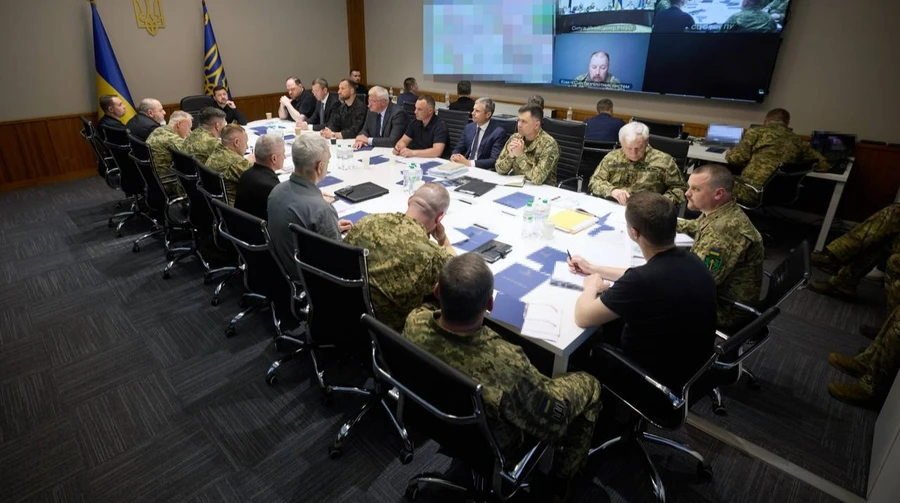 Зеленський провів спеціальну Ставку — Фото Офис Президента
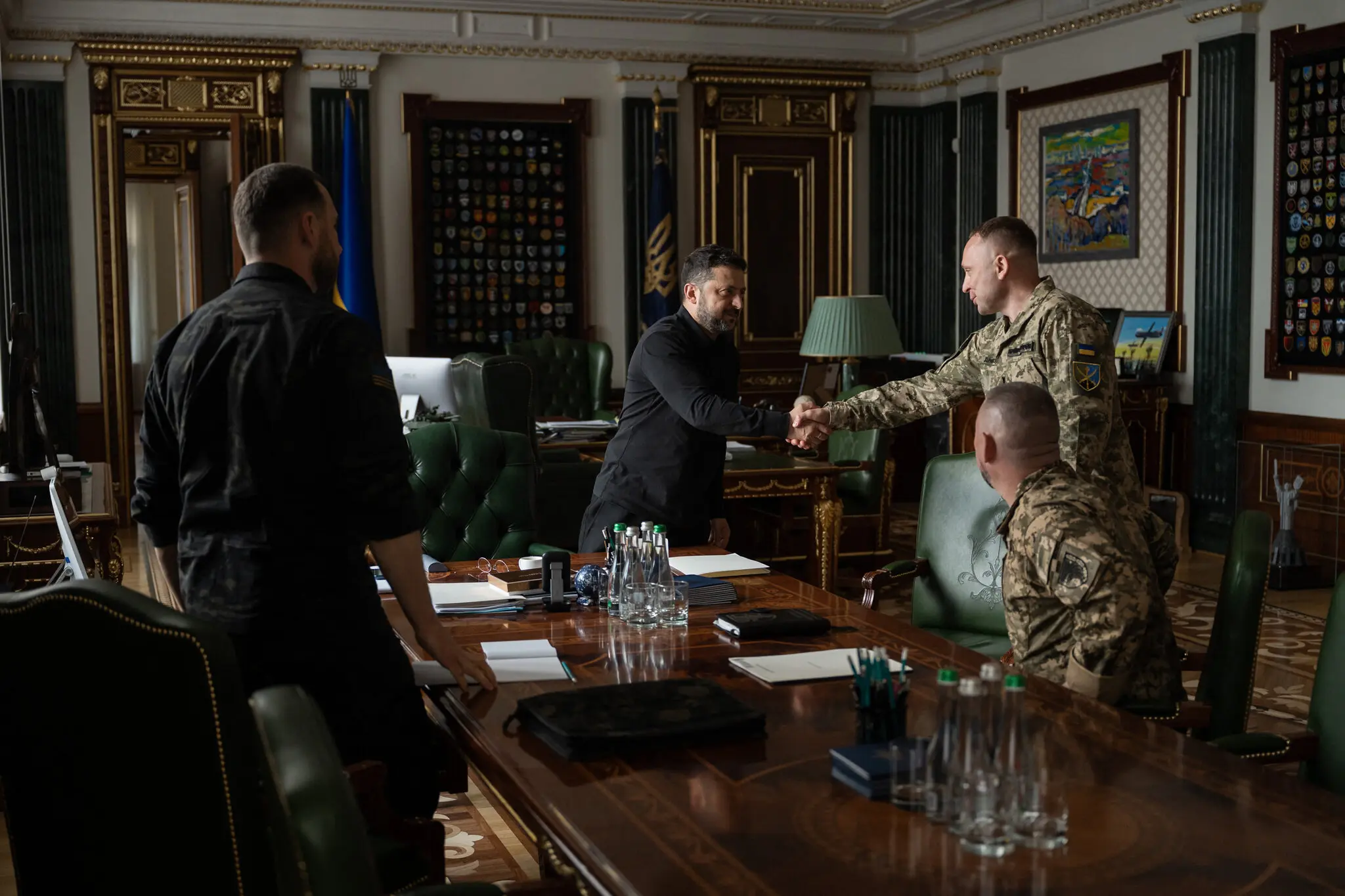
Two Models of War
Fedorov made visible what Ukrainian soldiers had been discussing for years. The modern battlefield no longer permits units to be managed as though an officer in headquarters automatically sees more clearly than a commander at the forward edge. Drones, digital maps, sensors and communications systems have shortened the time between detection and strike. They have not always shortened the distance between a problem and a decision.
The model associated with Fedorov relied on data, technology teams, rapid testing and direct contact with manufacturers. It did not reject artillery, infantry or traditional command. Its central argument was different: Ukraine cannot defeat Russia through superior numbers of soldiers and shells, so it must compensate through faster adaptation.
Syrskyi’s approach was shaped by the tradition of a large land army. It emphasizes a strict chain of command, centralized control, reserves, artillery mass and the subordination of operations to a single plan. In a high-intensity war, those principles remain essential. The problem begins when the hierarchy starts protecting itself from information that contradicts decisions already made.
Syrskyi has rejected the accusation that he resisted drone warfare. He has pointed to the creation of a separate branch for unmanned systems under his command and dismissed claims that he opposed drones as part of a manufactured mythology. It is a strong formal defense, but it does not answer the question of daily command practice.
Creating a separate institution is not enough if its resources remain dependent on the old bureaucracy and if drone commanders have little influence over operational planning. The presence of drones in the force structure does not mean the entire army has become technological. Genuine transformation begins when battlefield data changes orders rather than merely supplementing decisions already taken.
Ukraine is fighting across an enormous front in an environment where almost every movement can be detected by unmanned systems. Large concentrations of vehicles, prolonged preparations and predictable rotation routes become targets. Under such conditions, an order designed according to the logic of an earlier war may lose relevance before it reaches the unit expected to carry it out.
That is why the anger inside the military cannot be reduced to a generational struggle between young reformers and older generals. It is a conflict between different speeds. Technology changes the battlefield every week. Military procedures, force structures, procurement systems and chains of responsibility often change over years.
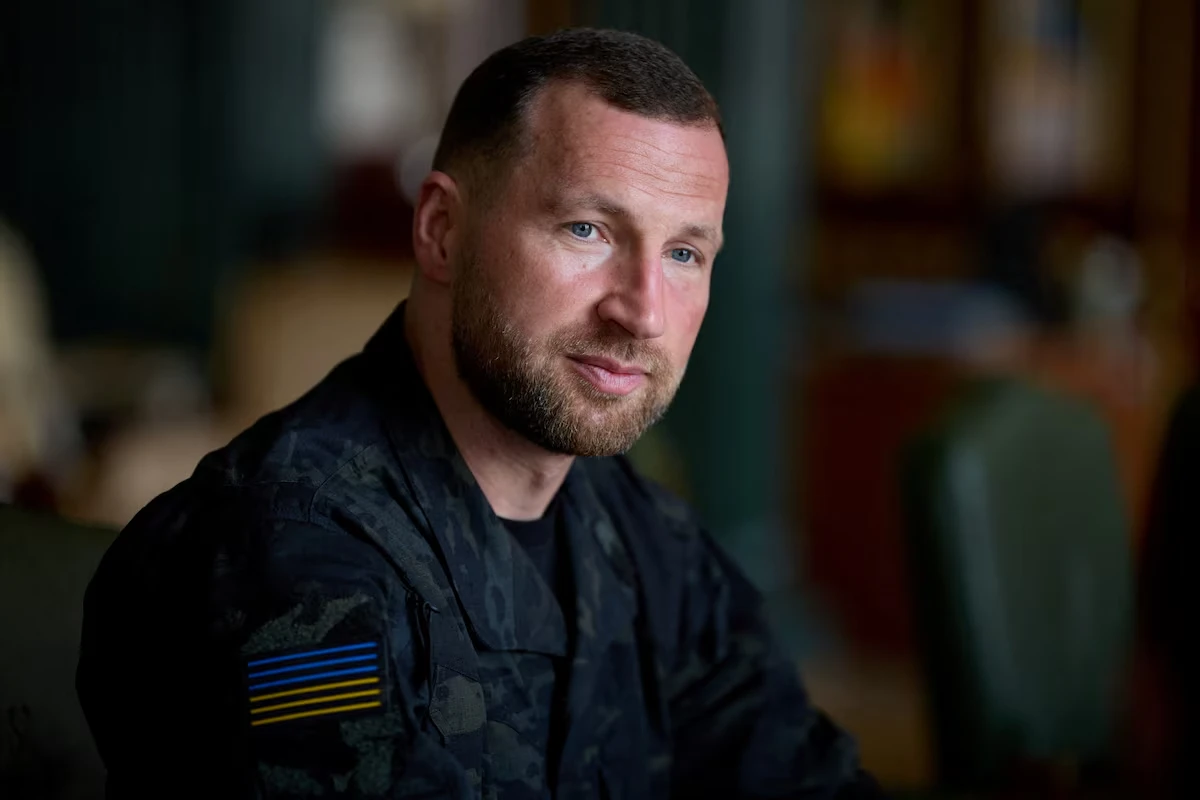
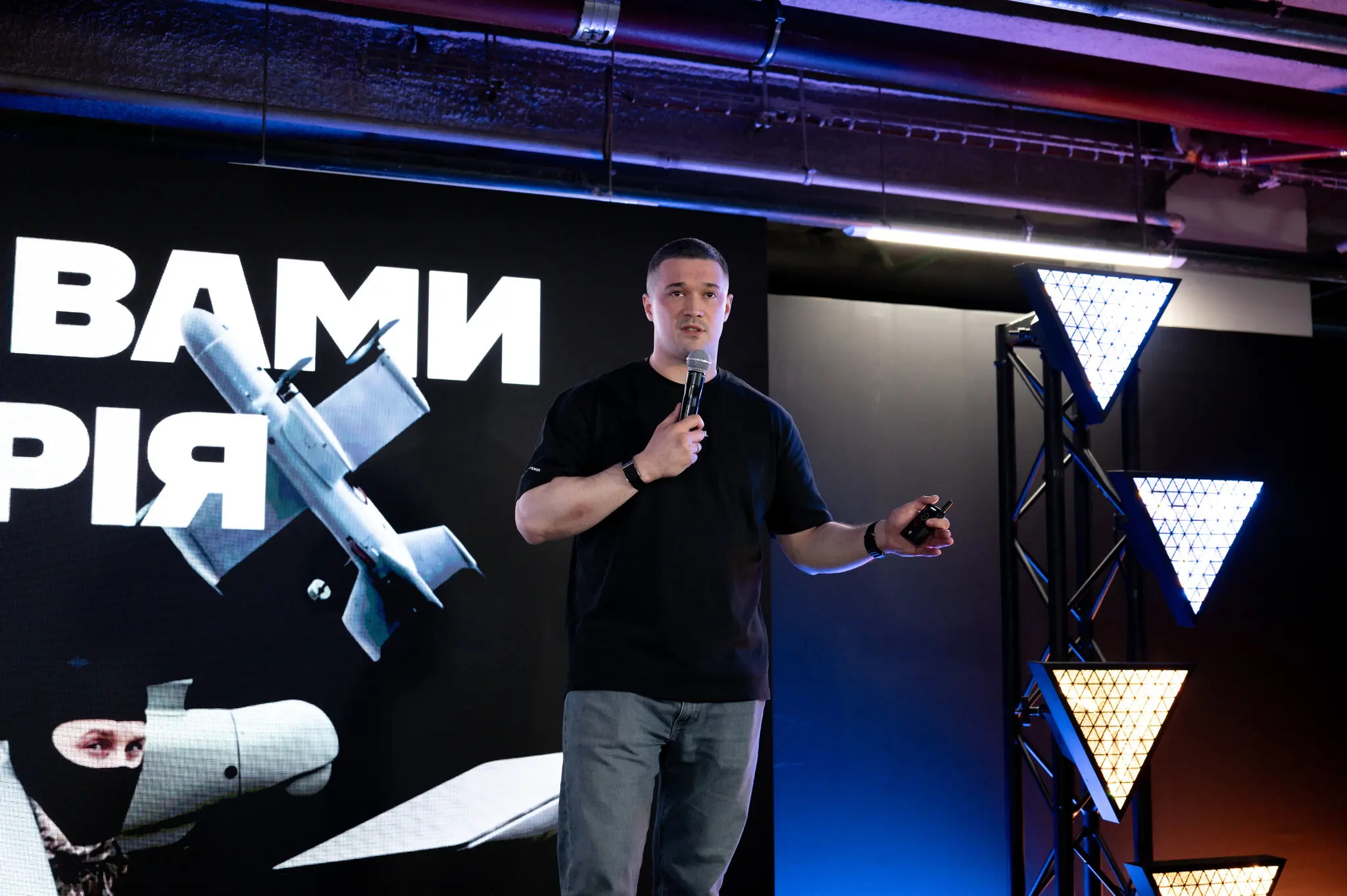 Колишній міністр оборони України Михайло Федоров у Києві у четвер. Він був обличчям української технологічної війни — Єнджей Новіцький
An Army Afraid of Its Own Headquarters
The most dangerous sign of the crisis has not been civilian protest, but the public statements of commanders. A growing number of officers describe an atmosphere in which leaders must think not only about completing a mission, but also about avoiding punishment for an inconvenient report or for refusing an unrealistic order.
Such a culture distorts information. When a commander fears reporting the loss of a position, a shortage of personnel or the impossibility of an advance, headquarters receives an artificially optimistic picture. The next order is then based on that picture and becomes even more detached from reality. Errors accumulate while responsibility is pushed downward.
Gen. Mykhailo Drapatyi has expressed the problem with particular clarity: silence does not protect the armed forces; it merely allows mistakes to grow until correcting them becomes far more costly. His position matters not only because of what he said. Drapatyi is widely viewed as one of the potential contenders for the position of commander in chief, which means he is effectively offering an alternative model of military leadership.
Col. Sviatoslav Palamar has warned against turning society’s internal exhaustion into an instrument of political control. Brig. Gen. Serhii Sobko has argued that excessive centralization is stripping the army of the agility that helped save the country in 2022. This is no longer criticism of a single decision. It is a collective signal from the middle and senior levels of command.
Public dissent is always dangerous in an army. A military organization cannot function as a debating society in which every order is put to a vote. But an absolute ban on objection can be equally destructive. A modern force needs discipline in execution, but it also needs a protected mechanism through which a commander can say that a plan no longer corresponds to reality.
The current system appears not to have provided such a mechanism. That is why the internal dispute moved into social media, public statements, interviews and street protests. When an institution cannot process criticism internally, it receives that criticism from outside in a sharper, more political and less controllable form.
Kostiantynivka as a Symbol of the Divide
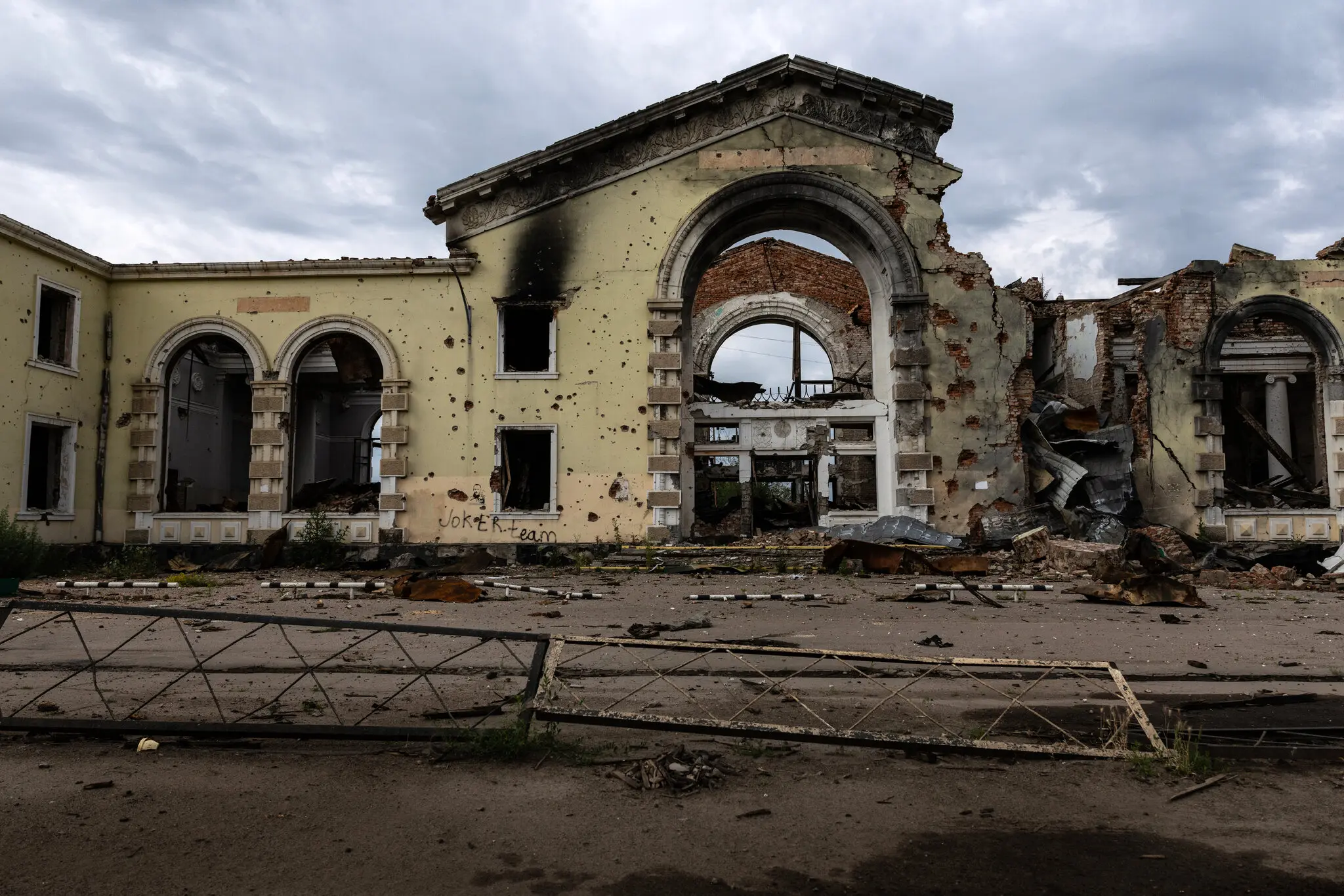
Particular anger followed an operation to raise the Ukrainian flag in Kostiantynivka. The footage was intended to show that Russia did not control the city and to strengthen morale. Instead, some soldiers saw it as a propaganda gesture for which troops may have been sent into an area of extreme danger.
Images later appeared showing Ukrainian soldiers in Russian captivity. The General Staff confirmed that several servicemen had been captured in the ruined city but did not say whether they had taken part in the flag operation. The uncertainty deepened public suspicion that symbolic effect may have been valued more highly than the safety of the men involved.
Kostiantynivka became a concentrated image of the wider problem. For headquarters, the flag represents presence, control and political signaling. For a soldier operating under near-constant observation, it may represent a mission whose tactical value is not proportionate to the risk. The distance between those two perspectives is the distance between the map and the battlefield.
At the center of the controversy was the 425th Separate Assault Regiment, known as Skelia, which reports directly to the General Staff and is deployed in some of the most difficult sectors. The unit had already drawn scrutiny over reports of noncombat deaths among new recruits and alleged abuses, giving the episode additional weight.
Critics sometimes describe such formations as “Syrskyi’s regiments,” suggesting a special relationship with the commander in chief. Even if the phrase is exaggerated, it reveals a problem of perception: units that answer directly to the highest headquarters are seen not only as military instruments, but as components of a personal command structure.

Why Syrskyi Still Matters to Zelensky
For all the criticism, Syrskyi is not an incidental figure. He has extensive operational experience, played an important role in the defense of Kyiv and the Kharkiv counteroffensive, understands the structure of the armed forces and has shown no political ambition. For a president determined to retain control over wartime decisions, the last quality may be almost as important as professional competence.
The relationship between political and military leadership always contains the potential for conflict. A popular general with an independent reputation can become a separate center of public trust. After Zelensky’s tense relationship with Valerii Zaluzhnyi, the presidential office is especially sensitive to the emergence of a military figure capable of competing with the president in the symbolic sphere.
Syrskyi was, in that sense, a predictable commander in chief. He did not cultivate a political persona, did not publicly challenge the president and remained an executor of the broader strategy. But political convenience can become a military weakness if a commander begins to treat presidential expectations as more important than uncomfortable facts from the front.
The question of his dismissal therefore leads back inevitably to the presidential office. Even if disputed orders formally came from the General Staff, Zelensky designed the command architecture, appointed Syrskyi and kept him in place despite sustained criticism. It is impossible to demand personal responsibility from the general while excluding the political leadership from responsibility for the system.
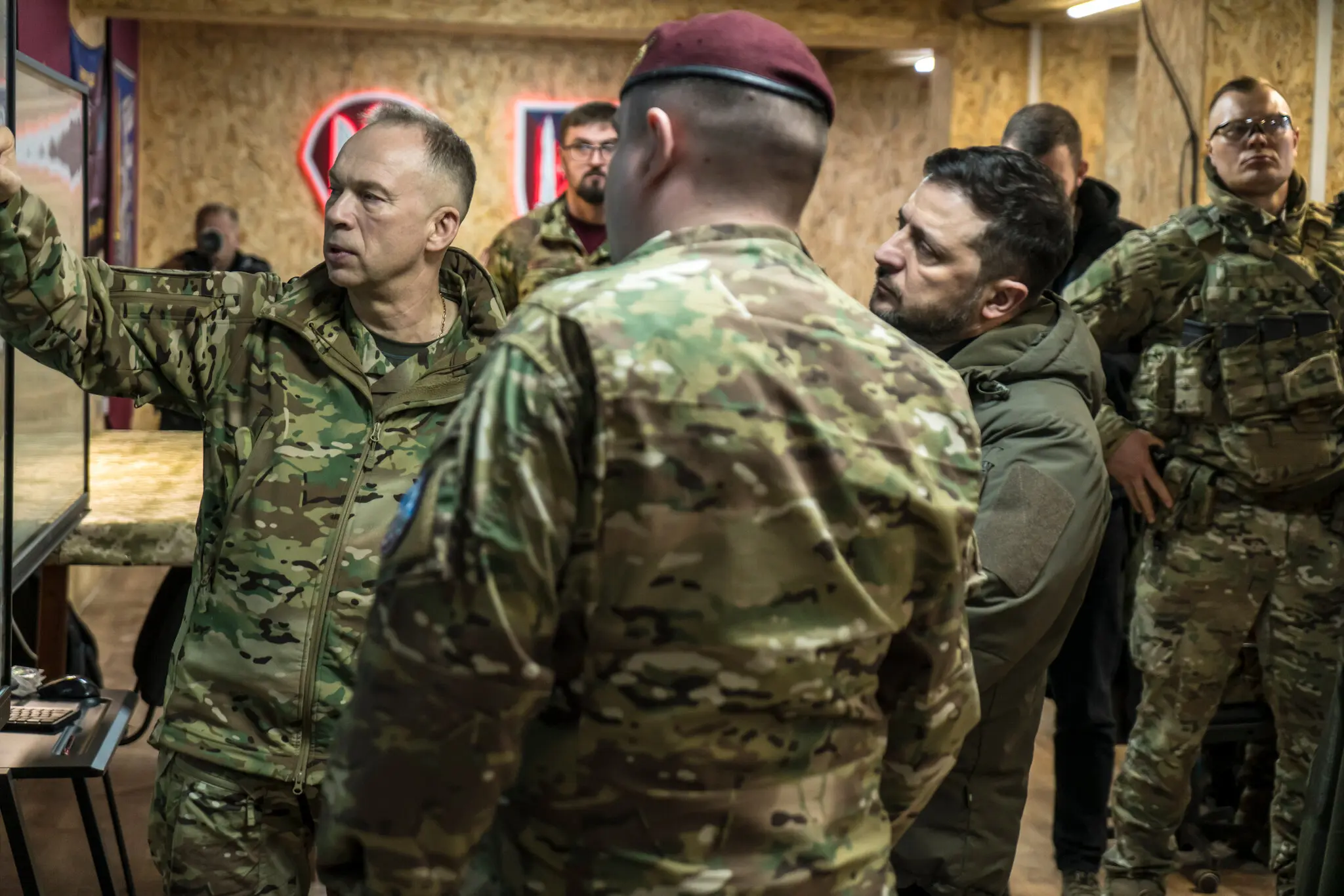 Генерал Олександр Сирський (ліворуч) із паном Зеленським у Донецькій області у березні — Брендан Гоффман
The Danger of a Simple Personnel Change
Appointing a new commander in chief could give Zelensky a brief political reprieve. The protests might subside, the public would feel heard and the military would gain hope that its practices could change. But the effect would quickly disappear if the successor were not allowed to bring in a new team and reshape the decision-making process.
That is the central argument of soldiers who support reform. What matters is not the name of the new commander, but the authority attached to the position. A general placed above the same apparatus and dependent on daily direction from the presidential office would soon begin reproducing the behavior of his predecessor.
Drapatyi appears an obvious candidate because of his combat record, openness to technology and support among part of the officer corps. Yet those same qualities may alarm the president’s inner circle. A strong commander in chief requires autonomy, while political systems built around vertical control usually attempt to limit any autonomy they cannot manage.
There is also the risk of inflated expectations. No general can quickly solve the shortage of infantry, the failures of mobilization, the lack of air defense, uneven brigade preparation or dependence on foreign supplies. A change in command will not turn a difficult defensive war into a sequence of technological victories.
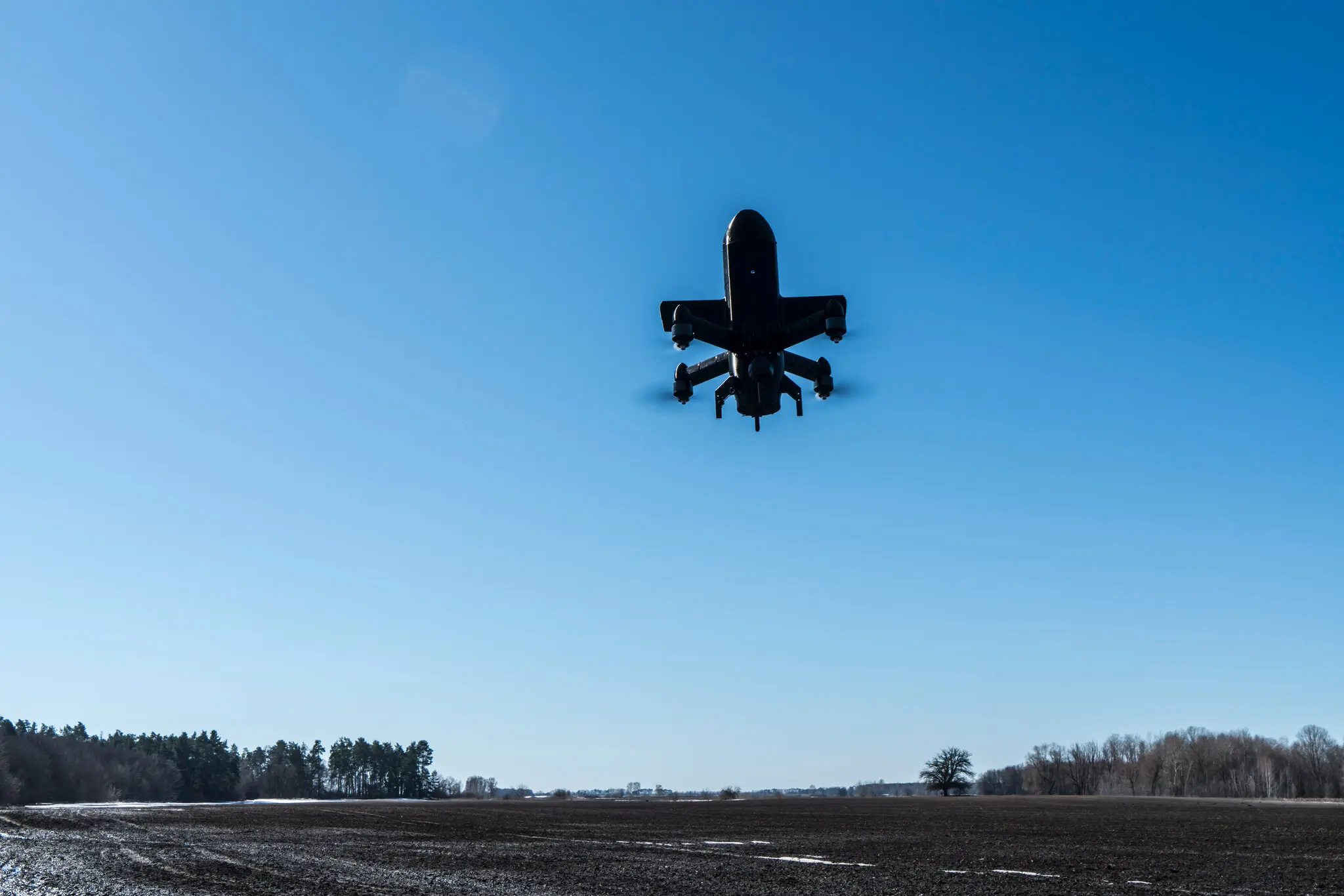
Drones are not a universal answer either. They require frequencies, software, munitions, trained crews, communications and constant upgrades. Russia rapidly copies Ukrainian innovations, expands production and increases its use of FPV systems. Technological advantage exists only as long as Ukraine changes faster.
At the same time, Ukraine’s campaign of long-range strikes has shown what this model can achieve. Attacks on logistics, warehouses, energy facilities and transport infrastructure deep inside Russia have demonstrated Ukraine’s ability to shift part of the war onto enemy territory without entering a symmetrical competition of manpower and resources.
The political irony is that the crisis erupted just as the technology-centered strategy began producing visible results. Instead of embedding that model institutionally, the government created the impression that it was removing its chief advocate and restoring the advantage of traditional command.
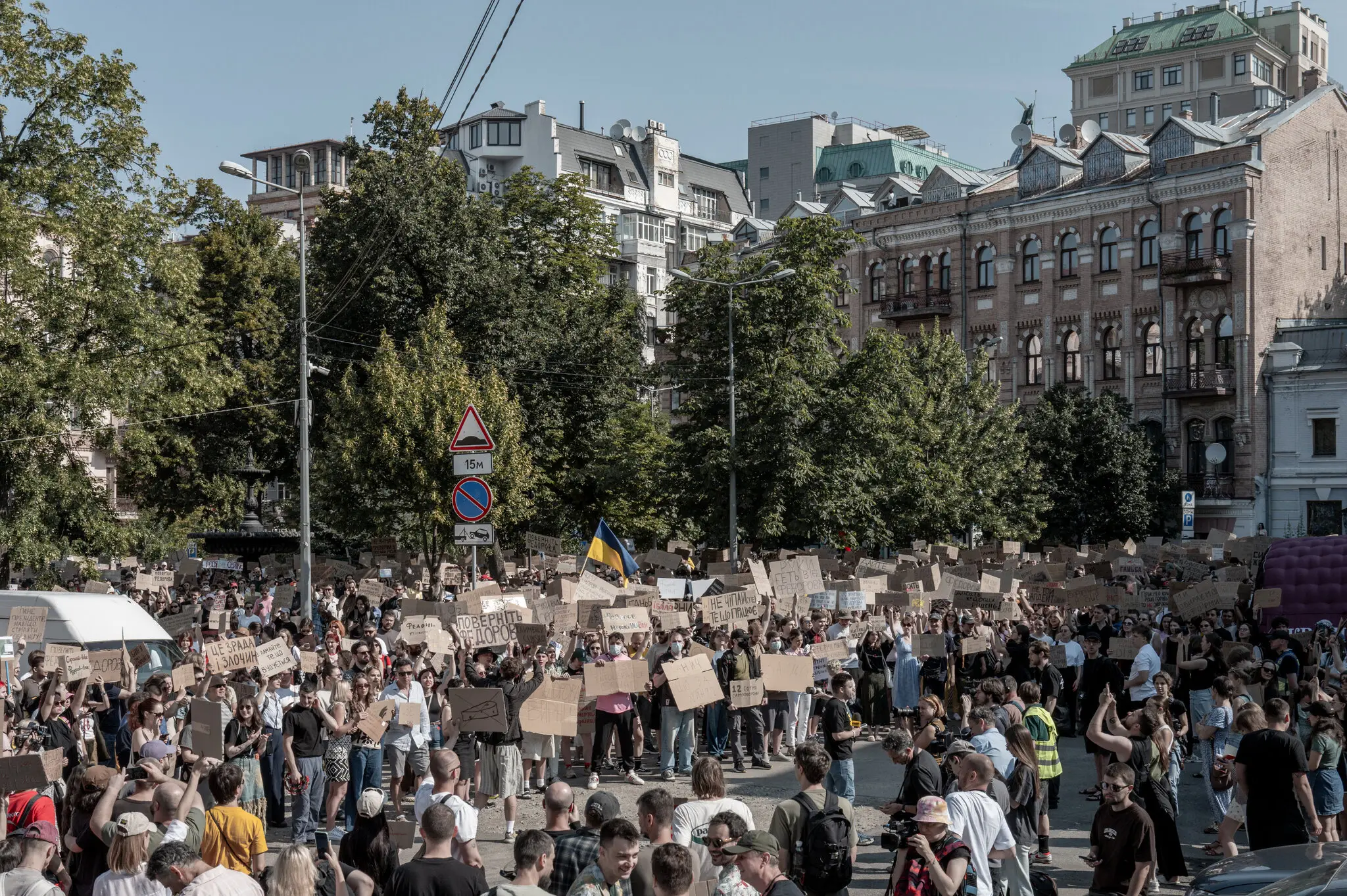 Протест у Києві в четвер — Єнджей Новіцький
Zelensky’s Choice
The president must decide more than whether Syrskyi remains in office. He must determine what kind of military command system Ukraine will have: a closed hierarchy that reacts only after public scandal, or an institution capable of absorbing criticism, data and initiative from below as a permanent feature of war.
That will require a clear division of roles. The General Staff must remain responsible for operations, but it cannot monopolize technological policy. The Defense Ministry must control procurement without turning it into an isolated civilian program. Commanders must receive greater autonomy, but that autonomy must be accompanied by measurable responsibility for results.
Ukraine also needs a different personnel culture. Advancement should depend not on proximity to the hierarchy, but on the ability to preserve lives, complete missions, learn from failure and spread successful methods across the force. As long as officers see loyalty rewarded faster than effectiveness, no technological reform will become irreversible.
Zelensky has already shown that he has heard the public signal. Meetings with corps commanders, direct engagement with manufacturers and promises of change indicate a readiness to intervene. But consultation cannot replace a decision indefinitely, especially when every day of uncertainty weakens the chain of command.
Keeping Syrskyi would require the president to explain convincingly why the accumulated criticism does not justify dismissal and what specific changes will occur under the current leadership. Replacing him would require an equally clear answer: what authority the successor will receive and how the new commander will be protected from the same structural conflict.
The street is demanding a name. The army is demanding rules. Zelensky must find an answer between those two demands.
Syrskyi’s removal could end the personnel crisis, but not the crisis of trust. It would begin the far more difficult work of rebuilding an army that must preserve discipline without fearing the truth, centralize strategy while decentralizing initiative, fight an exhausting defensive war and remain faster than its enemy.
Ukraine cannot afford to choose between generals and drones, between order and adaptation, or between hierarchy and the freedom of commanders. Its military model must combine all of them. Otherwise, every new technological advantage will be destroyed not by Russian countermeasures, but by an internal inability to turn innovation into a system.
That is why Zelensky’s decision will determine more than the fate of one commander in chief. It will show whether the government is prepared to change the military machine under pressure from reality — or merely replace the person at the top while leaving untouched the mechanism that produced the crisis.