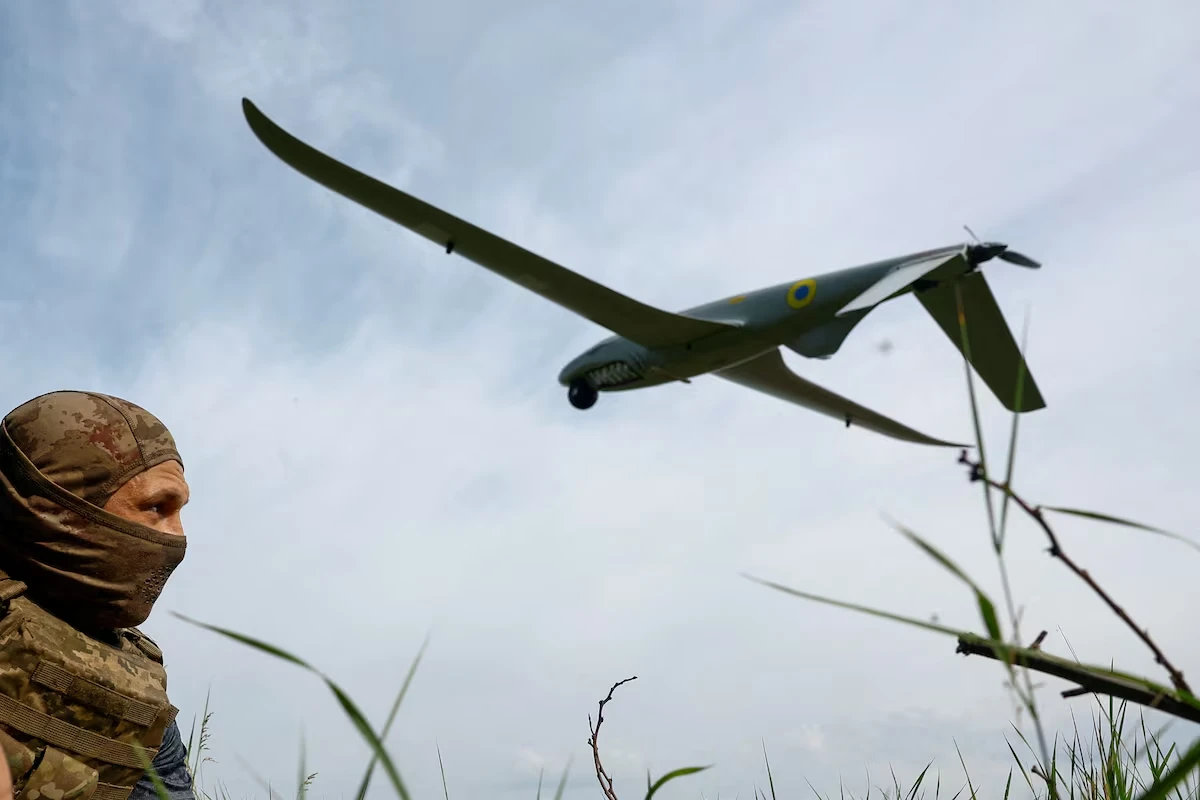
























Russia may not need an actual Ukrainian attack on a NATO country. It may only need a convincing imitation. Lithuanian intelligence believes Moscow is considering using captured Ukrainian-made drones to stage provocations against the Baltic states.
The scenario is simple. A Ukrainian-built drone enters the airspace of Lithuania, Latvia or Estonia, strikes an infrastructure site or crashes nearby, and Russia immediately claims that Kyiv has carried its war onto NATO territory.
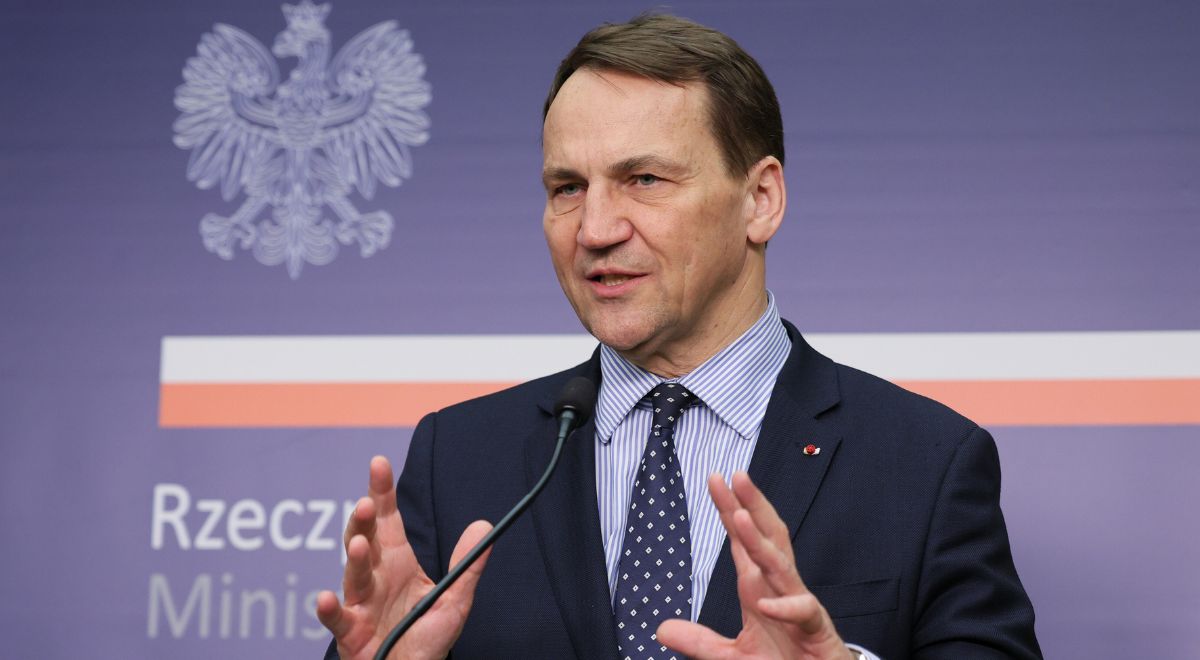
Lithuanian Defense Minister Robertas Kaunas has described such a possibility as a false-flag operation. The objective would not necessarily be large-scale physical destruction. It could be to create doubt inside the alliance, complicate relations with Kyiv and weaken political support for Ukraine.
Daycom’s assessment is that the danger lies precisely in the scenario’s plausibility. As more Ukrainian long-range drones fly deep into Russia and electronic warfare pushes aircraft away from their intended routes, it becomes easier to disguise a deliberate provocation as another navigation accident.
Ukrainian drones have already strayed into Finnish and Baltic airspace. Kyiv has attributed such incidents to Russian jamming and spoofing of satellite-navigation signals. That genuine technical problem creates useful cover for anyone attempting to manufacture a similar event deliberately.
When a drone deviates because of electronic warfare, determining its original intent is more difficult than tracing a missile with a relatively predictable trajectory. An accidental incursion, a deliberately redirected aircraft and a captured drone launched specifically for deception could initially look remarkably similar.
For an information operation, that may be enough. Moscow would not need legally conclusive evidence that Ukraine carried out the strike. It would need several hours of uncertainty in which pro-Russian media, political figures and online networks could establish the first narrative.
In a crisis, those first hours matter. If wreckage contains Ukrainian markings, recognizable components or a familiar airframe, it could be presented as proof long before investigators reconstruct the flight path or examine the aircraft’s software.
Such an operation would fit a broader Russian approach to information warfare. Moscow does not need everyone to believe its version. Creating several competing explanations can be sufficient if the result is that responsibility itself becomes politically contested.
For NATO, this is an especially difficult category of threat. The alliance is built around collective defense, but every incident still requires an assessment of origin, scale and intent. The interval between an explosion and reliable attribution is therefore the most valuable period for a provocateur.
A small drone crossing into NATO territory would not automatically trigger Article 5. Allies would first need to establish whether the incident was a deliberate attack, an accidental flight, the result of signal interference or an operation conducted by a third party.
Moscow could exploit precisely that caution. If some politicians demand restraint, others call for retaliation and still others accuse Ukraine of reckless escalation, the operation could achieve much of its political purpose without causing extensive damage.
The Baltic region is particularly attractive for such a scenario. Lithuania, Latvia, Estonia and Poland remain among Ukraine’s strongest supporters, consistently advocating more military assistance and warning that the Russian threat will outlast the current phase of the war.
An incident that appeared to implicate Kyiv would place those governments in an uncomfortable position. They would have to defend their sovereignty, avoid an unnecessary confrontation with Ukraine and counter a Russian narrative at the same time.
Even temporary tension between Kyiv and the Baltic capitals would benefit the Kremlin. Moscow has spent years arguing that supporting Ukraine creates greater risks for Europe than Russia itself. A drone bearing Ukrainian characteristics could give that argument a physical image.
Critical infrastructure provides another possible target. Lithuanian authorities have already tightened security around energy and transport facilities after intelligence warnings about potential Russian sabotage.
For Moscow, such infrastructure would have dual value. Damage could impose a real economic cost, while uncertainty surrounding responsibility could produce a political one. The ideal false-flag operation would create physical consequences while leaving attribution unresolved during the most important hours.
Russia rejects these warnings and portrays them as attempts to justify militarization against Moscow. That response fits a familiar pattern in which reinforcement of NATO’s eastern flank is presented not as a reaction to Russian behavior but as evidence of Western hostility.
At the same time, Moscow has promoted allegations that the Baltic states are secretly allowing Ukraine to use their airspace for attacks on Russian territory. Ukraine and the Baltic governments deny those claims.
The accusation nonetheless creates useful narrative groundwork. If a Ukrainian or Ukrainian-looking drone later appears over the Baltic region, Moscow could insert the incident into a story it has already been telling about covert NATO involvement in the war.
The technical side of such a scenario is also plausible. Russia regularly recovers wreckage from Ukrainian drones and occasionally captures aircraft in relatively intact condition. Those systems can be studied, repaired, copied in part or used as the basis for deception.
A provocation would not necessarily require restoring an entire captured drone to its original condition. A recognizable airframe, components or markings surviving an explosion might be enough to support a misleading initial claim.
Modern drones also rely heavily on commercially available electronics sourced through international supply chains. That makes attribution based on a single motor, controller or navigation module unreliable. Investigators need the complete system, its software, communications profile and reconstructed route.
Baltic states therefore need to prepare not only to intercept drones but to analyze them rapidly after an incident. Within hours, investigators may need to identify the aircraft type, direction of travel, communications links and any evidence of manipulated navigation.
Information discipline will be equally important. Conflicting statements from police, armed forces and governments could create precisely the ambiguity an influence operation is designed to exploit. In a false-flag scenario, official communication may matter almost as much as air defense.
NATO will need a shared attribution mechanism alongside its growing counter-drone capabilities. Radar information from Lithuania, Poland, Latvia, Estonia and other allies should be combined quickly enough to reconstruct the route of a suspicious aircraft regardless of where it ultimately crashes.
Satellite surveillance, electronic intelligence and records of Russian jamming activity would also be critical. A drone diverted through navigation spoofing should leave a different technical signature from an aircraft intentionally launched from Russian-controlled territory.
The logic is fundamentally asymmetric. Creating a major political crisis does not require a major military operation. One drone, one explosion and several carefully timed claims could force dozens of governments to react simultaneously.
That is one of the defining characteristics of modern hybrid warfare. The most politically dangerous incident is often not the one in which responsibility is obvious, but the one that leaves just enough uncertainty for manipulation.
Ukraine also has reason to prepare. Every long-range operation conducted near NATO borders increasingly requires precise route control, launch records and technical data that Kyiv can provide quickly if a suspicious incident occurs.
Drone warfare is therefore moving beyond the question of range and into the question of trust. As unmanned aircraft travel hundreds or thousands of kilometers, what matters is not only where they fly but who can credibly prove where they came from.
Lithuania’s warning describes a possible scenario, not a confirmed Russian attack plan. Yet the fact that governments on NATO’s eastern flank are preparing for such an operation shows how the threat environment has changed.
Russia does not need to strike the Baltics under its own flag to test NATO cohesion. It may be cheaper and politically more effective to make allies argue first about who carried out the attack.
In that sense, a captured Ukrainian drone could be more useful to Moscow than a Russian missile. A missile points quickly toward its owner. A borrowed drone creates doubt — and in hybrid warfare, doubt itself can become the weapon.