




















On the night of August 6, Russian strikes hit several regions of Ukraine almost simultaneously. Three people were killed in Balakliia in the Kharkiv region, and three more died in the Sumy region. Dozens of civilians were wounded.
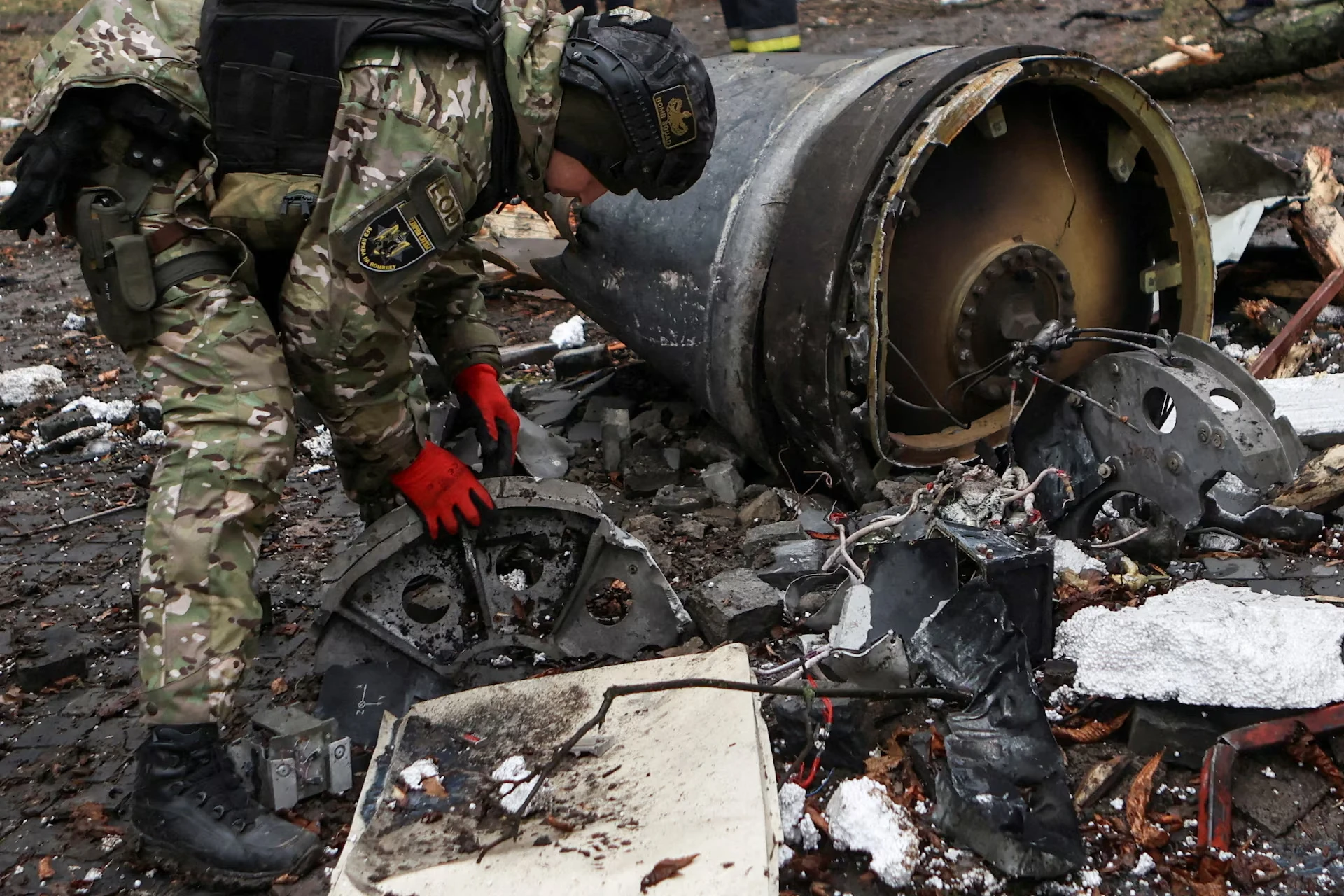
In Balakliia, rescue crews extinguished fires and cleared rubble after strikes on residential areas. Across the Sumy region, attacks killed three people and wounded at least 19, while another 12 were injured in the regional capital after guided aerial bombs hit the city.
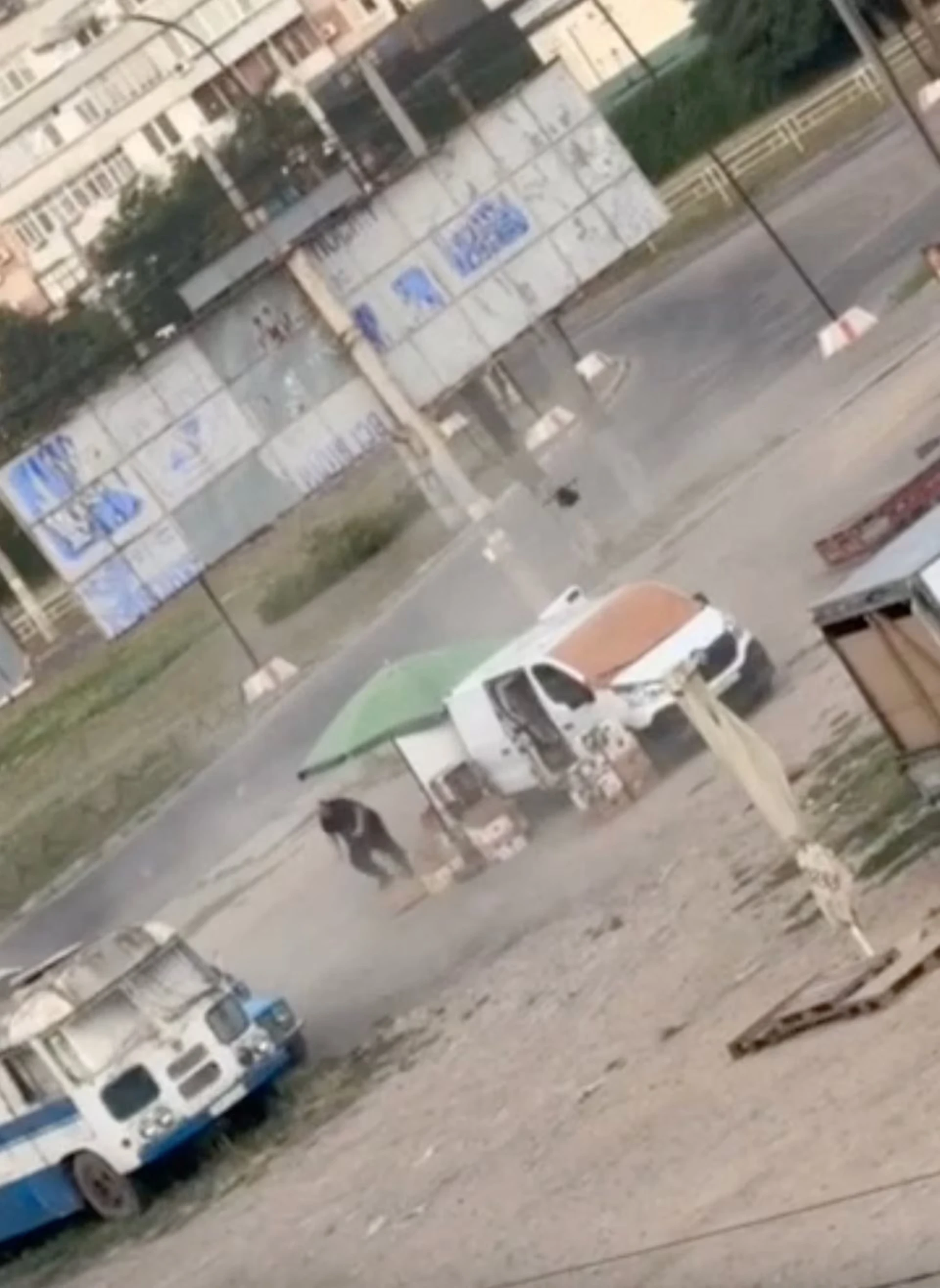
In southern Ukraine, a drone struck a van in the Kherson region, wounding six people. In the space of one night, the geography of danger stretched from Kharkiv through Sumy to the lower Dnipro.
In Daycom’s assessment, the significance of these attacks lies precisely in that geography. This was not one concentrated barrage against one target, but a dispersed pattern of violence in which different weapons keep several border and frontline regions under pressure at the same time.
Balakliia, Sumy and Kherson face a different kind of threat from Kyiv or Lviv. Here, danger does not always begin with preparations for a major missile salvo. It may arrive within minutes as a glide bomb, attack drone or missile launched from relatively close range.
Proximity to the battlefield makes these cities particularly vulnerable. The interval between detection and impact is shorter, while the effectiveness of air defense is constrained by flight physics and by the limited number of available systems.
For Sumy, guided aerial bombs have become one of the most dangerous weapons in Russia’s arsenal. Aircraft can release them without flying deep into Ukrainian-controlled airspace, allowing the bomb to glide toward its target from a substantial distance.
That enables Russian aviation to operate from behind the front and remain under the protection of its own air defenses. Ukraine is left with an exceptionally difficult task: either destroy the aircraft before release or intercept the bomb itself, which is technically far more complicated.
In a large city, even a single such bomb can produce a wide area of destruction. The danger extends beyond the point of impact to fragments, fires, shattered windows and structurally weakened buildings.
When attacks become routine, they reshape urban life. Residents begin planning their movements around shelters, businesses shorten shifts, and schools and hospitals become increasingly dependent on protected spaces.
Balakliia has a different but equally difficult history. The city has already endured occupation, fighting and liberation, yet it continues to live under the risk of renewed Russian strikes.
The deaths of three people after attacks on residential buildings illustrate a central vulnerability of frontline communities: the front may be pushed farther away, but the enemy’s ability to strike the city can remain.
Rescue teams work in an environment where the collapse of a single building can create multiple secondary dangers. Damaged gas lines, electricity networks, unstable floors and fires turn every pile of rubble into a separate emergency operation.
Time is decisive. A person who survives the initial blast can still die beneath debris hours later if rescuers cannot reach them quickly enough.
An attack on housing therefore strains far more than the medical system. It requires firefighters, engineers, utility crews, police officers, bomb-disposal specialists and heavy machinery at the same time.
Kherson demonstrates another form of warfare: the almost individualized threat posed by drones. An attack on a van shows how a small unmanned aircraft can transform an ordinary journey along a road into a potentially lethal event.
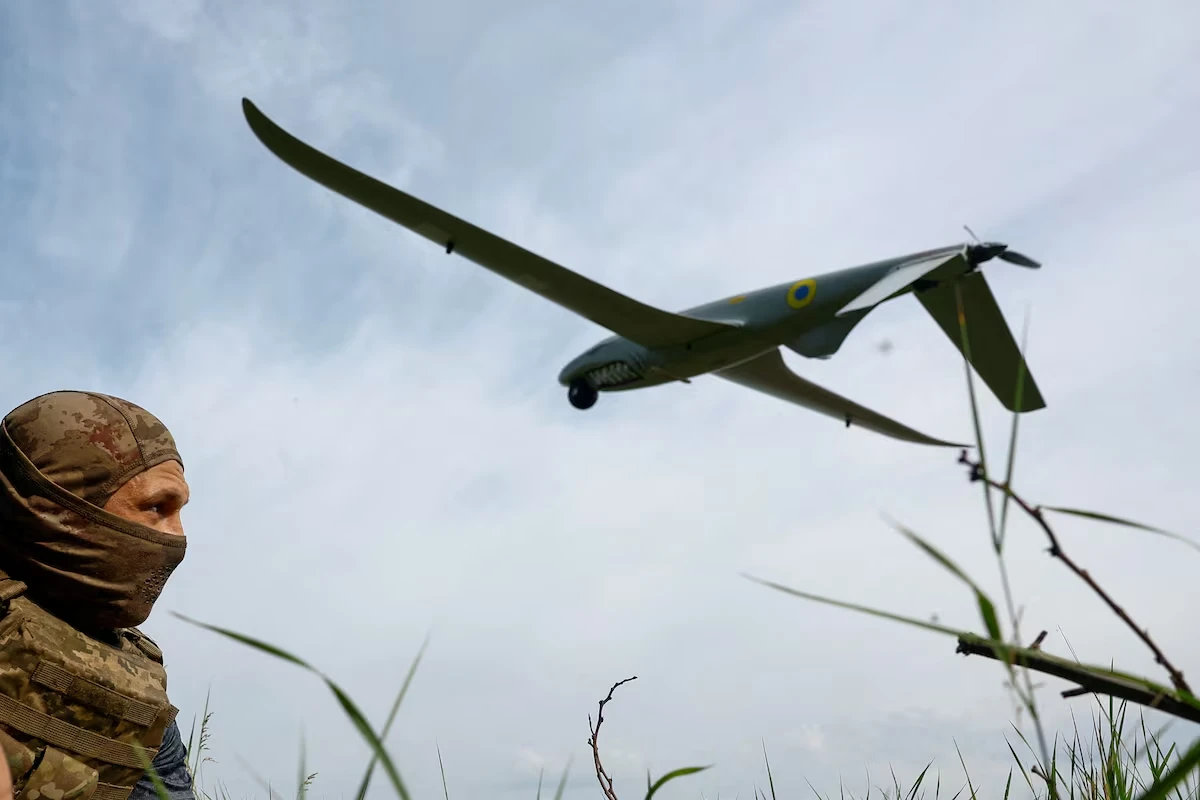
Unlike a large missile, a drone can loiter over an area, search for a target and alter its direction during the attack. That capability erases much of the distinction between the battlefield and civilian space.
For someone living near the front, danger is no longer limited to being close to a military base or strategic facility. The road itself, a vehicle, a bus stop or an open stretch of land can become dangerous.
In this war, the drone increasingly functions not merely as a munition but as a tool of persistent surveillance. Its presence changes civilian behavior even before it strikes.
The psychological effect is difficult to capture in casualty statistics. A person may never be physically injured yet live for months in a state where the sound of an engine or a warning about a drone immediately triggers a search for cover.
Sumy, Balakliia and Kherson illustrate three versions of the same threat. In the north, Russian aircraft use guided bombs. In the east, urban areas face combined strikes. In the south, drones can target vehicles and individual objects.
Together, they form a single system of pressure that exhausts not only Ukraine’s air defenses, but also local communities.
Large mass attacks receive more attention because of the number of missiles involved and the scale of visible destruction. For frontline regions, however, the continuous rhythm of smaller strikes may be even more damaging.
Several glide bombs today, a drone tomorrow, artillery the next day — that sequence prevents a city from fully returning to normal life between attacks.
The economic damage accumulates in the same way. A damaged shop, a destroyed apartment or a wrecked van may appear to be isolated losses, but over months they erode small businesses, transport networks and local employment.
People who have the means to leave increasingly do so. Those who remain are often tied to jobs, family, property or simply lack the resources to relocate.
Over time, this changes the demographic structure of cities. They lose younger families, workers and entrepreneurs, while the share of residents dependent on public assistance may rise.
Local governments then face a double burden. Tax revenue declines precisely when spending on repairs, shelters, health care and emergency recovery increases.
Russia says it strikes military targets. Ukraine records civilians killed and wounded and damage to residential and commercial properties.
The legal assessment of each individual attack depends on the target selected, the weapon used, military necessity and the precautions taken to reduce civilian harm.
For residents of Balakliia or Sumy, those legal distinctions do not change the practical reality: they live in places where war repeatedly arrives on residential streets.
That is why defending frontline cities cannot rely solely on large systems such as Patriot, which are primarily intended to counter more complex missile threats.
A layered defense is required: mobile anti-drone units, electronic warfare, short- and medium-range systems, counter-battery capabilities and the ability to threaten aircraft before they release guided bombs.
No country can create an absolute shield over hundreds of towns and cities. The second layer of defense must therefore be civilian resilience.
Shelters, early warning systems, protected medical facilities, backup power and rapid rescue operations reduce casualties even when an incoming weapon cannot be intercepted.
Dispersing critical services is equally important. If all medical assistance, transport or municipal equipment is concentrated in one place, a single strike can cripple a large part of a city’s emergency capacity.
Frontline communities are already moving toward a model in which infrastructure must be designed not only for efficiency, but for continued operation after partial destruction.
That is more expensive than a peacetime system. War changes the definition of efficiency: the best network is no longer the cheapest one, but the one that can keep functioning after attack.
Six deaths in one night may look like a small number only against the statistics of a war that has lasted for years. For six families, they represent an irreversible catastrophe.
Dozens of others are now receiving treatment, repairing homes or trying to rebuild daily routines after the explosions. For many, the next air-raid alert will begin before the consequences of the previous one have been resolved.
This is what the erosion of civilian space looks like. Not one event that stops a country, but thousands of repeated strikes, each taking away another portion of security, time and resources.
Balakliia, Sumy and Kherson appeared in the same morning casualty report despite being separated by hundreds of kilometers. That is one of the defining features of this phase of the war.
The front line still exists on the map, but the zone of danger extends far beyond it. Russia uses glide bombs, missiles and drones to make distance from the trenches an increasingly unreliable measure of safety.
The struggle for these cities is therefore no longer only about holding territory. It is about whether people can remain, work and preserve ordinary life in places where war is trying every day to prove that ordinary life is no longer possible.