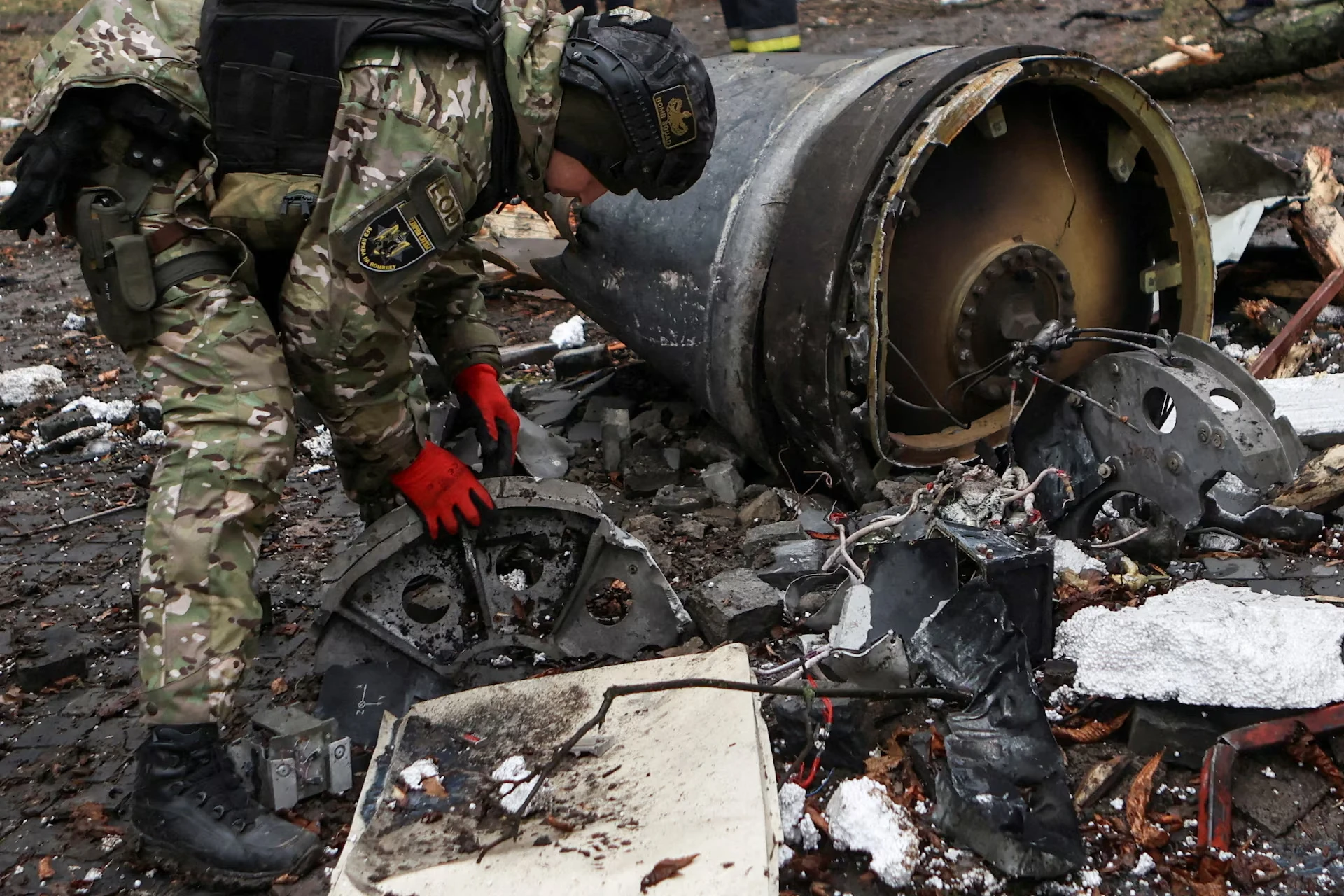




















Vladimir Tkachuk’s car exploded near Yekaterinburg, deep inside Russia. The head of the Uraldronzavod drone company was critically wounded and taken to intensive care. His driver, described in some Russian reports as a bodyguard, was killed at the scene.
The explosive device was reportedly planted beneath the Mercedes in which Tkachuk was traveling. The vehicle was largely destroyed. The circumstances of the attack remain unclear, and Russian authorities have not publicly identified either the organizers or the method by which the device was placed.
The incident drew particular attention because Tkachuk was not an ordinary defense-industry executive. His company produces Vampire FPV drones, systems used by Russian forces in Ukraine to attack military positions, vehicles and personnel.
Daycom’s assessment is that the explosion near Yekaterinburg points to a new phase in the war surrounding unmanned systems. The vulnerable targets are no longer only factories and warehouses, but also the engineers, executives and organizers whose work makes mass drone production possible.
Tkachuk had become a public face of Russia’s drone industry. He demonstrated his products to President Vladimir Putin and Security Council deputy chairman Dmitry Medvedev and ran a popular pro-war Telegram channel that helped raise money for the military.
That placed him simultaneously inside the industrial, propaganda and military ecosystems supporting the war. In modern warfare, those categories increasingly overlap: a private company produces weapons, its owner raises funds for combat units, and the finished systems can reach the front almost immediately.
The timing is especially significant. Six days before the attack on Tkachuk, an unknown assailant shot and wounded Andrei Cherezov, developer of the Gadfly FPV drone. Two attacks on Russian drone developers in a single week are difficult to dismiss as mere coincidence.
There is still not enough evidence to establish that the two cases were connected. Nor has there been confirmation that Ukrainian intelligence services were involved in the Yekaterinburg bombing. Kyiv has not claimed responsibility.
But the sequence itself is likely to affect the behavior of Russia’s defense sector. Once factory executives begin treating personal security as part of the war, production becomes more expensive. Protection details, secure routes, staff screening and tighter controls around industrial sites all consume time and resources.
This is particularly important in the drone sector, which expanded much faster than Russia’s traditional military-industrial complex. Many companies grew around small teams, direct ties to front-line units and a handful of engineers who simultaneously oversee design, procurement, testing and production.
The loss of such a person does not necessarily stop a factory. It can, however, create delays that the loss of an ordinary employee would not. Technical knowledge, supplier relationships, testing procedures and informal agreements may all be concentrated around a few individuals.
That makes the modern defense industry part of the operational battlefield. Destroying a finished drone removes one weapon. Disrupting the team that designs or produces it can potentially affect hundreds or thousands of future systems.
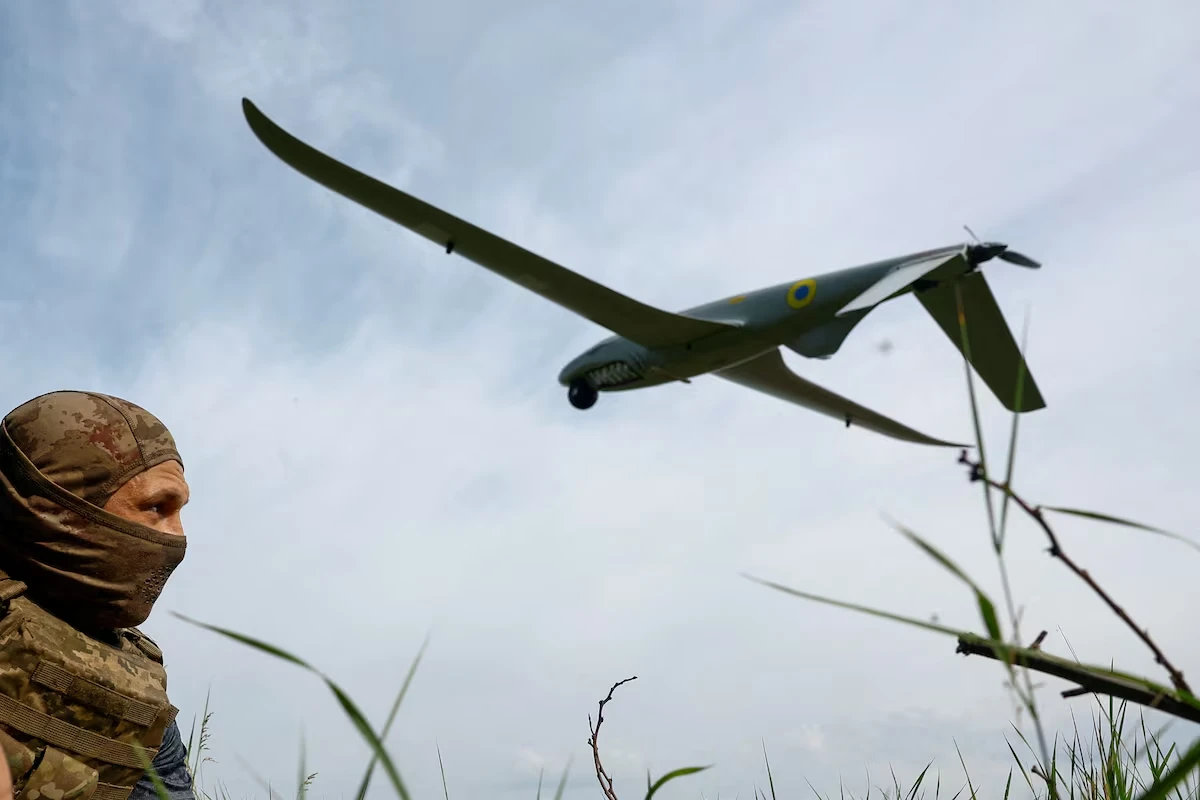
FPV drones have evolved in only a few years from auxiliary tools into one of the central weapons of the war. They are cheap, mass-produced, rapidly modified and capable of allowing a single operator to strike a target with considerable precision from a safe distance.
The Vampire belongs to that category. Its operator pilots the aircraft through a live video feed displayed in goggles, effectively seeing the flight from the drone’s perspective. That architecture has made FPV systems among the most dangerous weapons at tactical depth.
Their value lies not only in low cost. They can be moved to new control frequencies, fitted with different warheads, adapted for night operations and redesigned to overcome electronic warfare far faster than most traditional weapons systems.
The people building them are therefore closer to the battlefield than the designers of tanks or aircraft in earlier wars. An engineering change made in a workshop can alter tactics on a particular sector only weeks later.
Russia’s challenge is intensified by the fact that it is only now formalizing the drone revolution. Around the same time details of the Tkachuk attack emerged, Moscow appointed a commander for its newly created Unmanned Systems Forces, a separate military branch intended to integrate drones throughout the armed forces.
The move acknowledges what the battlefield established long ago: unmanned systems can no longer remain an improvised supplement used by individual units. They require dedicated command structures, training, procurement, logistics, repair networks and standardized production.
Yet the transition from a volunteer-driven and private-sector model to a large state-controlled structure creates a vulnerable period. Much of the technology, supply chain knowledge and industrial expertise remains tied to specific companies and individuals.
Those individuals have also become increasingly visible. They attend exhibitions, meet senior officials, operate public channels, raise donations and demonstrate new systems. Public recognition helps secure contracts and political support, but it also destroys anonymity.
Russia has already experienced a series of attacks on military officers, officials and figures directly connected to the war. Ukraine has accepted responsibility for some operations, denied involvement in others and remained silent on many more. Defense technologists are now becoming a more visible part of that risk environment.
That does not mean every engineer automatically becomes a lawful military target. The status of any individual depends on the nature of their role, their activity and their direct connection to military operations. Attacks far from the battlefield also raise difficult questions under the laws of war.
The political effect, however, exists regardless of the eventual legal assessment. Russia’s defense industry receives a clear message: distance from Ukraine no longer guarantees personal security. Yekaterinburg lies deep inside the Russian rear, far from the front.
For Russian security services, this is likely to mean tighter counterintelligence around drone manufacturers. Cars, travel routes, employees, contractors and executive contacts will come under closer scrutiny. Every additional layer of protection takes money, personnel and management attention away from production.
For the companies themselves, another problem emerges: fear. Russia’s drone industry benefited from entrepreneurial speed, with small firms testing multiple designs and moving successful models quickly into combat use. A permanent security threat could make that ecosystem more secretive and more bureaucratic.
The state may try to compensate by concentrating production, standardizing designs and moving important projects into larger defense corporations. That would improve control but could also slow the innovation cycle that made the FPV sector effective in the first place.
A new front in the technological war is therefore taking shape. Russia and Ukraine are competing not only over the number of drones in the air, but over factory output, access to electronics, operator training and the ability to protect the people who create the next generation of systems.
The bombing of Tkachuk’s car will not alter the battlefield in a single day. Uraldronzavod may continue operating, and other companies may be able to compensate for some of its production. But the strategic effect of such attacks is never measured by one executive or one factory.
It appears instead in security costs, changed travel patterns, canceled meetings, personnel checks, fear of publicity and the need to duplicate expertise that had previously been concentrated in a few people. The war gradually forces the defense industry to live by front-line rules.
There is a particular irony in the fact that drone manufacturers are now confronting this logic. Unmanned systems erased the boundary between front and rear for Ukrainian soldiers and civilians. The industry that produces those weapons is beginning to experience the same form of distant vulnerability.
Russia is trying to turn unmanned warfare into a separate military branch and scale it into a vast industrial machine. Yet beneath the millions of circuit boards, motors and airframes lies a basic weakness: the system still depends on specific human beings.
The destroyed Mercedes near Yekaterinburg showed how short the distance has become between a design office and the war. FPV drones made the battlefield personal for soldiers. Now the drone war is becoming personal for the people who build them.