



















Truck yards outside Moscow are filling up not because Russia suddenly has less to transport, but because some long-distance routes no longer make economic sense. Over the past month, fuel has become expensive enough that logistics companies have begun shrinking their geographic reach and concentrating on shorter runs.
After another wave of Ukrainian drone strikes on Russian oil refineries, fuel costs for some carriers rose by roughly 16% to 18%. That alone increased overall transportation costs by about 4.5% to 5.5% — enough to erase margins on routes stretching thousands of kilometers.
The most severe phase came in July. Average trucking rates increased by roughly 12% to 15% from the previous month, while some routes and regions saw jumps of as much as 50%. Even after shortages eased somewhat, prices have shown little sign of returning to their previous levels.
As Daycom has previously assessed, this is one of the most important indirect effects of Ukraine’s campaign against Russian refining. The impact of a refinery strike does not end at the damaged installation. Weeks later, it can appear in freight bills, the cost of Chinese imports and, ultimately, broader inflation.
Russia is particularly vulnerable to this transmission mechanism because of its scale. Distances between factories, warehouses and consumers frequently run into thousands of kilometers, while road freight remains the dominant way of moving goods across much of the country.
More than 70% of cargo in Russia during the first half of 2026 was transported by road. The country has an extensive railway network, but trucks still perform the final — and often one of the longest — legs of supply chains connecting wholesale depots, ports, factories and stores.
Diesel is therefore more than a fuel-market commodity for Russia.
It is effectively the price of geography.
When fuel becomes more expensive, moving almost everything else becomes more expensive as well.
Fuel accounts for roughly 30% of a trucking company’s operating costs. Before the crisis, large carriers could often secure discounts of 7% to 12% at filling stations. Those discounts have largely disappeared.
At the same time, highway tolls have risen, driver shortages have intensified and seasonal demand for transporting perishable goods has increased. The fuel shock has landed on top of several existing pressures, turning what might otherwise have been a temporary diesel-price increase into a broader logistics shock.
The clearest evidence is visible in how freight operators themselves are changing behavior.
Some companies that were still running long-haul routes across several Russian regions earlier this year are now limiting operations to the Moscow region and nearby ports. They are not doing so because customers have disappeared. They are doing it because they no longer want to absorb the fuel risk of very long routes.
That distinction matters.
When a carrier merely raises a tariff, goods become more expensive. When a carrier abandons a route altogether, the problem becomes not just price but physical access to transportation.
The pressure is especially severe in Siberia and along Russia’s eastern frontier.
This summer’s fuel shortages spread across much of Russia’s 11 time zones. Moscow has offset part of the shortfall through fuel imports and looser quality standards, but shortages persist in some areas.
One of the most important bottlenecks is Zabaykalsky Krai.
A significant share of road freight from China passes through the region, which has become strategically important as Russia reoriented trade eastward after 2022. Truck drivers there can still spend two or three days waiting for fuel.
For international logistics, that creates a double penalty: diesel itself becomes more expensive, while each truck completes fewer trips.
A vehicle sitting at a filling station for two days does not merely burn through more operating cash. It loses time that could have been used for another shipment. The same fleet therefore moves less freight.
That pushes up the cost of every journey.
The price of trucking a shipment from China to Moscow has risen by nearly a third, to roughly 1.1 million to 1.2 million rubles — around $14,000. Before the fuel crisis, the same route typically cost between $10,000 and $11,000.
At the height of the shortages in mid-July, rates on China-related routes were roughly 20% to 25% higher than in late May and early June. Prices have since eased somewhat, but the decline has been modest.
That matters because China has become central to Russia’s post-2022 trade structure.
As commercial links with Europe contracted, China became a major source of machinery, electronics, industrial components, consumer goods and other imports. The more expensive it becomes to move Chinese products across Russia, the more expensive those goods become for factories and households.
Transportation costs therefore feed directly into consumer inflation.
This is the chain through which a strike on a refinery eventually reaches the price of ordinary goods.
First, refining capacity is disrupted. Then a local diesel shortage emerges. Wholesale and retail fuel prices rise. Trucking companies revise their rates. Importers and manufacturers incorporate higher logistics costs into their own prices.
At the end of that chain, consumers pay more not for diesel itself, but for food, appliances, building materials, auto parts and thousands of other products.
That is what makes transportation inflation especially dangerous.
It does not stay confined to one sector.
If the price of a particular commodity rises, its impact on the broader inflation basket is limited by its weight. When the cost of delivery rises, the effect spreads across hundreds of categories simultaneously.
For Russia’s central bank, that creates an additional policy dilemma.
Higher interest rates can cool credit growth and consumer demand. They cannot repair a damaged refinery or produce more diesel at filling stations in Zabaykalsky Krai.
That is the classic problem of supply-driven inflation.
If the central bank responds aggressively with higher rates, it can weaken the economy without fixing the source of the cost shock. If it does too little, higher transportation expenses can become embedded in prices, wages and business expectations.
The current crisis contains another complication: freight companies do not expect tariffs to return fully to old levels even if fuel supply stabilizes.
Carriers have lost money through idle vehicles, lower fleet utilization and disrupted routes. Many will try to recover at least part of those losses through permanently higher rates.
Even if fuel availability normalizes, freight prices may fall by only about 7% to 10%.
That means a temporary shock can become a permanent component of the price structure.
This is how a second round of inflation develops. The first impulse comes from shortage. The second begins when companies rewrite contracts, tariffs, wage expectations and budgets as though higher costs are here to stay.
That is increasingly what Russian logistics firms are preparing for.
Companies are already redesigning supply chains.
Demand for direct rail freight from China has risen by roughly 18% to 20%. Demand for maritime transportation has increased by around 10% to 12%. Cargo owners are looking for ways to reduce their exposure to diesel shortages and unstable road routes.
At first glance, that looks like the normal adaptation of a large economy.
But adaptation also has a price.
Railways cannot instantly absorb every shipment abandoned by road carriers. Sea transport is slower and depends heavily on port capacity. And in most cases, goods arriving by train or ship still need to be loaded onto a truck for the final leg.
There is no complete escape from road logistics.
That is what makes attacks on the fuel system strategically significant.
Ukraine does not need to stop all Russian trucking. It only needs to make every kilometer more expensive, slower and less predictable.
For one truck, the difference may amount to only a few percentage points.
Across an economy in which more than 70% of freight moves by road, those percentages become enormous additional costs.
This also changes how the effectiveness of refinery strikes should be measured.
Their impact cannot be reduced to how many tons of fuel one plant failed to produce on a particular day.
The real effect spreads outward in waves.
Shortages force authorities to redirect fuel from other regions. Rail tankers change routes. Filling stations restrict sales. Drivers wait in queues. Logistics companies raise tariffs. Importers rewrite contracts.
That is how a tactical strike begins producing a macroeconomic effect.
Russia still has substantial capacity to adapt. It remains one of the world’s largest oil producers. It can redirect fuel between regions, increase imports, relax technical standards and intervene administratively in the market.
The fuel crisis does not mean the Russian economy is close to paralysis.
But attritional warfare works differently.
Its goal does not have to be destroying a system with one decisive blow. It can instead steadily raise the cost of keeping that system functioning normally.
In Russia, that cost is already visible in the price of a shipment from China, in the decision of a carrier to abandon a Siberian route, in a two-day queue for diesel and in the higher price of goods on store shelves.
The longer refinery attacks continue, the harder it becomes to separate a temporary “fuel crisis” from the ordinary condition of the economy.
That may ultimately be the more consequential effect.
Moscow can repair an industrial unit, redirect diesel to a shortage region or subsidize a particular route. It is much harder to reverse thousands of pricing decisions that transport companies, importers and manufacturers have already made.
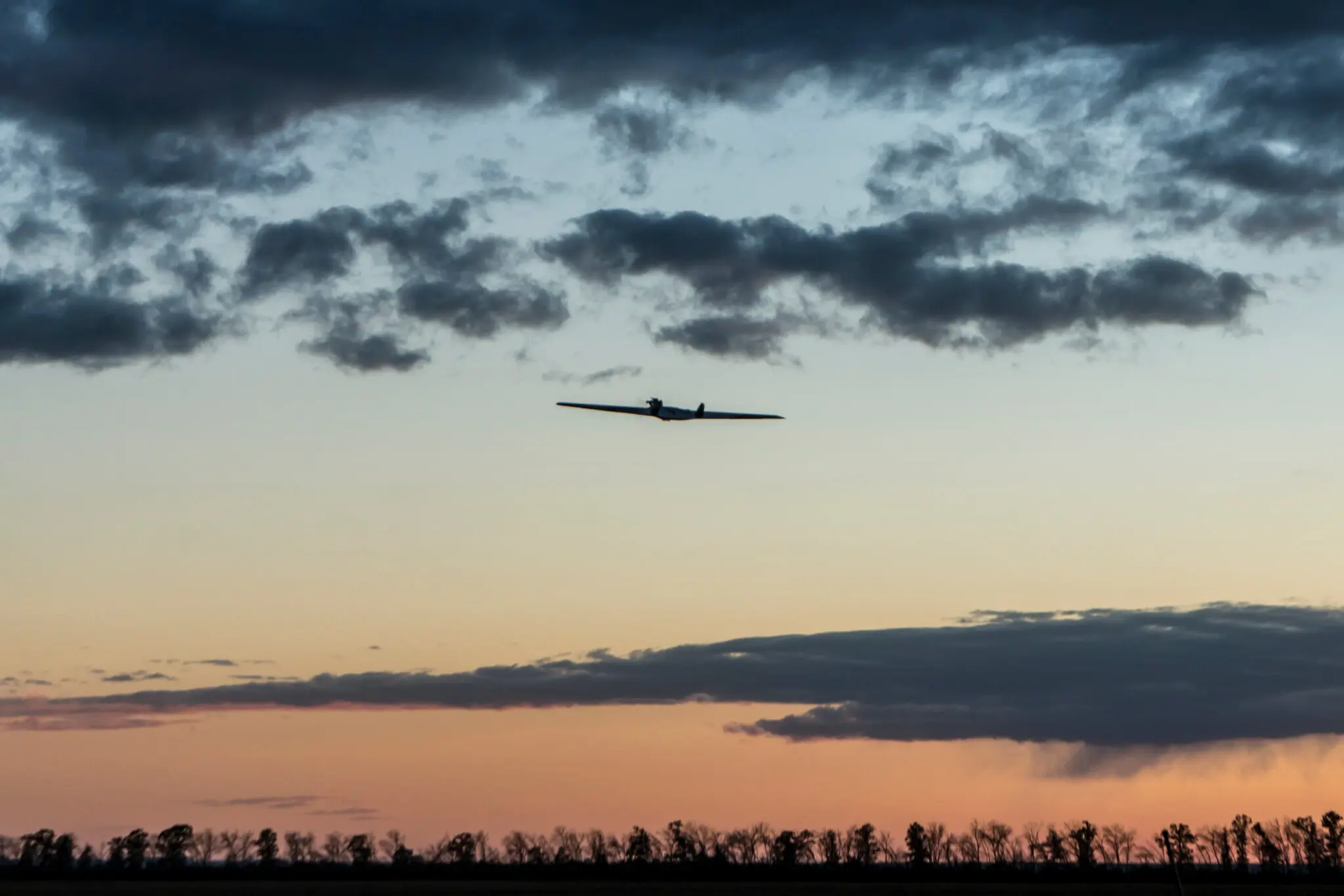
A Ukrainian drone may explode at a refinery hundreds of kilometers from Moscow.
The bill for that strike can arrive weeks later at a truck on the Chinese border, at a store in a Russian city — and ultimately in the wallet of the Russian consumer.