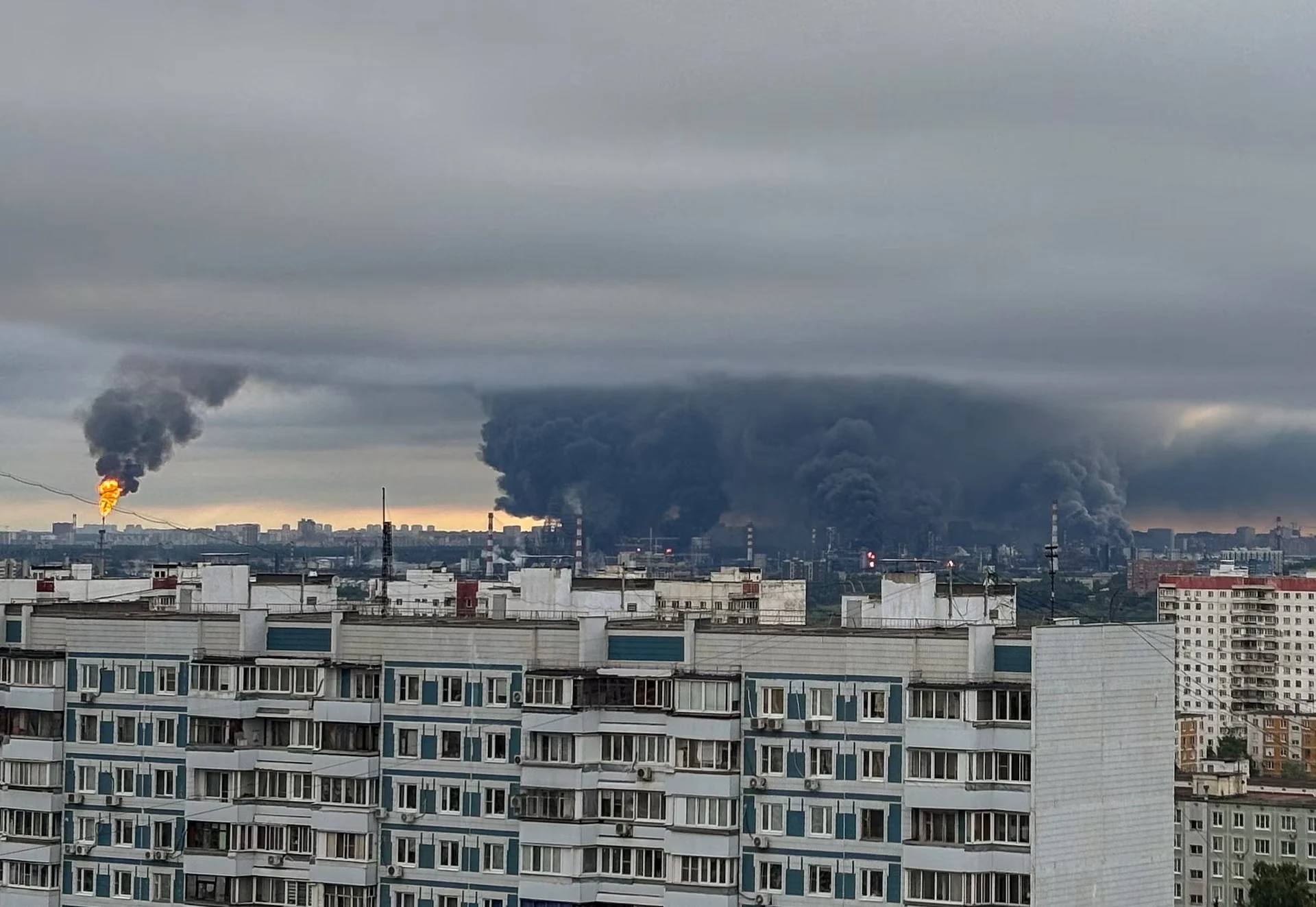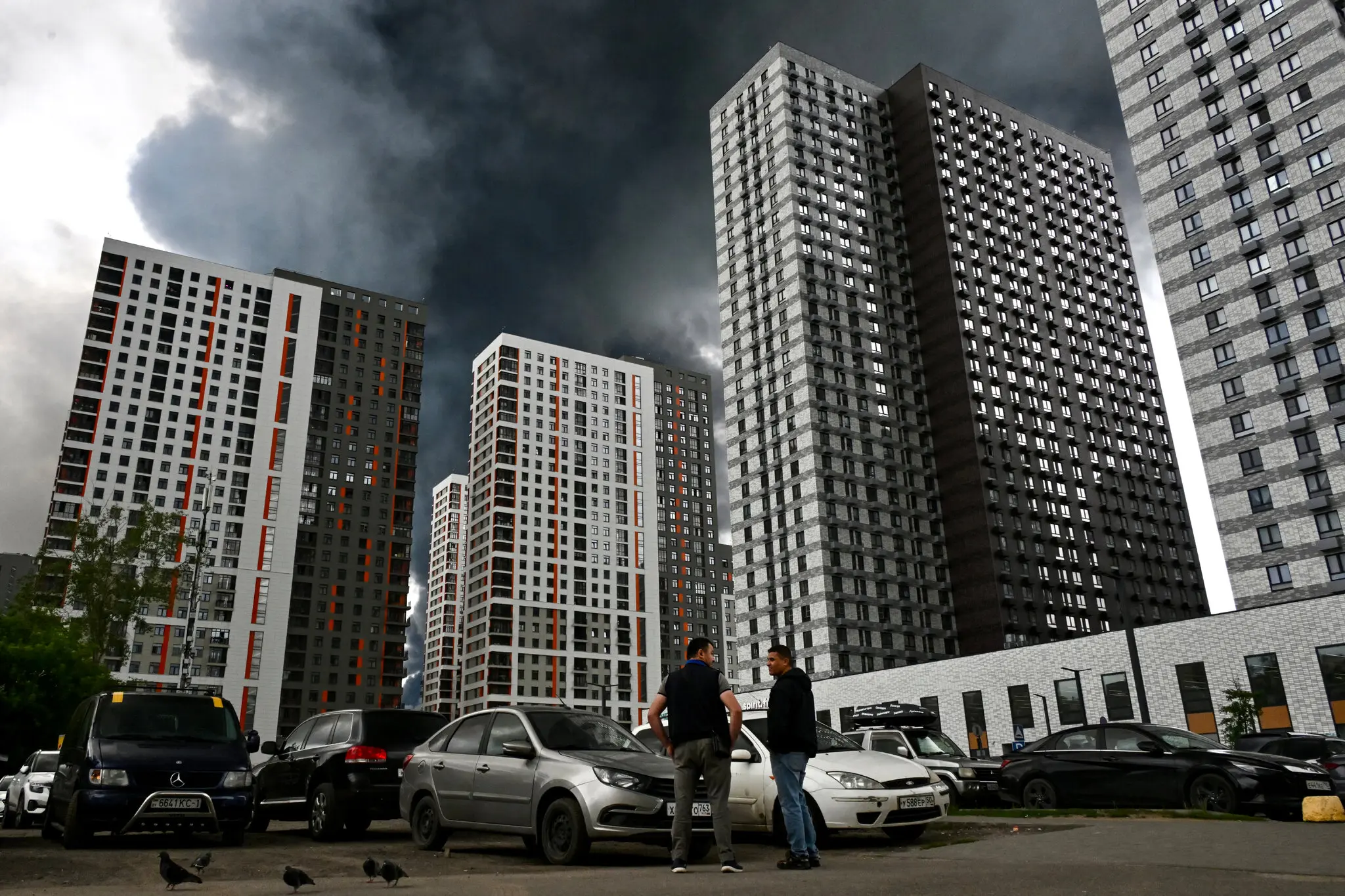


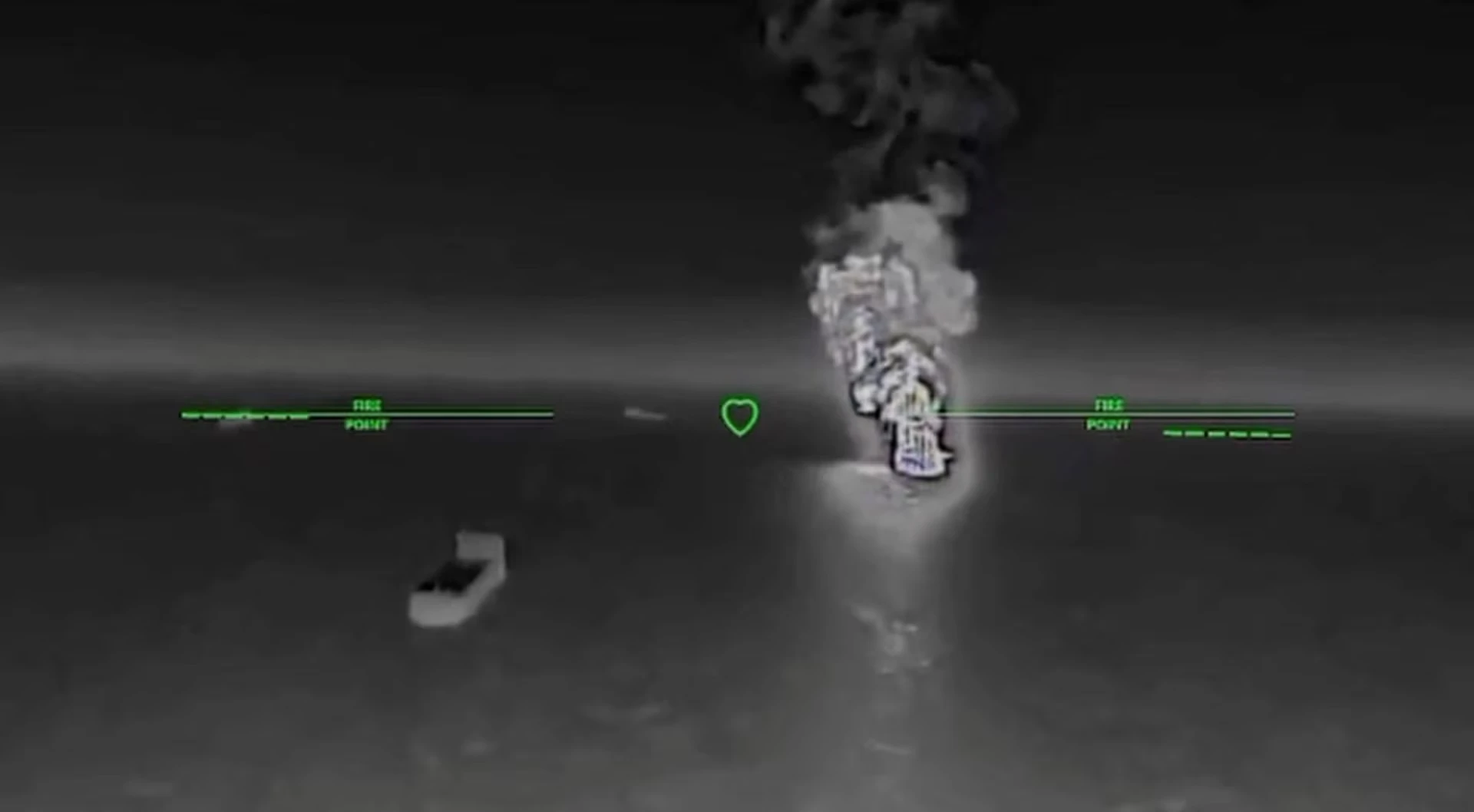















The explosion in southeast Moscow was powerful enough to throw the massive lid of an oil storage tank into the sky like a metal disc. Black smoke rose over the city, and for several hours the Russian capital saw what it had tried for years not to notice: the war was returning to the source that finances it.
Ukrainian drones struck the Moscow oil refinery for the second time in three days, hitting a critical site inside the ring road, roughly 16 kilometers from the Kremlin. This was no border incident and no strike on a remote depot. It was an attack on critical infrastructure at the heart of Russia’s political system.
For Kyiv, the operation has two dimensions. The first is military and economic: to hit oil refining, fuel logistics and the revenues that sustain the Russian army. The second is psychological: to break the habit of Muscovites living as if the war were a television story rather than the consequence of decisions made by their own state.
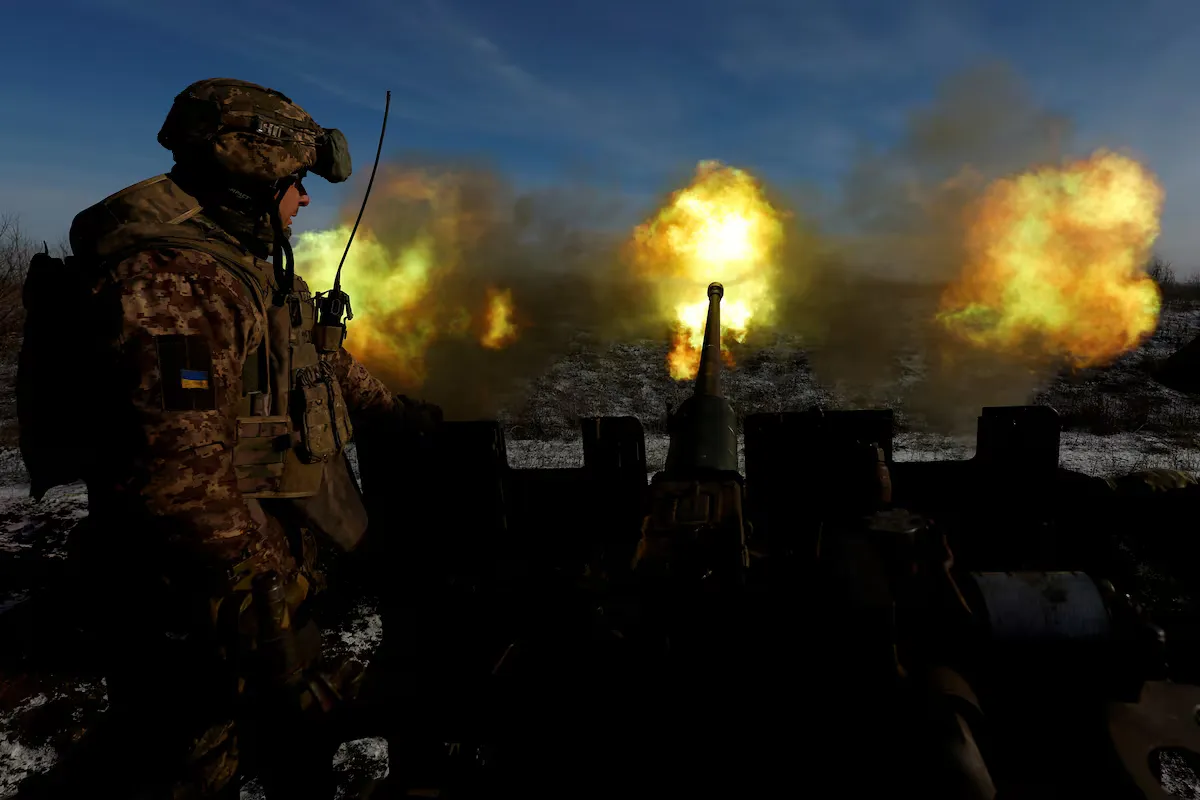
For Daycom, this strike matters as part of a broader shift in Ukrainian strategy. Ukraine is increasingly refusing to wait for Russia to bring war to Kyiv, Kharkiv or Dnipro by missile. It is transferring pressure into Russia’s rear — to the places where fuel, money, logistics and the feeling of impunity are produced.
The Moscow refinery was not a random target. Oil infrastructure is one of the central nerves of Russia’s war machine. It supplies fuel for the army, transport, aviation, the domestic market and the state budget. When a storage tank burns in the capital, the effect reaches far beyond one facility.
Russia may have one of the world’s largest oil sectors, but even such a system is vulnerable to repeated precision attacks. A refinery can be repaired, tanks can be replaced, logistics can be rerouted. But each new fire adds cost, fear, shortages and technical instability.
Accumulation is the main effect of Ukraine’s campaign. One strike on a refinery can be presented as an episode. A second in three days already looks like an air-defense failure. A series of attacks on Russian oil refining becomes systemic pressure that begins to affect not only the army, but prices, air travel, gasoline supply and public behavior.
In Moscow, the disruption was immediate. Airports suspended operations, Sheremetyevo was evacuated, and traffic was halted on sections of the road around the city. For a metropolis accustomed to the rhythm of a major capital, several hours of chaos can have a stronger effect than a dry number in a military bulletin.
The most important thing was not even the transport disruption itself. It was the question that appeared among Russians: what is going on? Ukraine’s answer was direct: your country began an aggressive war, has spent years killing Ukrainians, and now the consequences are becoming visible at home. This is not the rhetoric of revenge. It is the logic of responsibility.
For years, the Kremlin built a protective shell around its citizens. The war was called a “special military operation,” losses were hidden or dissolved in propaganda, and strikes on Ukrainian cities were presented as something distant and technical. Moscow was meant to remain a showcase of normality.
Drones over the capital shatter that showcase. When smoke rises from a refinery, when planes do not depart, when roads are blocked and oily marks appear after rain on cars and windowsills, war stops being an abstraction. It enters daily life.
That effect is especially painful for the Russian authorities. Moscow is a symbol of control. It is supposed to show that the state is strong, air defense is reliable, the Kremlin is unreachable and Russian life continues according to plan. A successful strike on a refinery inside the city’s ring road challenges all of those messages at once.
The reaction of pro-war Russian bloggers revealed the nervousness of the system. They were angry not only about the strike itself, but about videos of the fire spreading rapidly online. To them, filming destruction becomes almost treason, because it shows Ukraine the result and deprives propaganda of its monopoly over the image.
This is a defining feature of drone war. Every attack has not only a physical effect, but an information trail. Video of the explosion, black smoke, panic in chats, reports of closed airports and complaints that no sirens sounded all function as a separate weapon. They show that the state does not control the sky as it promised.
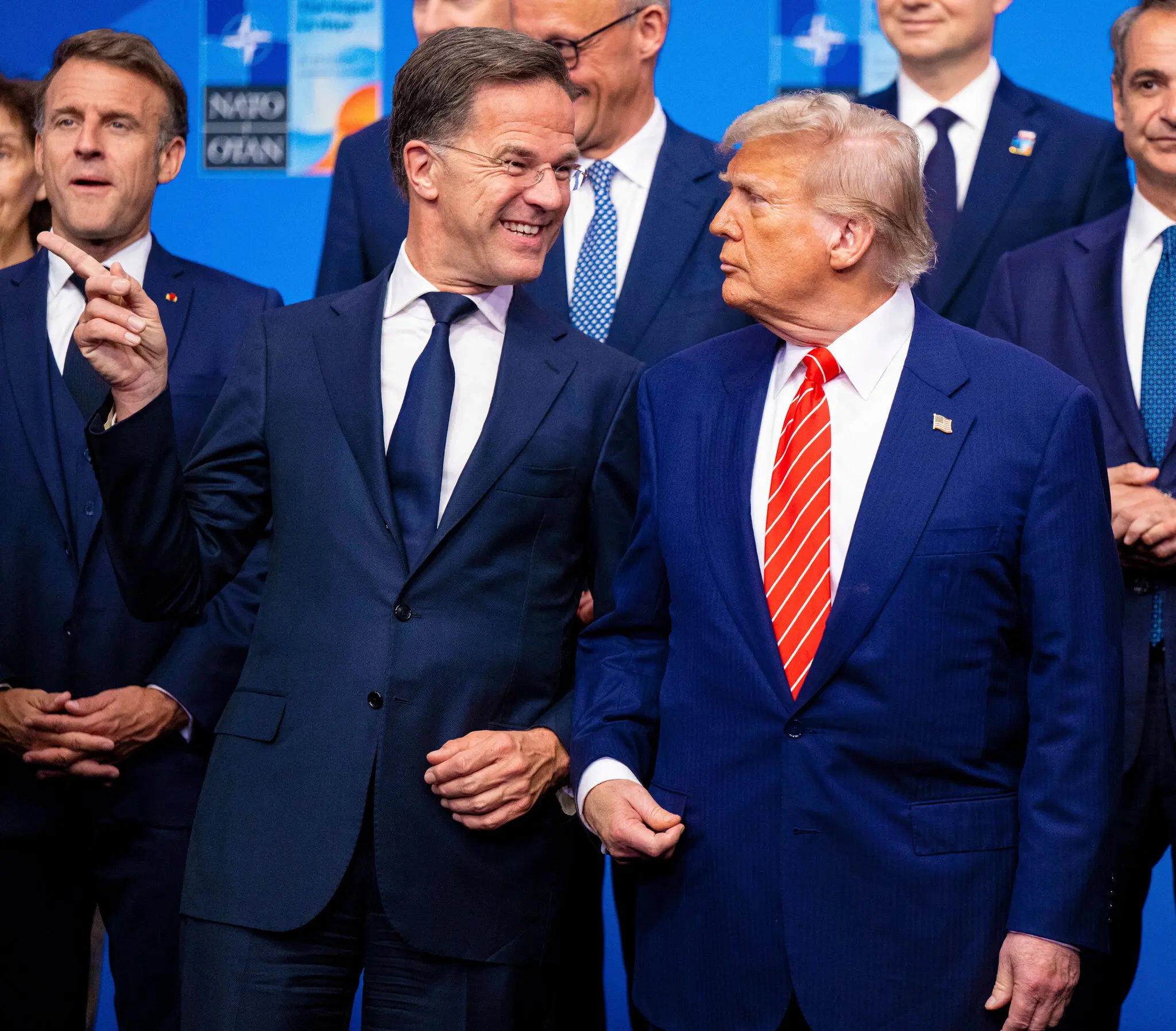
For Ukraine, the campaign also has a diplomatic dimension. Kyiv is trying to prove to allies that it is not only defending itself, but can alter the balance of the war with its own tools. While summits discuss air defense, sanctions and negotiating positions, Ukrainian drones demonstrate that Russia is not untouchable.
That matters at a time when Ukraine is persuading partners that Moscow has no right to dictate peace terms. A strike on oil refining in the Russian capital strengthens that argument. A state forced to close Moscow airports because of Ukrainian drones no longer looks like a power entitled to speak in ultimatums.
At the same time, such strikes are not without risk. Russia will use them for domestic mobilization, harsher repression, new restrictions and propaganda claims about “terrorism.” But that rhetoric no longer covers the basic fact: Moscow strikes Ukrainian cities, energy infrastructure, hospitals, ports and residential districts every day.
Ukraine’s logic is not symmetrical terror, but strikes on the infrastructure of war. Refineries, fuel depots, transport nodes and military-industrial facilities are part of the system that allows Russia to continue aggression. When that system burns, the war becomes more expensive for the aggressor.
The economic consequences are already beginning to show. Several Russian regions have reported fuel strain, and Russia, despite its status as a major oil producer, has had to look for fuel imports by sea. This does not mean an immediate fuel collapse, but it does mean that strikes on refining capacity have a real material effect.
For the Kremlin, it is especially dangerous if fuel problems move closer to major cities. The Russian system can hide battlefield losses for a long time, but it is harder to hide gasoline prices, queues, aviation disruption and smoke over the capital. Daily inconvenience often works more powerfully than political speeches.
That is why Moscow will try to present the situation as controlled. Authorities will speak of normal gasoline supplies, local consequences and the work of emergency services. But normality has already been damaged by the very need to explain why Ukrainian drones can reach a target near the Kremlin.
Ukraine cannot win the war through refinery strikes alone. But it can systematically weaken Russia’s ability to fight, create shortages, force Moscow to stretch air defenses, protect more and more facilities and spend more resources in the rear. In a long war, that carries strategic weight.
The Moscow strike was not merely another fire at an oil facility. It was a message. Russia wanted the war to remain background noise for its capital and daily reality for Ukraine. That separation is now breaking down.
When the lid of an oil tank flies into the sky over Moscow, it is more than a dramatic image. It is a sign that Ukraine’s drone war has entered a new stage. It is not striking Russian pride in the abstract. It is striking fuel, logistics, the security of the capital and the Kremlin’s central myth: that aggression can be waged far away, for a long time, without consequences at home.