

















Paris on Bastille Day was meant to show a Europe finally learning to stand on its own feet. Along the Champs-Élysées, allied units marched beside French troops, European aircraft crossed the sky, and beside Emmanuel Macron sat leaders preparing a security framework for Ukraine.
The image was carefully constructed. France gathered around itself the countries of the “coalition of the willing,” a force meant to support Ukraine’s security after any possible cease-fire. Volodymyr Zelensky, Friedrich Merz and Keir Starmer were in Paris not merely as ceremonial guests, but as participants in a European attempt to step out from under the American umbrella.
Yet on the very day Europe displayed military unity, another crisis theater exposed its weakness. Thousands of kilometers from Paris, in the Strait of Hormuz, the United States and Iran were again pushing the world toward energy instability, while the European maritime mission discussed for months remained more a plan than a force.
According to Daycom’s earlier analysis, that contrast is the central dilemma for Europe. It can already mobilize resources for Ukraine, build coalitions, invest in air defense and speak the language of strategic autonomy. But where Washington still sets the order, Europe often waits instead of acting.
The parade in Paris was an answer to an old dependency. In 2017, Macron invited Donald Trump to a military ceremony in an attempt to cultivate the president of the country that had guaranteed Europe’s security for decades. This time, the same Paris tried to show something different: Europe no longer wants to be merely a petitioner.
That shift is especially visible on Ukraine. After Washington’s hesitations, European capitals have taken on a growing share of political, financial and military responsibility. The European Union is providing major loan financing, France and Britain are pushing security guarantees, and a new antiballistic coalition is meant to help Kyiv build its own defense industry.
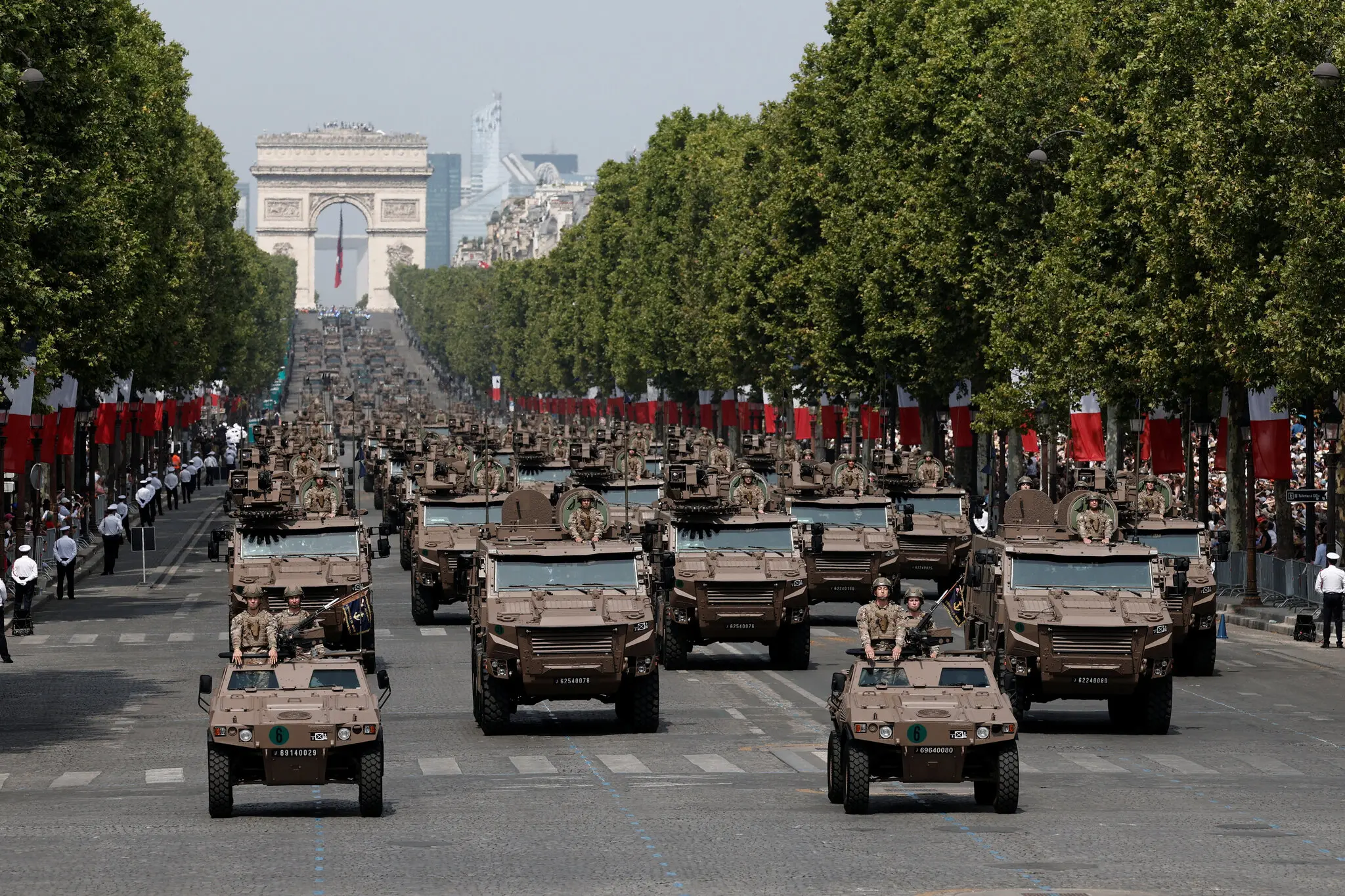 Транспортні засоби Дев'ятої бригади морської піхоти французької армії на Єлисейських полях під час щорічного військового параду до Дня взяття Бастилії в Парижі у вівторок — Бенуа Тессьє
This is no longer symbolic support. Europe is gradually moving from the role of donor to that of co-author of Ukraine’s security. The agenda now includes interceptor missiles, technological components, production chains, training, postwar deterrence planning and a possible military presence after a cease-fire.
But the Strait of Hormuz shows a different reality. Europe’s economy depends on stable sea lanes, energy flows and freedom of navigation. If the strait becomes an arena of confrontation between the United States and Iran, the impact is felt in European industry, inflation, insurance, logistics and political stability. Yet Europe’s leverage remains limited.
France and Britain had been preparing a maritime mission to guarantee the passage of commercial ships through Hormuz. More than two dozen countries were expected to join, though some would need domestic political approval before committing military assets. On paper, it looked like a test of European security maturity. In practice, the mission has been suspended between the desire to act and the fear of being pulled into war.
From the start, Europeans tied the deployment of forces to a durable cease-fire between the United States and Iran. That condition turned the initiative into a hostage of someone else’s escalation. When the American president restores a blockade, threatens transit fees and pursues his own game with Tehran, Europe’s plan for freedom of navigation loses room to maneuver.
Trump’s idea of a 20 percent fee on cargo moving through the strait became the clearest expression of that dependency. It contradicted the logic of the European mission, which was meant to preserve free passage, not turn a maritime corridor into a toll point under military control. Even the quick retreat from the idea did not change the central fact: Washington was again setting the agenda.
Europe found itself in an uncomfortable position. It needs Hormuz more than America does, but it lacks American power to dictate terms. It wants freedom of navigation, but does not want war with Iran. It speaks of autonomy, but must adjust to decisions by a U.S. president whose policy can change in a day.
Ukraine looks different because Europe has political consensus, moral clarity and a direct sense of threat there. Russia stands near Europe’s borders, its war is destroying the continent’s security architecture, and Ukraine’s defeat would be a strategic disaster for the European Union. That is why the European response, though slow, is becoming increasingly concrete.
Iran offers no such clarity. Some European countries fear an energy shock. Some do not want confrontation with Tehran. Some are unwilling to send ships without American cover. Others face parliamentary limits. As a result, strategic autonomy, which looks solemn in Paris, meets procedure, risk and a shortage of political will in the Persian Gulf.
That does not mean Europe is powerless. It has fleets, diplomacy, economic weight, technology and experience in multinational operations. The problem is different: it still cannot always turn those resources quickly into action. Its strength often exists as a sum of capacities, not as a single political instrument.
Macron calls this moment Europe’s strategic reawakening. There is truth in that. The continent is rearming, reassessing its dependence on the United States, investing in defense industry and no longer treating the American guarantee as automatic. But awakening is not the same as independence. It only begins a painful transition.
That transition is complicated by political timing. Starmer, who played a central role in building European coalitions, is approaching the end of his time in Downing Street. Macron is marking his final Bastille Day as president and will soon leave the Élysée. The leaders who pushed Europe toward greater autonomy may disappear from the front row before their projects become irreversible.
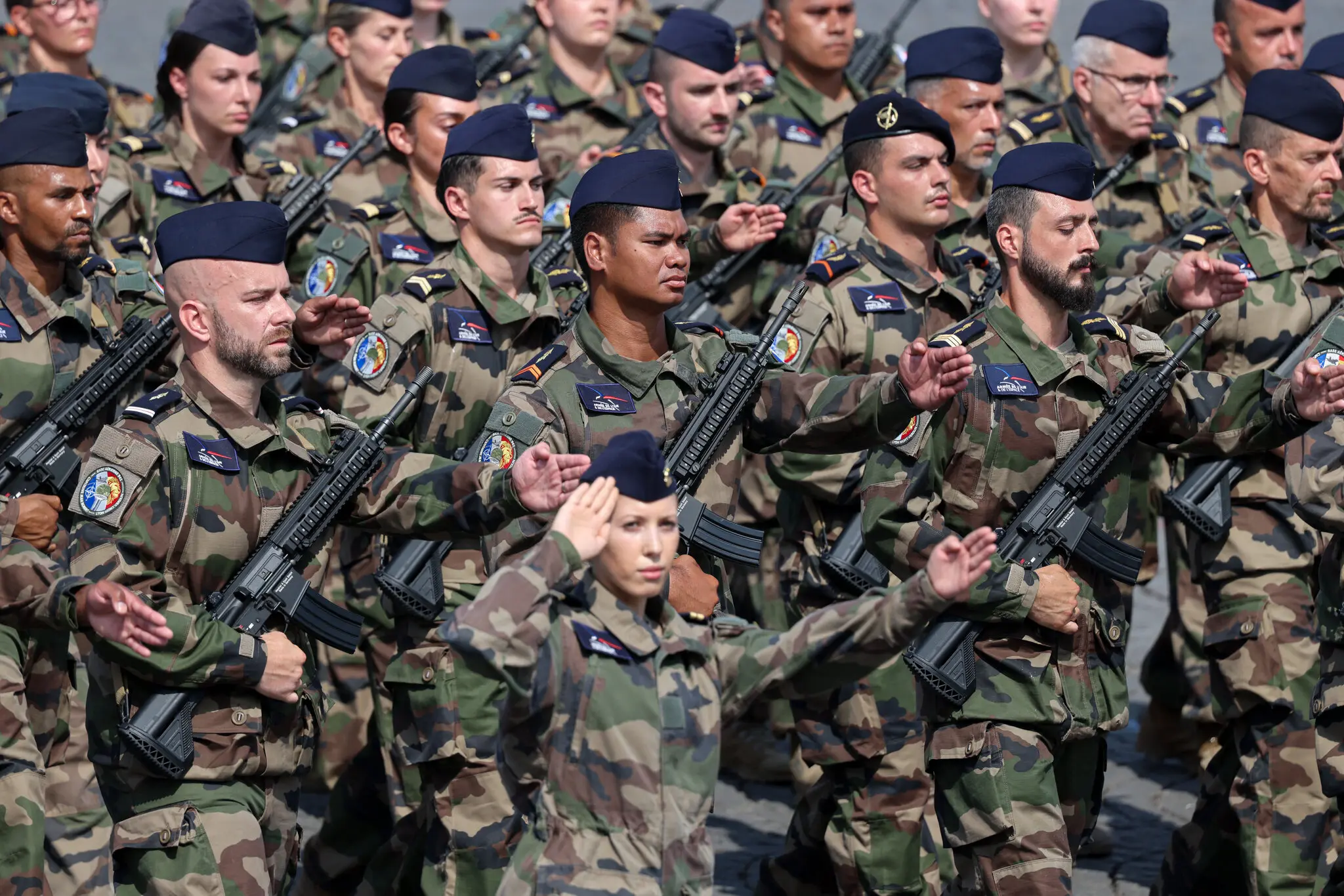 Французькі солдати беруть участь у військовому параді з нагоди Дня взяття Бастилії — Людовік Марін
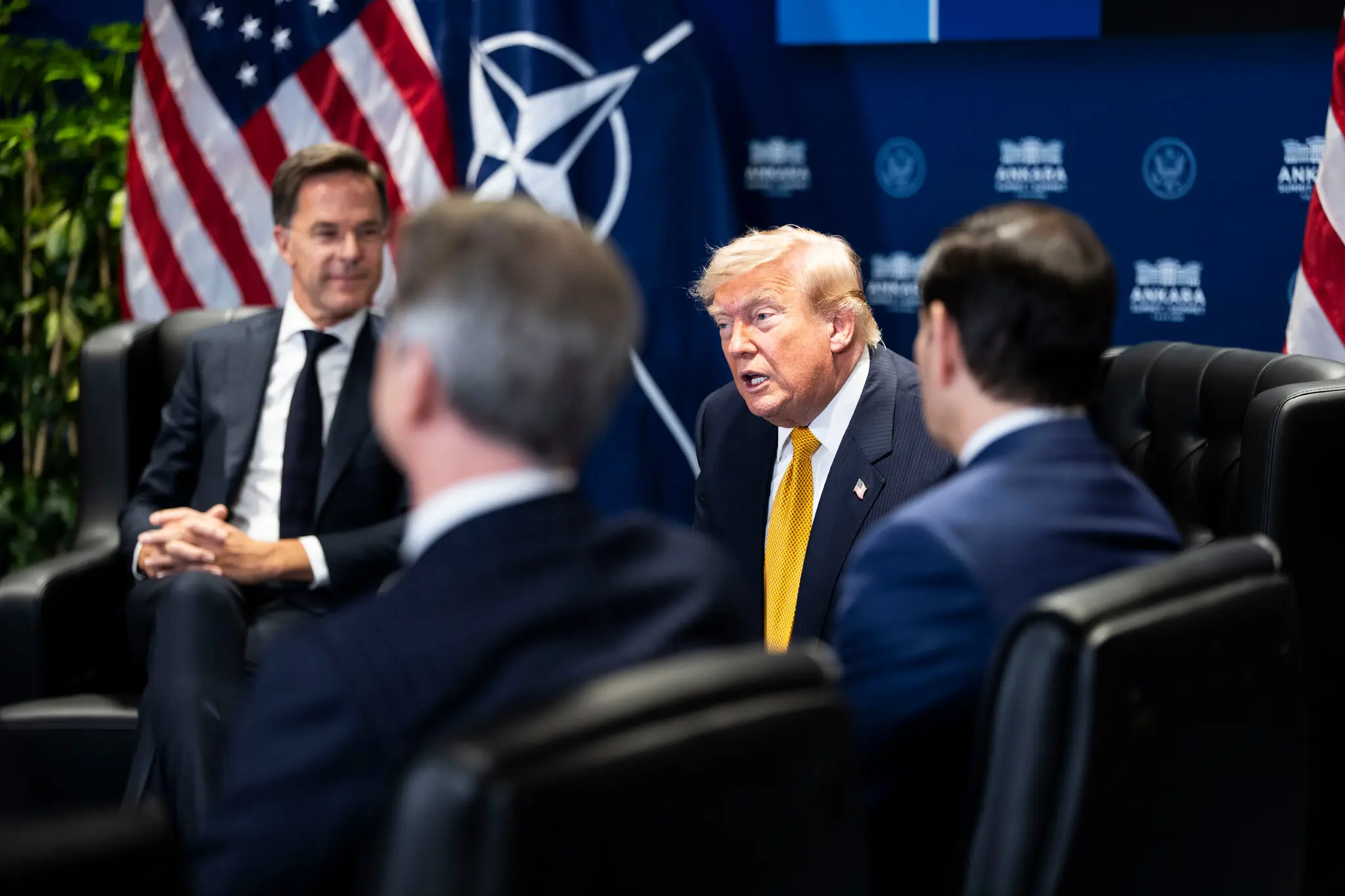
Trump, by contrast, still has a substantial part of his second term ahead of him. That means he will continue to set the tempo of crises over war and peace, even as Europeans try to build their own foundation. For allies, this is an uncomfortable reminder: autonomy is not proclaimed at a parade. It is proved when American policy moves in another direction.
European support for Ukraine shows that the continent can move in that direction. The antiballistic coalition, missile production, security guarantees and possible post-cease-fire presence are all elements of a new architecture. But Hormuz shows that this architecture is not yet universal. It works better where the threat is close and far worse where rapid global intervention is required.
For Ukraine, this has a double meaning. On one hand, Kyiv is receiving more real support from Europe. On the other, it sees the limits of European power when conflicts lie beyond the continent. If Europe cannot act independently in Hormuz, it will remain dependent on the United States in the broader security system for a long time.
That is why the Paris parade was not final proof of European independence, but a scene of its incompletion. On the Champs-Élysées, Europe looked gathered, determined and capable of defending Ukraine. In the Strait of Hormuz, it looked cautious, divided and dependent on decisions made in another capital.
This is the central paradox of the moment. Europe no longer wants to be a passenger of American power, but it has not yet become the driver of its own. It has learned to speak of strategic autonomy, but each crisis forces it to prove that behind the language stand ships, missiles, money, political will and readiness to take risks.
Ukraine has become Europe’s school of strength. Iran and Hormuz have become an exam in its limits. The continent is passing the first lesson with growing confidence. It is still postponing the second. And a world in which Russia, Iran and the United States are testing Europe’s endurance at the same time will not wait for Europe to finish its awakening.