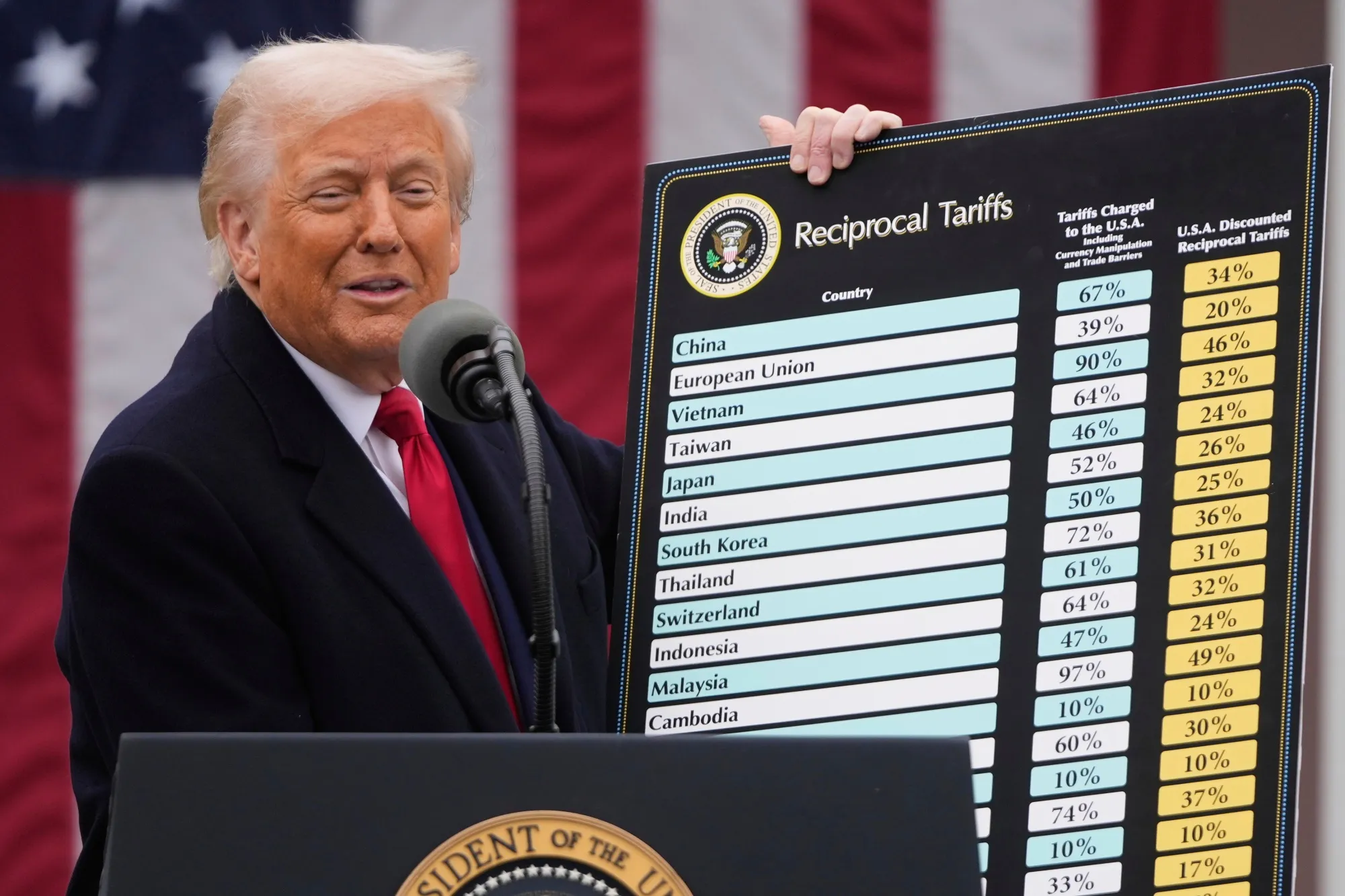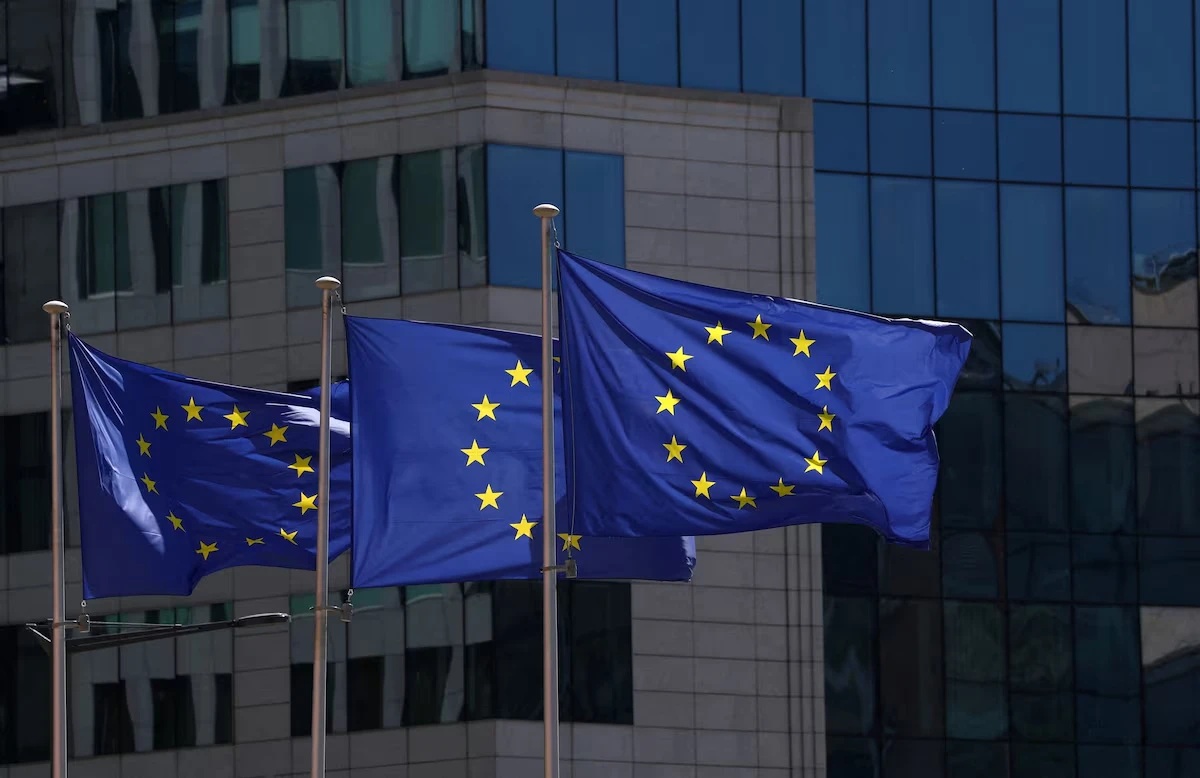





















On March 26, the European Parliament approved the key provisions needed to implement the European side of the EU-U.S. trade deal politically agreed by Donald Trump and Ursula von der Leyen in Turnberry on July 27, 2025. The arrangement is designed to stabilize transatlantic trade after a year of tariff turbulence and to keep U.S. tariffs on most EU goods capped at 15 percent.
In formal terms, lawmakers backed two legislative files covering the EU’s tariff commitments: the removal of tariffs on many American industrial goods and the opening of tariff-rate quotas for selected agricultural and seafood products. This is not a classic free-trade agreement. It is a limited, selective market-opening deal intended to prevent a much broader escalation.
What should have been a relatively technical process became politically fraught. The procedure was delayed first by Trump’s threats regarding Greenland, and later by uncertainty after the U.S. Supreme Court ruled that much of his sweeping tariff regime was unconstitutional, raising doubts about the legal durability of the American side of the bargain.
According to the preliminary assessment of Daycom, that is the real meaning of the vote: Europe did not suddenly regain confidence in Washington. It chose, instead, to secure as much predictability as possible in a relationship it still sees as structurally unstable. For Brussels, the stakes are simply too high. The European Commission describes the EU-U.S. relationship as the world’s most important bilateral trade and investment partnership, worth €1.6 trillion in goods and services in 2024, with more than €4.2 billion crossing the Atlantic every day.
That is why Parliament did not merely approve the deal. It rewired its defensive logic. Lawmakers added language allowing the agreement to be suspended if Washington undermines the deal’s objectives, discriminates against EU economic operators, engages in economic coercion, or threatens the territorial integrity, foreign policy, or defense interests of EU member states. Bernd Lange, who chairs Parliament’s trade committee, made clear that the Greenland episode was one of the triggers for that tougher wording.
In effect, the European Parliament tried to make the agreement “Trump-proof.” That phrase may sound political, but it captures the institutional mood in Brussels. Parliament is no longer prepared to rely on a political handshake alone, especially when tariff policy in Washington can shift with domestic court rulings, electoral calculations, or sudden geopolitical pressure.
The details matter. Parliament’s first-reading position included a sunset clause for the main regulation running to March 31, 2028, as well as defensive measures in case the United States makes new demands or reimposes pressure through tariffs. The separate file dealing with lobster trade carries its own time limit through December 31, 2028, along with additional defensive conditions.
The vote itself was strong but not politically effortless. The two files passed in separate votes, 417-154 and 437-144, with dozens of abstentions. That margin was large enough to clear the Parliament’s most important hurdle, but the numbers also reflected continuing unease among lawmakers who fear that the White House may still reverse course later.
The next phase is interinstitutional negotiation. Talks with EU member states and the European Commission are expected to continue in the coming weeks, and the deal is still expected to survive that process. Yet analysts in Brussels already note that some of Parliament’s tougher “weatherproofing” language may be softened if Washington refuses to accept it. In other words, the real bargaining is not over.
Washington, for its part, welcomed the vote. U.S. Ambassador to the EU Andrew Puzder said the decision would provide stability and predictability for businesses on both sides of the Atlantic. Business groups echoed that response, arguing that companies had spent much of the past year trapped in uncertainty while tariff politics lurched from one crisis to another.
That reaction reveals something important about the political economy behind the agreement. The deal is moving forward not because transatlantic trust has been restored, but because both sides have grown tired of permanent commercial improvisation. Business pressure has become one of the few stabilizing forces in a relationship otherwise dominated by strategic mistrust, electoral volatility, and legal ambiguity. This is an inference based on the alignment between official statements and business reactions after the vote.
In a broader sense, the Parliament’s decision captures the current European approach to the United States. Brussels still talks about strategic autonomy, diversification, and reducing dependency. But it also knows that the transatlantic economic channel remains too large to abandon and too valuable to leave exposed to unmanaged disruption. So rather than choosing trust or rupture, the EU is trying to govern uncertainty.
That is why this vote matters. The European Parliament did not ratify a new era of harmony with Washington. It endorsed a mechanism of conditional cooperation, one designed to preserve trade while acknowledging that the United States, under Trump, is no longer treated in Brussels as a fully predictable partner.
The deeper story, then, is not that Europe embraced the deal. It is that Europe accepted the need for the deal while embedding its distrust directly into the text. If the agreement ultimately survives the remaining stages, it will stand not as a monument to renewed transatlantic confidence, but as a document of a more brittle era — one in which trade is protected less by shared assumptions than by carefully written safeguards.