

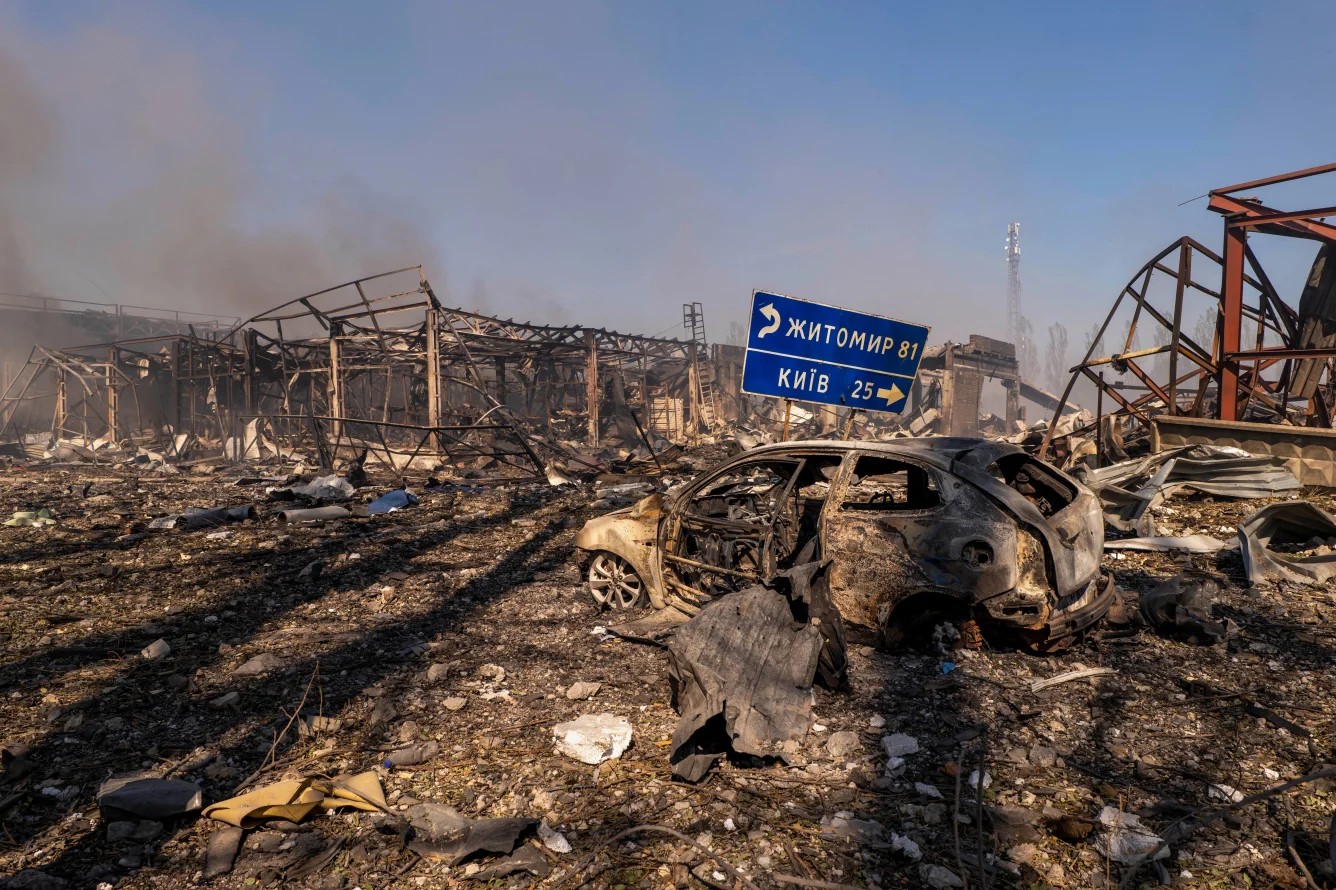



















Three years ago, this was water. Now the former Kakhovka Reservoir has become tens of kilometres of reeds, scrub and young willow forest, where Ukrainian and Russian soldiers can come within a few metres of one another before either side sees the other. One of the strangest battlefields of the war has emerged here.
Small Russian infantry groups are trying to infiltrate through the overgrown reservoir basin toward its northern shore and in the direction of Zaporizhzhia. Ukrainian units patrol the routes, search for trails, set ambushes and try to prevent Moscow from turning the vegetation into a concealed corridor for further advances.
What makes this front unusual is that one of the defining technologies of the war loses part of its advantage. Drone cameras are highly effective over open fields and roads, but dense tree cover and reeds conceal soldiers from above. At times, movement becomes visible only when troops cross a clearing.
The result is almost the reverse of the pattern seen across much of the front. Elsewhere, a drone can spot an infantryman from kilometres away and pass coordinates for a strike. Here, Ukrainian and Russian groups once again depend heavily on hearing, navigation, direct observation and split-second reactions during sudden encounters.
Daycom’s analysis indicates that fighting on the bed of the Kakhovka Reservoir is not a return to an earlier kind of war. It is a demonstration of the limits of the technological battlefield: change the environment enough, and a system built around constant aerial surveillance once again needs infantry operating at direct-contact range.
This landscape was created after the destruction of the Kakhovka dam on June 6, 2023. Ukraine has blamed Russian forces, which controlled the structure, for blowing it up. The disaster released an enormous volume of water, flooded areas downstream and severely disrupted water supplies across southern Ukraine.
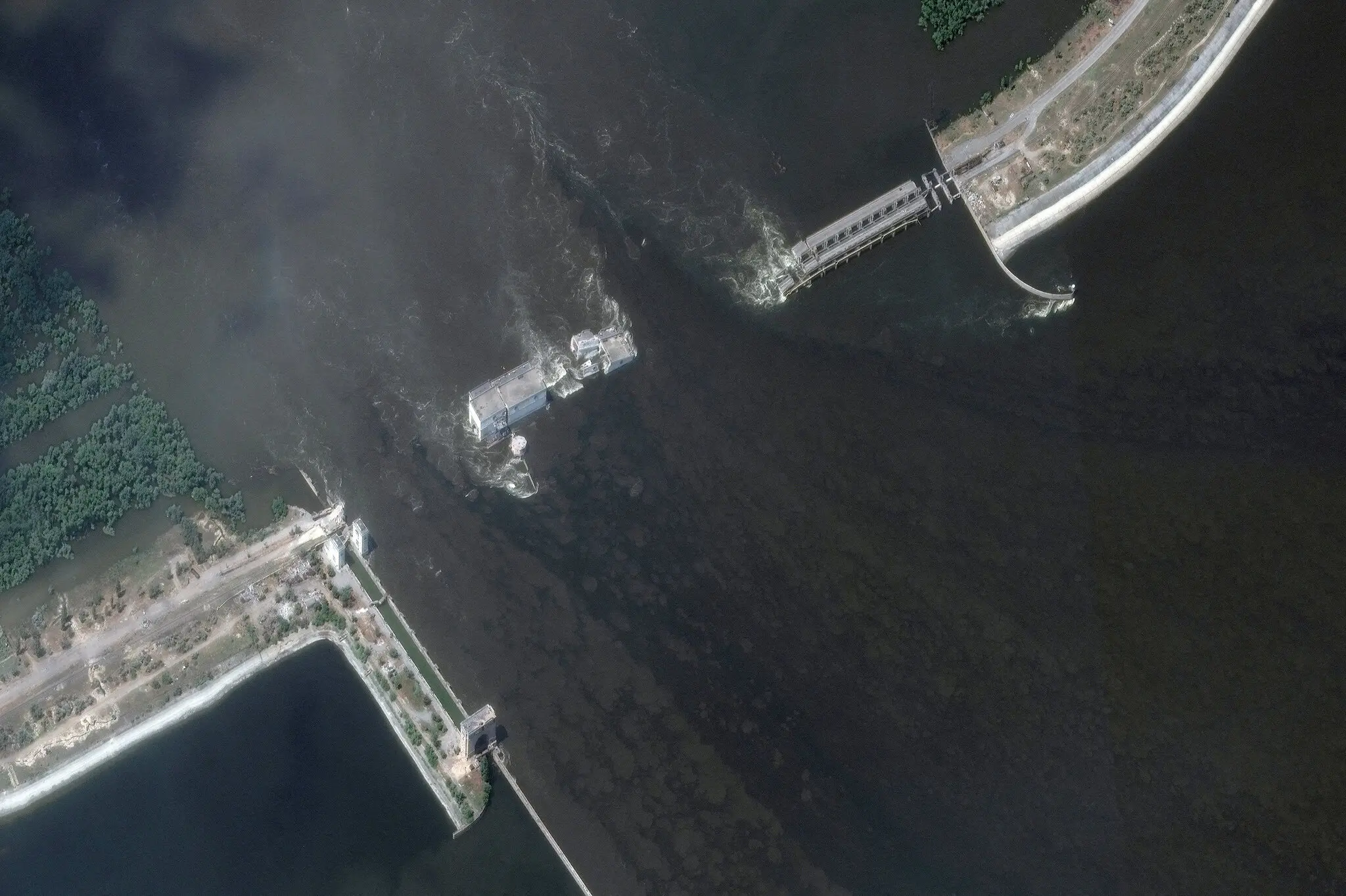 Супутниковий знімок Каховської греблі та ГЕС у середу 7 червня 2023 року — Maxar Technologies
The reservoir, which had covered more than 2,000 square kilometres, rapidly drained away, exposing old channels of the Dnipro, sediment and former islands. What initially looked like an immense expanse of mud and sand changed almost beyond recognition within three growing seasons.
Vegetation spread rapidly across the exposed basin. Growth was especially dense along former waterways and low-lying wet areas. By the summer of 2026, large stretches had become covered with willow, reeds, brush and other thick plant life.
In some places, young willow forest has already grown several metres high and formed a dense, layered environment. For ecologists, it is an example of strikingly rapid floodplain regeneration. For soldiers, it has become a vast zone of natural concealment where aerial observation is difficult.
That ecological transformation has produced a military consequence that would have been hard to predict immediately after the dam was destroyed. The young forest is dense enough to obstruct reliable observation from above, yet still passable enough for small infantry groups.
Across much of the Ukrainian battlefield, the opposite logic prevails. Drones create zones of persistent surveillance and strike capability in which the movement of people and vehicles can be detected quickly, making exposed terrain exceptionally dangerous.
Inside the former reservoir, that model starts to break down over the final few hundred metres. A drone may see where a group enters the trees but lose it under the canopy. It can follow soldiers across open ground, only for them to disappear again seconds later.

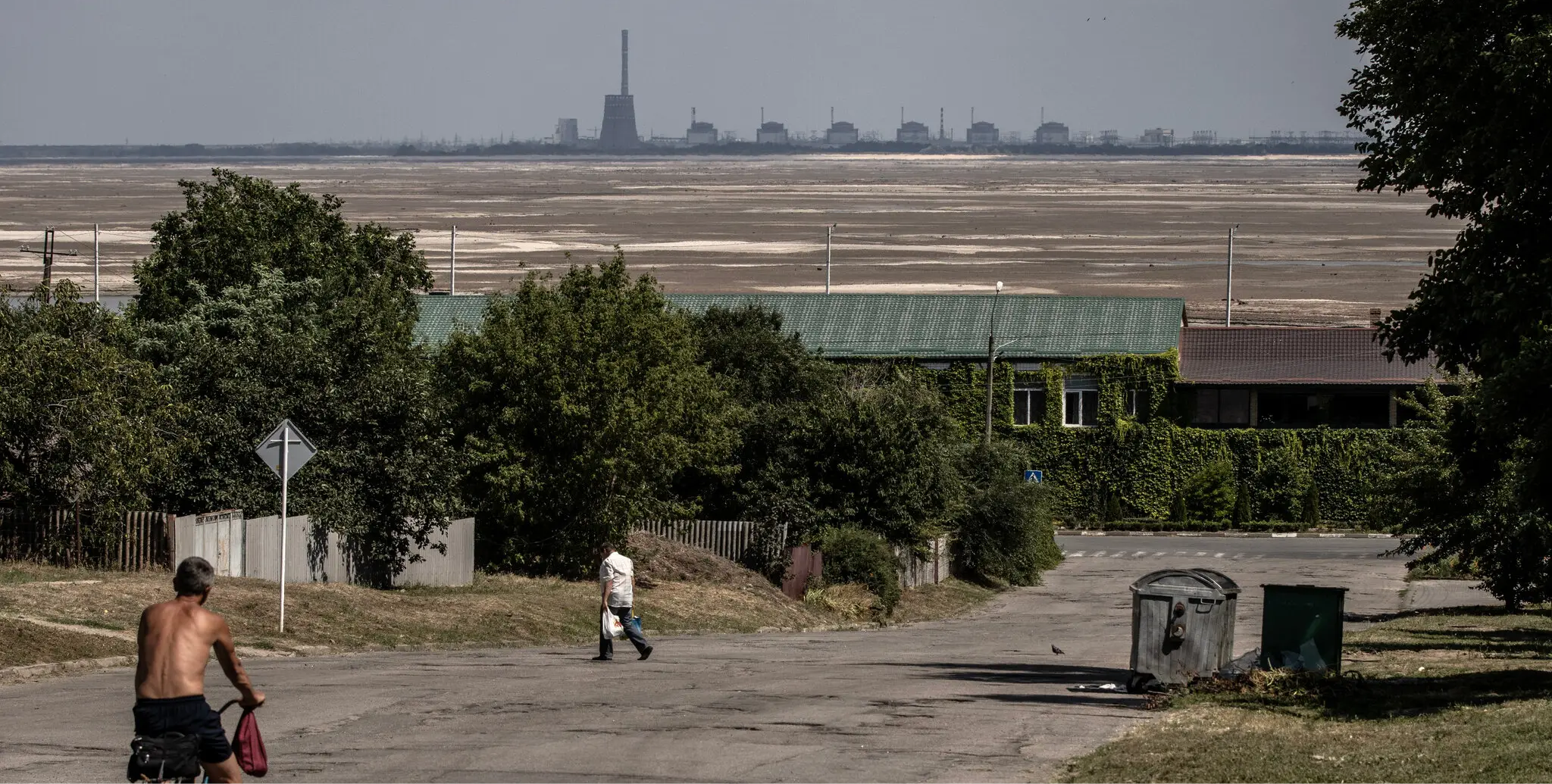
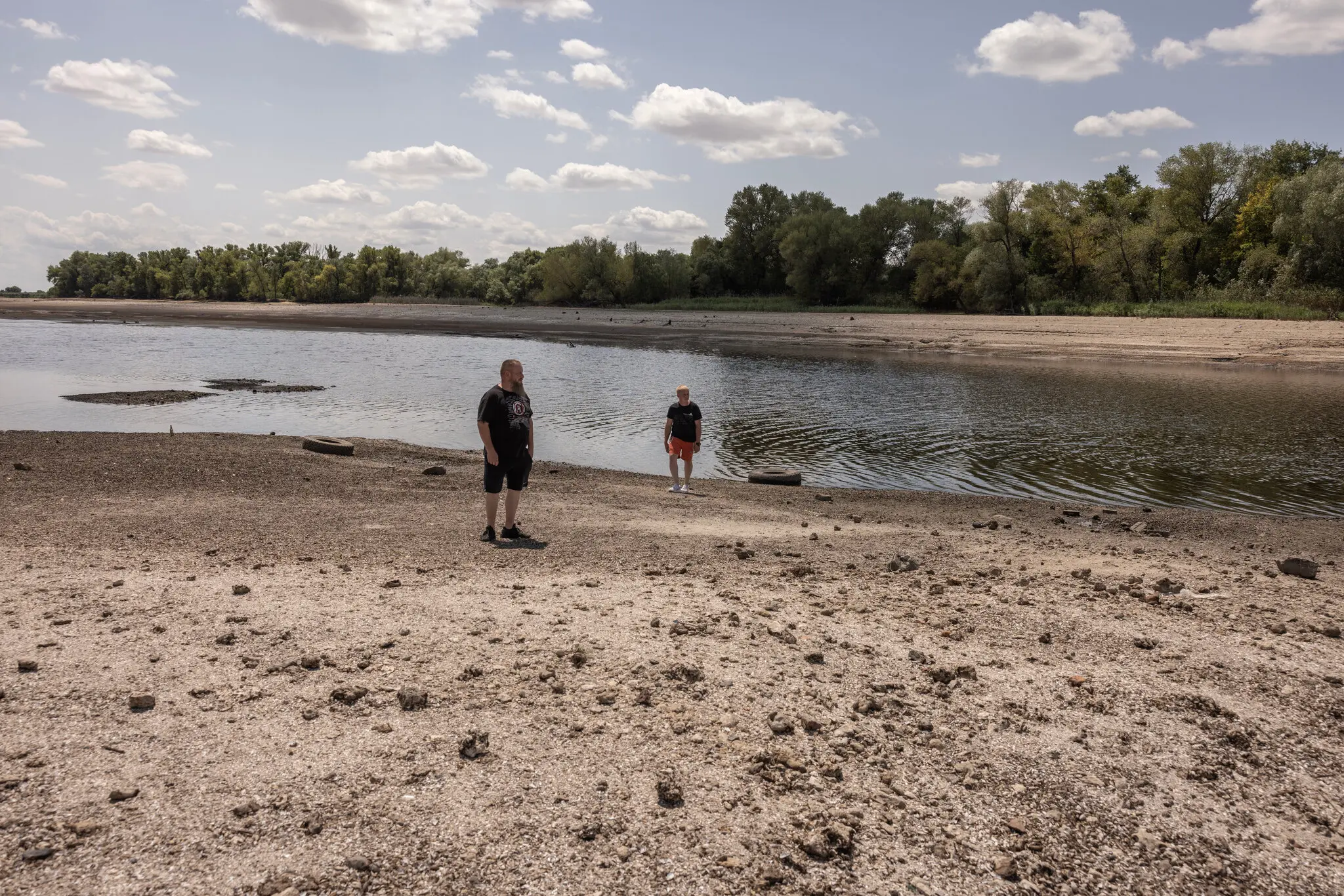
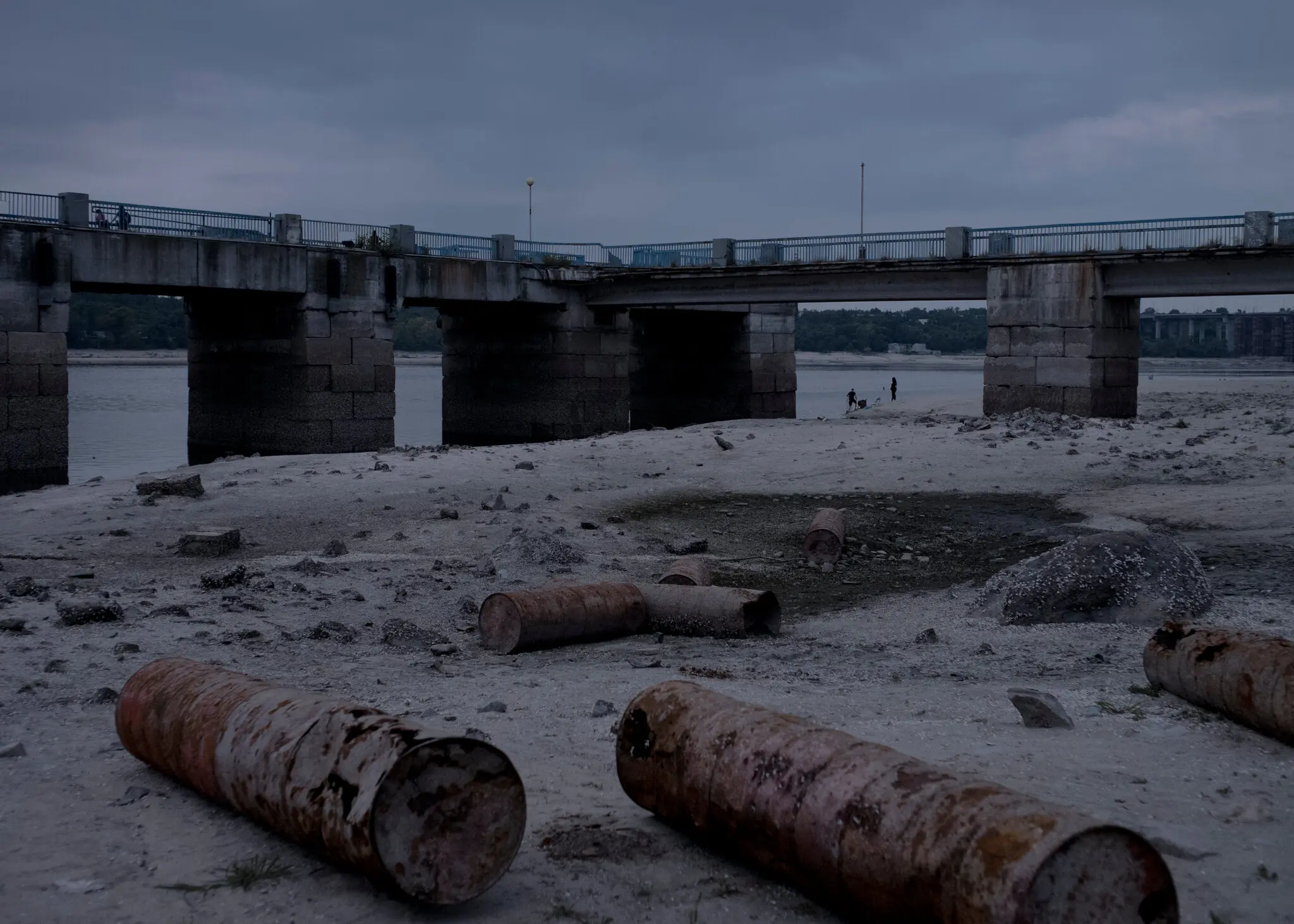
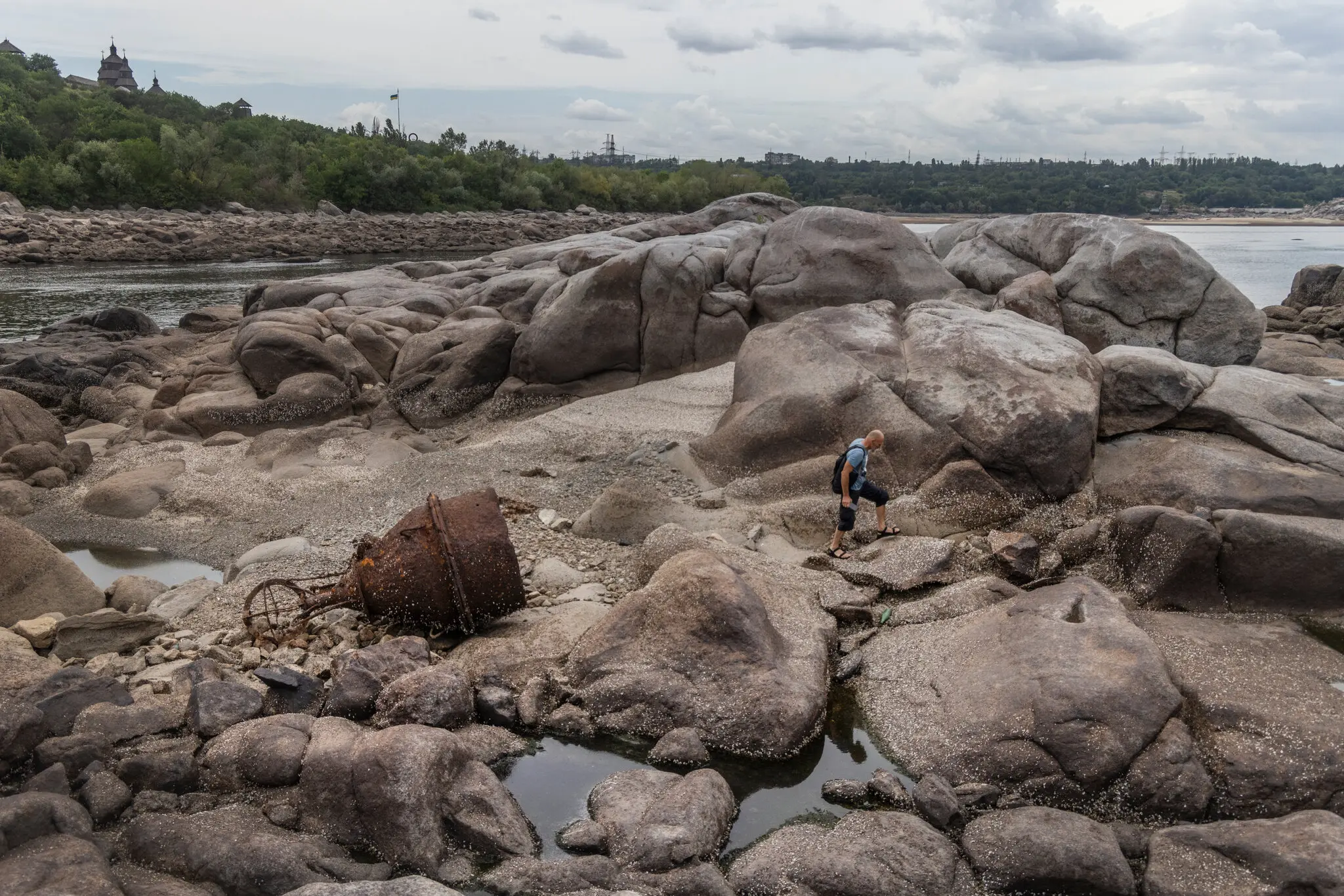
Oleksiy Serediuk, commander of the Bratstvo battalion, told that his unit sometimes struggled to find even its own soldiers. In one case, he said, a fighter was missing from view for three days — an indication of how seriously the vegetation complicates both enemy reconnaissance and friendly command and control.
Drones therefore do not disappear from the battle; their role changes. Ukrainian troops use them to carry some supplies, watch openings and drop explosives into areas where Russian troops may be hiding, sometimes with the aim of forcing them to move into infantry ambushes.
That changes the familiar kill chain. In open terrain, a drone can identify a specific position and rapidly pass the coordinates to a weapon system. In the Kakhovka vegetation, it may only narrow down the area, leaving soldiers on the ground to finish the search.
Russian tactics have also adapted to the environment. Ukrainian commanders say Moscow is sending small groups into the former reservoir, establishing observation posts and staging areas and opening routes that can be used to move personnel and supplies under cover.
Serediuk estimated that hundreds of Russian troops had been sent into the area. That number cannot be independently verified, and Russia has not publicly disclosed the composition of its forces in the basin. Still, repeated encounters suggest more than isolated reconnaissance patrols.
For Russia, the potential value of the terrain is clear. Zaporizhzhia remains a major industrial city and one of the key strategic centres of the southern front. Russian forces have repeatedly tried to move closer to it from the south during the war, placing steady pressure on Ukrainian defences.
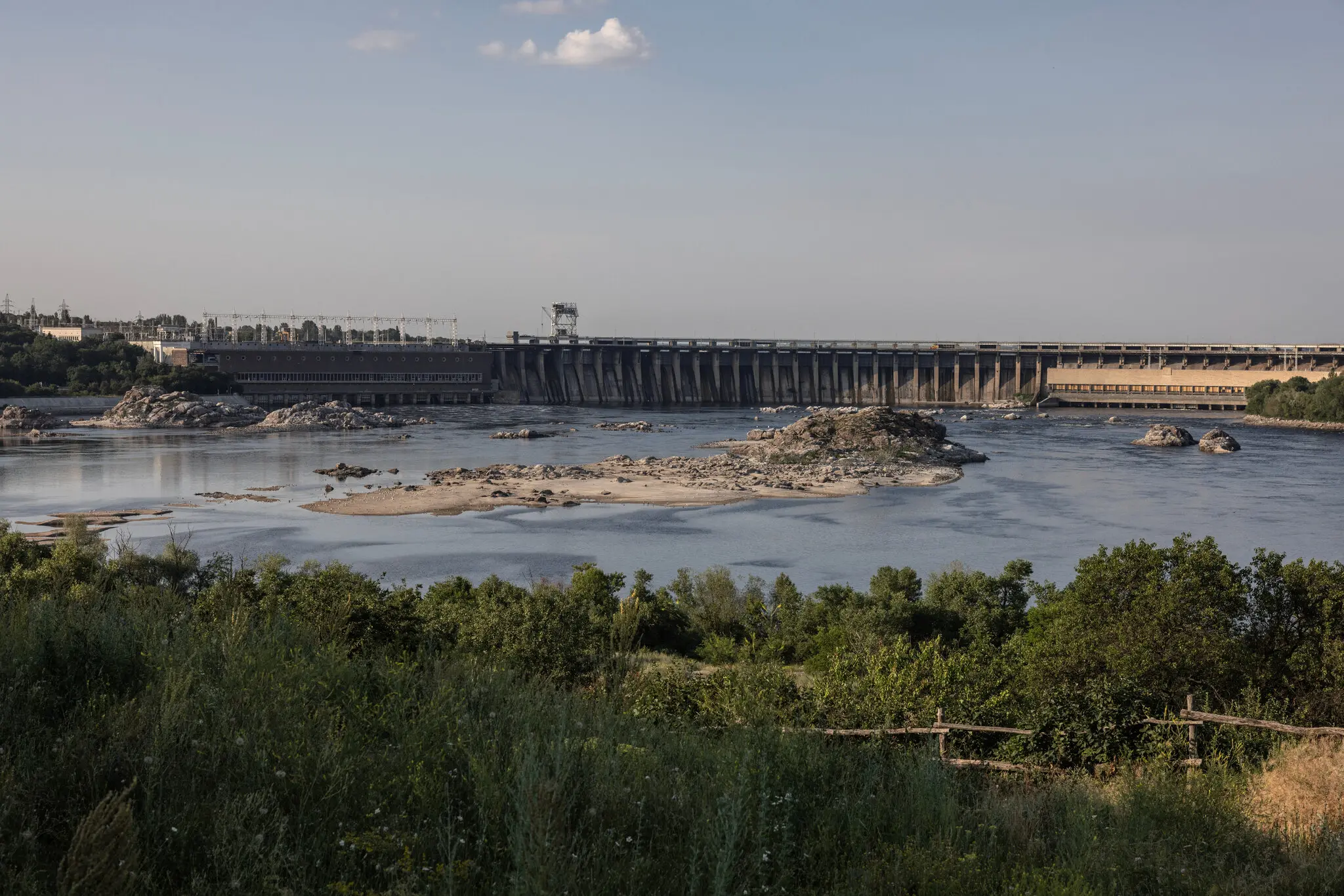 Вид з острова Хортиця на висохлу водойму, де було виявлено скарбницю артефактів після вибуху Каховської дамби в червні, внаслідок чого трильйони галонів води хлинули вниз за течією — Фінбар О’Райлі
Over the past year, Russian troops on some sectors moved substantially closer to the city than before. Ukrainian forces were able to stabilise parts of the front during the spring and summer of 2026 and push Russian units back in some areas, but the threat to Zaporizhzhia has not disappeared.
The overgrown reservoir now creates an additional axis of pressure. It may be unsuitable for large mechanised columns, but Russia does not need to send tanks through it to gain value. Small groups can look for weak points, observe Ukrainian positions and gradually establish footholds.
That approach fits a broader Russian pattern seen in recent years. Rather than relying exclusively on large frontal assaults, Moscow has increasingly used small groups to infiltrate between positions, hide in tree lines and try to accumulate behind the forward edge of Ukrainian defences.
The former reservoir gives such units natural cover on a scale that is unusual for the open terrain of southern Ukraine. A space roughly 60 miles long and up to 15 miles wide has become a maze of young forest, former islands, sandy ground, channels and thick vegetation.
Ukrainian soldiers from Bratstvo describe it primarily as an infantry battlefield. During the winter, one reconnaissance group encountered Russian positions on a rocky rise that had been an island before the dam was destroyed. The battalion says four Russian soldiers were killed and two captured in the clash.
Those details come from the Ukrainian side and have not been independently verified. More important than the casualty count is the tactical picture: geographical features that spent decades underwater are once again becoming heights, routes and strongpoints on a military map.
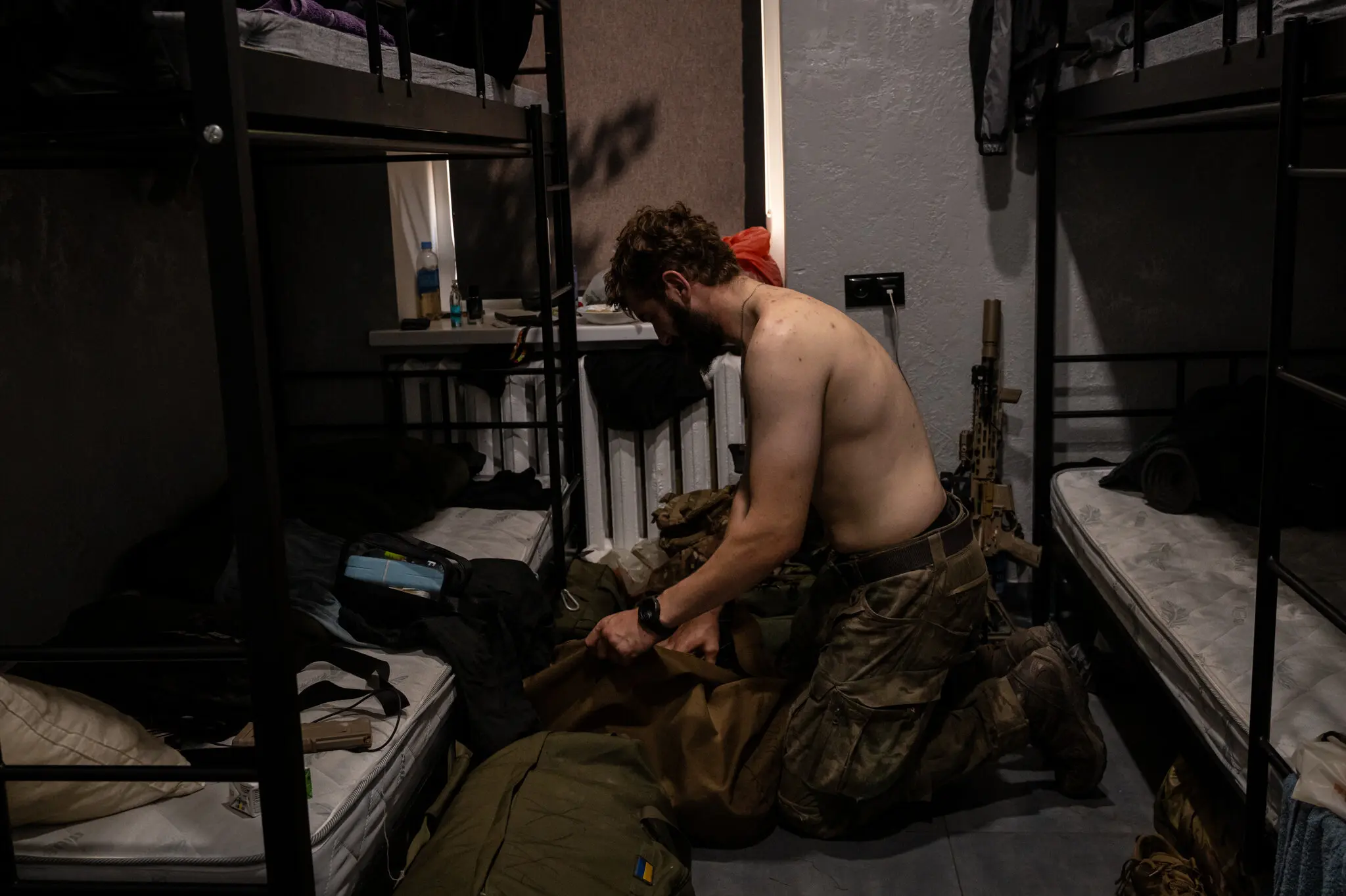 Командир взводу з позивним «Апач» розпаковує речі після повернення з операції в басейні Каховського водосховища — Ніколь Танг
One summer mission described reporters ended in several close-range encounters. The Ukrainian group captured a Russian soldier and spent several days moving back through the forest with him, encountering enemy troops again along the way.
In the first episode, the Ukrainian soldiers unexpectedly came upon two Russians sitting in bushes. One reached for his weapon and was shot. The second pulled the pin from a grenade, but after several tense minutes was persuaded to replace it and surrender.
Later, the group encountered two more Russian soldiers. Body-camera footage from the Ukrainian commander showed an exchange of gunfire through the trees at very close range. The Ukrainians withdrew with the prisoner because the contact was too close and too dangerous to sustain.
A fight like that leaves almost no time for the usual call for support. When opposing soldiers are only metres apart and can see little more than shadows through the vegetation, artillery or an FPV drone may be too slow or too dangerous to friendly troops. Personal weapons become decisive again.
Discipline and navigation also become far more important. Poor visibility makes it harder to distinguish friend from enemy, maintain direction and keep proper spacing between soldiers. Losing contact with a neighbouring group can be almost as dangerous as encountering an enemy patrol.
Even drone operators have to use unusual methods to keep track of their own troops. During one mission, Ukrainian soldiers briefly stepped out from under the trees so a drone could identify them. Seconds later, they disappeared again, with only the movement of the canopy hinting at their progress.
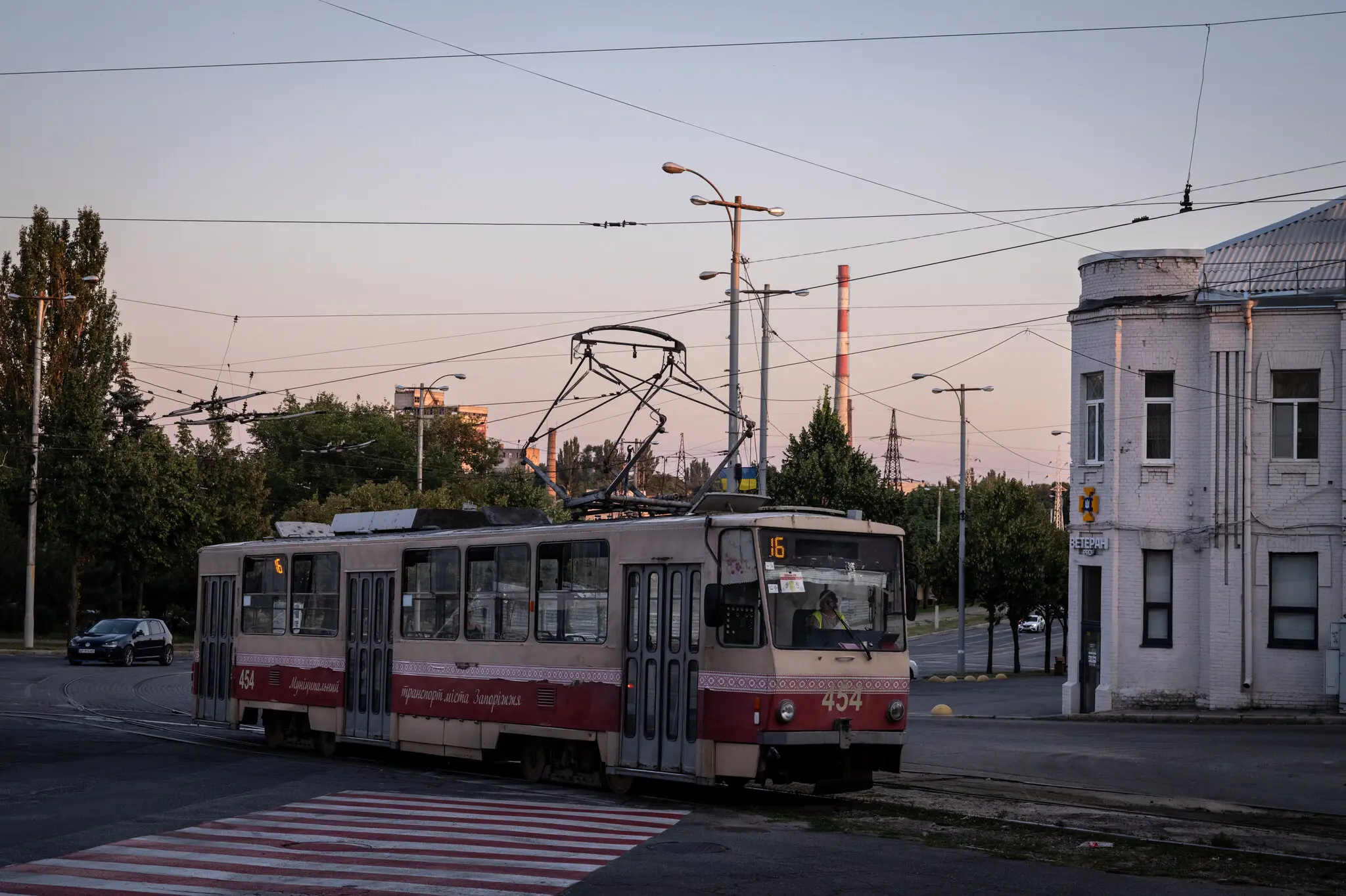 Запоріжжя, промисловий центр, до війни мало населення 750 000 осіб. Зараз місто регулярно зазнає ударів росіян — Ніколь ТАнг
The scene shows how modern warfare depends not simply on having a drone, but on the physics of the environment around it. An optical camera can only see what lies within its line of sight. Dense foliage can sometimes conceal a person from aerial reconnaissance more effectively than a sophisticated electronic system.
Calling the area a “drone-free zone” would still be wrong. Drones continue to monitor entrances and exits, open ground and movements between patches of forest. They can attack targets once detected. What they cannot provide is the near-continuous visibility that has become normal on exposed parts of the front.
That limitation is particularly significant for Ukraine, which increasingly builds its defences around technological observation. Shortages of infantry are partly offset by sensors, drones, digital data-sharing and remote strikes. Terrain that interrupts that chain automatically increases the demand for soldiers on the ground.
For Russia, which has a larger pool of manpower, that creates a potential opportunity. Small groups can be sent forward repeatedly, forcing Ukrainian troops to spend infantry resources searching and clearing a huge area where each new route has to be checked almost physically.
But concealment works both ways. The same canopy that hides Russian soldiers from Ukrainian drones also hides Ukrainian ambushes. A group moving down a trail without a clear picture of what lies ahead can suddenly come under fire at a range where technological advantages have no time to matter.
Bratstvo commanders say some Russian groups appear to have primarily reconnaissance tasks: remain concealed, listen for movement and pass information back. That fits the logic of gradual infiltration, in which the first objective is not to seize ground immediately but to map the Ukrainian defence.
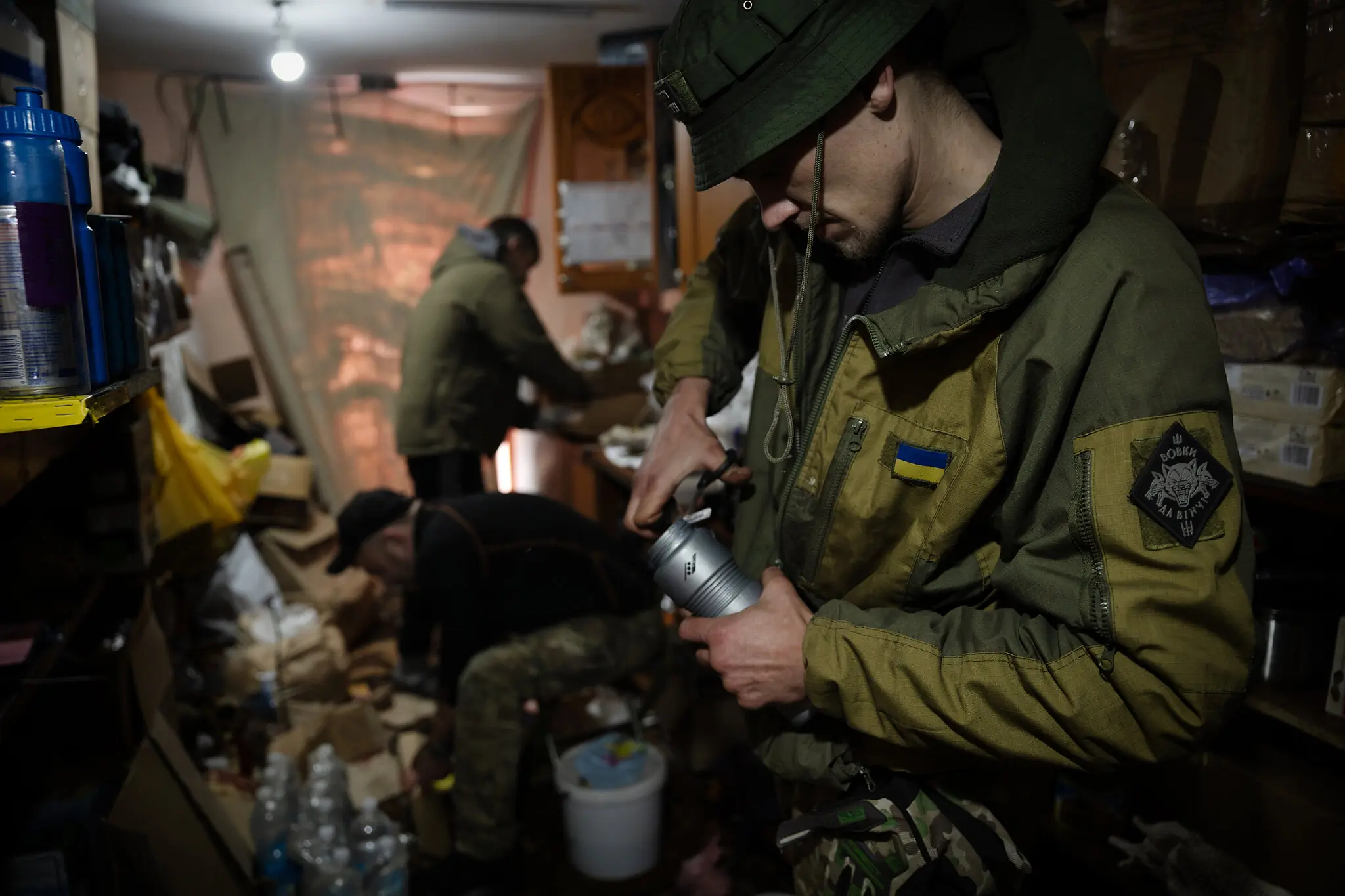
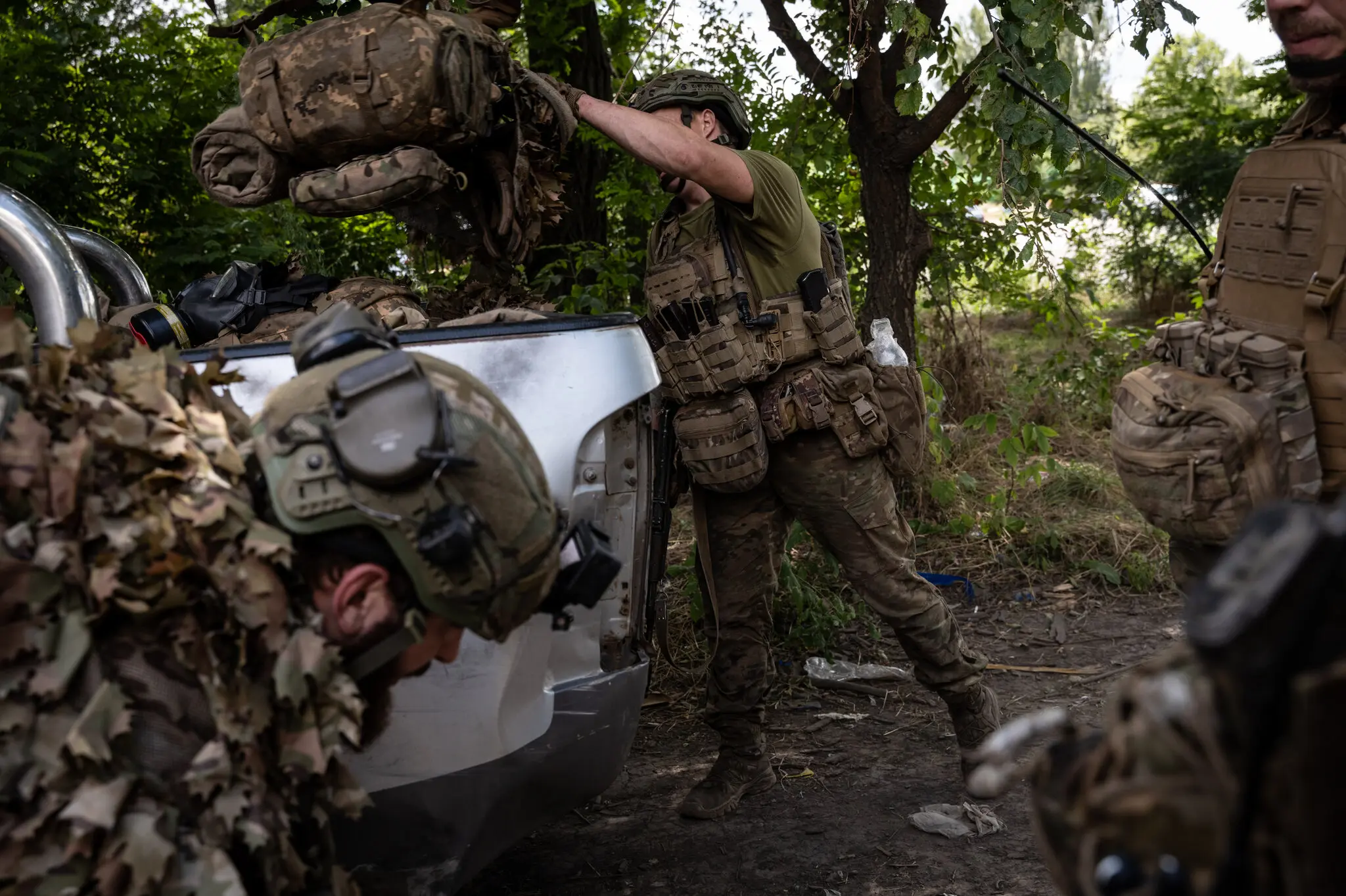 Українські солдати батальйону «Братство» розвантажують спорядження після виходу з басейну Каховського водосховища в липні — Ніколь ТАнг
Ukrainian troops also give mixed assessments of the quality of Russian infantry. Serediuk has spoken of encounters with experienced soldiers, while other commanders described many recent arrivals as less well-trained recruits.
They have also said more Russian soldiers have been surrendering since the spring. In their account, some troops increasingly doubt Russian claims that captivity in Ukraine inevitably means torture or death, because returning prisoners have been able to describe what detention was actually like.
Such assessments are extremely difficult to verify independently on this part of the front. Claims about morale, casualties and surrender rates should therefore be treated as the observations of one Ukrainian unit rather than a complete picture of Russian forces in the area.
A firmer conclusion is that a new battlefield has formed where, before 2023, there was effectively no traversable land at all. Nature has altered the military geography of the southern front in just three years.
The destruction of the dam first caused an enormous ecological and humanitarian disaster. Water disappeared from the reservoir, communities downstream were flooded and cities and agricultural regions were left with severe water-supply problems.
Then the exposed basin began to revegetate. Young willow, reeds and other plants rapidly occupied the newly uncovered land. What ecologically resembles the restoration of a floodplain has, in military terms, become a difficult zone of concealment for small armed groups.
For scientists, the speed of the transformation has been striking. In only a few seasons, nearly bare sediment became dense vegetation. In some areas, young trees already form an environment that looks more like genuine forest than the floor of a former reservoir.
For soldiers, the same speed means that maps and tactical assumptions can become outdated almost every season. An area clearly visible from the air a year ago may now be hidden by leaves. A trail that did not exist in spring may become a supply route by autumn.
Seasonality will therefore matter greatly. Summer foliage provides the strongest concealment, while visibility for optical sensors should improve once leaves fall in autumn and winter. Temperature, rainfall and water levels in the Dnipro may also change how passable different parts of the basin are.
The current Russian infiltration does not prove that Moscow can launch a large offensive across the entire reservoir floor. There is not enough confirmed evidence for that conclusion. But efforts to establish observation points and concealed routes are themselves enough to complicate the defence of Zaporizhzhia.
The city is already a regular target of Russian air strikes, while the ground front has repeatedly moved closer to its southern approaches over the past year. The new terrain forces Ukraine to divide attention between traditional defensive lines and an area that was still a water barrier only three years ago.
That is what makes the fighting on the bed of the Kakhovka Reservoir more significant than individual firefights in the reeds. It shows that even in a war where drones and digital systems turn the battlefield into a constantly updated map, geography can still suddenly favour the side that moves better on foot.
The paradox of the Kakhovka front is that technological warfare does not disappear there — it simply stops at the edge of the canopy. Beyond it lies a space where the map may know the coordinates of the forest, but not the person inside it. Russia is now trying to use that gap as a concealed route forward, while Ukraine is trying to close it.