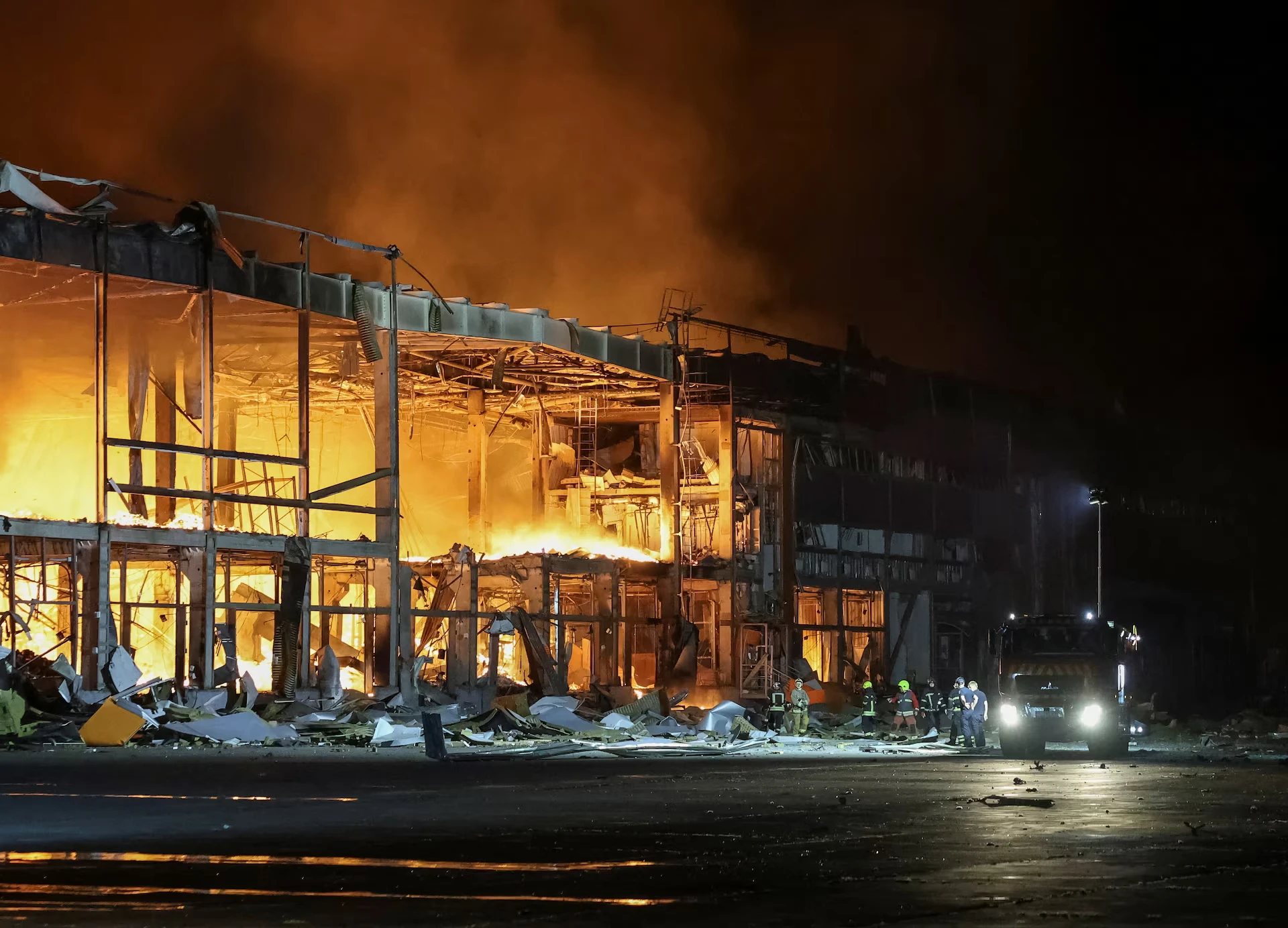



















July 2026 became the month when Western Europe stopped measuring wildfires only by the amount of land they consumed. Hundreds of thousands of people in France and Spain were forced from their homes, while individual blazes became the largest recorded since European monitoring began.
In France, fire swept through large parts of Gironde and Landes in the southwest. Bordeaux’s suburbs, vineyards, tourist routes and Atlantic resorts all entered the danger zone, including the popular Cap Ferret peninsula, where evacuation orders reached tens of thousands of people.
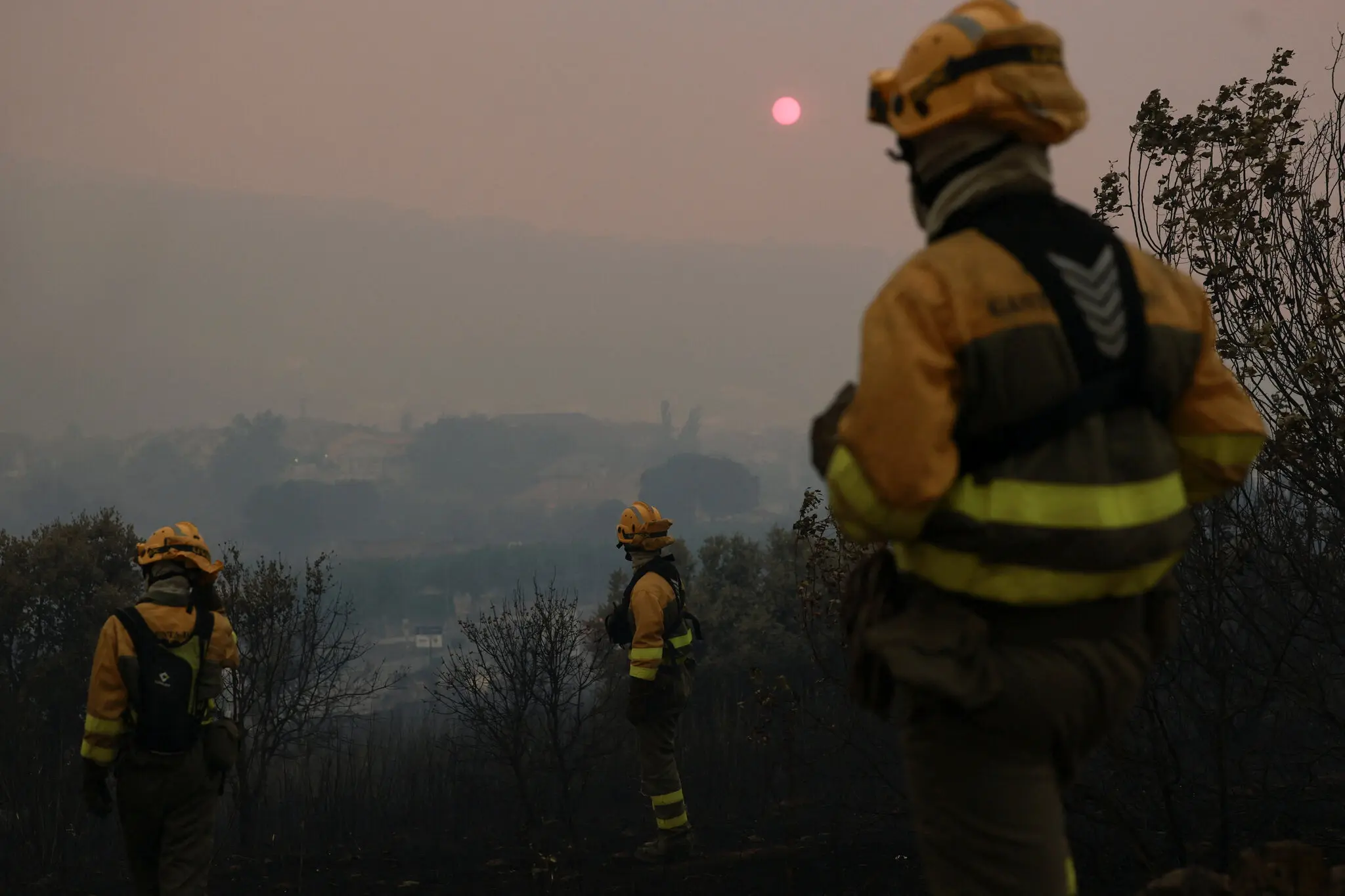
In Spain, the main fire front moved through the mountains west of Madrid. Tens of thousands of residents were evacuated or ordered to shelter because of dense smoke, falling ash and the possibility that flames could spread rapidly toward populated areas.
In Daycom’s assessment, the importance of these fires goes beyond another episode of extreme heat. They showed that Europe’s security system is entering a phase in which the mass evacuation of civilians is becoming not an exception, but a recurring method of crisis management.
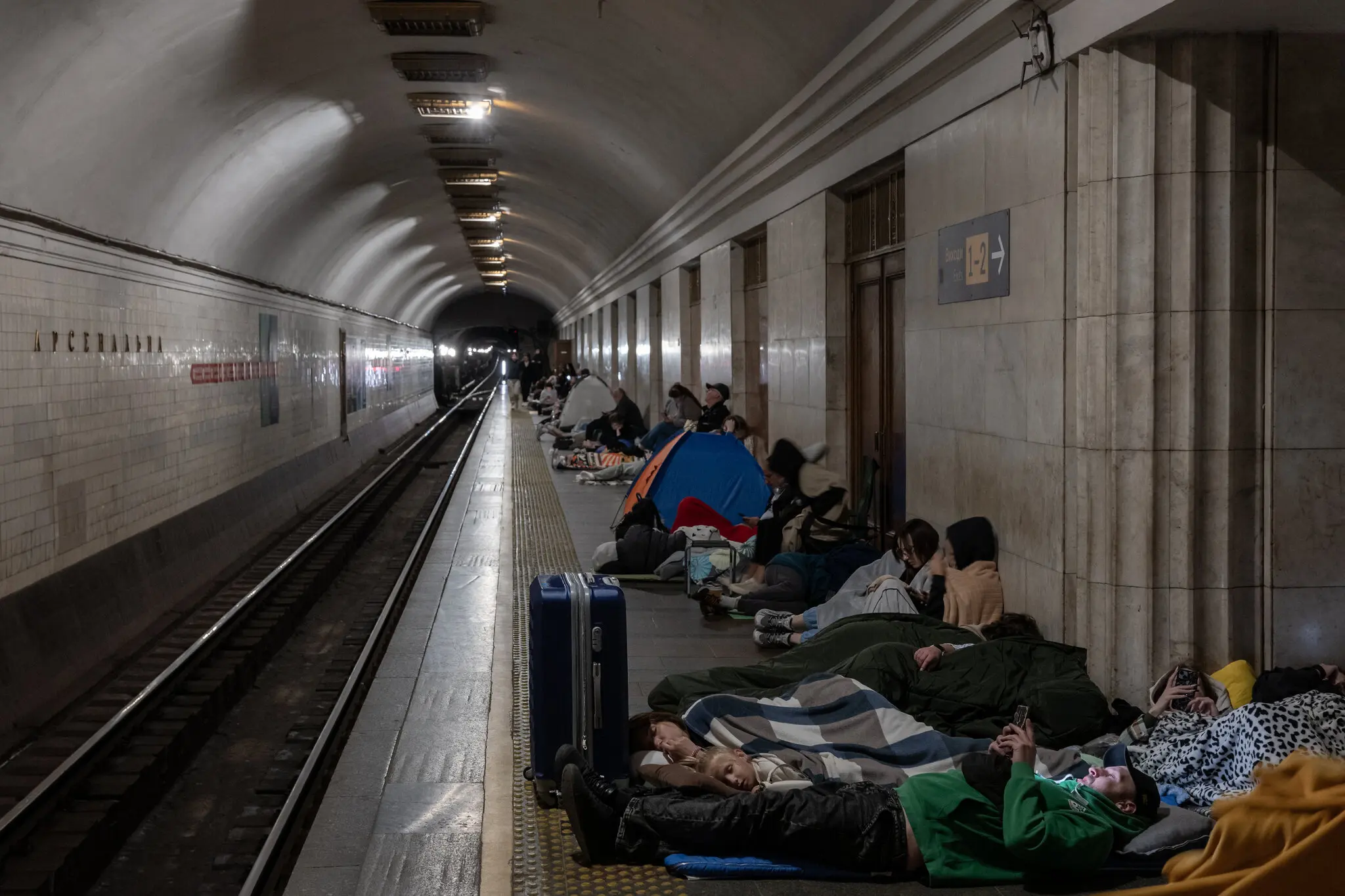
By the end of July, about 250,000 acres had burned in France. One of the largest fires forced more than 220,000 people from their homes, making it one of the biggest peacetime evacuations in the country’s modern history.
In Spain, the fires near Madrid affected about 90,000 people. By the end of the month, most fronts had been stabilized and tens of thousands of residents were able to return. Authorities immediately warned, however, that high temperatures and low humidity could create new fires with little notice.
That instability is becoming the defining feature of the new wildfire reality. Containment no longer means the crisis is over. One day of strong wind or a dry thunderstorm can transform a controlled fire into a major emergency.
The fires in France and Spain were part of a broader wave across Europe. In Greece, authorities were fighting dozens of blazes at once at the end of July, while firefighters were killed on Crete and in the Peloponnese.
In Scotland, a fire burned for weeks through forests and moorland in the Cairngorms National Park. Large parts of England and all of Wales were declared to be in drought by late July.
The geography of wildfire risk has changed. Attention once focused mainly on Greece, Portugal and southern Spain. Fires are now increasingly affecting Western and Northern Europe, where infrastructure, settlement patterns and emergency systems are not always designed for such intensity.
Southwestern France offered a particularly revealing example. Gironde is not only a forested region, but also a center of wine production, tourism and a major urban economy. Fire there threatens lives, harvests, transport and the reputation of the region at the same time.
When the flames approached Bordeaux, authorities ordered precautionary evacuations in western suburbs. The decision reflected a new doctrine: waiting until fire enters the city has become too dangerous.
In modern wildfires, time is the most valuable resource. A sudden change in wind can close a road within an hour and isolate an entire community. Evacuations therefore increasingly begin before residents can see an immediate threat.
For many people, that logic is difficult to accept. They are reluctant to leave homes, pets, businesses and property because of a forecast that may prove wrong. Yet early departure reduces panic and the risk of people dying on blocked roads.
French and Spanish authorities opened emergency shelters, deployed aircraft and helicopters, and brought in military and security reinforcements. The scale of the response resembled the management of a humanitarian crisis rather than ordinary firefighting.
The burden extends far beyond fire departments. Governments must house evacuees, control transport, support hospitals, deliver water, protect abandoned homes and maintain communications in areas where infrastructure may fail.
The largest fires in France and Spain broke national records for the period covered by European monitoring. Yet record-breaking events are beginning to lose their exceptional character. Almost every summer now produces conditions once considered extreme.
The causes of individual fires are not always known. A blaze may begin with lightning, faulty equipment, negligence, an accident or arson. Its speed and destructive power, however, depend on the environment into which the first spark falls.
Repeated heat waves since late May dried soil, trees and brush. Under such conditions, vegetation stops being part of the landscape and becomes ready fuel.
Climate change does not explain every ignition, but it creates the physical foundation of the crisis. Higher temperatures increase evaporation, lower moisture levels and prolong the periods in which forests can ignite and burn with exceptional intensity.
The fire season is therefore becoming longer. It starts earlier, ends later and increasingly overlaps with water shortages, pressure on energy systems and the peak tourist season.
European governments are facing several crises at once. During extreme heat, electricity demand rises, water levels fall, air quality deteriorates, mortality increases among vulnerable people and fire services operate close to exhaustion.
The challenge can no longer be reduced to the number of firefighting planes and engines. Governments must rethink construction, forestry, water policy, insurance and the rules governing life in high-risk regions.
Necessary measures include firebreaks, forest clearing, controlled burns, improved roads, reserve water supplies and new building standards. Without them, aircraft will only contain the consequences without reducing underlying vulnerability.
Such decisions are politically difficult. Local communities often oppose tree removal, developers resist restrictions and homeowners object to higher insurance premiums. The cost of prevention is visible immediately, while its success is measured in disasters that never happen.
This summer demonstrated the price of delay. Evacuating hundreds of thousands of people, rebuilding homes, restoring forests and absorbing economic losses costs far more than systematically reducing risk.
Insurance is becoming one of the most difficult issues. If fires become regular, companies raise premiums or withdraw coverage from dangerous areas. Climate risk then turns into a housing affordability crisis.
Tourist regions also lose more than a single season. Images of evacuations, closed roads and smoke-filled resorts change traveler behavior even when hotels and beaches survive physically intact.
For France’s wine regions, the threat has another dimension. Smoke can damage grapes, heat alters ripening cycles and fires disrupt access for workers and transport.
In Spain, wildfires are colliding with long-term water scarcity. Even after the flames are contained, regions remain vulnerable because soil and vegetation do not recover moisture quickly enough.
July also exposed the limits of mutual assistance. One country can send aircraft and crews to a neighbor when it is not facing a crisis itself. During a continent-wide heat wave, however, spare capacity disappears quickly.
Europe needs more than solidarity. It needs shared reserves of equipment, personnel and financing. Otherwise governments will compete for the same aircraft at the very moment each country needs them at home.
Countries with smaller budgets will be especially vulnerable. France and Spain have developed emergency services, aviation fleets and the capacity to organize mass evacuations. Poorer states will face the same heat with far fewer resources.
The deaths already recorded show that even strong systems cannot guarantee safety. Firefighters were killed in France while battling earlier fires near Bordeaux. In Spain, one July blaze became among the deadliest in the country’s history.
The danger to rescue workers increases with the intensity of the flames. Wildfires generate their own winds, shift direction rapidly, cut off escape routes and can move through treetops at speeds that are difficult to predict.
The central lesson of this summer is therefore not that Europe must simply become better at extinguishing fires. It must learn to live in an environment where large wildfires are part of regular planning.
Cities must know whom to evacuate first, hospitals must be able to operate in heavy smoke, transport authorities must keep roads clear and residents must understand what to take and where to go.
The evacuations in France and Spain became some of the largest peacetime population movements in the modern histories of those countries. That fact alone shows how much the scale of climate risk has changed.
By the end of July, many residents had returned home and the largest fire fronts were stabilizing. Yet the risk of new fires remained high across much of Western and Central Europe, as well as Britain and Ireland.
The end of one wildfire no longer means the end of the season. The continent is shifting from isolated emergencies to a prolonged state of readiness.
For decades, European governments built protection systems around war, financial crisis and terrorism. They will now have to plan with equal seriousness for evacuations caused by heat, smoke and fire.
The wildfires of summer 2026 set records not only for the amount of land burned. They established a new scale of public risk, one in which a single change of wind can force hundreds of thousands of people from their homes.
That is the clearest sign of the new era. The climate crisis is no longer approaching Europe. It is already determining how its cities, rescue services and state institutions operate.