












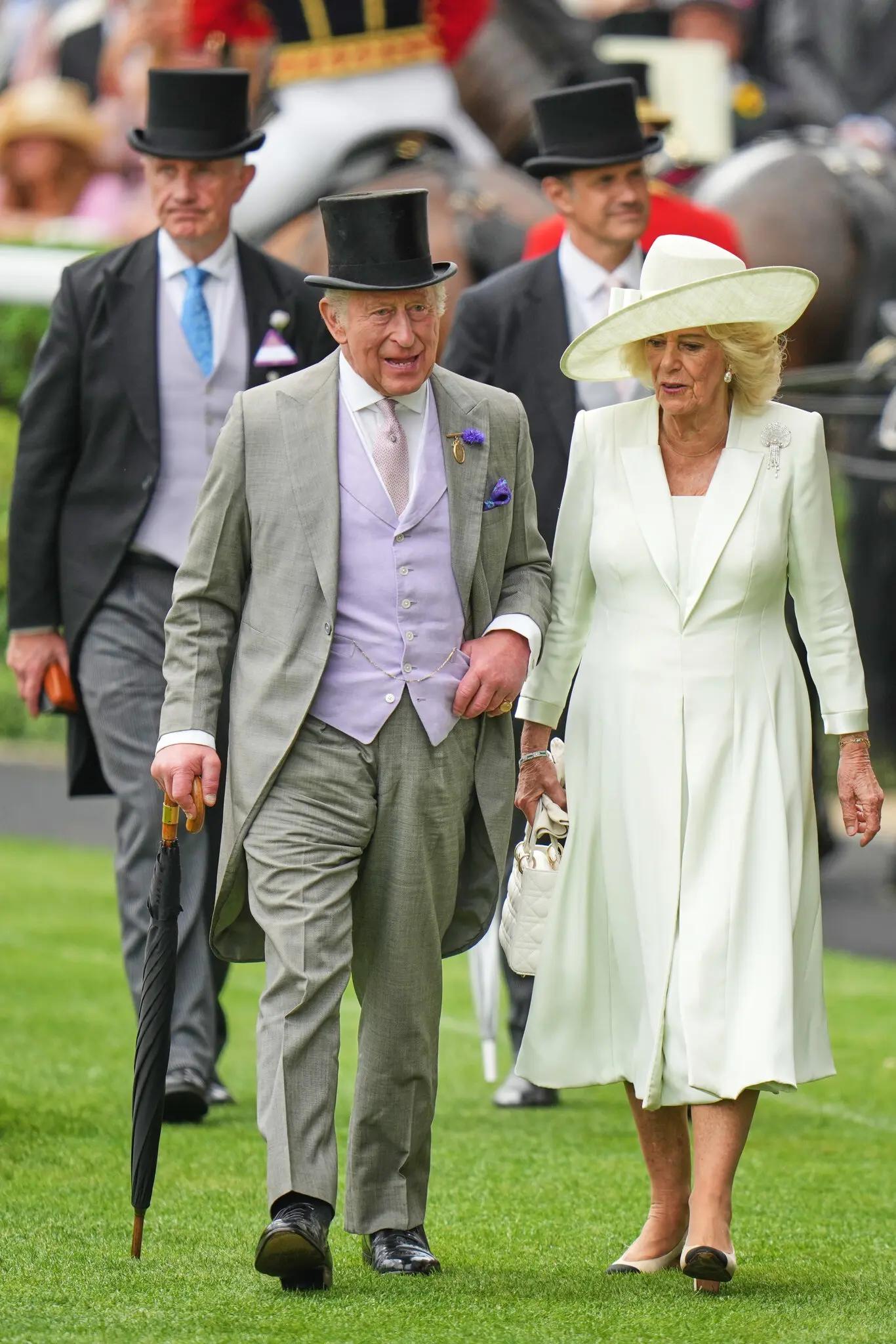





The British monarchy has made a gesture that until recently would have seemed almost unthinkable: a sitting king has publicly disclosed how much he has paid in personal taxes. Since ascending the throne in September 2022, King Charles III has paid more than £30 million, or about $39.6 million. For an institution long wrapped in financial tradition and ambiguity, this is not a minor accounting detail. It is a political signal.
Buckingham Palace has presented the figure as part of a broader commitment to transparency. Yet the disclosure does not resolve the central question. The public now knows the scale of the king’s tax payments, but not the full picture of royal income, assets or the boundary between private wealth, dynastic property and public money.
The announcement comes at a particularly sensitive moment for the royal family. The scandal surrounding Andrew Mountbatten-Windsor, the king’s younger brother, has intensified demands for public accountability. In a society where support for the monarchy is no longer automatic, financial opacity has become a political risk.
According to Daycom’s earlier analysis, Charles’s disclosure should be read as more than an act of personal openness. It is an attempt to modernize the symbolic contract between the monarchy and taxpayers: the Crown preserves tradition, but must increasingly justify it in the modern language of transparency, efficiency and public value.
The king’s taxes remain voluntary in a legal sense. The sovereign is not subject to the ordinary tax regime, though British monarchs have voluntarily paid tax on private income since the early 1990s. That is why this disclosure matters. It does not merely confirm that tax was paid; it shows, for the first time, the scale of those payments by a reigning monarch.
In the two full tax years after his accession, Charles paid £11.7 million for 2023–24 and £12.9 million for 2024–25. The payments relate to private income, including funds from the Privy Purse, investment income and private assets.
The principal source of the Privy Purse is the Duchy of Lancaster, a vast portfolio of land, property and assets that provides private income to the reigning monarch. This is where the complexity of royal finances begins. Formally, it is not direct state funding. Yet it is not ordinary private property in the modern sense either.
Alongside this sits the sovereign grant, the public funding that supports the monarch’s official duties and the maintenance of occupied royal palaces. For the 2025–26 financial year, the grant rose to £132.1 million. More than half of that amount, £67.5 million, was allocated to preserving and protecting royal palaces.
That explains why tax transparency does not close the debate, but opens its next stage. The king can show a tax bill, while the public simultaneously sees an increase in state funding for the monarchy. In a country where many households have spent years under pressure from rising prices, such arithmetic inevitably becomes political.
Another symbolic shift concerns Buckingham Palace. Charles and Queen Camilla do not plan to make it their personal home after its large-scale refurbishment is completed. They will remain at Clarence House, while the palace will continue as a ceremonial center, a working space for the monarchy and a national historic site with wider public access.
The decision appears practical, but its political meaning runs deeper. Buckingham Palace has long been more than an official residence. It is the architectural image of the monarchy: the balcony, the processions, crisis addresses and the theater of state. Choosing not to live there day to day turns the palace from the sovereign’s home into the Crown’s public stage.
For Charles, this is also a way to separate personal life from institution. His monarchy is less domestic and palace-bound, more administrative. It seeks to appear not as a closed court, but as a working mechanism of state symbolism, diplomacy, charity and historical inheritance.
Yet this is where the most delicate tension arises. If Buckingham Palace is refurbished with substantial public money, and the monarch does not use it as his primary home, the public will inevitably ask who benefits from that investment. The palace’s answer is clear: the nation, tourists, state protocol and future generations. Critics will still demand broader access and tighter oversight.
The publication of Prince William’s tax details adds a dynastic dimension. Since becoming Prince of Wales in September 2022, the heir to the throne has also disclosed tax payments of more than £20 million. That suggests the new financial visibility is not limited to the sitting king, but is gradually becoming an expected norm for the next generation.
Still, disclosing totals is not the same as full transparency. Anti-monarchy groups and financial critics argue that without a detailed breakdown of income, expenses, tax base and asset structure, the public sees only the top line. That line is important, but it does not allow the system as a whole to be independently tested.
This is the paradox of the present moment. The more the palace reveals, the more clearly one can see how much remains offstage. Royal finances are not simply private wealth, nor are they an ordinary public institution. They exist in an intermediate zone where history, law, ceremony, inheritance and public money are so tightly interwoven that every step toward clarity generates new questions.
For Charles III, this is a particularly difficult inheritance. He became king after the exceptionally long reign of Elizabeth II, whose personal discipline often softened questions about the institution’s finances. He must reign in a different society: more skeptical, less hierarchical, more attentive to inequality and less willing to accept old privileges without explanation.
The king’s tax disclosure is therefore not the end of the debate, but its new beginning. It shows that the monarchy feels the pressure of the times and is trying to adapt. It also reveals the limit of that adaptation: the Crown is willing to share figures when they may strengthen trust, but it is not prepared to become a fully open financial corporation.
The question facing the British monarchy now is different from the one it faced in the last century. It is no longer only whether Britons like the king. It is whether they consider the institution useful, transparent and restrained enough to support it in an age of economic anxiety.
Charles III has taken a step no sitting British monarch before him had taken. The strength of that step will depend on whether it becomes the start of a new practice, not a one-time response to a crisis of trust. In modern Britain, even the Crown must prove not only its historical grandeur, but its financial logic.