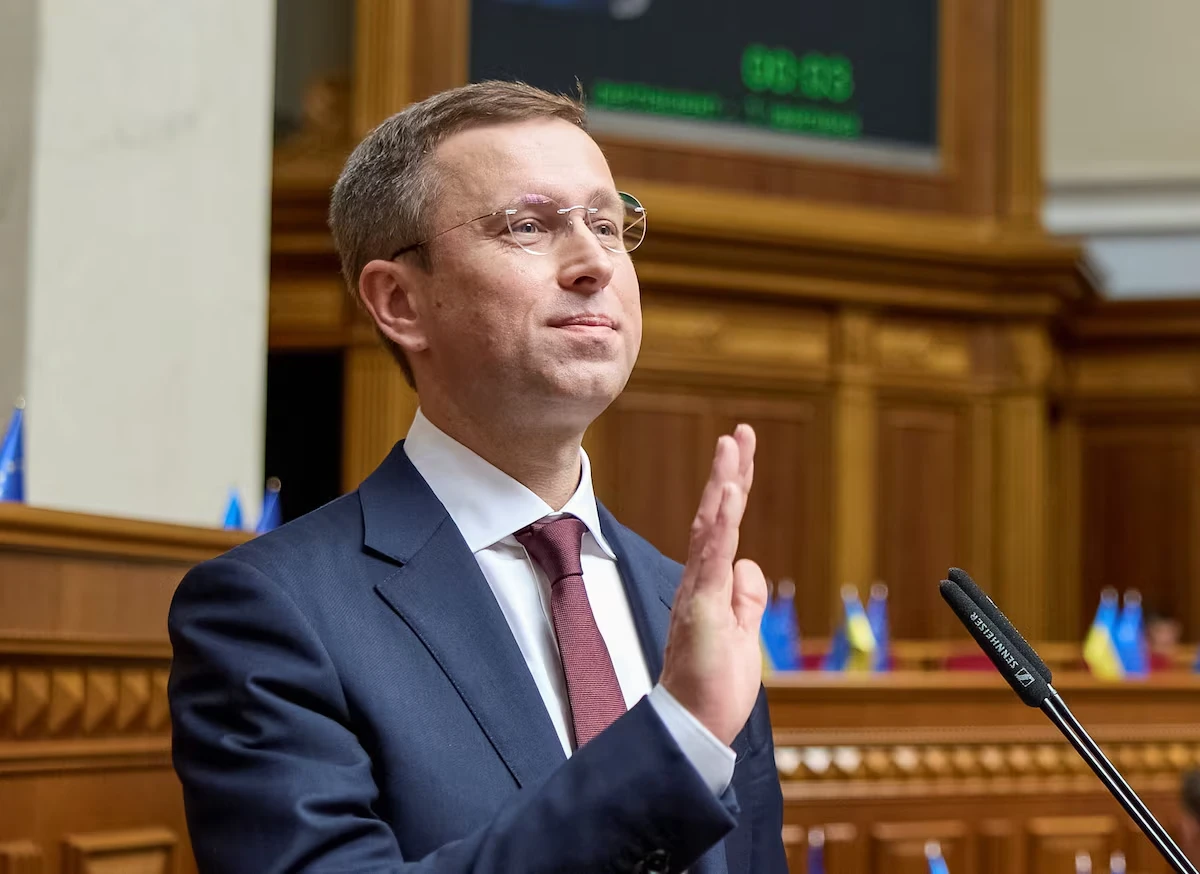



















Sergii Koretskyi has become prime minister not as a politician of the grand stage, but as a manager of crisis infrastructure. Parliament’s decision to support him with 289 votes formally completed a government reset, but in reality it opened a far more difficult stage for Ukraine’s executive power.
Ukraine now has its third prime minister since the start of the full-scale invasion. That fact alone shows how war has turned government into a system of constant adaptation. A cabinet can no longer be merely a political balance. It must function as a headquarters for the survival of the state, the economy, the front and the rear.
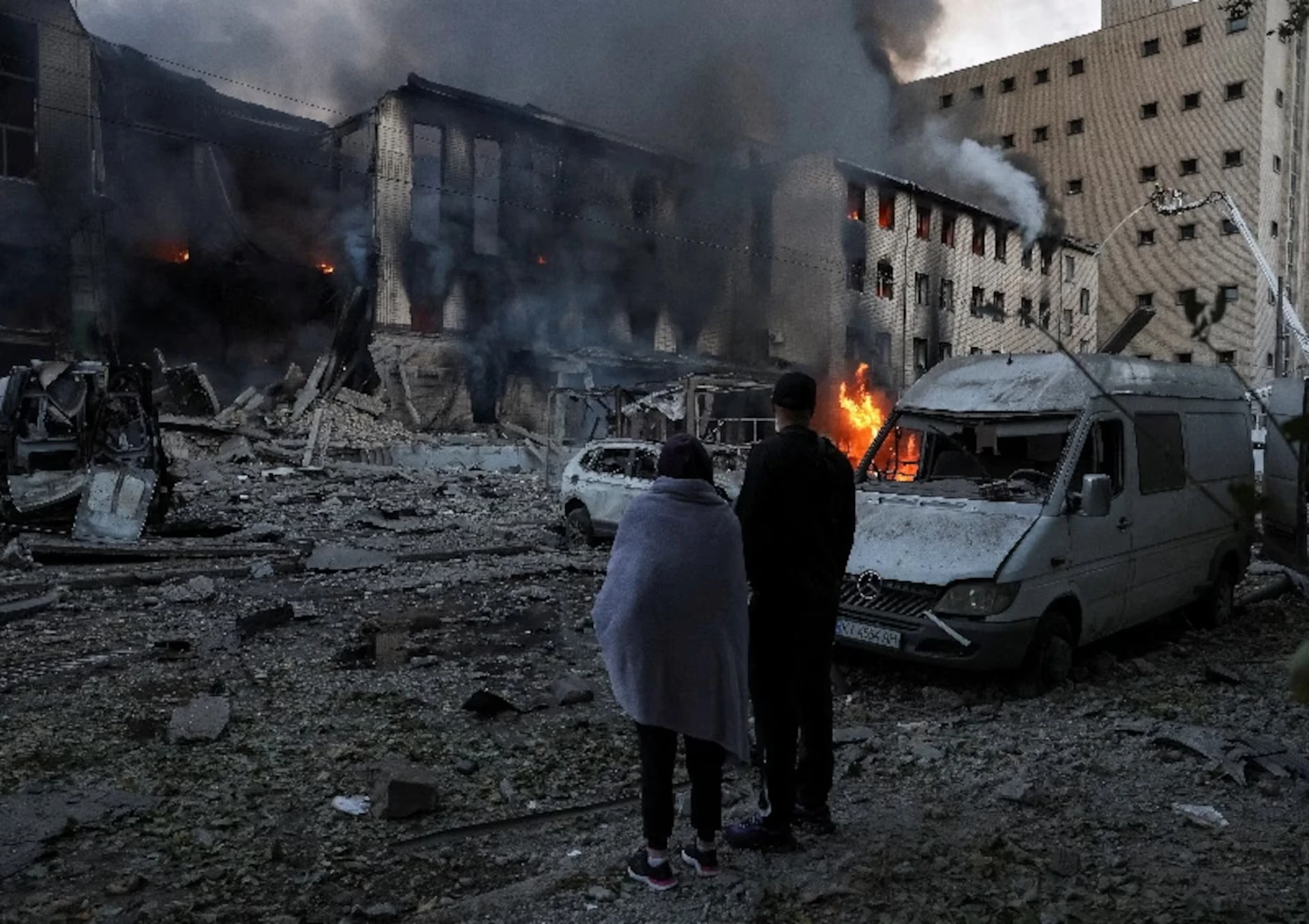
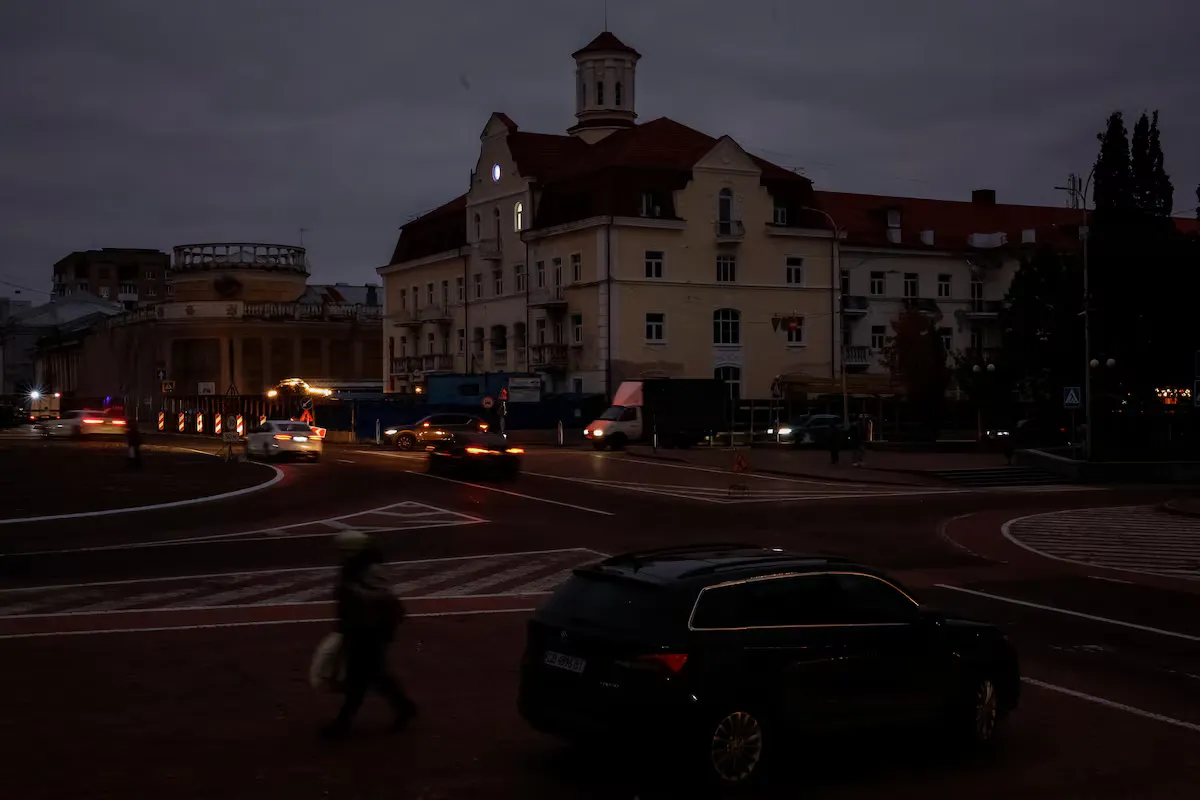
Koretskyi comes from the energy sector — an industry that, in Ukrainian conditions, has long ceased to be only about economics. After Russian strikes on power plants, substations, gas infrastructure and grids, energy has become one of the main lines of defense. It determines not only whether apartments are warm, but whether the state remains resilient.
According to Daycom’s assessment, Koretskyi’s appointment is an attempt by Zelenskyy to move the government from political turbulence into operational management. The new prime minister does not need to prove party loyalty. He needs to prove that he can deliver results where failure is immediately visible — in electricity, heat, fuel, the budget and military supply.
Before the vote, Koretskyi named three priorities: defense, economic stability and Ukraine’s integration into the European Union. This was not a random list. In this war, those goals are more tightly connected than they would be in peacetime. Defense needs the economy. The economy needs energy. European integration needs institutional discipline.
The first priority — defense — will be the main test for the government, even if Koretskyi himself is not a military politician. Ukraine needs drones, ammunition, equipment repairs, stable procurement, transparent contracts and industrial scaling. A prime minister does not command brigades, but the government creates the material conditions without which the front loses tempo.
This is especially important after the painful dismissal of Mykhailo Fedorov from the Defense Ministry. Ukrainian society has already shown that it sees any hint of retreat from the drone revolution as a strategic threat. Koretskyi will have to convince the country that the government reset does not mean a return to slow defense bureaucracy.
The second priority — economic stability — sounds dry, but in Ukrainian conditions it means the state’s ability not to crack under the simultaneous pressure of war, shortages, social exhaustion and destroyed infrastructure. Stability is not only the exchange rate or the budget balance. It is military salaries, pensions, equipment imports, taxes, credit programs and business activity under air-raid sirens.
Koretskyi has an advantage here. His biography is tied to major energy companies, operational processes, the fuel market and financial management. He knows how systems work when a mistake in logistics quickly becomes a shortage. In war, that experience may be more valuable than political rhetoric.
But state governance is not corporate management. A company can be reorganized through a chain of command and performance indicators. A country at war must be led through parliament, local communities, international partners, the military, public trust and constant information pressure. Koretskyi will have to learn politics as quickly as he once learned the energy market.
The third priority — integration into the E.U. — may seem less urgent against the background of the front and the approaching winter. In fact, it is no less practical. Ukraine’s European path today is not only a diplomatic goal. It means procurement rules, the courts, anti-corruption infrastructure, the energy market, governance standards and predictability for allies.
This is where the new prime minister faces a difficult task: he must not allow European integration to become a decorative section of the government program. If Ukraine wants to preserve partner support, it must show not only heroism at the front, but the ability to build a state that follows European rules even during war.
Koretskyi enters office after an acute political week. The government reset came with protests over personnel decisions in defense and anxiety about the future of reforms. That means the new prime minister is not receiving a blank page, but a field already marked by open lines of tension. His first decisions will be read as signals about the direction of power.
If the government quickly shows that defense procurement is not being rolled back, drone production is scaling, winter preparations are systematic and economic decisions are explained honestly to society, Koretskyi can turn his technocratic image into political capital. If not, his lack of party affiliation will quickly become not an advantage, but a sign of weak support.
The 289 votes in parliament give him a starting mandate, but they do not guarantee success. Wartime Ukrainian politics has become less patient with managerial error. Society is prepared to support difficult decisions when it sees purpose and honesty. It reacts far more sharply to opacity, personnel games and the feeling that effective people are being removed for the convenience of the system.
Koretskyi’s main advantage is the concreteness of his profile. He is not promising abstract renewal. His appointment is directly connected to the most tangible risks: an energy winter, the endurance of the rear, defense financing, industrial production, gas and fuel. That is why his success or failure will be easy to measure.
For Zelenskyy, this choice is also a way to change the tone after a conflict-heavy personnel cycle. The president needs a government that not only publicly supports his political line, but continuously keeps the system functioning. Against the background of war, the prime minister must become not the president’s rival, but the chief manager of national endurance.
Yet this is also where the risk of excessive dependence lies. If Koretskyi is perceived only as an executor of presidential will, his room for action will narrow. If he can show managerial weight of his own without creating a political conflict with Bankova, the government will have a chance to work with greater strength and autonomy.
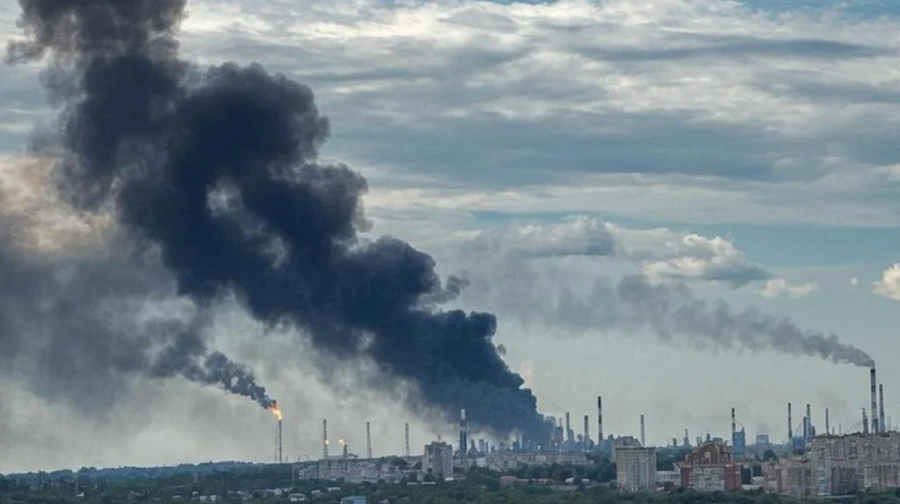
Ukraine is entering a period in which the front, energy and diplomacy can no longer be separated. Strikes on Russian refineries affect the economics of the war. Russian attacks on Ukrainian power plants affect public morale. European decisions affect budget financing. A prime minister must see that system whole.
Koretskyi has no right to be only a “winter prime minister.” But if he fails the winter, all his other priorities will lose weight. This is the paradox of his mandate: he must think strategically, but he will be judged by very physical things — heat, electricity, gas, repairs, reserves, supplies and recovery time after strikes.
His government must also work with a new public demand for the quality of the state. Ukrainians do not merely want the authorities to endure. They want them not to degrade under the pressure of war. They do not accept the argument that combat automatically justifies secrecy, inefficiency or the return of old practices.
Koretskyi’s premiership will therefore become a test of Ukrainian technocracy’s maturity. Can a manager from big business and state energy run a country where every administrative failure carries moral and military consequences? Can a man without a party base become the center of government responsibility? Can energy experience be transformed into state resilience?
The new prime minister’s success will not depend on how confidently he sounds in parliament. It will depend on whether the army has enough drones, whether cities survive the winter, whether the budget holds, whether Ukraine remains on its European track and whether allies feel they are dealing with a governable state.
Koretskyi has taken office at one of the most difficult moments of the war, when optimism from Ukrainian strikes inside Russia coexists with frontline fatigue, manpower shortages, a deficit of air defense and fear of another winter. His mandate is not about the comfort of power. It is about whether the state can fight, repair, pay, reform and move toward Europe at the same time.
If he can assemble that system, his appointment will become one of Zelenskyy’s most important management decisions of the past year. If not, it will remain only a personnel attempt to buy time before winter. In war, time is also a resource. But it runs out quickly when it is not turned into preparation.