



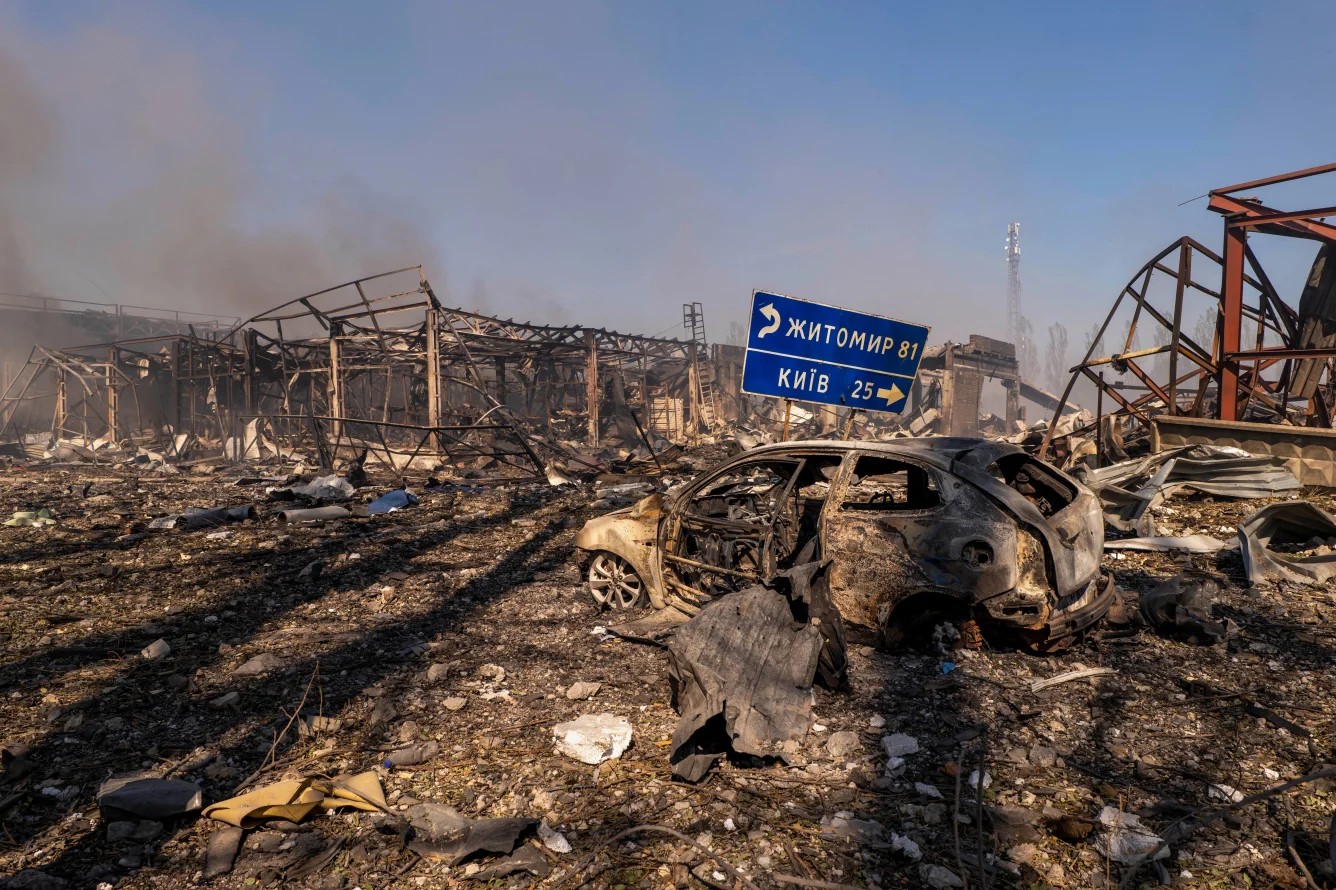


















Russia’s August 28 attack on Kyiv no longer resembled a single large overnight raid with a clear beginning and end. Drones returned in small groups throughout the day, air-raid alerts followed one another, and Ukrainian air-defence crews were repeatedly forced back into combat mode.
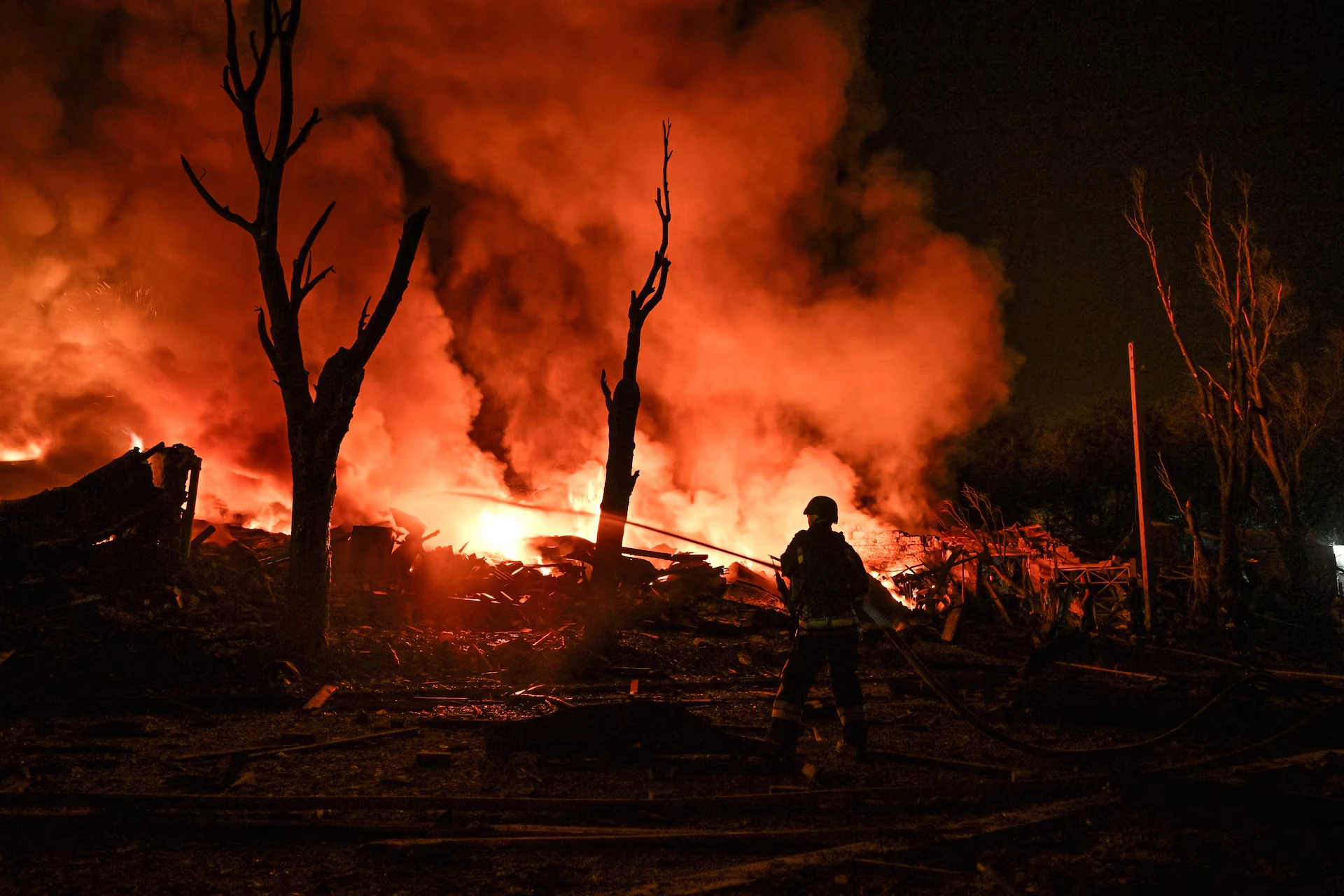
It was the second consecutive day of sustained pressure after the major assault of August 27. Ukrainian authorities said homes, warehouses, retail facilities and businesses were again struck. One person was killed in the Kyiv region and another was wounded.
During the night, Russia launched 164 drones of the Shahed, Gerbera and Parodiya families, including jet-powered variants. Ukraine’s Air Force said 137 targets were destroyed or suppressed. Impacts were recorded at 16 locations, with falling debris reported at four more.
But the raid did not end with the morning assessment. Between 6:30 a.m. and 7 p.m., Russia launched another seven S8000 Banderol weapons and 96 attack drones, more than 70 of them jet-powered. Most of the unmanned aircraft were directed toward the capital.
Daycom’s analysis indicates that the Kyiv attack on August 28 reflects a shift in emphasis: Russia is trying to exhaust defences not only through the size of a single salvo, but through the duration of the threat. Small waves of fast drones can keep air defence, transport, businesses and millions of people operating under wartime disruption for hours.
During the daytime phase, Ukrainian forces said they destroyed or suppressed six of the seven Banderols and 73 of the 96 attack drones. Even at around 7 p.m., the Air Force reported that roughly ten jet-powered drones were still in the air.
Andriy Kovalenko, head of Ukraine’s Centre for Countering Disinformation, described the tactic as repeated launches of small numbers of jet-powered UAVs. In his assessment, Russia’s objective was to “paralyse Kyiv” while wearing down both air defences and the population.
The jet-powered component changes the burden on defenders. Faster drones reduce the interval between detection and the need to respond, while repeated approaches force interceptors, radars and mobile teams to remain ready for much longer than during a single concentrated raid.
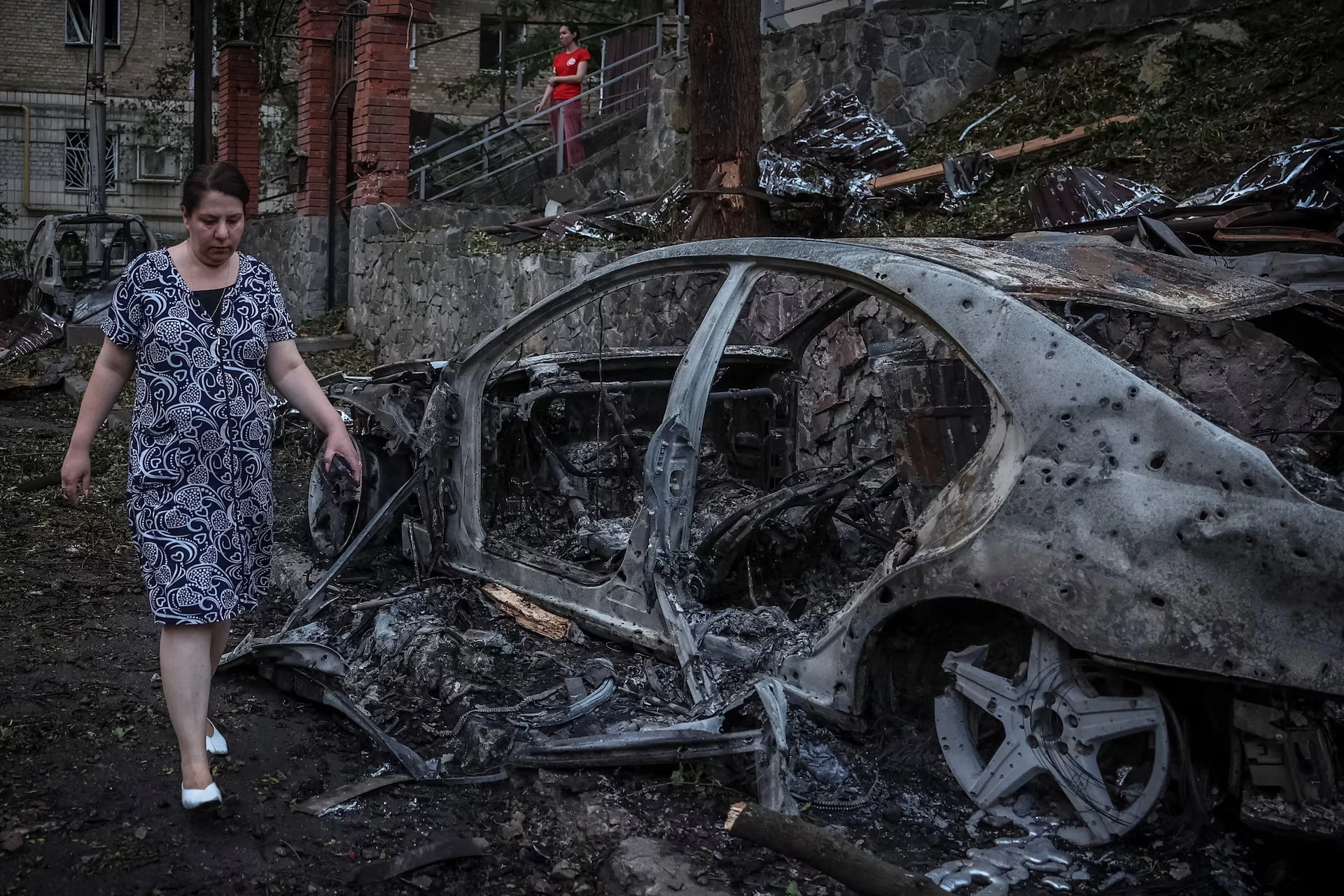
The scale was particularly visible across the Kyiv region. Ukraine’s emergency service said 38 Russian attacks had been recorded since the first impacts of the previous day. In five districts, 14 warehouse buildings, 16 private homes, three apartment blocks and 16 vehicles were damaged.
One person was killed in the Bucha district. In the Boryspil district, a man was hospitalised with shrapnel wounds. Damage was also reported in the Fastiv, Vyshhorod and Brovary districts.
Yet the types of facilities hit made the attack broader than another series of strikes on the capital’s outskirts. Sorting hubs, warehouses belonging to retail companies and businesses central to the daily movement of goods inside Ukraine were among the most visible targets.
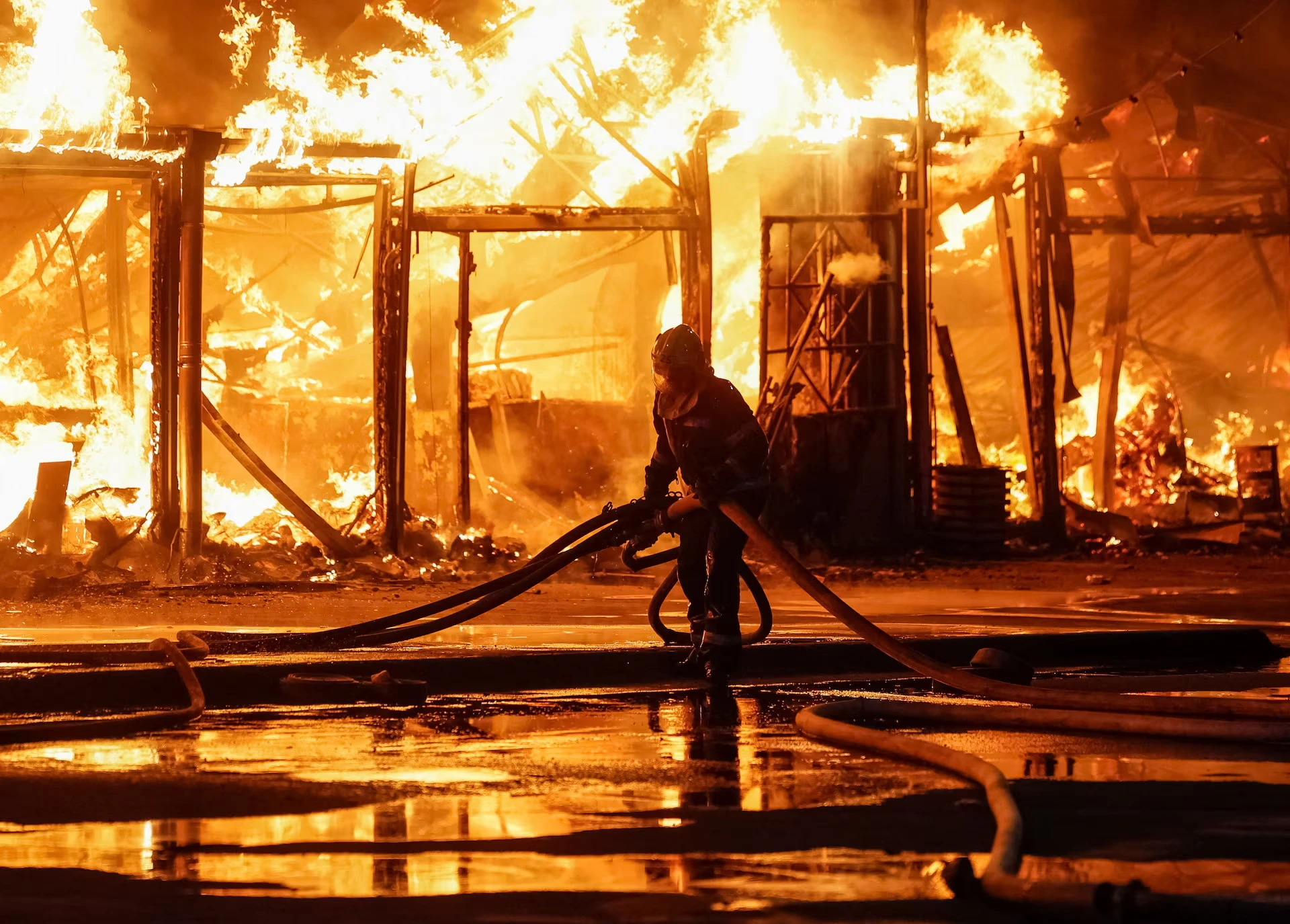
In Sviatopetrivske in the Kyiv region, a Russian drone destroyed a Nova Poshta sorting depot. Further attacks were reported while firefighters were working at the site, and local officials warned residents to stay away from the affected area. No company employees were killed.
That same night, a Nova Poshta sorting centre in Sumy was destroyed. The company said four guided aerial bombs struck the terminal and three trucks were also damaged. All employees survived.
Nova Poshta did not suspend its network. It said customers would receive the full declared value of destroyed shipments and that logistics flows would be redirected through other facilities. The ability to reroute traffic quickly is increasingly becoming part of Ukraine’s economic resilience.
A modern sorting centre is more than a warehouse. It concentrates thousands of flows between manufacturers, shops, small businesses and consumers. Destroying one facility may not stop the entire network, but it causes delays, raises costs and shifts pressure onto neighbouring hubs.
The same logic can be seen in attacks on retail. In Zaporizhzhia, a Russian drone struck an Epicenter home-improvement store on August 28. A fire spread across roughly 2,000 square metres and at least four people were wounded.
It was not the first strike on the chain. Large retail stores combine commercial space with significant inventories, meaning the loss of one site can create local shortages, supplier losses and additional pressure on distribution networks even when the wider company continues operating.
The book trade was also hit. A drone destroyed a warehouse in the Kyiv region holding stock from Readeat, Book.ua, Vivat, Osnovy, Laboratoria and other Ukrainian publishers. Preliminary estimates put the loss at more than 60,000 books.
Such attacks have a cumulative effect. A single store, postal depot or book warehouse does not determine the health of the entire economy, but damage to several nodes at once forces companies to build longer routes, maintain spare capacity and spend more on security and risk management.
The strain is already visible in food retail. Agriculture Minister Taras Vysotskyi said on August 28 that Russian strikes had destroyed around 90% of the logistics capacity used by retail chains, forcing companies to redesign supply systems.
That figure should not be read as meaning that 90% of Ukrainian retail or food stocks have been destroyed. It refers to logistics infrastructure used by retail networks, according to the minister. Vysotskyi said no overall food shortage was expected, although some shops could temporarily offer a reduced range of goods.
Companies are increasingly relying on direct deliveries from producers to stores and rerouting supplies through other regions. Such measures can prevent a complete breakdown in distribution, but they make the system more expensive and less efficient — precisely the kind of economic cost a campaign against logistics can produce.
The August 27–28 strikes also disrupted rail transport. After the previous day’s attacks, some trains were delayed by more than 14 or 15 hours on certain routes. Ukrzaliznytsia cited the effects of hostilities among the causes.
On August 28, the railway said delays were gradually declining but warned that the consequences of repeated attacks and air alerts would continue to be felt. It is another feature of attrition tactics: disruption can keep spreading through a network long after the strike itself is over.
If a sorting centre stops for several hours, the delay carries over to trucks and local branches. If a train is held because of an air alert, the lost time affects later services and connections. In complex logistics systems, the consequences of one attack can last much longer than the raid.
Kyiv also faced the accumulated effect of repeated air alerts. Ukrainian officials estimated that from the morning of August 27 to the morning of August 28, the capital spent about 13 hours under air-raid warnings — more than half a day.
Under those conditions, an attack causes disruption even when a drone never reaches its target. Schools, businesses, government offices and transport systems repeatedly interrupt operations, while workers move to shelters and each new alert generates additional losses of time that do not appear in photographs of damaged buildings.
This helps explain the difference between a mass salvo and a wave campaign. One very large raid seeks to overwhelm air defence through sheer numbers. A succession of smaller attacks can pursue a different objective: maximising the period during which a city is forced to function in emergency mode.
Jet-powered drones strengthen that model. More than 70 of the 96 attack UAVs Russia used during the daytime phase on August 28 were identified by Ukraine as jet-powered. Most were directed toward Kyiv, shortening warning and interception cycles.
Those aircraft do not make cheaper Shaheds and decoy drones obsolete. Different target types can instead be combined: some overload defences with volume, others increase the need for rapid reaction, while decoys complicate decisions about which threats deserve scarce interceptors.
For Ukraine, that again raises the economics of air defence. The task is not simply to destroy most incoming drones, but to do so with a weapon whose cost is proportionate to the target. Using scarce high-end missiles against every UAV is unsustainable, particularly during raids lasting many hours.
Mobile fire groups, electronic warfare, interceptor drones, automated detection and cheaper short-range anti-aircraft systems are therefore becoming more important. Layered defence is needed not only to achieve a high interception rate, but to keep that rate financially and operationally sustainable.
The second element of the Russian strategy is target selection. Strikes on postal terminals, warehouses, stores and transport systems affect more than individual companies. They hit the infrastructure through which the civilian economy moves food, consumer goods, books, spare parts and small-business orders every day.
Russia regularly says that it attacks facilities linked to Ukrainian military needs. But for the commercial, residential and postal sites damaged on August 28, there is no independently established evidence that would justify treating each one automatically as a military target.
Ukraine, meanwhile, has also expanded long-range attacks on Russian economic infrastructure, especially refineries, ports and facilities Kyiv says support or finance the war. The economic rear is becoming broader on both sides.
The August 28 attacks nevertheless highlight the particular vulnerability of a large city. Creating a systemic effect does not always require destroying a power station or a major rail junction. Repeatedly disrupting several logistics links can be enough to force the entire network to keep reorganising itself.
For businesses, the answer is decentralisation: more small warehouses instead of one large hub, alternative routes, duplicated information systems and the ability to shift sorting operations quickly. But resilience costs money and reduces the efficiency that peacetime economies spend years building.
For the state, the problem is even harder. It must simultaneously protect energy facilities, defence plants, cities, railways, ports and logistics networks. Air defence cannot be equally dense over every warehouse, giving Russia opportunities to search for less protected nodes.
The Kyiv attack on August 28 therefore matters not only because of the number of drones or damaged buildings. It demonstrates a model in which time itself becomes a weapon: hours of alerts, repeated air-defence activations, halted sorting operations, delayed trains and constant rerouting of supplies.
Ukraine intercepted most of the drones used during both the night and the day, but the high interception rate did not eliminate the wider disruption. Russia is trying to ensure that even a small number of drones that get through, combined with hundreds that are destroyed, still cost Kyiv time, resources and normal daily functioning.
That may become one of the central tests of the next phase of the air war. Ukraine must not only destroy incoming weapons, but also reduce the ability of repeated waves to paralyse the economy. In a war of attrition, an air-defence victory will increasingly mean not just a drone shot down, but a city that keeps working after the sirens stop.