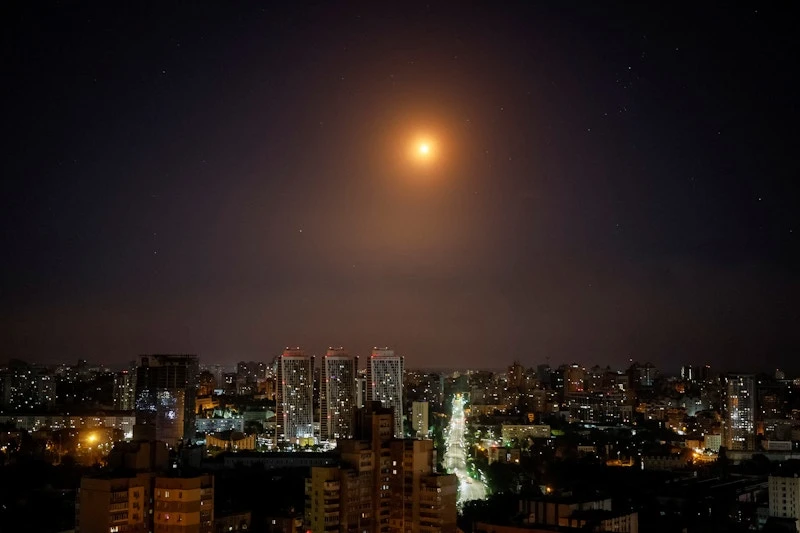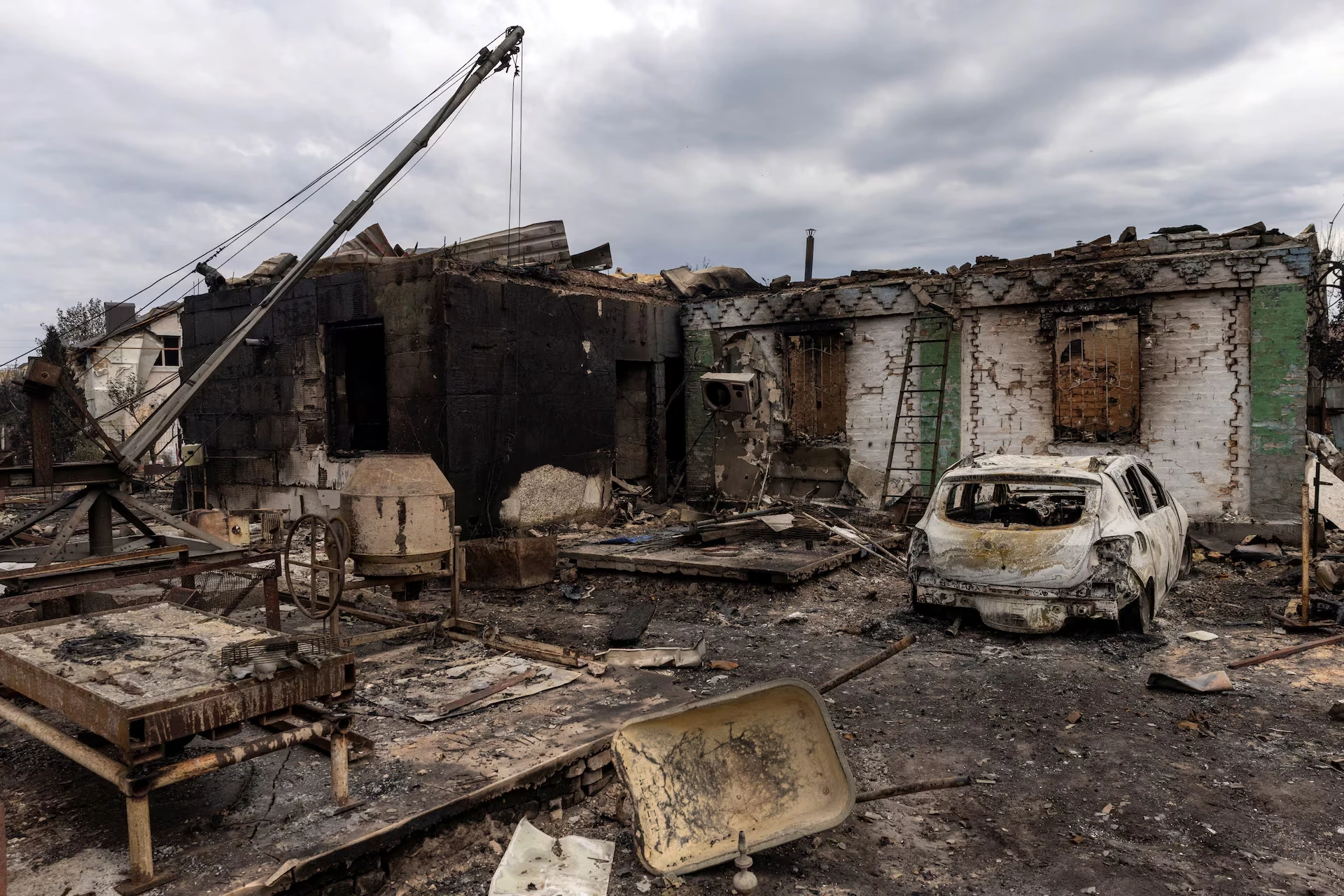





















Kyiv’s night began with drones, explosions and the work of air defenses, and ended with smoke hanging over residential neighborhoods. Russia launched one of the heaviest combined strikes on the capital in recent months, using waves of unmanned aircraft and ballistic missiles.
The air-raid alert lasted more than 11 hours. During that time, damage and destruction were recorded at more than 30 sites across every district of Kyiv. Several apartment blocks were hit directly, people remained trapped under rubble, and rescuers pulled bodies from the debris.
At least 13 people were killed and more than 30 were wounded. Fires broke out in different parts of the capital; apartments and cars burned, while a market, a hotel and an ambulance station were damaged. The city again became not a rear area, but a target of a major war.
According to Daycom’s earlier analysis, this attack was not merely another episode of Russian missile terror. It was a demonstration of the Kremlin’s logic: to answer Ukrainian strikes on Russia’s military infrastructure with attacks on the capital, civilian homes and the psychological endurance of society.
Attack drones appeared first in the night sky. Then came air-defense fire, large explosions, new impacts and fires. Closer to 2 a.m., ballistic missiles joined the assault, and powerful blasts shook the capital, setting off car alarms across neighborhoods.
The most frightening part was not only the force of the explosions, but their duration. Between the booms, birds could be heard singing before dawn. That almost unreal contrast — morning nature and nighttime destruction — captured life in wartime Kyiv, where ordinary time has long been broken.
Many residents of the capital spent the night in the metro. People went underground with sleeping bags, backpacks, children and pets, trying to survive hour after hour as more drones and missiles flew over the city. For Kyiv, this is no longer an exceptional scene, but a painful routine of survival.
City authorities urged people to remain in shelters once it became clear the attack would not end with the first wave. The layered nature of the strike was the main danger: drones exhausted air defenses and nerves, missiles struck later, and after them came the renewed threat of more unmanned aircraft.
Kyiv had been expecting a major attack. About two weeks had passed since the previous mass strike — enough time for Russia to accumulate a new batch of weapons. Volodymyr Zelensky had warned in advance that Moscow was preparing another large-scale assault and urged people to be especially careful.
That predictability did not lessen the tragedy. On the contrary, it showed how the war has become a rhythm of accumulation and repetition. Russia gathers missiles and drones, Ukraine prepares air defenses, the city goes underground at night, and then again counts destroyed apartments, the wounded and the dead.
In recent weeks, Ukraine has intensified long-range strikes on Russian territory. Moscow, fuel infrastructure, logistics sites and Crimea, illegally annexed by Russia in 2014, have all come under attack. Kyiv is trying to move the war into Russia’s rear and raise the cost of continued aggression for the Kremlin.
That campaign is gradually undermining one of the main pillars of Putin’s system: the ability to keep Russian society at a distance from the real war. When drones reach facilities that feed the front with fuel, missiles and logistics, war stops being something seen only on a screen.
Russia described the strike on Kyiv as a response to Ukrainian attacks inside Russia. The formula serves the Kremlin by presenting the mass bombardment of the capital as retaliation, rather than as the continuation of a systematic campaign of terror against civilian infrastructure.
But there is no moral symmetry between these actions. Ukraine’s long-range strikes target elements of Russia’s war machine: fuel, depots, logistics and military facilities. In Kyiv, residential buildings, cars, urban sites and places where people are not fighting but simply trying to live were again burning.
For Putin, the attack has another function. The Russian army has not been able to achieve a rapid decisive result in the east, where the Kremlin is trying to seize the rest of Donetsk region. When the front moves slowly and expensively, missiles against the capital become a way to create an illusion of strength.
This is the classic logic of weak strategic initiative: when the defense cannot be broken on the ground, cities can be struck to demonstrate the ability to punish. Such tactics do not bring Russia closer to real victory, but they increase the cost of war for civilians.
Returning from a European event, Zelensky framed the central political reality of the moment: Putin wants to keep fighting and must therefore face conditions that make it impossible. A few hours after those words, the sirens began wailing in Kyiv.
The sequence was almost symbolic. Ukraine speaks of the need to force Russia to stop by raising the price of war. Russia answers with new strikes on the capital. The circle of violence does not break on its own, because the Kremlin is not looking for a way out; it is trying to impose exhaustion.
For Ukraine’s allies, the night again became an argument that is difficult to postpone. A capital under attack for more than 11 hours needs more than sympathy. It needs air-defense systems, interceptor missiles, long-range weapons and the political readiness to let Ukraine strike the sources of attacks.
Every destroyed apartment block in Kyiv is not only the result of a Russian decision. It is also a reminder of the time cost of slow assistance. When missiles fly faster than decisions are made, people end up under rubble, not abstract formulas of restraint.
The Russian strike did not break Kyiv. But it left the city with new graves, new scars and new exhaustion. The morning after such a night does not bring full relief; it merely reveals the scale of destruction that could be felt in the dark but not yet seen.
In this attack, Russia showed not confidence, but dependence on terror as an instrument of policy. When a state responds to military pressure by striking residential neighborhoods, it admits that it cannot isolate the war at the front and cannot accept its own vulnerability.
Kyiv survived a night in which explosions mixed with sirens, and people in the metro waited for dawn with children and animals beside them. But the main conclusion reaches far beyond the capital: this war is increasingly being decided by the ability of rear areas to withstand strikes and deprive the aggressor of the resources for the next one.