





















Lindsey Graham died at the moment when his political biography had again converged with war. Hours before his death, he returned to Washington from Ukraine, where he had spoken of a new formula for pressuring Russia. In a few months, he was due to seek re-election. For a senator who spent nearly a quarter-century as one of the most visible figures in Republican foreign policy, the end came abruptly and almost symbolically.
The preliminary cause of death was an aortic dissection, a tear in the main artery carrying blood from the heart. Such a diagnosis leaves little room for political speculation: it belongs to those bodily catastrophes that can unfold quickly and without public warning. Graham was 71. He died two days after his birthday.
The final hours of his life have already become part of American political chronology. Emergency workers were called to his Capitol Hill home after reports of chest pain. Medics performed resuscitation efforts before the senator was taken to a hospital, where he was pronounced dead. Behind those dry details lies the sudden end of a career spent in near-constant political mobilization.
According to Daycom’s assessment, Graham’s death matters not only as a personal tragedy or a Senate event. It breaks a knot where three lines of American politics met: Trumpism, hard-edged foreign-policy interventionism and support for Ukraine. Graham was one of the few Republicans who tried to combine loyalty to Donald Trump with sustained pressure on Russia.
That combination was always contradictory. Graham became one of Trump’s closest allies in the Senate, often defending him even when other Republicans preferred silence or distance. At the same time, on Ukraine, Russia, Israel and the use of military power, he remained an old-school hawk — a politician for whom American leadership meant not only statements, but sanctions, weapons and the willingness to punish adversaries.
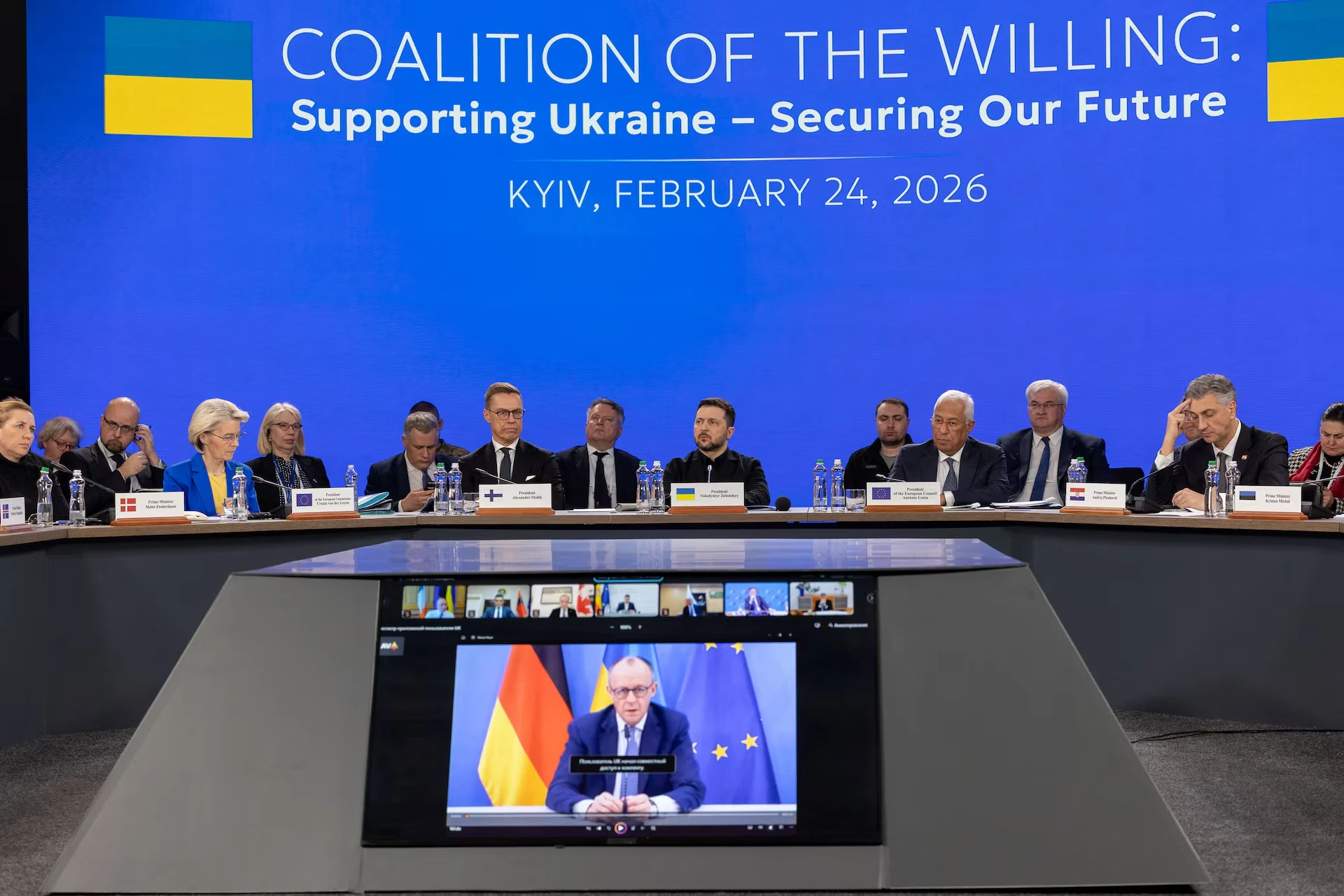
His final trip to Kyiv fit precisely into that logic. Graham spoke of an agreement among senators from both parties and the White House on sanctions against those who buy Russian oil. This was not a secondary issue. Oil remains one of the main sources of financing Russia’s war, and buyers of Russian energy effectively help Moscow withstand sanctions pressure.
Graham had long promoted the idea of secondary sanctions — punishment not only of Russia, but of the states and companies sustaining its revenues. Politically, it was an attempt to move beyond the familiar sanctions architecture. Washington could not merely restrict Russian banks, technologies or individual officials, but strike at the economic network that allows the Kremlin to sell oil and finance the war.
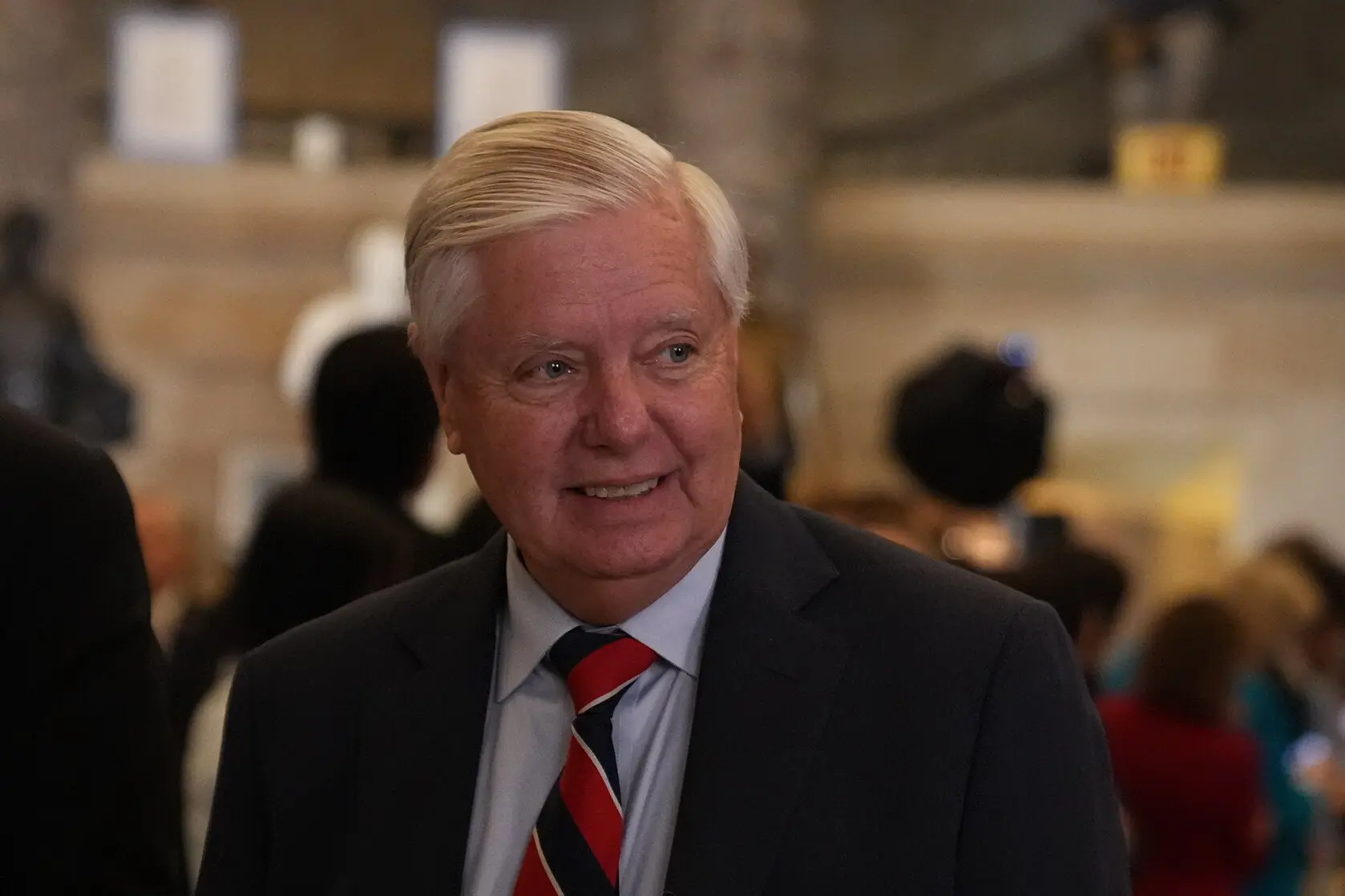
In Kyiv, Graham formulated what became his last public political argument almost like a testament: help Ukraine become more lethal, make those supporting Russia understand there will be a price to pay, and at the same time seek an off-ramp without humiliating Vladimir Putin. In that sentence lay his late foreign-policy position: force as a tool for compelling an end to the war, not as an end in itself.
For Ukraine, Graham was valuable not only as a voice of support. He was a bridge to the part of the Republican Party increasingly torn between isolationism, Trumpist skepticism toward alliances and traditional toughness toward America’s authoritarian adversaries. His presence in Kyiv sent a signal that support for Ukraine could still retain a bipartisan backbone.
That is why his death creates a political emptiness larger than a single Senate vacancy. In the American system, personal ties, authority and the ability to move difficult legislation can matter as much as formal office. Graham knew how to speak with Trump, Republican hawks, some Democrats and the Ukrainian leadership. There are not many figures like that in Washington today.
His biography was built around several durable roles. He was a former military lawyer, an Air Force Reserve officer, a senator from South Carolina, chairman of the Budget Committee, a former leader of the Senate Judiciary Committee, an ally of presidents and a critic of America’s adversaries. He knew how to be a technical legislator, a television politician and a party fighter at the same time.
Graham entered the Senate in 2003 and quickly became one of those figures who could not be ignored. His political style combined sharpness, personal sociability and a taste for large foreign-policy stakes. He was not a politician who built a career on quiet. His strength was constant presence — in hearings, negotiations, television appearances, foreign trips and intraparty fights.
His relationship with Trump will remain one of the central paradoxes of his career. Graham was once a fierce critic of Trump, but later became one of his closest Senate allies. Some saw that turn as political adaptation; others saw it as surrender to the new reality of the Republican Party. Yet that adaptation gave him access to the center of power, without which his Ukraine sanctions line might have been less effective.
On Ukraine, he tried to do something that was becoming increasingly difficult inside today’s Republican Party: sell support for Kyiv not as humanitarian charity, but as a hard instrument of American interest. In his logic, Ukraine was not merely defending itself. It was exhausting a strategic adversary of the United States, degrading the Russian military and demonstrating that aggression carries a price.
That argument mattered particularly for a Republican audience. When part of the party spoke of fatigue with a foreign war, Graham answered in the language of strength, advantage and punishment of an enemy. He did not ask sympathy for Ukraine to serve as the main motive. He insisted that Russia’s defeat served American security. That frame helped preserve support for Kyiv where moral rhetoric no longer worked.
At the same time, Graham was not a simple or unconditional ally for Ukraine. His political loyalty to Trump meant that the Ukraine question often depended on broader fluctuations inside the White House and the Republican Party. He could pressure, persuade and seek compromise, but he did not exist outside the Trumpist architecture of power. That was both his strength and his limit.
His final sanctions initiative therefore carried particular weight. If it had indeed been agreed with the White House and a bipartisan group of senators, it meant Graham had found a formula capable of moving through internal resistance. Not a direct widening of the war, but economic coercion. Not endless aid packages as the only instrument, but pressure on the countries that give Russia money for oil.
Now that initiative may become part of his political legacy. The Senate may try to give it memorial meaning: to finish what he advanced in his final days. But the death of the author of a legislative idea always changes its trajectory. The person disappears who knew the details of negotiations, held personal understandings, could persuade skeptics and take on political risk.
For Kyiv, this means quickly seeking new points of support in Washington. Ukrainian diplomacy has long worked not only with the administration, but with Congress, governors, defense companies, think tanks and party leaders. Losing Graham does not destroy support for Ukraine, but it weakens one of the channels of influence into the Republican environment.
For Trump, Graham’s death also carries political weight. He has lost an ally who could be both personally loyal and deeply experienced in Senate affairs. Graham could explain complex foreign-policy decisions in language acceptable to Republicans while still not looking alien to the old Washington establishment. That combination was useful to the president.
Domestically, the senator’s death opens a fast and hard replacement process. South Carolina must appoint a temporary senator to serve out the term, while the party must choose a new candidate for the election. Graham had already won the Republican primary and was favored to win another term. His death months before the vote turns a safe campaign into an urgent test of party discipline.
Republican South Carolina is unlikely to become easy ground for Democrats, but Graham’s personal advantage no longer applies. His name, network, donors, years of recognition and place in the state’s political culture cannot be transferred automatically to a successor. Even in a strong Republican state, the death of such a senator creates a brief window of uncertainty.
At the same time, the reaction to his death already shows the toxicity of America’s political atmosphere. The sudden death of a senior politician after an international trip inevitably produces rumors. But the preliminary medical finding points to a cardiovascular catastrophe, not a conspiracy. In a country where political distrust has become almost reflexive, even death quickly turns into a field of information warfare.
That is especially ironic for Graham, who spent decades in a world of uncompromising political conflict. His style provoked strong feelings: supporters saw him as a patriot and fighter, opponents as an opportunist, a hawk and one of Trump’s chief defenders. He left few people indifferent because he never built his politics on neutrality.
His death also reminds us how personalized American foreign policy has become. Formally, institutions make decisions. In practice, individual senators can spend years pushing sanctions, blocking appointments, supporting allies, building coalitions and changing the tone of debate. Graham was precisely that kind of politician: not always decisive, but almost always present in the room where questions of power were discussed.
For Ukraine, his final day in Kyiv will carry symbolic weight. It was not merely a support visit, but the appearance of a politician who saw the end of the war through forcing Russia to make a choice. His formula — more Ukrainian lethality, a higher price for Moscow’s enablers, an exit from the war without a theater of humiliation — reflected a pragmatic, hard and politically cautious approach.
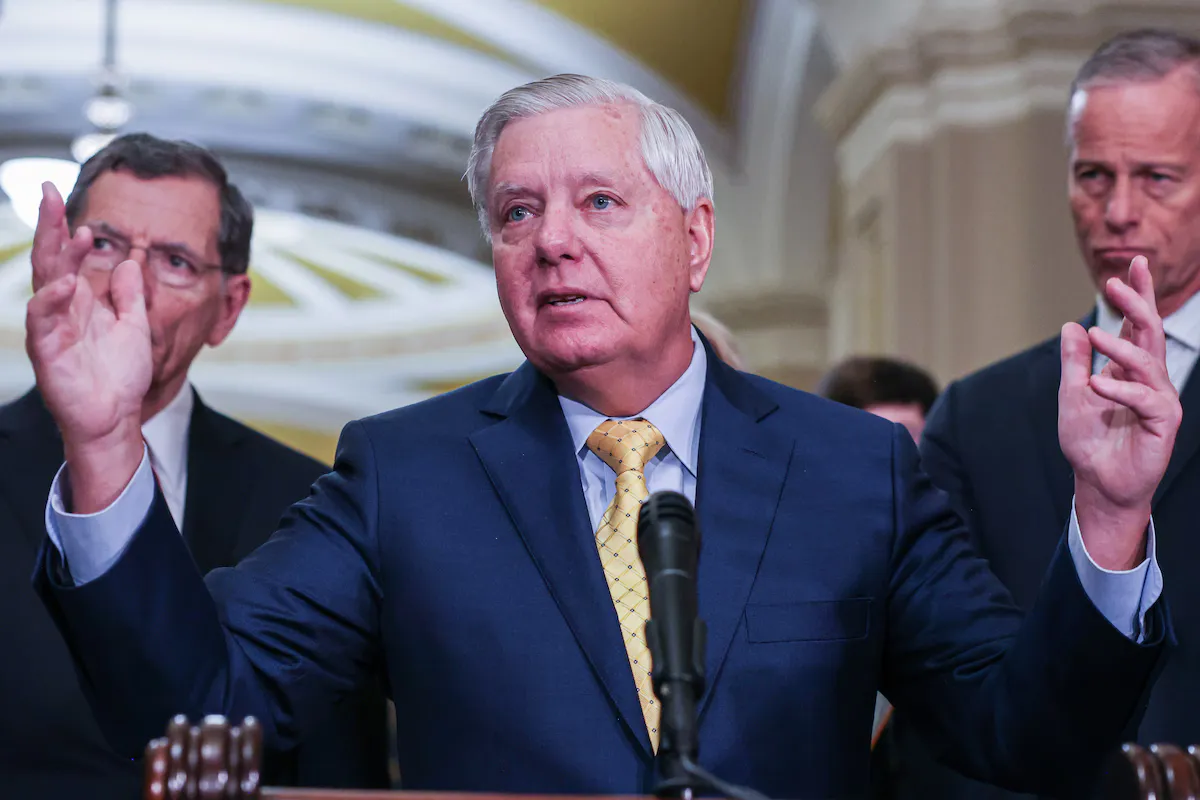
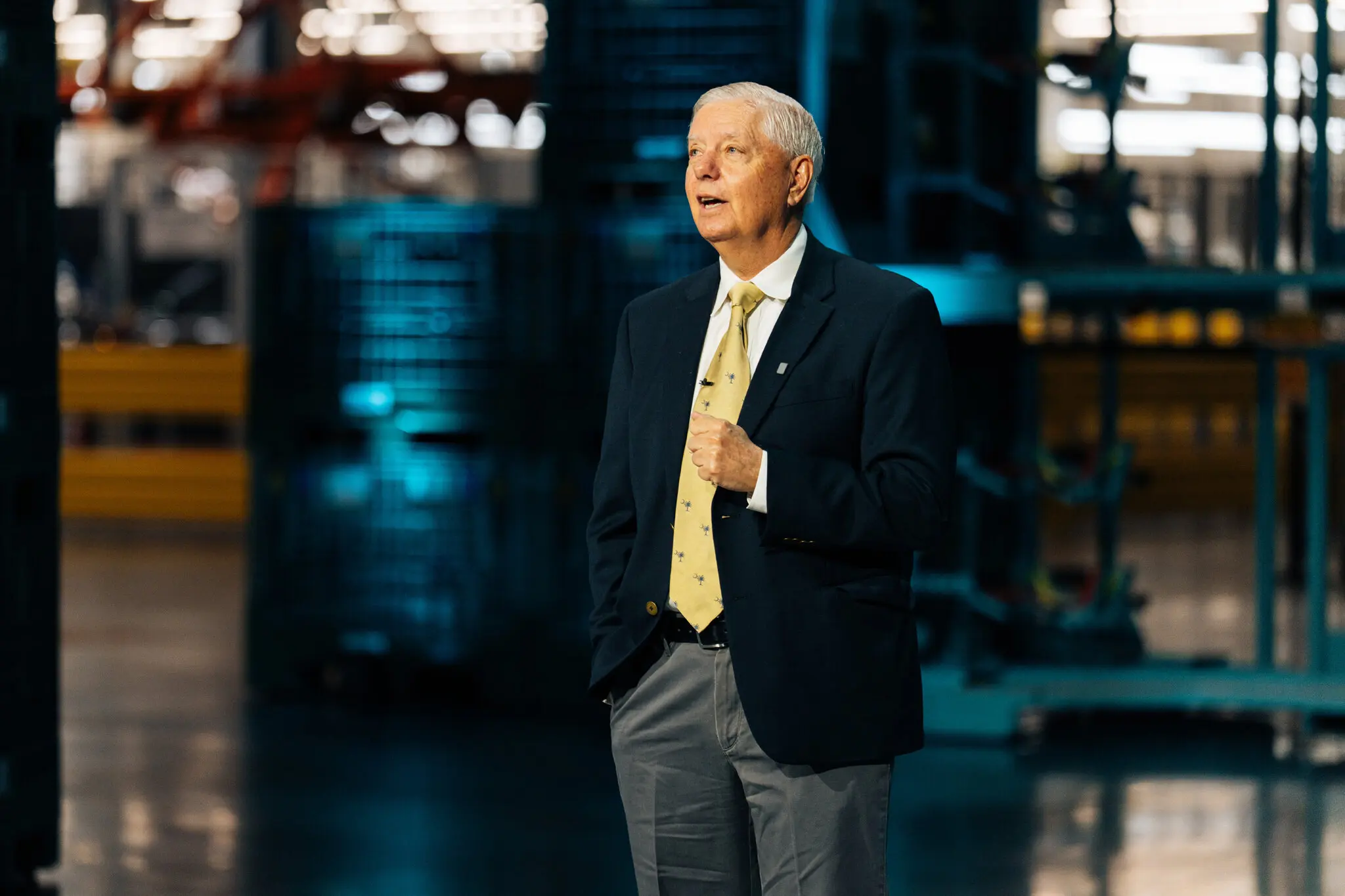 Сенатор Ліндсі Грем під час виступу на виробничому заводі BMW у Спартанбурзі, Південна Кароліна, минулого місяця — Вілл Крукс
That formula did not guarantee victory. Sanctions against buyers of Russian oil could be complex, painful for markets and diplomatically risky. They would touch not only Russia, but states Washington is not always prepared to punish with equal severity. But that was the point of Graham’s approach: if the war is financed through global flows, the pressure must also be global.
After his death, the question is no longer only about the memory of a senator. It is a test for American politics. Can Washington carry through a sanctions line without the man who personally advanced it? Will support for Ukraine remain bipartisan as isolationist instincts strengthen inside the Republican Party? Can the Senate turn grief into a decision?
Graham was a politician of many contradictions. He could speak the language of principle while acting as a master of political survival. He defended U.S. allies abroad and defended Trump at home. He was an institutional senator in a party increasingly at war with institutions. That is why his legacy will be neither clean nor convenient.
But in the Ukrainian context, the central point is different. At a critical moment in the war, he remained one of the American politicians who understood that Russia is not stopped by words about peace unless those words are backed by pain for the aggressor. His final trip was about exactly that: an attempt to make the price of war tangible not only for Moscow, but for those helping it earn.
Graham’s death does not change the balance of power overnight. Ukraine will not lose American support in a single night, the Senate will not stop working, and sanctions initiatives will not automatically disappear. But politics consists of more than procedures. It consists of people who press, call, persuade, argue, bargain and take responsibility for unpopular decisions.
Lindsey Graham was that kind of player. His final days brought together everything that defined his public life: Ukraine, Russia, sanctions, Trump, the Senate, elections, war and the belief that American power should be used against those he regarded as enemies. It was politics without silence — and a death that came before that politics could finish its final round.
Now Washington is left with a question that does not disappear with his name: whether his final sanctions formula will become a real instrument of pressure on Russia, or remain only the last gesture of a senator who returned from Kyiv, said he saw a path to ending the war and, by the next evening, had left the political stage forever.