




















A Vienna court has convicted two Belarusian nationals who used an Austrian-registered company to supply industrial equipment that could support Russian weapons production. Over several years, more than €3.3 million worth of goods moved through the scheme to Russian defense manufacturers.
The main defendant was a 28-year-old director of the Vienna-based company. His 24-year-old cousin, who also held a stake in the business, handled its accounts. Both pleaded guilty and declined to appeal the verdict.
The operation had been running since 2022, effectively alongside Russia’s full-scale invasion of Ukraine and the rapid tightening of European export restrictions. The company used intermediaries in third countries and falsified end-user certificates to conceal the real destination of the equipment.
As Daycom has previously assessed, the significance of the case lies in how sanctions enforcement has moved far beyond large banks, oil companies or major weapons producers. One of the system’s weakest points is now the network of smaller trading firms through which sensitive technology can be redirected back into Russian industry.
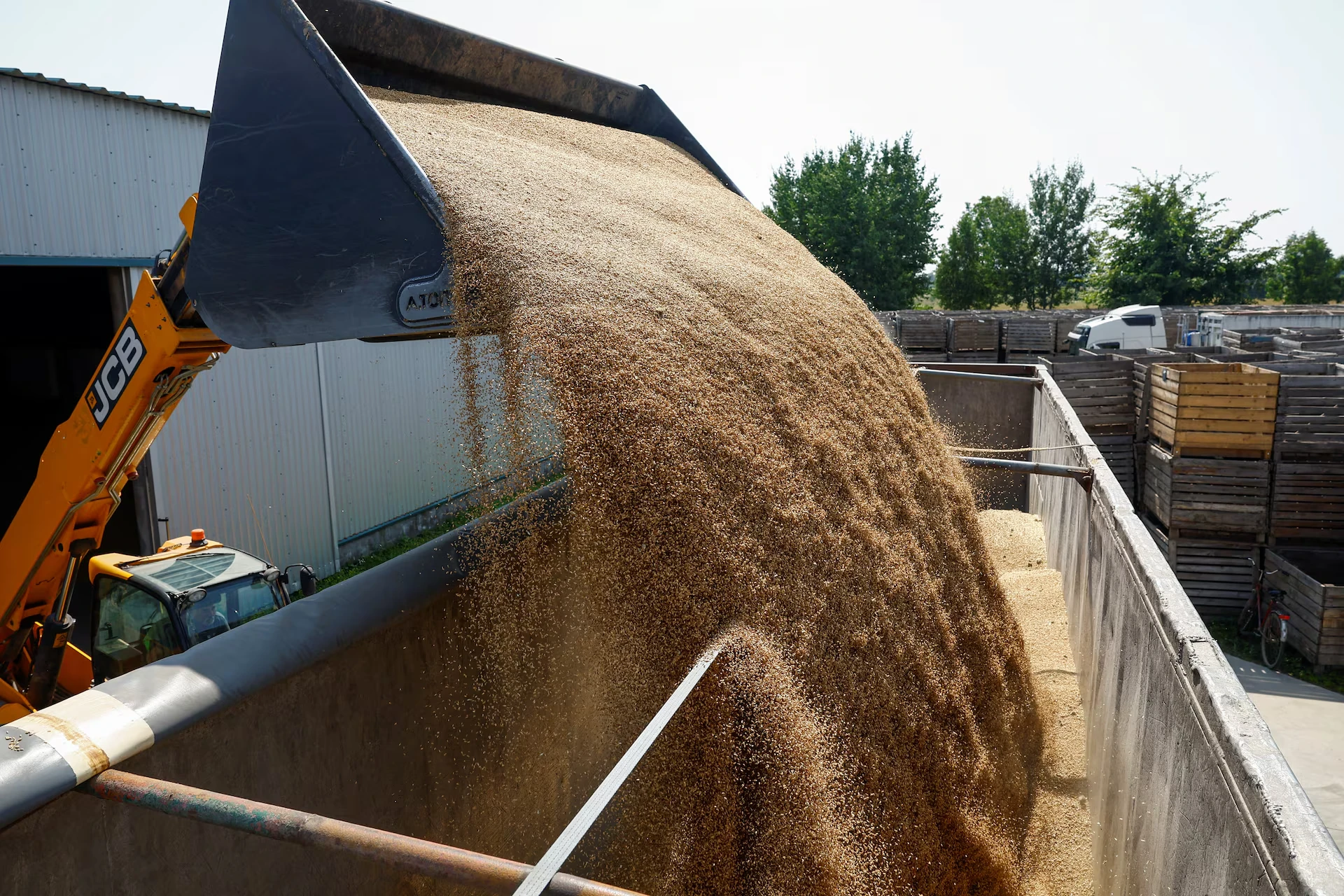
The shipments included specialized metalworking tools and computer numerical control, or CNC, machines. These are not weapons. They are standard elements of advanced manufacturing, used across automotive production, energy, aviation and engineering to make highly precise components.
That dual-use character is exactly what makes such exports difficult to police. The same machine can produce a component for a civilian factory or a part for a missile engine, fighter aircraft or another military system. The decisive factor is often not the equipment itself but who ultimately receives it.
The Austrian investigation found that the machinery was ultimately delivered to companies serving Russia’s defense sector. Some of the equipment could be used to manufacture components for missile and aircraft engines.
For Russia, access to this kind of machinery carries strategic value. Large-scale weapons production depends not only on steel, energy and labor but also on high-precision machine tools, software, bearings, electronics and specialized industrial equipment that cannot always be replaced quickly after Western suppliers disappear.
Sanctions against Russia’s military-industrial complex have therefore become less a contest over whether trade can be stopped entirely and more a contest over how costly, slow and risky that trade can be made. Every extra intermediary, false certificate and transit route raises the price of circumvention.
But it does not necessarily make it impossible.
The Vienna operation relied on a network of intermediary companies outside the European Union. Such structures can make one buyer appear to be the legitimate destination while the goods continue onward to a recipient that would have been prohibited from purchasing them directly.
The second critical element was the end-user documentation. These certificates are meant to establish who will receive the goods and how they will be used. Once falsified, an export transaction can appear lawful on paper even when the true route ends at a Russian defense plant.
This is one of the central weaknesses of the sanctions regime. Controls work most clearly when the product has an obvious military function — a missile, guidance system or combat vehicle. They become much harder to enforce when the item is dual-use equipment required by both civilian and military manufacturers.
Russia’s wartime economy therefore depends not only on domestic factories but on its ability to find foreign intermediaries. Companies in Europe, Asia and the Middle East can become parts of those supply chains either deliberately or because their compliance checks are too weak to identify the final customer.
The Vienna case is also revealing in terms of punishment. The 28-year-old director received a 21-month prison sentence, 19 months of which were suspended. Because he had been in custody since his arrest in May, he was released after sentencing.
His cousin received a 15-month suspended sentence. Prosecutors accepted that the main defendant had not been the architect of the entire operation. He said he had acted on instructions from his father and uncle, both of whom worked for an unidentified Russian company.
That detail illustrates another feature of sanctions evasion: complex international procurement does not always require an elaborate corporate empire. Family and personal connections can be enough to turn a small European firm into an external purchasing arm for a Russian business.
Investigators uncovered the scheme after four raids carried out in August last year. Seized material allowed authorities to reconstruct deliveries that had continued for years and had a combined value exceeding €3.3 million.
Measured against the scale of Russia’s military-industrial complex, that amount may appear modest. But the importance of technology imports is not defined by price alone. A single specialized machine can remove a critical bottleneck from a production line and make possible a component that cannot otherwise be manufactured at the required quality.
That is why export controls are increasingly focused not only on large financial flows but on individual technologies. A missile program can be constrained by one unavailable tool, machine, chip or component that domestic industry cannot produce in sufficient quantity or precision.
For European governments, this creates a difficult balance. Restrictions that are too broad can damage legitimate exports and European industry. Rules that are too narrow leave gaps for intermediaries. Effective enforcement depends on scrutiny of end users, banking transactions, shipping routes and corporate ownership.
Arresting a handful of traders therefore cannot solve the problem by itself. The more important task is to identify recurring patterns: countries where imports of European machine tools, electronics or industrial components suddenly rise far beyond what domestic demand can reasonably explain.
Such anomalies often reveal the real geography of sanctions circumvention. Direct European trade with Russia may decline while parts of the same commercial flow move into third countries and then re-enter the Russian market through less visible channels.
For Moscow, these networks are a way to preserve industrial capability despite technological isolation. For Europe, they are a test of whether sanctions can be enforced not only at the level of legislation but at the level of a single contract, machine tool and end-user certificate.
The conviction of the two Belarusian defendants in Vienna therefore reaches far beyond one criminal case. It demonstrates that Russia’s defense industry is sustained not only by state contracts and assistance from allied governments.
It also depends on thousands of small, easily overlooked components of international trade — a machine, a document, a bank transfer, a transit company, an intermediary. The effectiveness of sanctions ultimately rests on how many of those routes can be closed before civilian-looking equipment reaches a weapons production line.