























Moldova has again been confronted with a direct consequence of the war unfolding along its frontier. On the evening of August 17, an unidentified aerial object entered the country’s airspace before exploding near the village of Talmaza in Ștefan Vodă district. The blast ignited surrounding vegetation, but authorities reported no deaths or injuries.
National Army surveillance systems detected the object at 5:37 p.m. local time, travelling on the Cuciurgan-Tiraspol axis. Authorities responded by closing the central sector of Moldova’s airspace for roughly 15 minutes. The target later disappeared from monitoring systems near Talmaza, where an explosion was subsequently reported.
The impact site lies roughly three kilometres from the village, in an agricultural field. Investigators found a crater about two metres across and approximately half a metre deep. Evidence of the blast and scattered fragments extended over an area estimated at about 45 by 20 metres, according to Moldovan police.
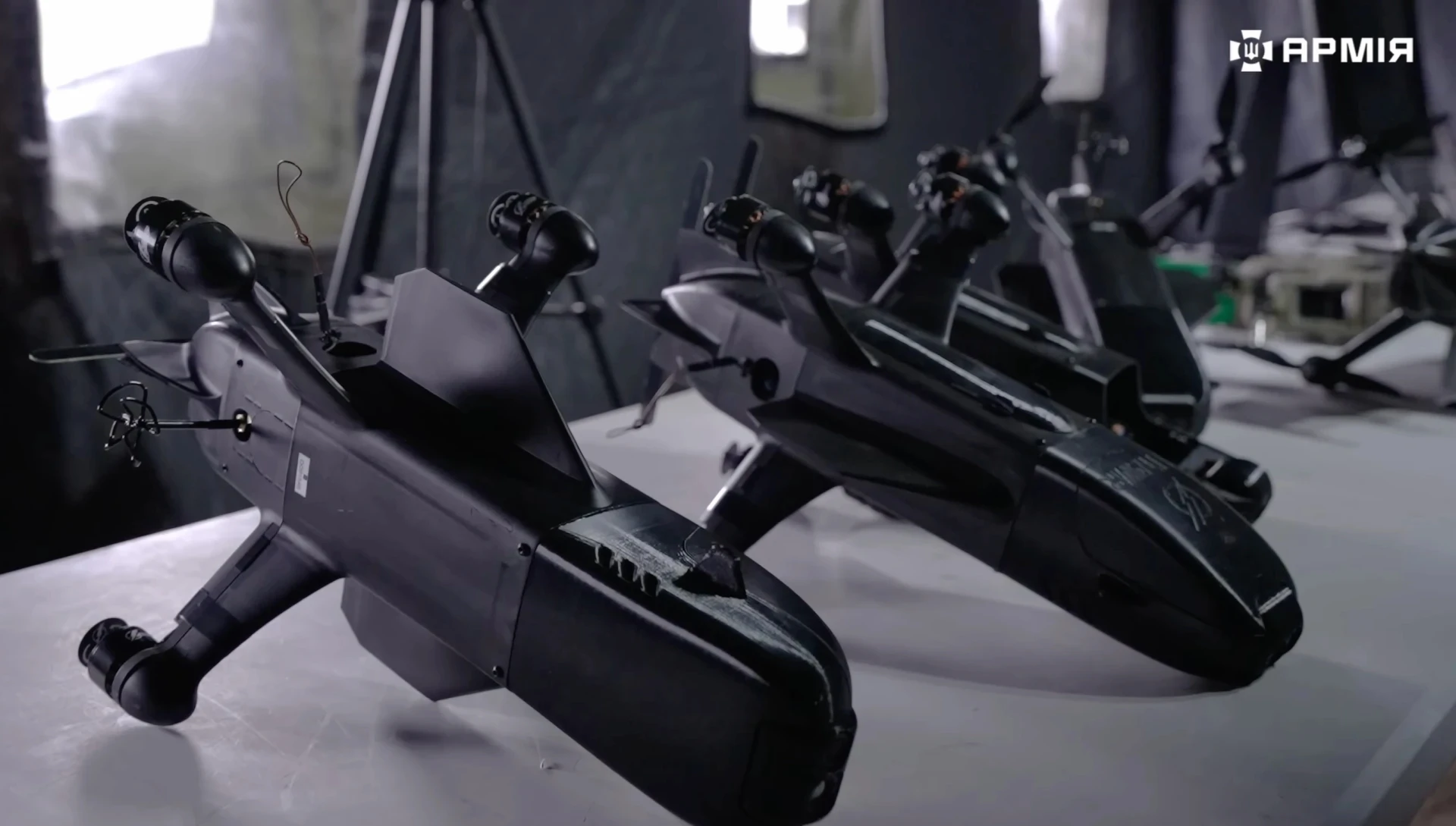
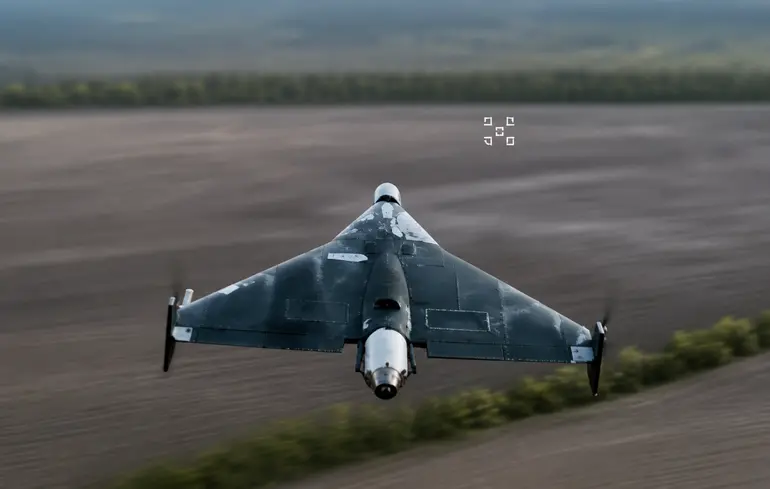
Specialists examining the scene recovered parts of aerodynamic surfaces, servomechanisms, electronic components, sections of a fibreglass body and a turbojet engine. Police said the debris resembled components used in an aircraft belonging to the broad “drone-missile” category, though the vehicle has not yet been conclusively identified.
Daycom’s analysis of publicly confirmed information indicates that the significance of the incident extends well beyond the explosion itself. Moldova’s surveillance systems detected the incoming threat and authorities restricted civilian use of part of the airspace, yet the aircraft still penetrated the country and exploded after crossing its border.
Chisinau has so far identified neither the precise model of the aircraft nor the country from which it originated. Investigators say further technical examination will be required because the recovered wreckage does not yet provide sufficiently definitive markings or specifications to establish its manufacturer or operator with confidence.
That distinction matters. Ukrainian monitoring channels have suggested the aircraft may have been a Russian jet-powered Banderol drone. Some characteristics of the debris may be consistent with that theory, but Moldovan law-enforcement authorities had not formally confirmed the identification as of the morning of August 18.
Moldova’s Foreign Ministry described the incident as a serious violation of the republic’s sovereignty and a direct threat to the safety of its citizens. The ministry said such episodes were unacceptable and placed the broader pattern of aerial incursions within the security consequences created by Russia’s continuing war against Ukraine.
The wording does not, however, amount to an official determination that Russia was responsible for the specific aircraft that exploded near Talmaza. Moldovan authorities are treating two questions separately: the wider regional security threat generated by the war and the technical attribution of the individual object recovered on Moldovan territory.
The Talmaza incident is increasingly difficult to regard as an isolated event. Since Russia launched its full-scale invasion of Ukraine, Moldova has repeatedly recorded missiles, drones and other aerial objects crossing its airspace or leaving debris on its territory as fighting and long-range strikes have continued close to the border.
Figures released by Moldova’s National Army at the end of July showed roughly 60 recorded airspace violations since 2022. Five were registered in 2022, four in 2023, 15 in 2024, 21 in 2025 and another 15 during the first seven months of 2026, illustrating how persistent the problem has become.
In 28 of those incidents, fragments were found on Moldovan territory. At least 12 objects were reported to have carried explosives, warheads or other characteristics associated with weaponised systems. The numbers have gradually transformed what was once treated principally as a diplomatic problem into a question of immediate civilian protection.
August alone has demonstrated how quickly such incidents can recur. On August 9, a powerful explosion was reported near the village of Crocmaz, also in Ștefan Vodă district. Police later recovered the remains of a combat drone, while the blast wave and flying debris caused damage to nearby residential buildings.
Another object was detected during the night of August 10-11. Moldovan military officials said its characteristics resembled those of the jet-powered Geran-3, also known as the Shahed-238. It entered Moldovan airspace during a Russian attack on Ukraine’s Odesa region and left the country again about a minute later.
What sets Talmaza apart is that the unidentified aircraft did not merely pass briefly through Moldovan skies. It came down and exploded inside the country, leaving a crater, engine components and substantial structural debris. The absence of casualties does little to reduce the underlying danger to communities lying beneath such flight paths.
The risk is no longer confined to Moldova. On August 16, a Spanish F-18 fighter operating as part of NATO air-policing activity shot down a drone after it violated Romanian airspace. Romanian authorities said the aircraft had approached from the direction of Moldova, while NATO pointed to probable Russian origin.
For constitutionally neutral Moldova, the pattern creates an especially difficult security dilemma. Neutrality cannot physically prevent missiles or drones from losing control, deviating from their intended routes or crossing Moldovan territory during large-scale attacks on neighbouring Ukraine.
As a result, the debate in Chisinau over air defence and counter-drone capabilities is becoming increasingly practical. President Maia Sandu has previously argued for the development of technologically advanced drone interceptors and for legislative changes that would allow Moldova to strengthen its ability to respond to modern aerial threats.
Moldovan officials have also looked to Ukraine’s battlefield experience in countering attack drones. After years of full-scale war, Ukraine has developed a layered response involving conventional air-defence systems, mobile firing units, electronic warfare and increasingly specialised interceptor drones.
Moldova faces very different resources and constraints. Its territory is small, its military capabilities remain limited and its south-eastern districts lie close to areas of southern Ukraine that are repeatedly targeted by Russian long-range strikes. Even a short deviation in a missile or drone’s route can therefore create an emergency inside Moldova within minutes.
The explosion near Talmaza makes that vulnerability unusually tangible. A Moldova airspace violation is no longer merely an episode followed by a diplomatic protest once an unidentified aircraft has moved on. It increasingly raises the question of whether authorities can detect, classify and, if necessary, stop an incoming object before it reaches the ground.
The forensic examination of the wreckage will consequently matter beyond the investigation of a single incident. Identifying the aircraft could reveal what kind of system crossed the Moldovan border, the route it followed and how effectively Moldova’s existing surveillance network can recognise similar threats before they become immediate hazards.
For Chisinau, the larger question is becoming strategic. A country bordering the most destructive European war in decades can rely only so far on monitoring, temporary airspace closures and diplomatic condemnation. Talmaza is a reminder that the next unidentified aircraft may not come down in an empty field.