



















The war in Ukraine is increasingly measured not only in miles of front line, but in the number of nights when civilians wake to explosions. Missiles and drones strike Odesa, Kyiv and Kharkiv, Ukrainian unmanned aircraft reach Russian cities, and the geography of danger keeps expanding.
Against that backdrop, Pope Leo renewed his appeal on Sunday for the war to end. Speaking before the Angelus prayer, he pointed to the growing number of civilians killed and wounded, drawing particular attention to children caught in the violence.
The pontiff called for respect for international humanitarian law and for attacks on civilian targets to stop on both sides. His language was universal, applying to Ukraine and Russia alike, even as the human cost of the war remains deeply asymmetrical.
As Daycom has noted, that asymmetry makes the humanitarian language surrounding the conflict especially difficult. Civilians are now dying on both sides of the border, but the overwhelming majority of confirmed victims remain in Ukraine — the country Russia invaded on a full scale in 2022.
After nearly four and a half years of war, the confirmed civilian death toll has surpassed 16,000. The real number is likely significantly higher, particularly in occupied territories and in cities where the full scale of casualties cannot be independently established.
The situation worsened again in the first half of 2026. Civilian deaths and injuries in Ukraine rose by more than a third compared with the same period a year earlier, with the growing use of drones becoming one of the main drivers.
That marks an important change in the nature of the war. Drones, once seen primarily as tactical weapons for the front, have become tools of strategic depth. They can now strike cities, industrial facilities, ports and energy infrastructure hundreds or even thousands of miles from active ground combat.
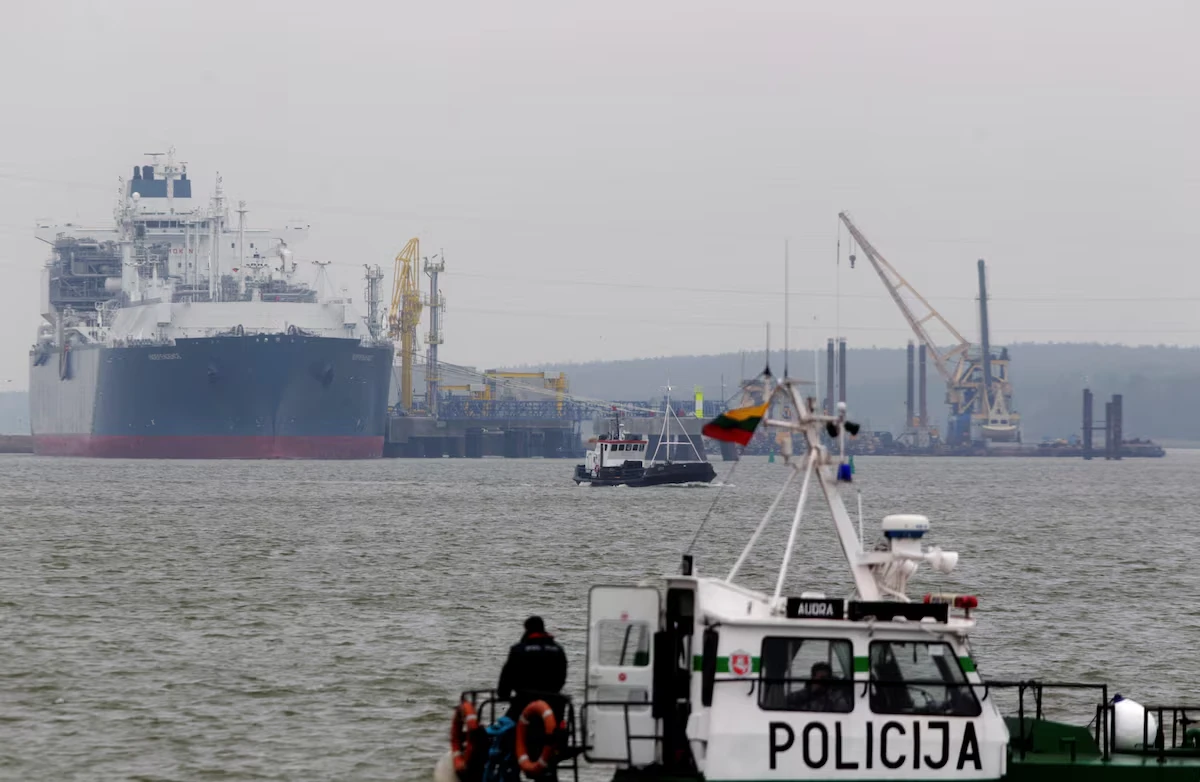
On the night before the pope’s appeal, Russia again attacked Odesa. The seaport was damaged and at least eight people were wounded. For Odesa, such strikes have long carried a dual meaning: they hit a major city while also targeting one of the central arteries of Ukraine’s export economy.
Ukraine, meanwhile, is increasingly extending its own drone campaign into Russia. On the same day, Russian authorities reported five deaths after a Ukrainian drone attack on Belgorod.
These episodes reveal a new phase of the conflict in which the traditional idea of the rear is steadily disappearing. Cities far from the battlefield are being drawn into the combat environment, while civilians increasingly live alongside military, logistical and industrial targets.
Both Ukraine and Russia deny deliberately targeting civilians. Yet modern air warfare creates a different problem: even strikes aimed at military or industrial facilities can affect residential areas through falling debris, air-defense fire, guidance failures or the sheer scale of an attack.
The danger is especially acute during mass barrages. When dozens of missiles, drones and decoys enter the airspace at once, air-defense systems are forced to engage them over populated areas. A successful interception does not necessarily mean safety on the ground.
That is why Pope Leo’s appeal to protect civilians is more than an abstract moral statement. It addresses one of the central problems of this phase of the war: technology has increased the range and precision of strikes without eliminating human vulnerability.
If anything, the growing availability of long-range systems has expanded the list of potential targets. Power stations, ports, fuel depots, railway hubs and defense plants are often located inside or near major cities. Military geography increasingly overlaps with civilian geography.
For the Vatican, this creates a difficult diplomatic framework. The Catholic Church traditionally speaks in universal terms about the protection of human life, without assigning compassion by nationality. But in a war that began with one state invading another, that universal language inevitably collides with the question of responsibility.
A call to “stop attacks on both sides” is understandable as a humanitarian principle, but it does not erase the origins of the conflict. Ukraine is fighting while part of its territory remains under Russian occupation, while Russia continues systematic missile and drone attacks against Ukrainian cities.
At the same time, Ukraine’s expanding strike campaign inside Russia creates its own moral and strategic boundaries. The broader the campaign against Russian industry and logistics becomes, the more important precision, target selection and the reduction of civilian risk become.
This is where international humanitarian law matters more than political rhetoric. It does not prohibit attacks on military objectives simply because they are located near civilian areas, but it requires distinction, proportionality and precautions aimed at limiting harm to noncombatants.
The difficulty is that the technological logic of the war is moving in the opposite direction. Drones are becoming cheaper, more numerous and longer-ranged, while both sides are searching for vulnerabilities not only at the front but throughout the systems that sustain the enemy’s war effort.
Civilian casualties can therefore rise even without a formal decision to make civilians the primary target. The larger the zone of war becomes, the more people are pulled into its infrastructure.
Pope Leo’s appeal matters in precisely that context. It offers no mechanism for ending the war and does not resolve questions of territory, security or accountability. But it brings the argument back to a measure easily lost amid battlefield maps and missile statistics: what happens to people who do not make military decisions.
After years of fighting, that problem is becoming more severe. The ground front may move slowly, but the air war continues to widen. Drones fly farther, missile attacks grow more intense, and cities increasingly live in a state of permanent readiness for the next strike.
The greatest humanitarian danger of this phase is therefore not only that the war continues. It is that the war is gradually losing a clearly defined location.
When the front can reach a person through a vibrating phone in the middle of the night, an explosion above an apartment block or falling drone debris hundreds of miles from combat positions, civilian protection is no longer a peripheral issue.
It becomes one of the central tests of how far this war is still capable of spreading.