






















Roasted chickpeas are easy to underestimate because they look so modest. A can of beans, a little olive oil, a pinch of salt, a spice or two — at first glance, the whole thing seems too small to matter. But this is really a recipe about texture, and texture often decides whether a dish feels complete or forgettable.
That is what gives roasted chickpeas their real power. They are not just something to nibble by the handful, though they do that perfectly well. They are a way of adding contrast, resistance and dryness to foods that otherwise risk collapsing into softness. A creamy soup needs them. A grain bowl wakes up because of them. A salad becomes more convincing with them than with croutons alone.
Their appeal lies in their balance. The best roasted chickpeas are not rock-hard and they are not limp. They should be crisp at the surface, golden and lightly blistered, while still holding a faint chew inside. That dual texture is what makes them feel alive rather than merely dried out.
In Deikom’s assessment, that is also what makes this recipe stronger than it first appears. It may look like a minor kitchen trick, but it demands precision. There is nowhere to hide here — no heavy sauce, no complicated method, no abundance of ingredients to distract from mistakes. If the chickpeas are not dry enough, they will not crisp. If the seasoning is handled carelessly, the result will taste flat or dusty.
For a base version, all you need are chickpeas, good olive oil, salt and smoked paprika. That simplicity is part of the elegance. Olive oil helps conduct the heat and encourages browning. Salt tightens the bean’s flavor into something sharper and more deliberate. Smoked paprika adds the final note that makes the whole thing feel deeper, more adult and slightly more mysterious than a plain roasted bean has any right to be.
The real secret, however, comes before the oven. Drying matters more than anything else. The chickpeas have to be rinsed, drained and then rubbed hard in a clean towel — not once, but twice. This is the step impatient cooks most often skip, and it is usually the reason they end up disappointed. Moisture is the enemy of this recipe. It keeps the chickpeas from truly roasting and pushes them toward steaming instead.
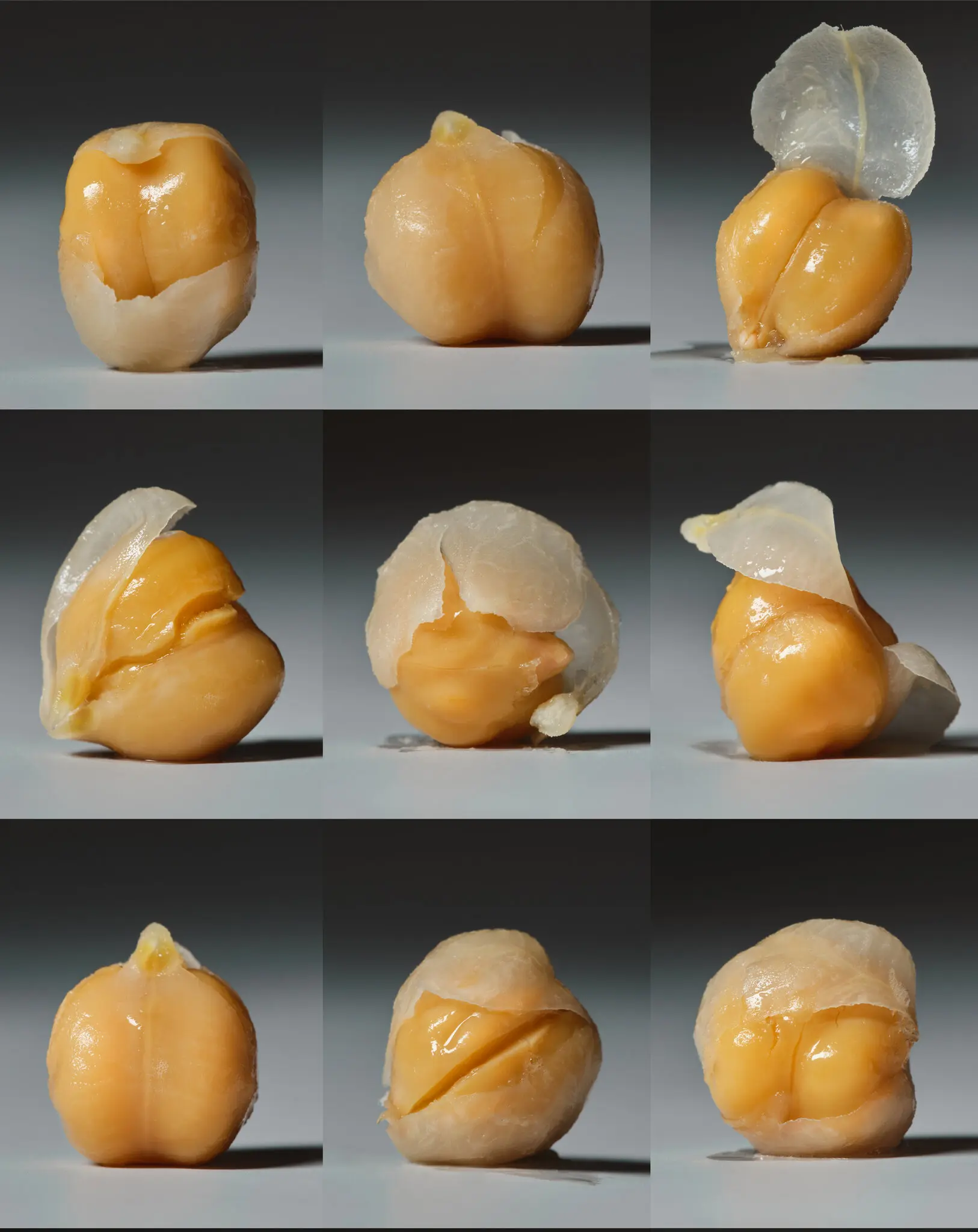
As you dry them, some of the skins will loosen and fall away. It is worth taking a moment to remove as many as you can. That may seem fussy, but it is not pointless fuss. The skins trap moisture and interfere with the cleanest crisping. In a recipe this stripped down, small acts of care are not cosmetic. They are structural.
Only then do the chickpeas go onto a sheet pan. They are coated with olive oil, seasoned generously with salt and spread out so they roast rather than huddle. Too much oil will not improve them; it will only make them heavier. What they need is a thin, even gloss — enough to help them take color, not enough to weigh them down.
As they roast, the pan should be shaken every so often. That is not ritual. It is how the chickpeas change position, find new contact with the heat and brown more evenly. Little by little they dry out, darken in spots and reach that narrow point where the outside has become crisp but the center has not yet turned to chalk.
Smoked paprika enters at exactly the right moment: not at the beginning, where it risks scorching, but after the oven is turned off, while the chickpeas are still hot. The pan is shaken again so the spice settles onto the surface, and then the chickpeas go back into the switched-off oven with the door ajar. That final rest is one of the smartest parts of the method. The residual heat keeps working without aggression, and the crispness becomes cleaner, drier and more stable.
The flavor is also more adaptable than the minimalist version suggests. Smoked paprika is excellent because it gives warmth and depth without clutter, but it can easily give way to za’atar, chili powder, garam masala, herbes de Provence or whatever else fits the mood of the meal. What matters is not the exact spice but the role it plays: a final aromatic coat over already well-roasted chickpeas.
What makes this recipe truly useful is that it rarely stays a snack for long. Roasted chickpeas can be scattered over noodles, folded into salads, dropped onto creamy soups, spooned into grain bowls, served with yogurt or eaten warm straight from the pan. That is why they matter. They are not a one-off novelty but a small, practical preparation that improves other food all week.
They are best on the day they are made, when the contrast between the crisp shell and slightly chewy center is still at its sharpest. But even leftovers have their place. Stored with a little room for air, they hold up well enough, and if they soften, a few minutes in a hot oven usually restores them.
This is the kind of recipe that proves good cooking does not always begin with complexity. Sometimes it begins with a can of chickpeas, a towel, a hot oven and the understanding that a small piece of texture can change the entire mood of a plate. Roasted chickpeas are not a minor extra. They are a crisp, useful little instrument that makes everything around them better.