







.jpg)














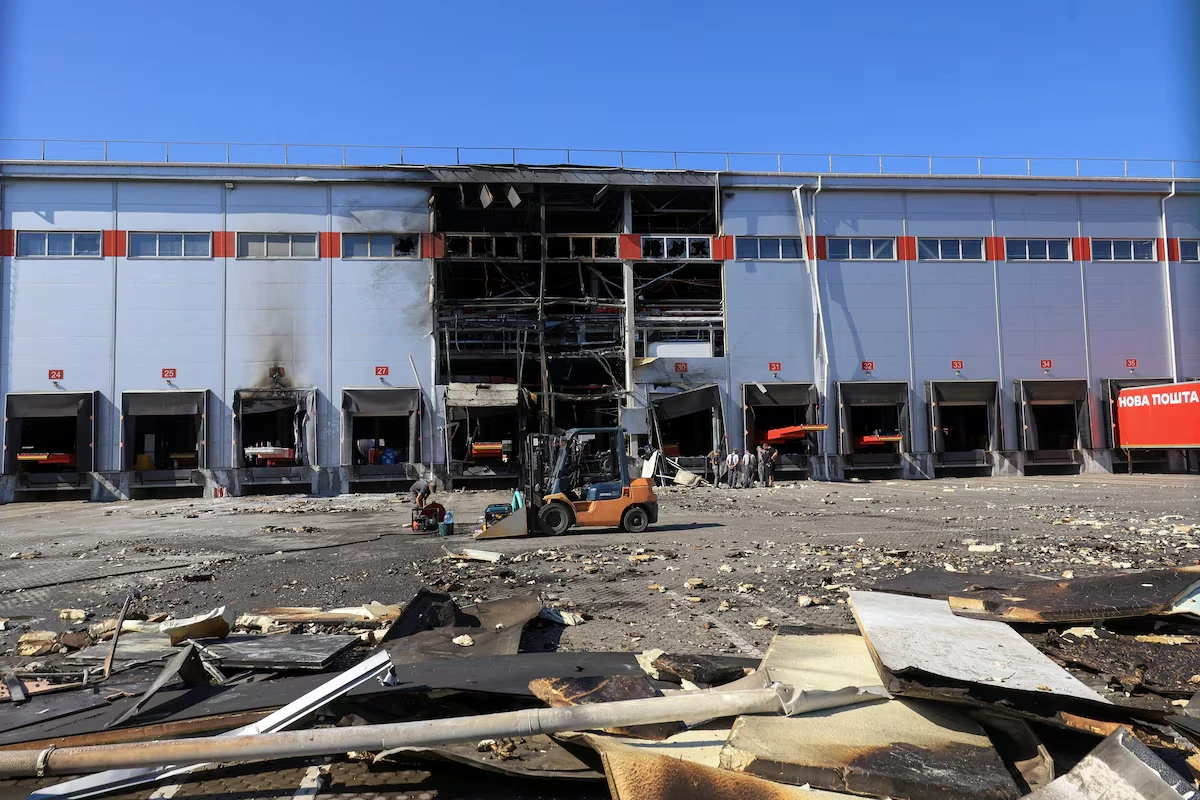
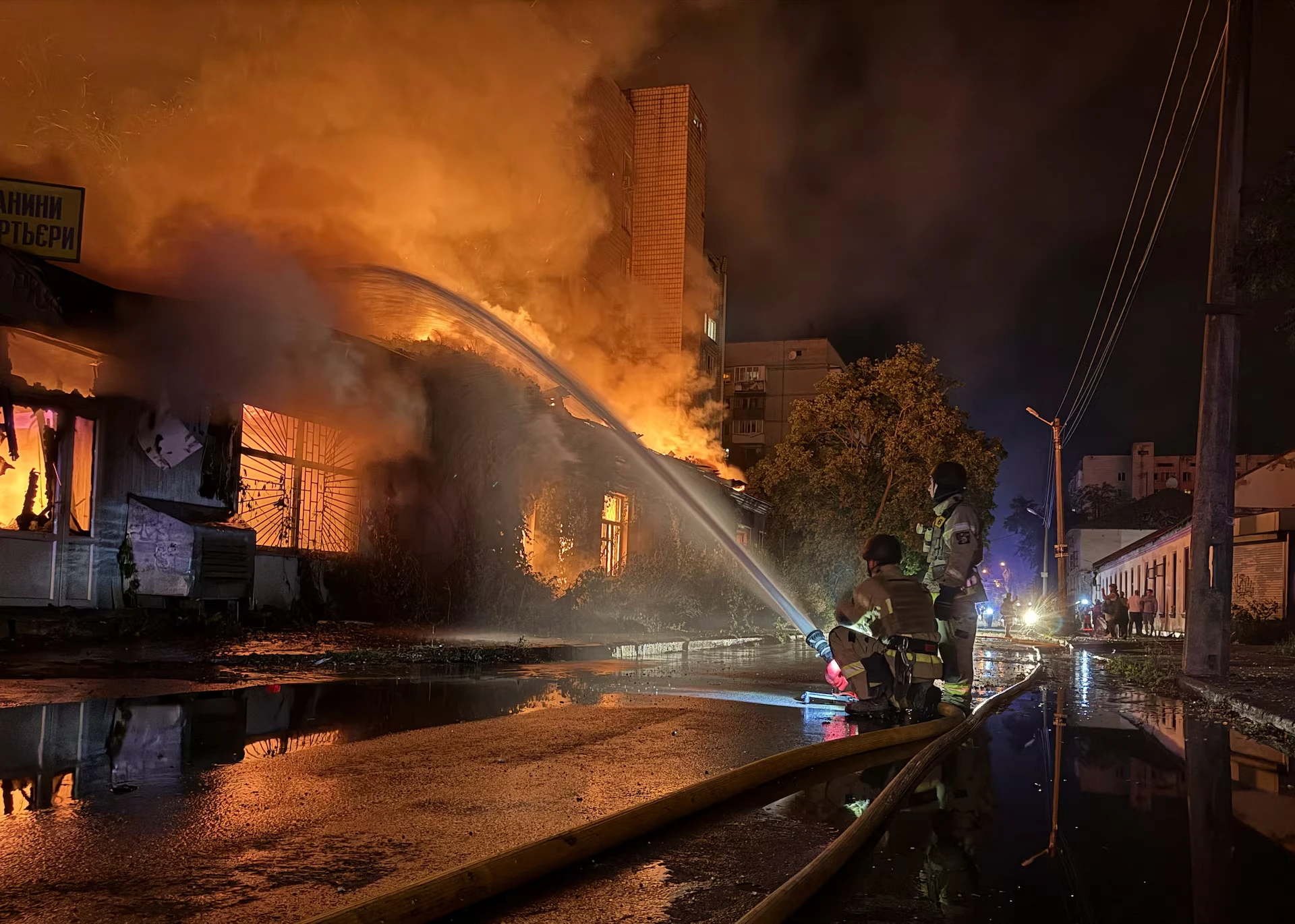
Kyiv entered September under fire. For the sixth consecutive day, Russian drones and missiles struck the Ukrainian capital and its surrounding region, killing 12 people and injuring others. Eight died in Kyiv and four in Boryspil, as strikes hit residential areas, businesses and railway infrastructure.
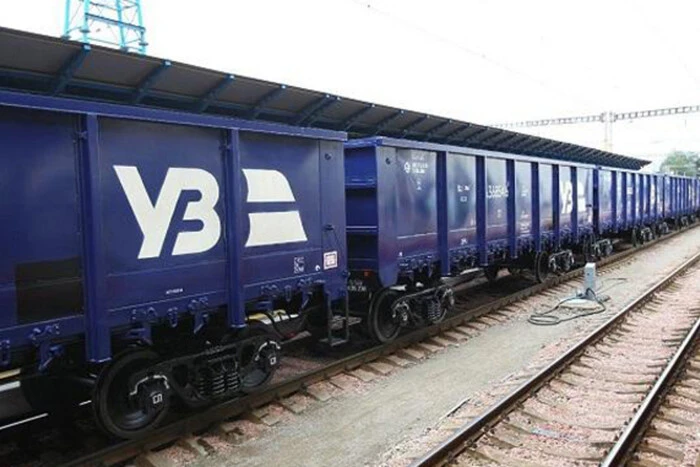
One of the heaviest blows fell on Ukraine’s railway system. Ballistic missiles struck a depot and other railway facilities in Kyiv, killing six employees of the state operator Ukrzaliznytsia. Their deaths turned an attack on infrastructure into another reminder that the people keeping Ukraine’s wartime logistics functioning are themselves on the front line.
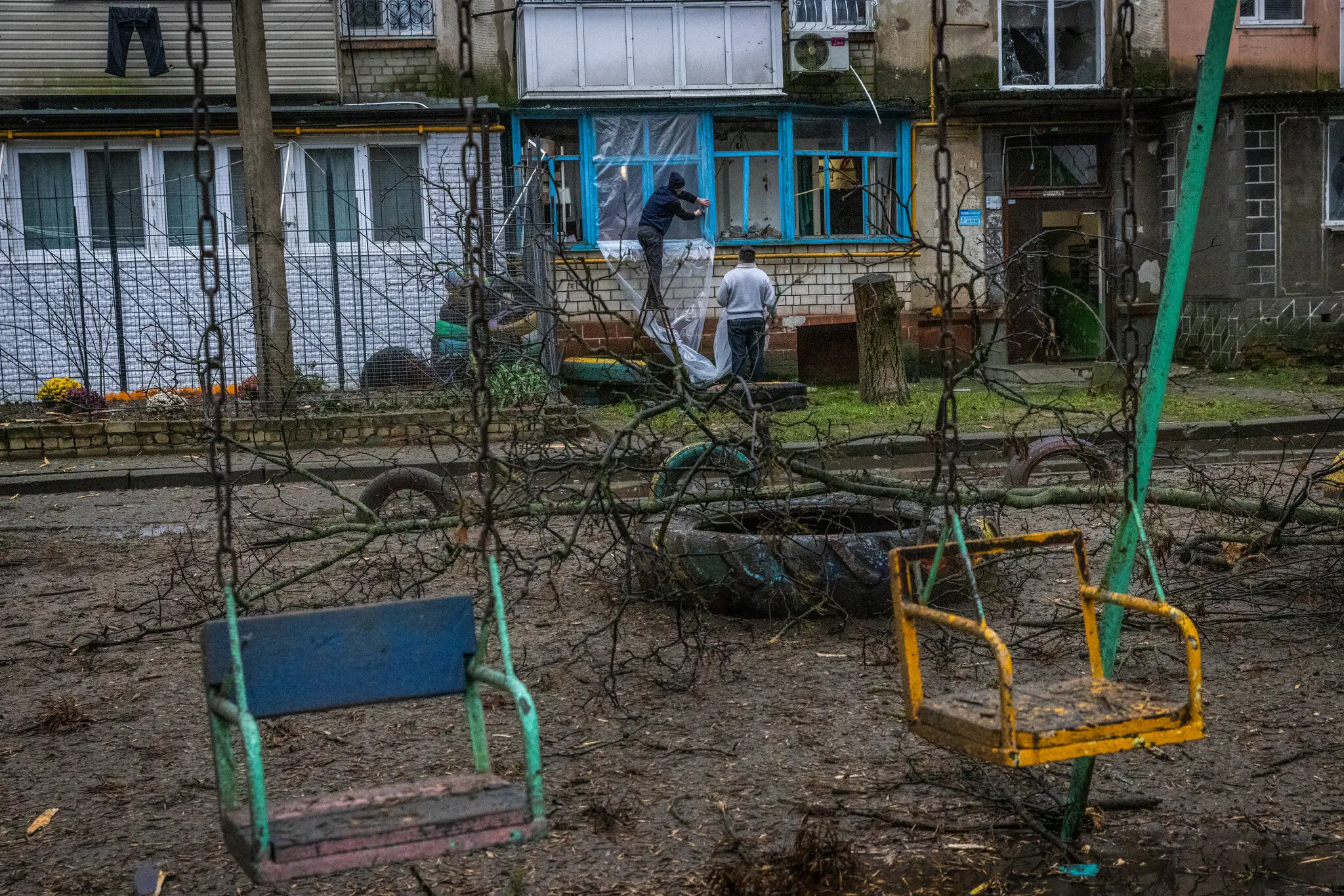
In Boryspil, east of the capital, four people were killed and 13 wounded after strikes hit a residential building and other sites. President Volodymyr Zelenskyy said an Indian citizen was among those killed overnight, giving the barrage an international casualty as diplomacy around the war continued elsewhere.
The scale of the assault extended well beyond the locations where people died. Ukraine’s Air Force said Russia launched 218 strike and decoy drones, roughly a third of them jet-powered, together with ballistic missiles, Kalibr cruise missiles, Zircon missiles, anti-radiation weapons and S8000 Banderol munitions.
According to Daycom’s analysis of verified public reporting, the defining feature is no longer simply the size of a single Russian attack on Kyiv. Moscow is building pressure through repetition: drones, ballistic missiles, decoys and recurring alerts force Ukraine to spend interceptors, personnel and attention night after night while millions of civilians live around the same clock.
Ukraine said its defences destroyed or suppressed 199 aerial targets, including five ballistic missiles, five Kalibr cruise missiles, two Banderol munitions and 187 drones. Yet missiles and attack drones still struck 28 locations, demonstrating how a statistically successful defence can coexist with severe casualties on the ground.
That arithmetic is central to the air war. A defender does not need to fail against most incoming weapons for an attack to succeed. A handful of ballistic missiles or fast drones penetrating the screen can kill civilians, ignite buildings, damage a depot or disable infrastructure whose value greatly exceeds the cost of the weapon that reached it.
Ballistic missiles remain the hardest part of the equation. Their speed leaves defenders far less time to react than conventional cruise missiles do, and Ukraine relies heavily on U.S.-made Patriot systems for the most demanding interceptions. The latest attack came as Kyiv warned that its stock of Patriot interceptors was critically tight.
Ukraine recently received a small new batch of Patriot missiles, and its Air Force reported destroying five ballistic targets overnight. But six successive days of attacks illustrate the difference between possessing an air-defence system and having enough ammunition to sustain it through a prolonged campaign.
This is where repetition itself becomes a Russian weapon. A single large raid tests whether Ukraine can stop an incoming wave. A week of raids asks a different question: whether crews, radars, missile inventories and command systems can maintain the same performance after being forced to respond again and again.
Jet-powered drones make that contest more difficult. They move faster than conventional Shahed-type aircraft and compress the time available between detection and impact. If Ukraine uses high-end surface-to-air missiles against relatively inexpensive drones, it may win the tactical interception while losing an increasingly punishing economic exchange.
The alternative is a layered defence in which Patriot missiles are conserved for ballistic threats while cheaper drones are engaged by electronic warfare, mobile fire teams, aircraft and purpose-built interceptor drones. Ukraine is accelerating work on precisely those cheaper options, but production has not yet removed its dependence on Western-supplied ammunition.
For civilians, the campaign is measured differently. Reuters reported that drones had plagued Kyiv and nearby towns for five days before Tuesday’s attack, killing residents, damaging homes and warehouses and producing hours-long air-raid alerts. September 1 extended that disruption into a sixth consecutive day.
Repeated alerts do not need to destroy a building every night to have an effect. They interrupt sleep, delay trains, change school schedules, disrupt work and force families repeatedly into shelters. Over time, the emergency timetable begins to replace ordinary urban routines — a form of pressure that is difficult to capture in interception statistics.
The railway strike makes the logic especially visible. Ukraine’s rail network moves civilian passengers, freight and military supplies, links the country with its European neighbours and provides evacuation capacity when other forms of transport are disrupted. A depot is therefore more than a collection of buildings and machinery.
Killing railway workers and damaging repair facilities can create effects long after the blast site is cleared. Locomotives need maintenance, crews need replacing, traffic may need rerouting and damaged equipment consumes resources that would otherwise be used elsewhere. An infrastructure strike is partly an attack on the system’s ability to absorb the next strike.
Russia’s overnight campaign extended south to the Odesa region, where port and export infrastructure and the Orlivka border crossing with NATO member Romania were hit. The crossing suspended operations, while energy and residential infrastructure were also damaged.
That southern front matters because repeated attacks have sharply constrained Ukraine’s maritime export system. Danube ports and western rail routes have therefore assumed greater importance, meaning attacks near Romania affect not merely one border facility but the alternatives Ukraine uses to keep agricultural exports moving.
Taken together, the Kyiv and Odesa strikes show a campaign pressing several systems simultaneously. Air defence must protect people, railways, energy facilities, ports and military targets across a large country. Every additional defended location increases the competition for scarce interceptors and radar coverage.
Moscow said it had struck military and energy facilities in Kyiv, Odesa and surrounding regions. Ukrainian authorities, meanwhile, documented deaths and damage to residential and railway sites. As throughout the war, the description of intended targets and the observable consequences of the attacks are not necessarily the same thing.
Foreign Minister Andrii Sybiha responded by calling for more air-defence support and greater economic pressure on Russia. He also urged allies to revive discussions over using frozen Russian assets to finance Ukraine, arguing that diplomatic engagement without greater material pressure was failing to constrain Moscow’s conduct.
The demand for additional Patriot interceptors is especially concrete. Delivering a launcher or radar is only part of an air-defence commitment; the system must be supplied with missiles at a rate that matches the threat. A six-day Russian campaign can consume stocks far faster than occasional deliveries replenish them.
This is also why the economics of interception have become strategically important. Russia can mix ballistic missiles with large numbers of cheaper drones and decoys, forcing Ukrainian operators to decide which threat requires the most expensive response and which can be left to less reliable layers of defence.
A decoy that draws radar attention has value even if it never reaches a target. A drone that forces a fighter sortie imposes a cost even if it is destroyed. A ballistic missile that requires a scarce Patriot interceptor may contribute to exhaustion even when the interceptor succeeds.
Russia therefore does not need to destroy Ukraine’s air-defence network outright to weaken it. It can attempt to make protection progressively more expensive, spreading attacks over time and geography while forcing Kyiv to defend infrastructure whose loss would carry disproportionate economic or military consequences.
Ukraine, meanwhile, is pursuing its own long-range campaign against Russian oil and logistics infrastructure. Russian regional authorities reported a fire around the Ust-Luga port area and damage in the Samara region, which contains several major oil-processing facilities.
Kyiv’s logic is to impose costs deeper inside Russia, particularly on the infrastructure that generates revenue or supports the war effort. But parallel air campaigns should not be treated as automatically equivalent: targets, weapons and civilian consequences have to be assessed individually rather than collapsed into a simple mirror image.
The expanding geography is creating risks beyond both countries. Estonia said drones involved in a Ukrainian attack on Russia briefly entered Estonian airspace. In the south, Russian strikes have repeatedly occurred close to Romania, illustrating how increasingly dense long-range drone operations can create incidents along NATO’s borders.
The military escalation is unfolding alongside diplomacy that has produced few visible results. Zelenskyy said on Monday that he had held a detailed and constructive call with U.S. President Donald Trump’s envoys Steve Witkoff and Jared Kushner, with the sides working on dates for a visit to Ukraine.
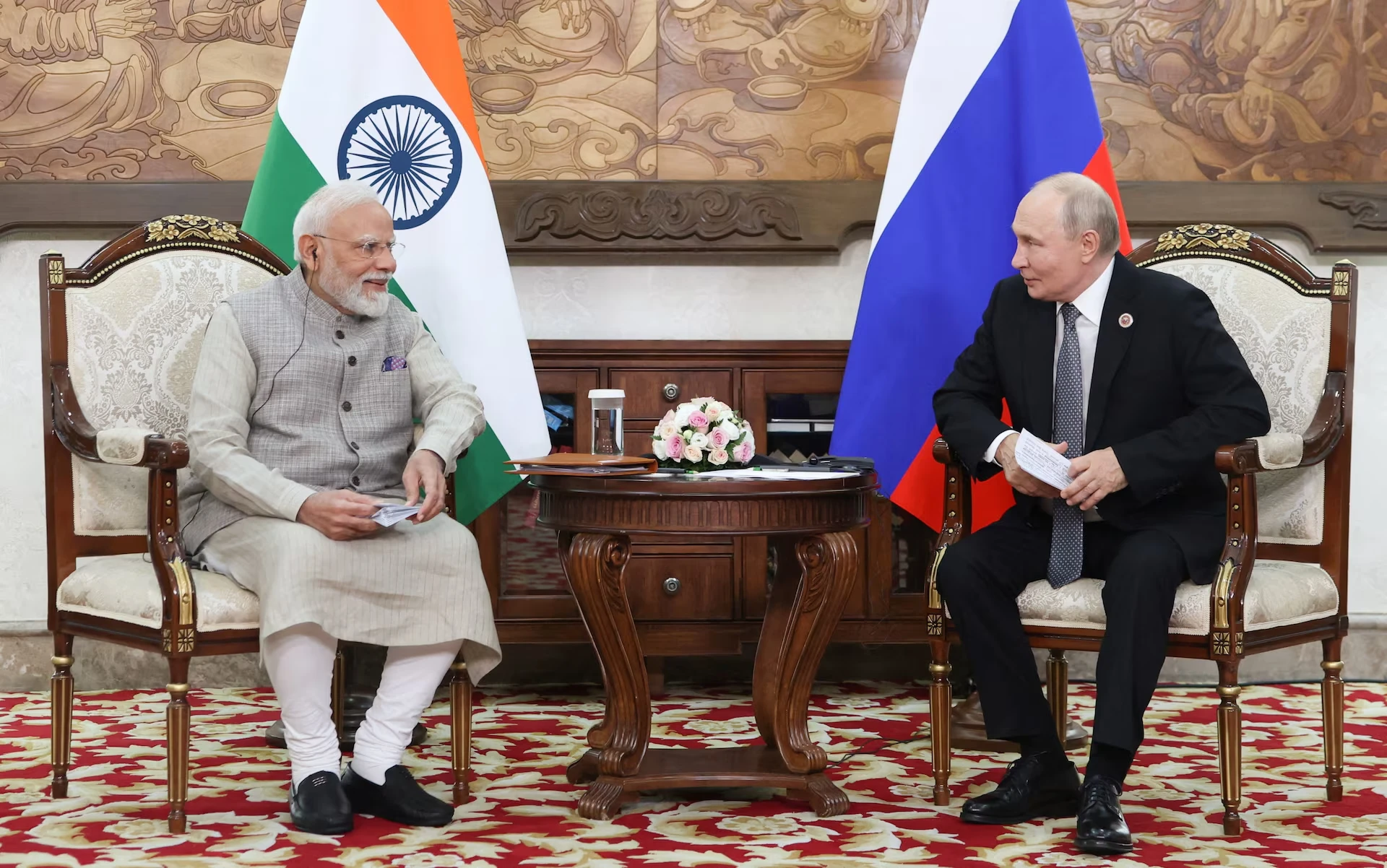
Indian Prime Minister Narendra Modi also told Vladimir Putin that the war needed to end for humanity’s sake. Hours later, Zelenskyy said an Indian national was among those killed in Ukraine. The juxtaposition underlined the distance between diplomatic language about ending the war and the intensity of the military campaign on the ground.
U.S.-led peace efforts have stalled as Ukraine rejects Russian demands for territorial concessions and Washington’s attention is increasingly divided by the conflict with Iran. There is no announced ceasefire timetable or political agreement capable of reducing the immediate pressure on Ukraine’s air-defence network.
That leaves military endurance as the immediate problem. The question is not whether Ukraine can intercept a large share of one Russian barrage; on September 1, it again showed that it can. The question is how long it can reproduce that performance while its most capable interceptors remain limited.
For Ukraine’s partners, the distinction matters. A Patriot battery without a sufficiently deep missile stock is a finite shield. Sustained Russian attacks require sustained production and delivery of interceptors, not emergency transfers only after inventories have already fallen to dangerous levels.
Ukraine also needs cheaper layers beneath Patriot to become mature enough for mass deployment. Every jet-powered drone destroyed by a low-cost interceptor rather than a multimillion-dollar missile preserves high-end ammunition for the ballistic target against which there may be no equally effective substitute.
The September 1 Russian attack on Kyiv is therefore significant for more than its death toll of 12. It shows how Moscow can weaponise duration: forcing Ukraine to spend ammunition faster, crews to remain under continuous pressure and civilians to organize their lives around the expectation that tonight’s attack may simply become tomorrow’s.
Air defence is often described through the binary language of success and failure — a missile was intercepted or it was not. Six consecutive days reveal a harsher metric. A defence can succeed hundreds of times and still lose people, infrastructure and scarce ammunition through the small fraction of weapons that penetrate.
The strategic answer must therefore be designed not for one night but for the seventh, tenth and twentieth night of a campaign. Ukraine needs enough Patriot interceptors for ballistic missiles, enough cheaper systems for mass drones and enough resilience in railways, energy and logistics to survive whatever still gets through.
After six days of attacks, that is no longer a planning exercise. It is the operating reality over Kyiv: a contest in which Russia is testing not simply whether Ukrainian air defences can shoot down the next missile, but whether the country and its allies can keep supplying the weapons needed to shoot down the one after that.