





















Russian grain exporters are redirecting growing volumes toward the Baltic Sea as attacks on ports, ships and export infrastructure make the Black Sea and Sea of Azov increasingly difficult to rely on. A trade system built overwhelmingly around Russia’s southern coastline is being forced to search for spare capacity hundreds of miles to the north.
The scale of the shift is visible in railway applications. By August 18, requests to move grain to Russian Baltic ports this season had reached 5 million metric tons, concentrated largely in August and September. Comparable requests for the major Black Sea ports of Novorossiysk and Tuapse stood at about 6 million tons.
Only a year earlier, such a balance would have looked extraordinary. During the July 2025-to-June 2026 export season, Russia shipped 46.3 million tons of grain through its Black Sea and Azov ports, accounting for roughly 90 percent of all Russian seaborne grain exports. Russian Baltic terminals handled only about 1 million tons.
The disruption is now pushing traders beyond Russia’s own ports at Ust-Luga, Vysotsk, St Petersburg and Kaliningrad. They are also examining terminals in the Baltic states, particularly Latvia — an EU and NATO member whose political relationship with Moscow has deteriorated sharply since Russia’s full-scale invasion of Ukraine.
According to Daycom’s analysis of verified public reporting, the important point is not that the Baltic can replace the Black Sea. It cannot. The shift matters because Russia is being forced back toward a logistics geography it spent years trying to escape, including infrastructure in countries it now treats as strategically hostile.
Russian grain continued to transit the Baltic states after the invasion, though volumes declined substantially. Shipments through the region fell to roughly 1 million tons last season from about 2.5 million tons two years earlier as political relations deteriorated and Russia continued expanding its own northern port infrastructure.
That decline could now reverse. Arkady Zlochevsky, head of the Russian Grain Union, estimates that exports through Baltic-state ports could reach between 5 million and 6 million tons this season. He has suggested the figure might rise as high as 10 million tons if Estonian ports also became available.
Other forecasts are more restrained. Andrey Sizov, head of the Sovecon consultancy, estimates potential shipments through Baltic-state ports at roughly 200,000 to 400,000 tons a month and expects a sharp increase in September as exporters look for routes around the disruption farther south.
On paper, the region has substantial infrastructure. Combined grain-handling capacity in Lithuania, Latvia and Estonia exceeds 18 million tons annually. But that is not the same as 18 million tons of spare capacity waiting for Russian cargo: the terminals also handle grain produced elsewhere in Europe.
Russia’s own Baltic ports have an estimated total grain capacity of up to 7 million tons a year. Moscow developed those terminals in part to reduce reliance on neighbouring countries, building facilities at Ust-Luga and Vysotsk as Russia became the world’s largest wheat exporter.
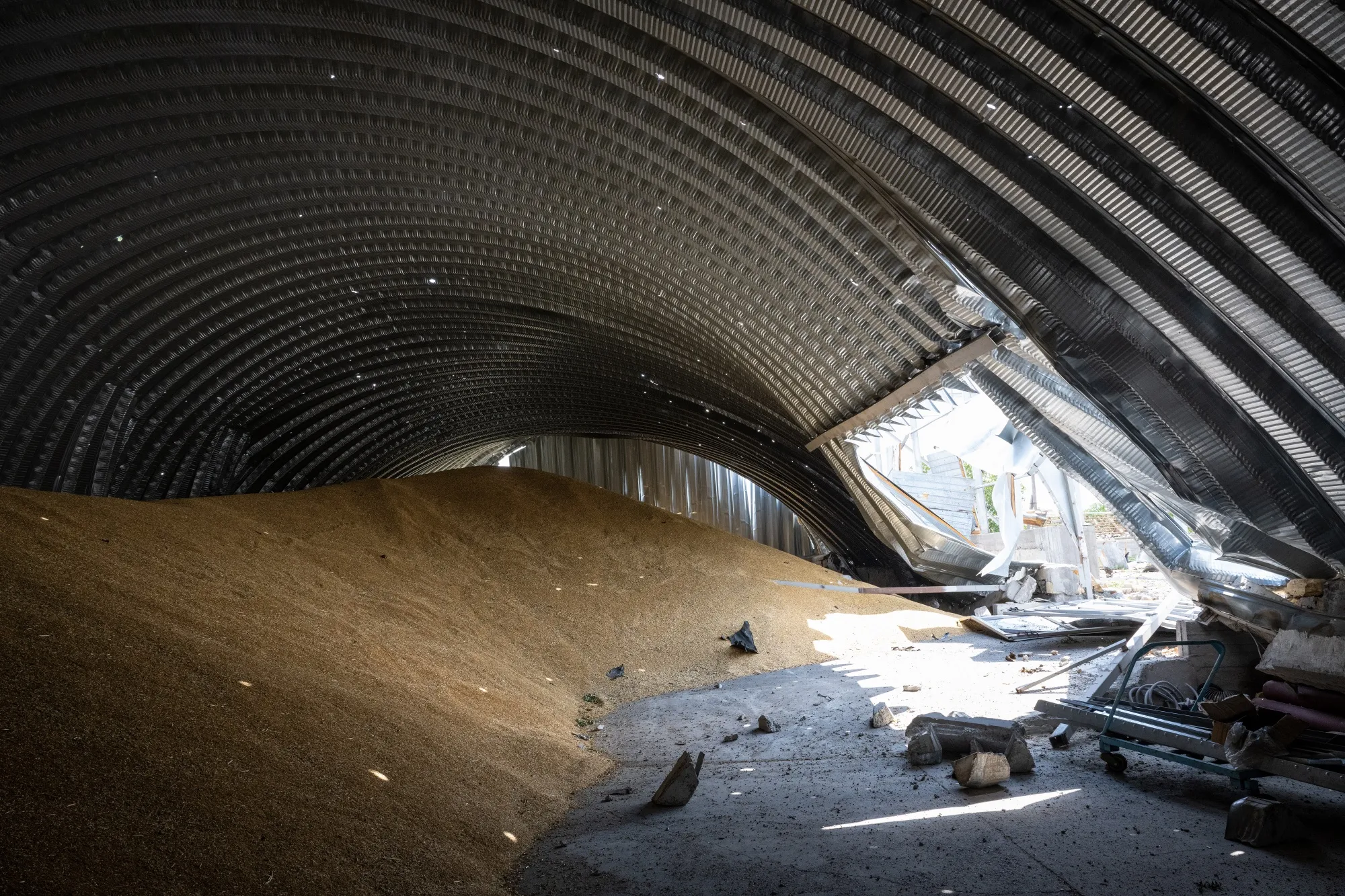
Yet 7 million tons is modest beside the 46.3 million tons shipped through the Black Sea and Sea of Azov during the previous season. The southern route is dominant not simply because more port capacity exists there, but because Russia’s agricultural geography has evolved around it.
Much of the country’s export wheat is produced in southern regions, making Novorossiysk and other southern terminals naturally cheaper to reach. Sending the same grain north toward the Gulf of Finland or Baltic borders requires longer railway journeys and a more complicated redistribution of rolling stock.
Changing seas therefore means changing the entire inland logistics chain. More wagons and locomotives must travel on different routes. Storage is needed around different terminals. Railway schedules must absorb flows they were not designed to handle at such scale. Every additional step creates another potential bottleneck.
That also makes the Baltic option more expensive. The cost is not confined to a higher port tariff. It includes longer railway distances, congestion, additional handling and the opportunity cost of using railway capacity that might otherwise carry different freight.
Russia can subsidise some of those costs, and officials have discussed measures to support alternative transport routes. But subsidies cannot manufacture unlimited physical capacity. Grain still needs rails, wagons, storage, berths and ships, and those constraints become increasingly visible as volumes rise.
The Russian Grain Union has offered a blunt estimate of the limit: even if all other Russian ports and overland routes were used as fully as possible, they could accommodate only about half the volumes that would normally move through the Black Sea and Sea of Azov.
That makes the Baltic a pressure valve rather than a replacement system. If southern disruption persists, the consequences will gradually move inland. Grain could accumulate inside Russia faster than alternative routes can clear it, increasing storage pressure and pushing down domestic prices.
For farmers, this is the hidden cost of an export bottleneck. A large harvest is economically useful only if it can be sold. If elevators fill and ports cannot move enough grain abroad, traders have less incentive to bid aggressively for new supplies from producers.
The result can be falling farm-gate prices even when international grain demand remains strong. Transport disruption effectively moves the cost of war backward through the supply chain, from the port to the trader and eventually to the farmer.
That prospect has already produced concern inside Russia’s agricultural sector. Industry representatives have warned that sustained export difficulties could leave excess grain on the domestic market and potentially discourage farmers from planting as much winter grain for the next crop.
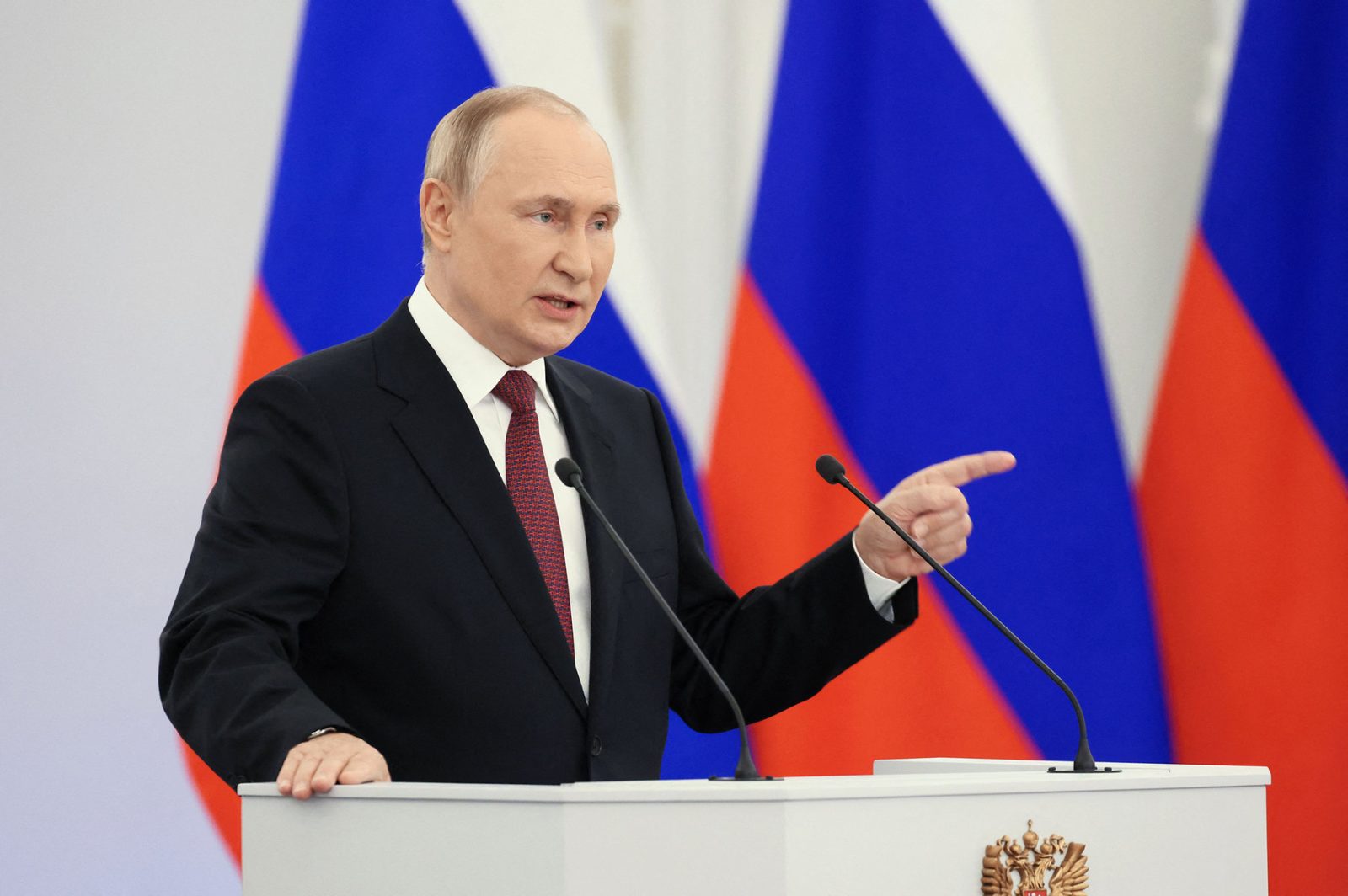
For the Kremlin, the scale of the challenge is significant because Russia remains the world’s largest wheat exporter. President Vladimir Putin has indicated that the country could have an exportable grain surplus of around 60 million tons this season, an amount that assumes logistics can continue functioning at enormous scale.
Moving anything close to that volume becomes far harder if the Black Sea remains unreliable. Baltic routes can absorb several million tons. They cannot easily recreate an export system that sent more than 46 million tons through the southern ports in a single season.
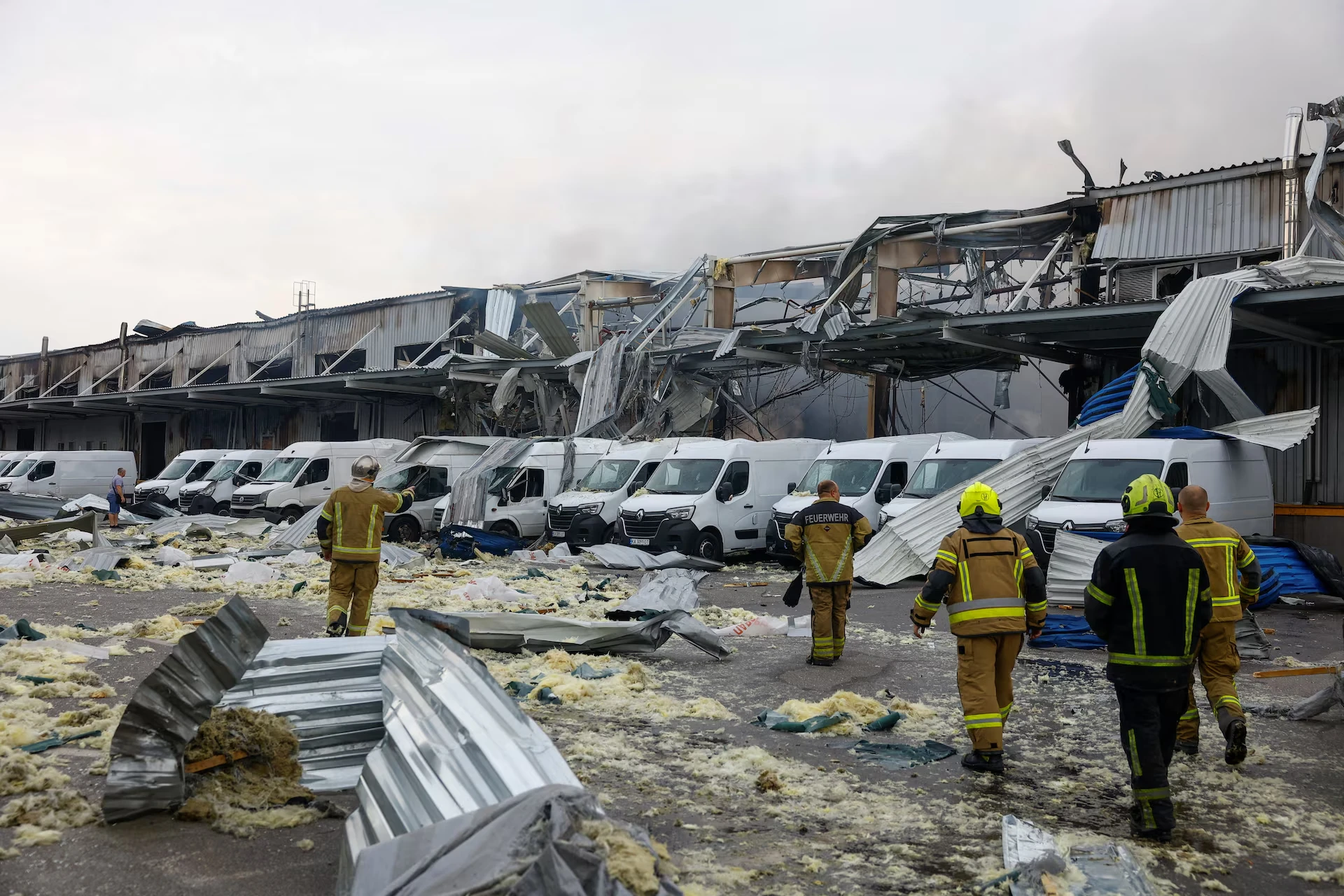
The disruption has emerged as Russia and Ukraine intensify attacks on one another’s export infrastructure. Ships carrying grain and port terminals have increasingly become exposed to a broader campaign of long-range strikes around the Black Sea.
Ukraine seeks to raise the economic and logistical cost of Russia’s war by hitting infrastructure connected to its export and industrial economy. Russia, meanwhile, has repeatedly attacked Ukrainian ports, grain facilities, ships and transport routes, sharply constraining Kyiv’s own agricultural trade.
The two campaigns should not be treated as automatically identical in targets or consequences. Each strike requires its own assessment. For global commodity markets, however, the cumulative result is striking: two major grain exporters are simultaneously struggling with growing risks around their principal shared maritime basin.
Ukraine has turned increasingly toward the Danube and its western borders. Russia is now looking north toward the Baltic. In both cases, the alternative routes are less capable than the systems they are being asked to replace.
The comparison has limits. Ukraine’s Danube ports at Reni and Izmail remain geographically close to its agricultural south, while the principal challenge is constrained river and channel capacity. Russia’s Baltic option involves significantly longer inland transport from many producing areas.
But Russia’s northern route carries an additional political vulnerability. To expand rapidly, exporters may need access not only to Russian ports but also to infrastructure in Latvia and potentially other EU and NATO countries that strongly support Ukraine.
That creates a complicated debate for Baltic governments. Russian grain can generate port fees, railway income and commercial activity while at the same time raising the question of whether infrastructure belonging to Ukraine’s allies should facilitate Russian trade during the war.
Agricultural products also occupy an unusual position in Western sanctions policy. European and allied governments have generally sought to avoid measures that could directly worsen global food insecurity, meaning Russian grain does not face the same regime imposed on many energy, financial or technology sectors.
That distinction matters because Russia supplies major wheat-importing countries across the Middle East, Africa and Asia. A severe decline in its exports could affect global prices and import costs, particularly in countries where food budgets are already under pressure.
It also explains why the debate over Baltic transit cannot be reduced simply to whether European governments want to deny Russia revenue. Restricting grain movements can have consequences well beyond Russia, particularly if Ukrainian exports are simultaneously constrained.
The Black Sea has therefore become a global commodity risk as well as a battlefield. Disruption at Novorossiysk or Odesa can eventually be reflected in freight rates, insurance premiums and grain prices paid thousands of miles away.
Turkey has again been exploring whether some form of safer Black Sea grain passage can be negotiated between Russia and Ukraine. Ankara has experience in that role after helping broker the 2022 Black Sea Grain Initiative together with the United Nations.
That agreement allowed tens of millions of tons of Ukrainian agricultural products to reach international markets before Russia withdrew from the arrangement in 2023. A renewed mechanism would require fundamentally different political conditions, and no comparable deal is currently in force.
Until then, geography is performing the work diplomacy has not. Ukrainian grain is being pushed toward the Danube and Europe; Russian grain is moving toward Baltic terminals. Every diverted ton takes up infrastructure that previously was not required for the same journey.
For Russia, the historical irony is particularly sharp. Moscow spent years investing in Ust-Luga and other domestic ports partly so Russian oil, fertiliser and other cargo would no longer depend on Latvia, Lithuania and Estonia.
The strategy was intended to produce economic sovereignty over transport. As relations deteriorated, Russia deliberately shifted cargo away from former Soviet transit corridors and into ports under its own jurisdiction.
The war is now partially reversing that achievement. Russia’s Baltic terminals still function and have expanded, but their combined capacity is insufficient to absorb a sudden large-scale diversion from the south. Commercial necessity is again making neighbouring ports relevant.
That does not mean Moscow has become dependent on Latvia overnight. The volumes remain limited compared with Black Sea trade. But the direction of travel exposes a vulnerability: an export system optimised around one maritime region becomes expensive and inefficient when that region turns into an active war zone.
The 5 million tons of railway applications toward Russian Baltic ports therefore look dramatic only until they are compared with the scale of the trade being displaced. Against 46.3 million tons shipped through southern ports last season, they represent a substantial adaptation but not a replacement.
The decisive question this autumn will be whether the shift remains an emergency response or begins to reshape Russian grain logistics more permanently. If Black Sea risks subside, economics will pull much of the trade south again. If disruption persists, Baltic routes will become increasingly important.
That would bring higher freight costs, greater strain on Russian railways and more intense political debate in Baltic capitals over Russian agricultural transit. It could also feed back into planting decisions and farm incomes inside Russia if exporters cannot move the harvest fast enough.
The Baltic, in other words, is not solving Russia’s grain problem. It is revealing the size of it.
For years, Moscow built ports so it would no longer need its Baltic neighbours. Now the war Russia launched against Ukraine is helping drive Russian exporters back toward those same routes. The disruption of the Black Sea has turned an old logistics dependence into a new strategic vulnerability.